
What Are Bitcoin Runes?

 Prefer us on Google
The Bitcoin ecosystem has undergone significant evolution with the introduction of various token standards that enable both fungible and non-fungible tokens on the network. Among these developments, Bitcoin Runes represents a notable advancement in fungible token creation. This article examines the technical foundations of the Runes protocol, its operational mechanisms, key differentiators from existing standards, and its potential impact on the Bitcoin network.
What Are Bitcoin Runes?
Bitcoin Runes is a specialized protocol designed for creating and managing fungible tokens directly on the Bitcoin blockchain. Unlike alternative token standards such as BRC-20 and SRC-20, Runes operates independently of the Ordinals protocol and employs Bitcoin's native UTXO model alongside the OP_RETURN opcode. This architectural approach results in a more streamlined and efficient system for token operations.
How Do Bitcoin Runes Work?
The protocol leverages two core components of Bitcoin's infrastructure:
UTXO Model Integration
Bitcoin's Unspent Transaction Output model forms the foundation of Runes' functionality. Within this framework, each transaction generates discrete digital currency units that can contain varying amounts or types of Runes tokens. This integration allows for precise tracking and management of token balances while maintaining compatibility with Bitcoin's existing transaction structure.
OP_RETURN Data Storage
The OP_RETURN opcode enables the attachment of token-specific data to Bitcoin transactions, supporting up to 80 bytes of information in an unspendable output. Runes utilizes this capability to store critical token data within a structure called the Runestone, containing identifiers, symbolic representations, operational commands, and other essential metadata.
Token Creation Process
The initial creation of a new Rune token occurs through a process called etching. During this phase, creators define fundamental token parameters including:
- Token nomenclature and symbolic representation
- Unique identification markers
- Total supply specifications
- Divisibility settings
- Additional configurable attributes
This information becomes permanently recorded in the blockchain through OP_RETURN outputs. The etching process may include a premine option, allowing creators to allocate a predetermined portion of tokens before public availability.
-- Price
Minting Procedures
Following successful etching, tokens become available through either open or closed minting processes:
- Open minting permits unrestricted token generation by any participant
- Closed minting restricts token creation to specific predetermined conditions
- Minting concludes automatically once established parameters are met
Comparative Analysis: Runes vs. BRC-20
Operational Framework
Runes operates natively within Bitcoin's UTXO model, while BRC-20 tokens rely on the Ordinals protocol's inscription methodology attached to individual satoshis.
Transfer Mechanisms
Runes transactions generate new UTXOs based on OP_RETURN data, whereas BRC-20 transfers require creating new inscriptions for each transaction, resulting in increased blockchain data requirements.
Minting Flexibility
The Runes protocol supports both open and closed minting with premine capabilities, providing greater flexibility in token distribution strategies compared to BRC-20's exclusively open minting approach.
Wallet Compatibility
Runes maintains compatibility with Bitcoin Lightning Network implementations and supports both lightning clients and SPV wallets. BRC-20 tokens necessitate Ordinals-compatible wallet solutions.
Protocol Advantages
Network Efficiency
Runes demonstrates superior efficiency through its optimized use of OP_RETURN outputs, utilizing only 80 bytes per transaction compared to BRC-20's potential 4MB inscriptions. This substantial reduction in data requirements minimizes network congestion and prevents the accumulation of unspendable UTXOs.
User Accessibility
The protocol simplifies fungible token creation and management through its straightforward on-chain approach, eliminating requirements for off-chain data or native token generation. This accessibility potentially expands participation in Bitcoin-based token ecosystems.
Ecosystem Growth Potential
While initial protocol activity peaked around its April 2024 launch, Runes represents a significant advancement in Bitcoin's functionality. The protocol's efficient design and simplified token management may attract continued developer interest and user adoption over time.
Conclusion
Bitcoin Runes introduces a technically sophisticated approach to fungible token creation on the Bitcoin network. By leveraging Bitcoin's native UTXO model and OP_RETURN functionality, the protocol delivers enhanced efficiency and accessibility compared to existing alternatives. While the long-term adoption trajectory remains uncertain, Runes demonstrates Bitcoin's continuing evolution as a multi-functional blockchain platform capable of supporting diverse digital assets beyond simple value transfer.
Further Reading
- Is Bitcoin Price Volatility Good or Bad?
- User Guide: How to Make Money with Bitcoin in 5 Different Ways?
- Smart Tips for Buying and Selling Bitcoin
Disclaimer: The opinions expressed in this article are for informational purposes only. This article does not constitute an endorsement of any of the products and services discussed or investment, financial, or trading advice. Qualified professionals should be consulted prior to making financial decisions.
This content is provided for general informational purposes only and doesn't constitute financial, investment, legal, or tax advice. Any events, rewards, online promotions, or related information mentioned herein should not be considered a recommendation, solicitation, or invitation to purchase, sell, trade, or otherwise deal in any crypto assets. Crypto assets are highly volatile and may result in loss. The availability of WEEX services, products, and related events may vary by region. You are responsible for ensuring that your participation is in accordance with applicable local laws and regulations.
You may also like
WEEX Futures PnL: Why Your Three PnL Numbers Rarely Match
WEEX Reduce-Only Order: What It Does and When It Gets Cancelled
WEEX Stop Loss Not Triggered? Check the Trigger, Then the Fill
WEEX Funding Fee Explained: Rate, Countdown, Records and Math
WEEX Trading Pair Suspended or Delisted? Your Orders and Assets
WEEX Order History: How Orders, Fills and Fees Fit Together
WEEX Minimum Order Size Errors Explained With Rounding Examples

Cancel WEEX Spot Order: What Returns to Your Balance and When
WEEX Limit Order Not Filled? Read the Book, Then Fix the Order
How to Spot Trade on WEEX: From Pair Choice to a Confirmed Fill
How to Convert ETH to USDT on WEEX: Step-by-Step Guide
How to Convert USDT to BTC on WEEX: Step-by-Step Guide
How to Convert BTC to USDT: A Step-by-Step WEEX Guide
BTC Funding Rate and Open Interest: What Each One Measures and How to Read Them Together
How Transparent Is a Crypto Exchange? Checking Proof of Reserves and Protection Funds
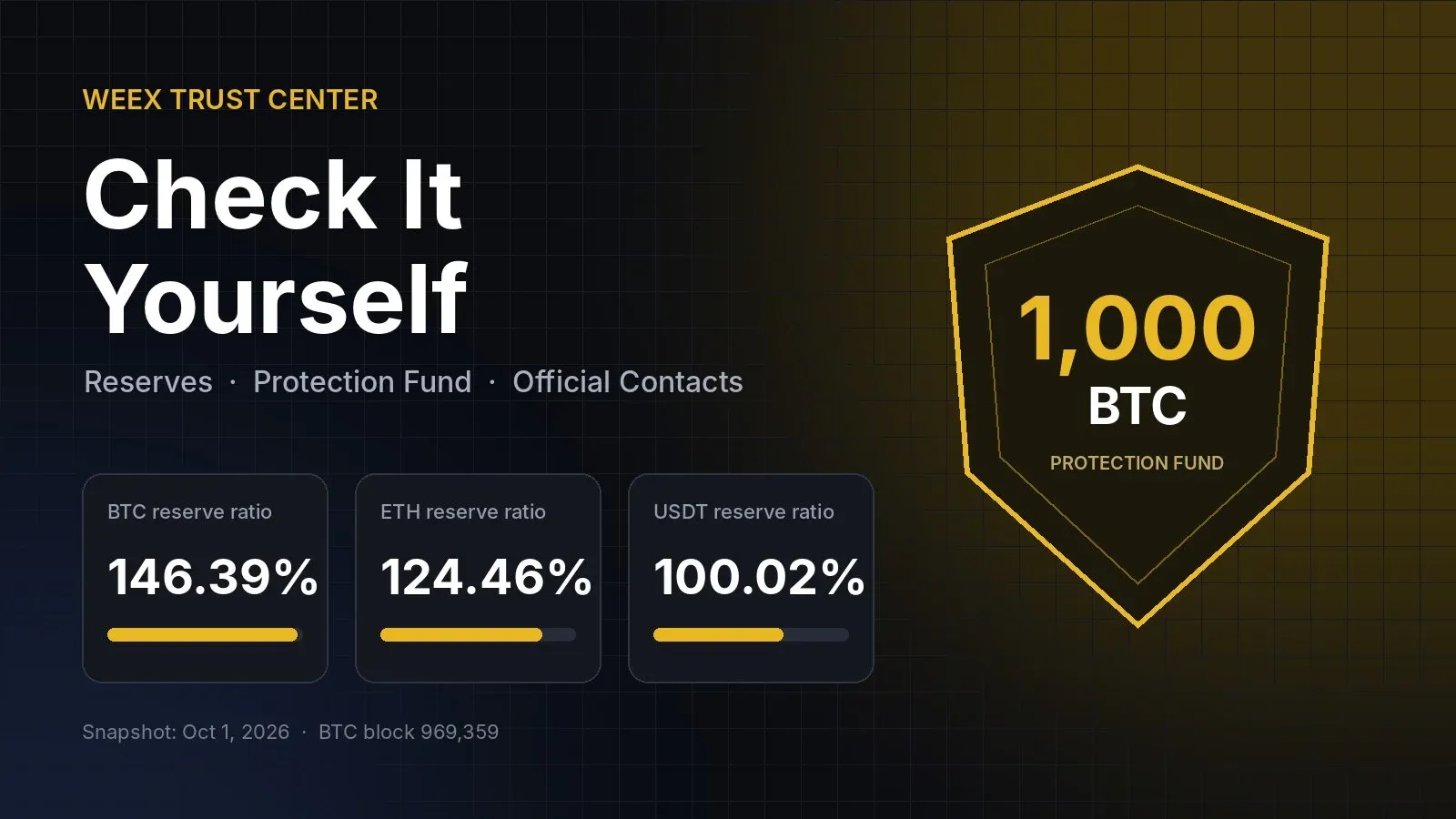
How to Use the WEEX Trust Center: Check Reserves, Protection Fund and Official Contacts
Crypto Leverage Trading Explained: How Perpetual Futures, Margin and Liquidation Work
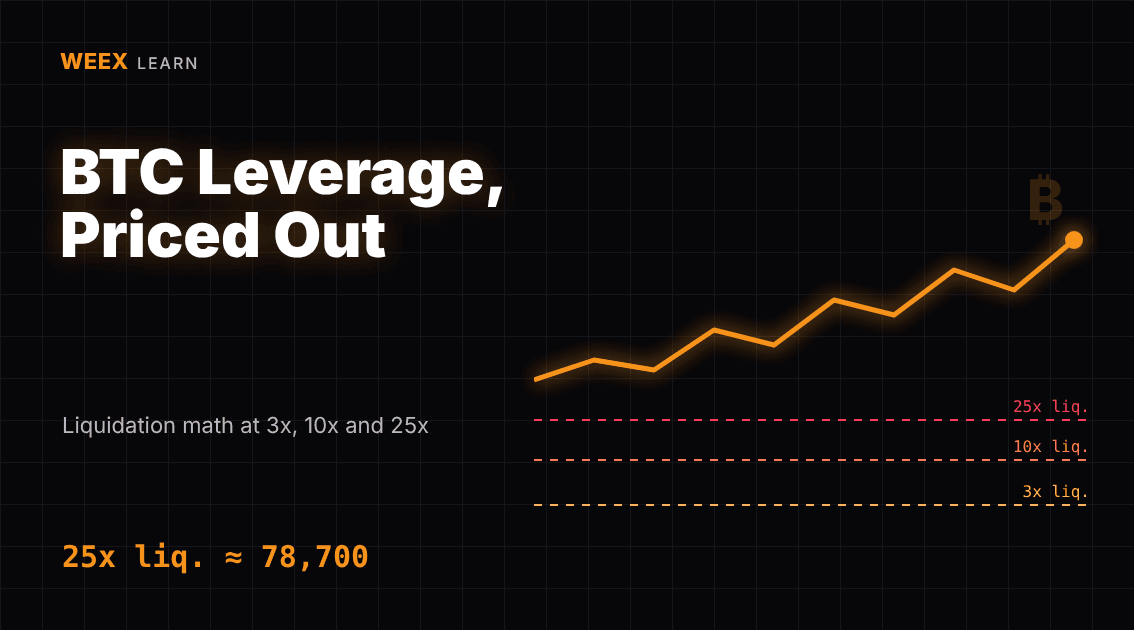
Bitcoin Margin Trading: BTC Liquidation Math at 3x, 10x and 25x
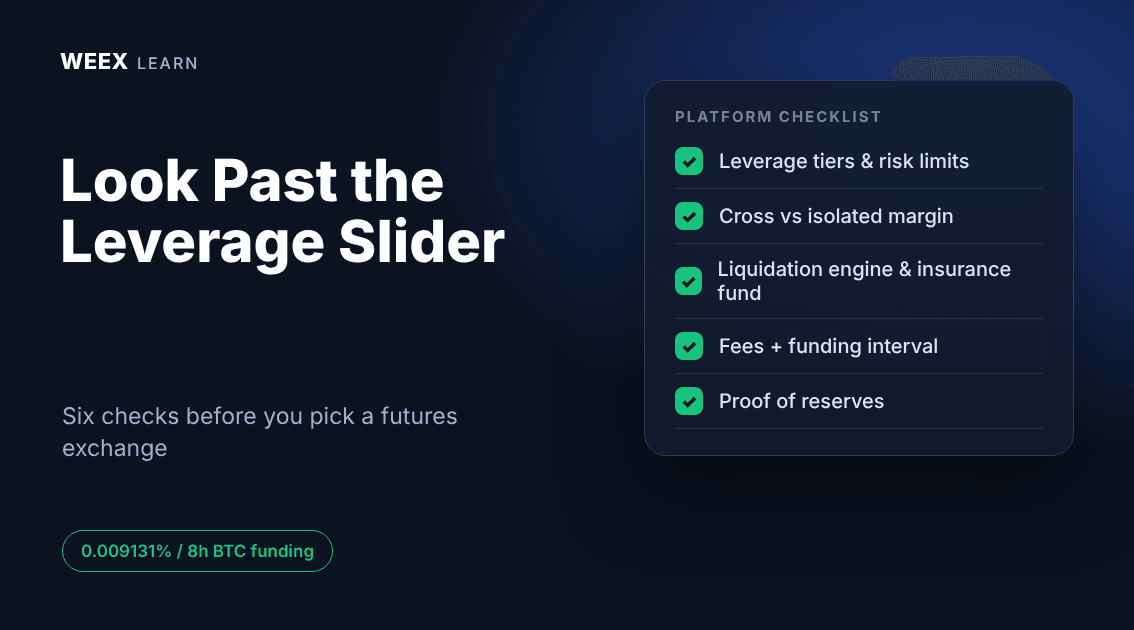
Crypto Leverage Trading Platform: 6 Checks Before You Deposit
What Is Margin Trading? A $1,000 Example at 3x and 10x Leverage
How to Day Trade Crypto for Beginners: The Math Behind One Trade
Trading Psychology for Beginners: Crypto Traps and Hard Rules
What Is a Bitcoin ETF? How Creation, Custody and Fees Work
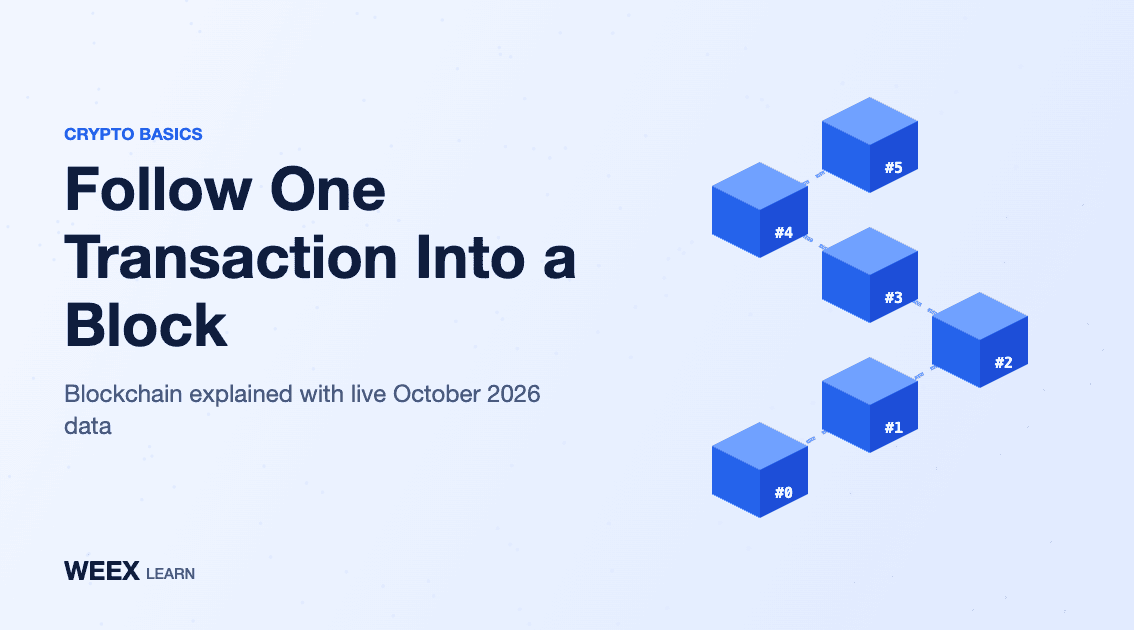
What Is Blockchain and How Does It Work? One Transaction, Traced
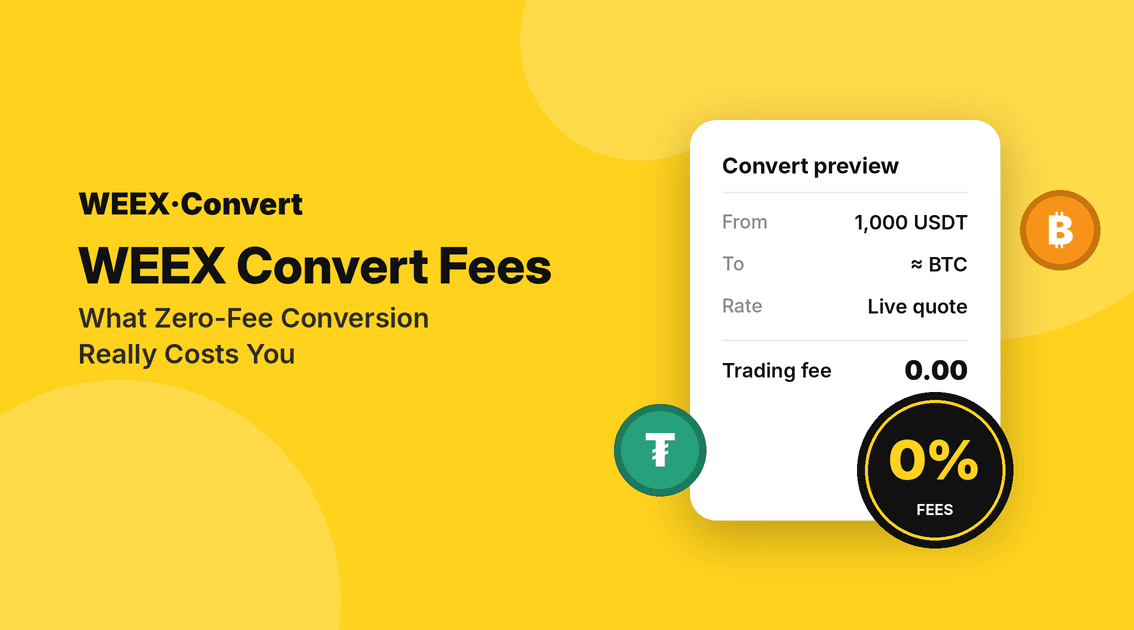
WEEX Convert Fees: What Zero-Fee Conversion Really Costs You

WEEX Convert Quote: How the 8-Second Price Lock Really Works
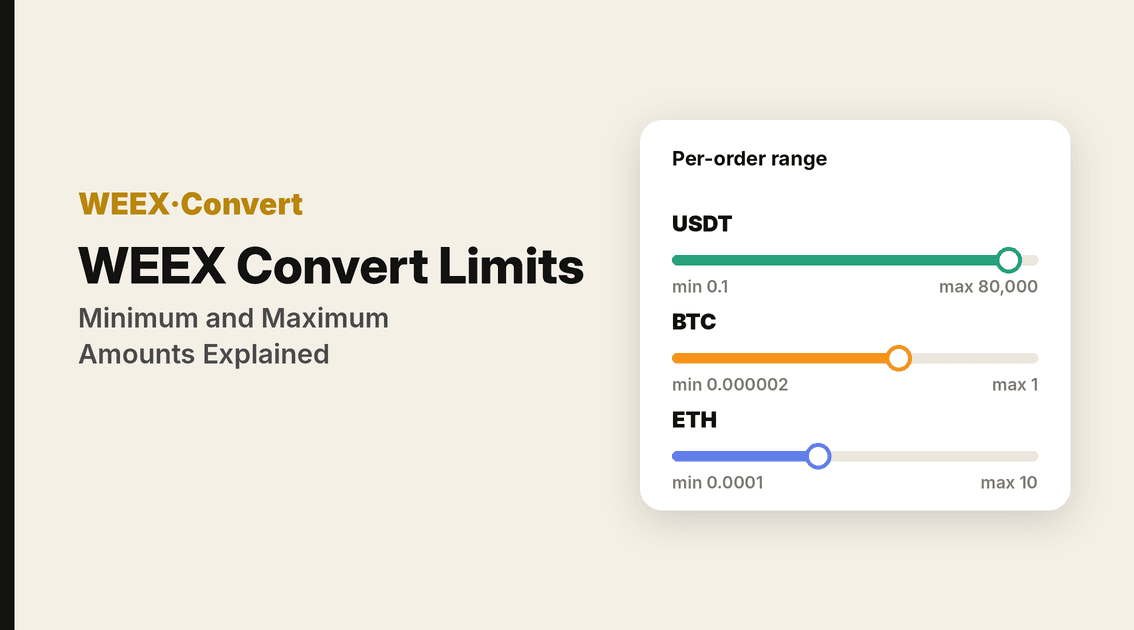
WEEX Convert Limits: Minimum and Maximum Amounts Explained
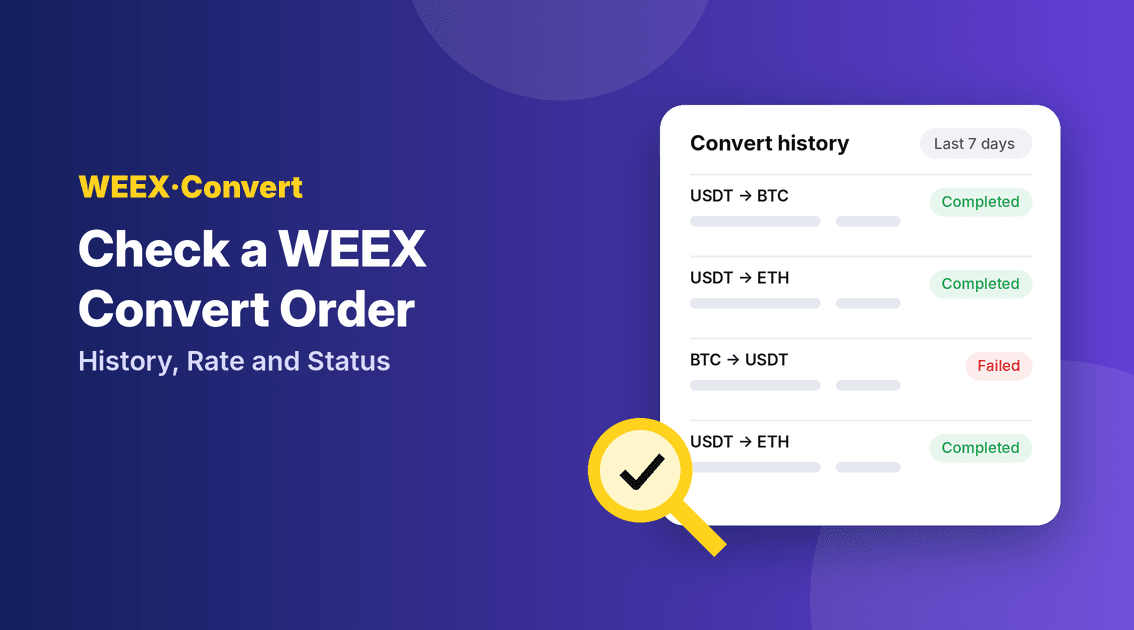
How to Check a WEEX Convert Order: History, Rate and Status
USDC Significant EMT Status in the EU: What Changes on November 12 Under MiCA
Walrus (WAL) Jumps 30%: Sui Storage Token Rallies on AI Data
WEEX Futures PnL: Why Your Three PnL Numbers Rarely Match
WEEX Reduce-Only Order: What It Does and When It Gets Cancelled
WEEX Stop Loss Not Triggered? Check the Trigger, Then the Fill
WEEX Funding Fee Explained: Rate, Countdown, Records and Math
WEEX Trading Pair Suspended or Delisted? Your Orders and Assets
WEEX Order History: How Orders, Fills and Fees Fit Together





