
WEEX Funding Fee Explained: Rate, Countdown, Records and Math

 Prefer us on Google

A WEEX funding fee is a payment exchanged directly between long and short holders of a perpetual futures contract, and you pay or receive it only if you hold a position at the exact settlement time. The amount is your position value multiplied by the funding rate shown next to the countdown on the futures trading page. WEEX does not keep the fee; it moves from one side of the market to the other. Below: where to read the live rate, how to confirm your pair's settlement interval, how to calculate the charge, and where past payments appear in your records.
Most confusion comes from three mismatches: assuming one interval from an older FAQ applies to every pair, closing a few seconds after settlement and still being charged, or recomputing the fee from margin instead of full position value, which makes the record look ten or twenty times too large.
Each has a simple fix, worked through with numbers below. Interface details are as of October 2026; labels can differ between app and web, so treat menu names as a guide.
Where WEEX Shows the Live Funding Rate and Countdown
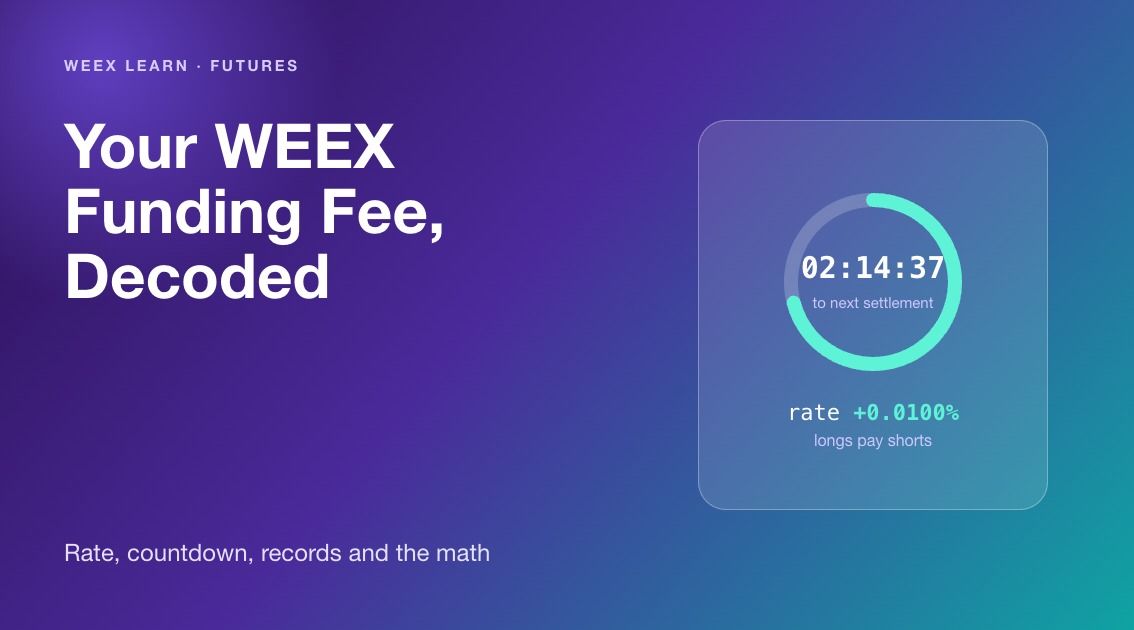
On each perpetual pair's trading page, WEEX displays a field labelled "Funding rate / Countdown" near the price header. The first value is the current rate for the next settlement, and the second is the time left until that settlement. You can see it on the BTC-USDT perpetual futures page before you open a position.
Two things to read correctly:
- The sign. A positive rate means longs pay shorts. A negative rate means shorts pay longs.
- The rate is not final until settlement. It is recalculated from the premium between the futures price and the index, then capped by a floor and ceiling. A rate that reads +0.01% two hours before settlement can be different at the moment it is applied.
If you plan to close before settlement to avoid a payment, the countdown tells you how much time you actually have.
Which WEEX Funding Fee Interval Applies to Your Pair?
This is where the existing WEEX documentation needs reconciling. An older WEEX Q&A on funding rates describes a single schedule: funding "charged every 8 hours," with settlement times listed in UTC+8. The current WEEX Help Center article on funding fees is more precise. It says settlements typically occur on the hour, that settlement times vary by trading pair, and that each contract's details show its schedule.
The better reading: 8 hours is common, not guaranteed. A newer or more volatile contract can run on a shorter cycle, which multiplies how often you pay. As of October 2026, WEEX does not publish one interval for all pairs.
To confirm the interval for a specific pair:
- Open that pair's futures trading page and note the countdown.
- Open the contract details or contract information panel for the pair, where WEEX says the settlement schedule is listed.
- If the countdown and the listed schedule disagree, or neither is clear, ask WEEX support before holding a large position through settlement.
Quick check: if the countdown resets to about 8 hours after a settlement, the pair is on an 8-hour cycle; about 4 hours or 1 hour means two or eight times as many payments.
The Settlement Rule That Decides Whether You Pay
WEEX applies the funding fee only to positions that are open at the settlement time. There is no partial charge for holding part of the interval.
Three outcomes follow:
- Open a position one minute before settlement: you pay or receive the full funding amount for that interval.
- Close one minute before settlement: you pay nothing for that interval, even if you held for seven hours and 59 minutes.
- Close a few seconds after settlement: you have already been charged. The countdown has rolled over and the payment is booked.
WEEX deducts the fee from your position's margin, and the amount credited to receivers depends on what is collected from payers. A payment also reduces available margin, which can move your estimated liquidation price. WEEX's own guide to liquidation and futures risk lists funding payments as one of the factors that can push a thin position closer to liquidation.
-- Price
WEEX Funding Fee Calculation: Position Value Times Rate
WEEX gives the formula plainly: funding fee = funding rate x position value, where position value = face value x number of contracts x the latest mark price. Leverage and the margin you posted do not enter the formula.
Example 1: A BTC long at a positive rate.
- Position: 0.5 BTC long on BTC-USDT perpetual
- Mark price at settlement: 80,000 USDT
- Position value: 0.5 x 80,000 = 40,000 USDT
- Funding rate at settlement: +0.01%
- Funding fee: 40,000 x 0.0001 = 4 USDT, paid by you to shorts
If you opened that position at 10x leverage, your margin is about 4,000 USDT. Recomputing the fee as 4,000 x 0.01% gives 0.40 USDT, which is wrong by a factor of ten. This is the most common reason a record looks "too high."
Example 2: The same position, held for a week on an 8-hour cycle.
Three settlements a day over seven days is 21 payments. At a steady +0.01%, that is 21 x 4 = 84 USDT. At +0.05%, a level seen during crowded rallies, each payment becomes 20 USDT and the week costs 420 USDT. On a pair settling every 4 hours, the count doubles to 42 payments.
Example 3: A short at a negative rate. A short worth 2,500 USDT at mark price, with a rate of -0.03%, pays 2,500 x 0.0003 = 0.75 USDT to longs.
The mark price, not your entry price, sets position value, so a 10% move since entry changes your fee by 10% too.
For a broader look at what persistent funding signals about market positioning, the WEEX Learn piece on who pays the crypto funding rate and what it costs covers the 30-day cost picture.
How to Find Past WEEX Funding Payments in Your Records
Funding payments are recorded as account bill entries, not as trades, so you will not find them in your order history or trade fills.
The older WEEX funding Q&A gives this path: Assets, then the futures (contract) bill, then the funding cost entries. In the current interface, the label may read as bills, transaction history, or funding fees, and the filter may be called "funding" or "funding cost," depending on whether you use the app or web. Look for a record type filter in your futures account history and select the funding category.
Each entry should show the pair, time, and amount, negative when you paid and positive when you received. To reconcile one:
- Note the entry's timestamp and match it to a settlement time for that pair.
- Find your position size at that moment from your position history.
- Multiply position size by the mark price at settlement, then by the funding rate applied.
- Compare. Small gaps usually come from the settlement mark price differing from the price you remember.
If you believe you had closed, check position history for the exact close time. A close seconds after the countdown hit zero explains most disputed charges.
FAQ
1. Does WEEX charge the funding fee itself?
No. WEEX describes funding as a transfer between users: longs pay shorts at a positive rate, shorts pay longs at a negative one. Trading fees are separate.
2. Is the WEEX funding interval always 8 hours?
Not necessarily. An older WEEX Q&A describes an 8-hour schedule, but the current Help Center states that settlement times vary by trading pair. Check the countdown and the contract details for the pair you trade.
3. Why did I pay funding if I closed my position?
The fee applies to positions open at the settlement moment. If your close executed after the countdown reached zero, even by seconds, the payment for that interval was already applied.
4. Does higher leverage increase my WEEX funding fee?
Not directly. The fee uses position value, not margin. Leverage only matters because it lets the same margin hold a larger position.
5. Where do I see how much funding I paid last month?
In your futures bill or transaction history, filtered to funding. They are not trades, so they do not appear in order history.
This content is provided for general informational purposes only and doesn't constitute financial, investment, legal, or tax advice. Any events, rewards, online promotions, or related information mentioned herein should not be considered a recommendation, solicitation, or invitation to purchase, sell, trade, or otherwise deal in any crypto assets. Crypto assets are highly volatile and may result in loss. The availability of WEEX services, products, and related events may vary by region. You are responsible for ensuring that your participation is in accordance with applicable local laws and regulations.
You may also like
WEEX Futures PnL: Why Your Three PnL Numbers Rarely Match
WEEX Reduce-Only Order: What It Does and When It Gets Cancelled
WEEX Stop Loss Not Triggered? Check the Trigger, Then the Fill
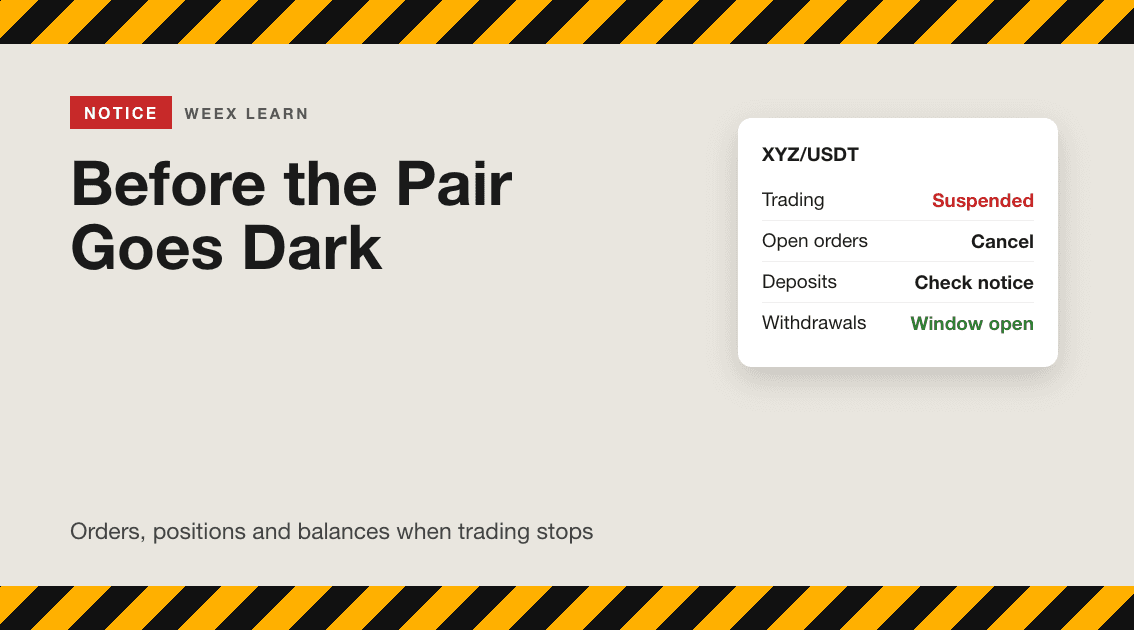
WEEX Trading Pair Suspended or Delisted? Your Orders and Assets
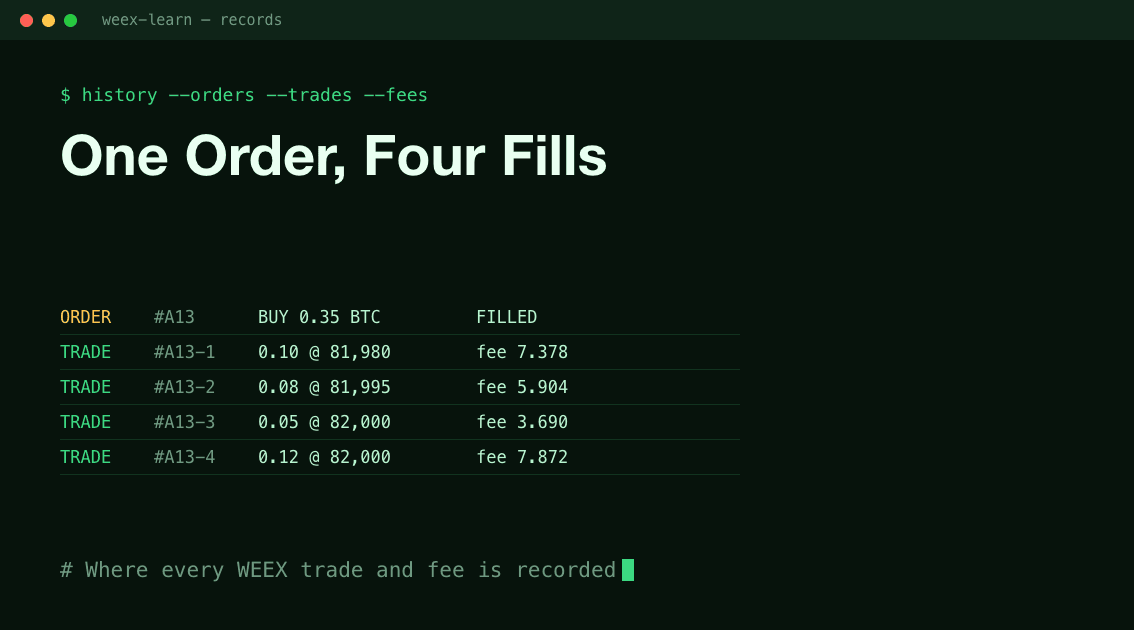
WEEX Order History: How Orders, Fills and Fees Fit Together
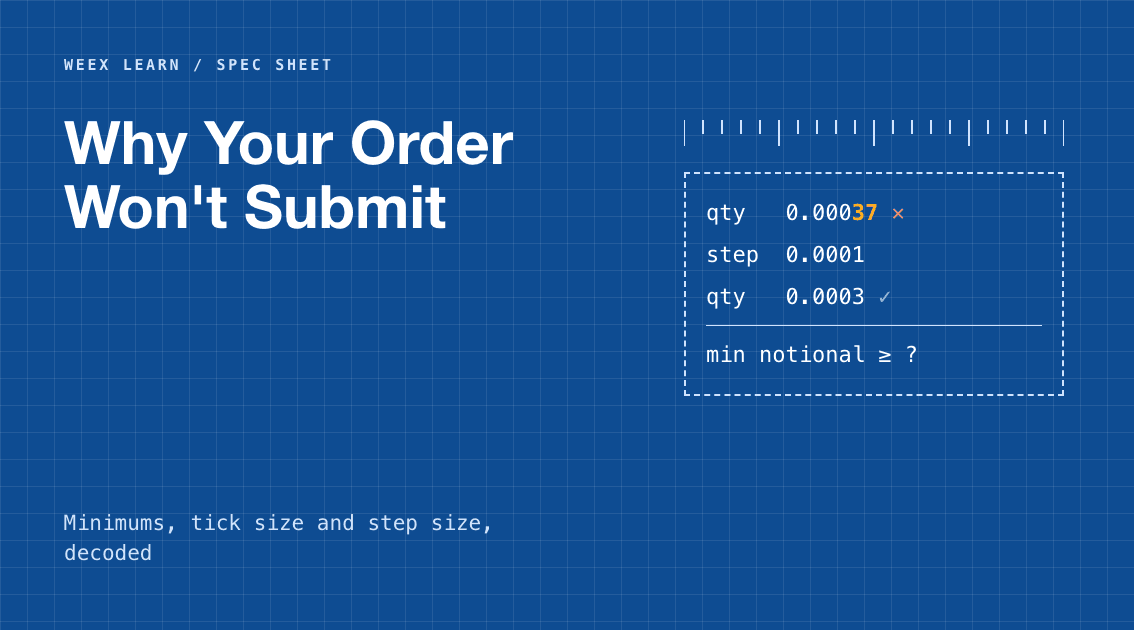
WEEX Minimum Order Size Errors Explained With Rounding Examples
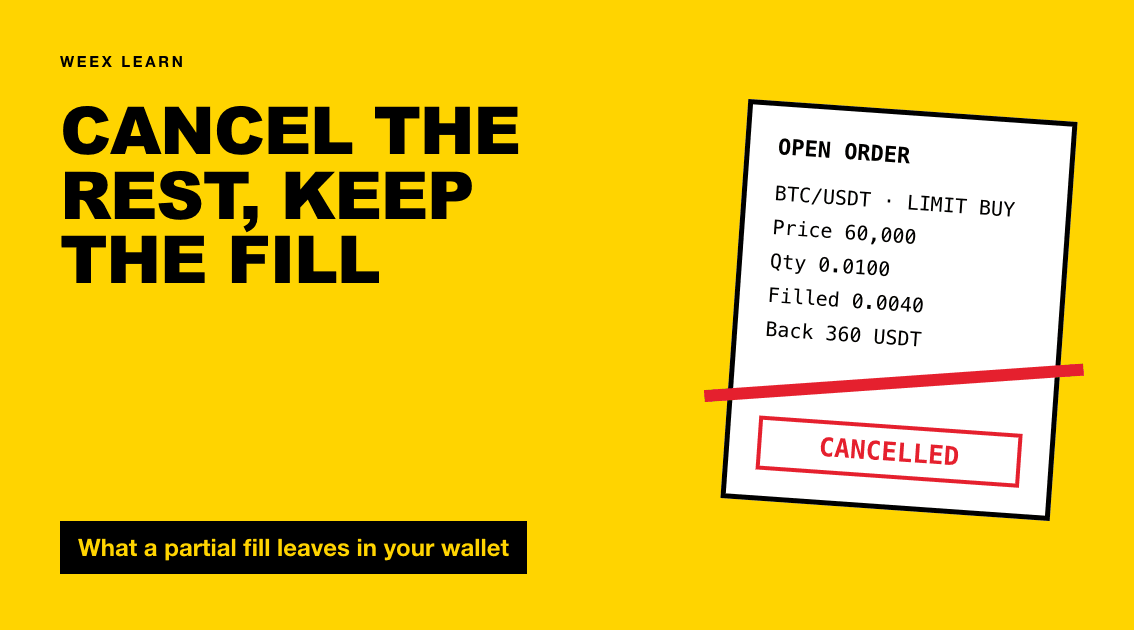
Cancel WEEX Spot Order: What Returns to Your Balance and When
WEEX Limit Order Not Filled? Read the Book, Then Fix the Order
How to Spot Trade on WEEX: From Pair Choice to a Confirmed Fill
How to Convert ETH to USDT on WEEX: Step-by-Step Guide
How to Convert USDT to BTC on WEEX: Step-by-Step Guide
How to Convert BTC to USDT: A Step-by-Step WEEX Guide
BTC Funding Rate and Open Interest: What Each One Measures and How to Read Them Together
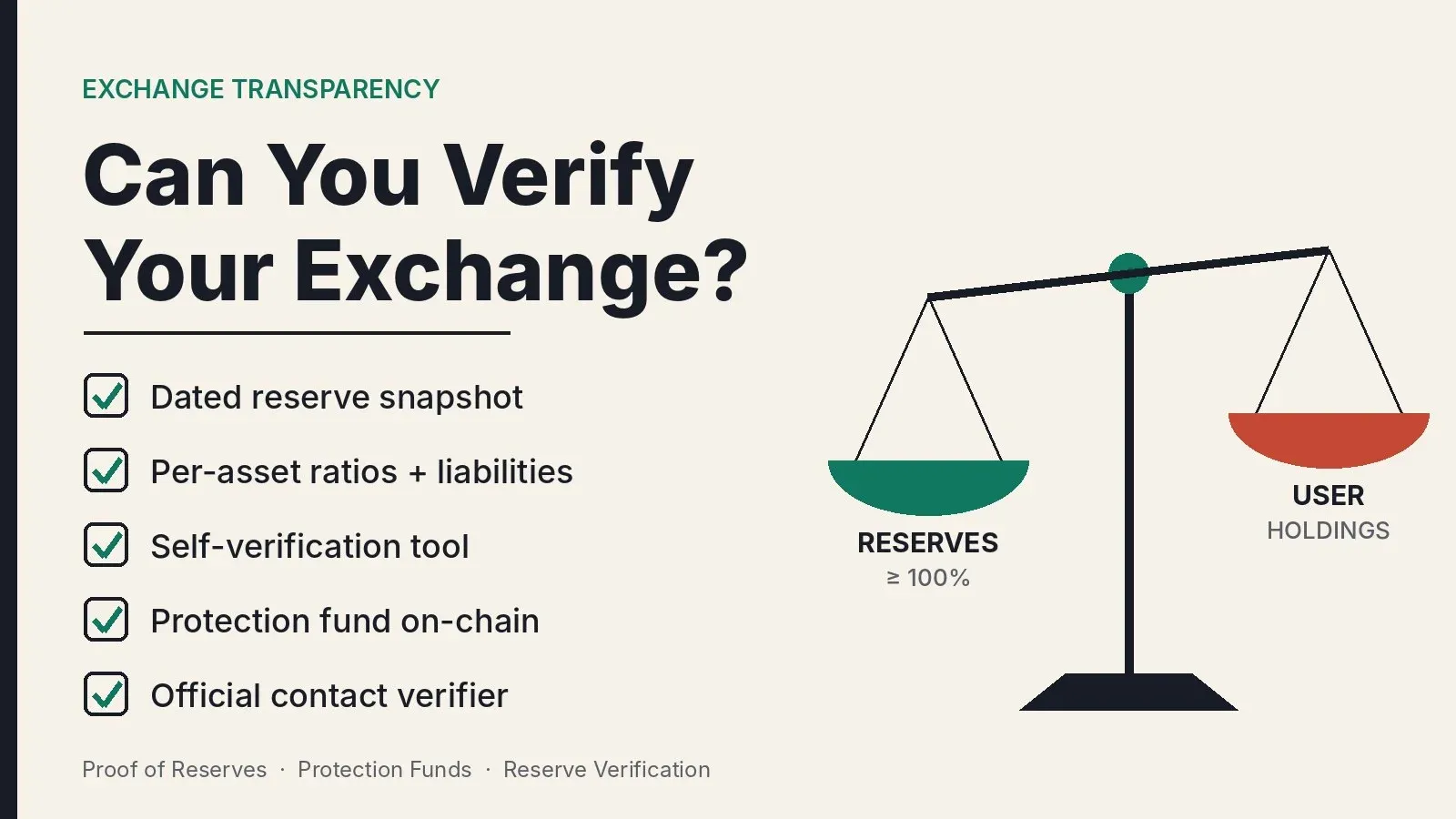
How Transparent Is a Crypto Exchange? Checking Proof of Reserves and Protection Funds
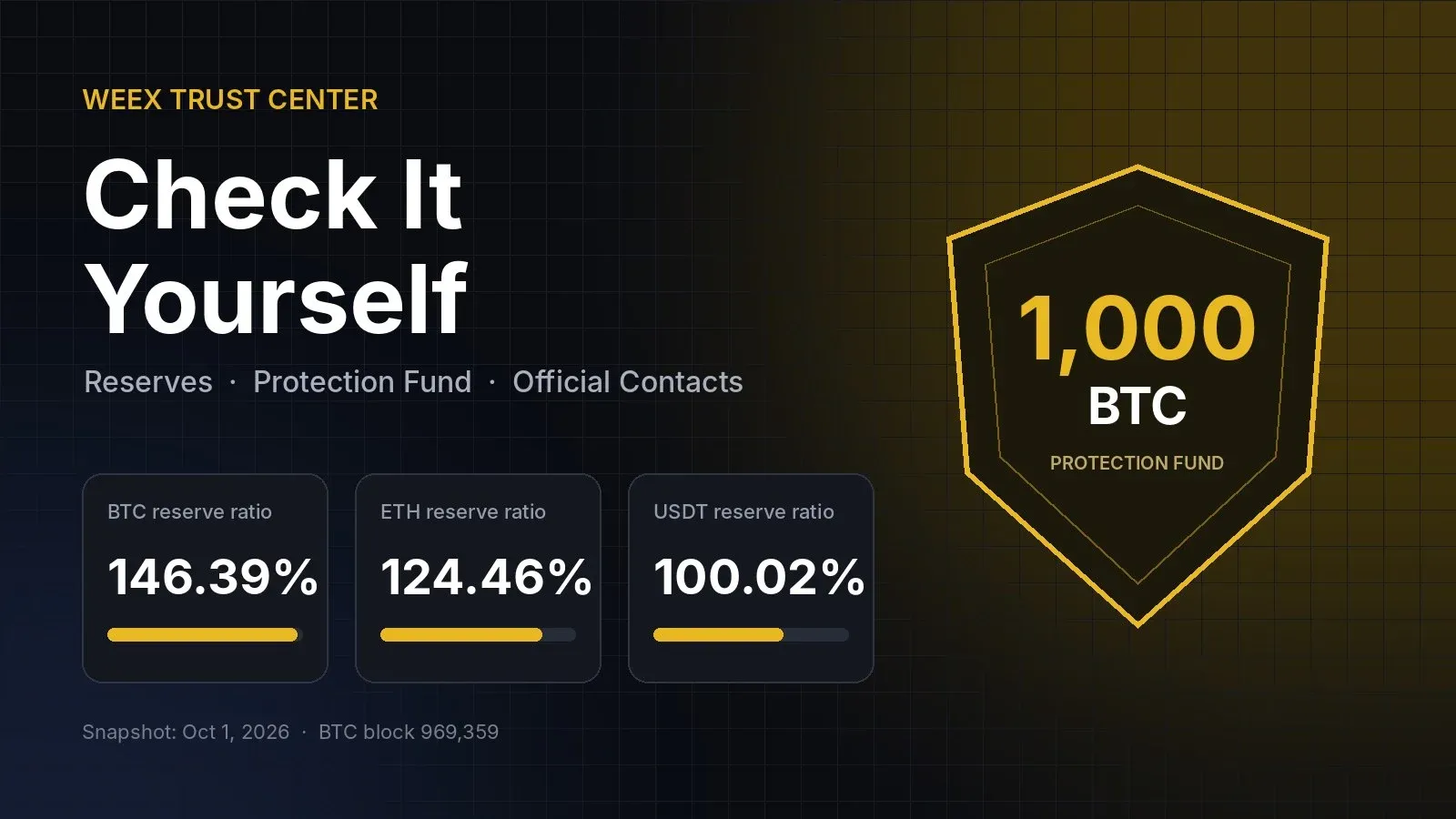
How to Use the WEEX Trust Center: Check Reserves, Protection Fund and Official Contacts
Crypto Leverage Trading Explained: How Perpetual Futures, Margin and Liquidation Work
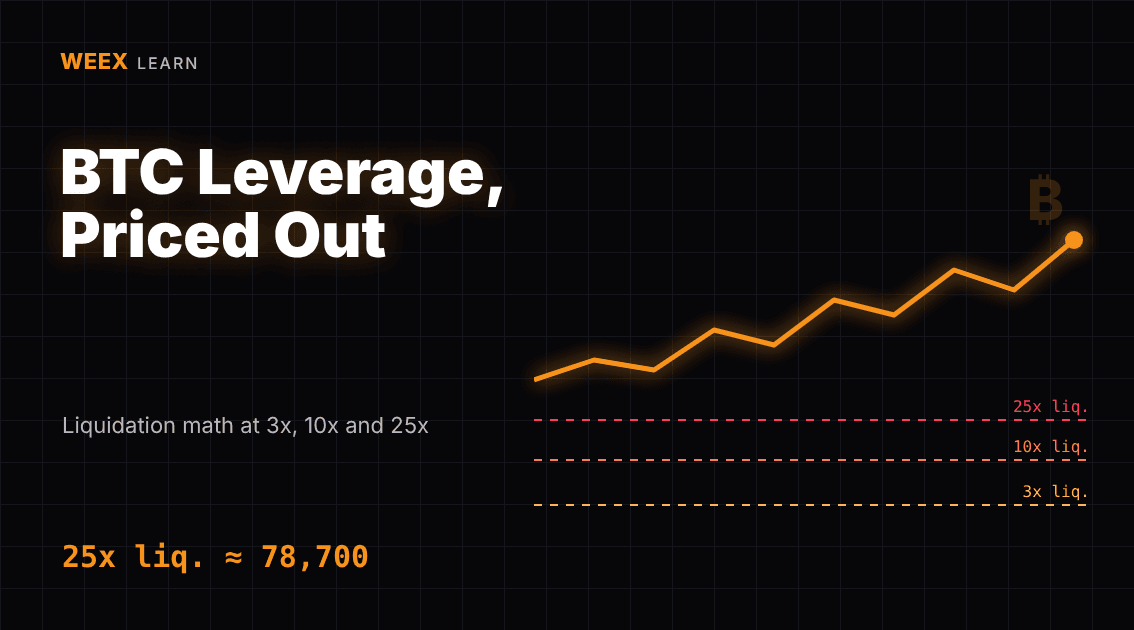
Bitcoin Margin Trading: BTC Liquidation Math at 3x, 10x and 25x
Crypto Leverage Trading Platform: 6 Checks Before You Deposit
What Is Margin Trading? A $1,000 Example at 3x and 10x Leverage
How to Day Trade Crypto for Beginners: The Math Behind One Trade
Trading Psychology for Beginners: Crypto Traps and Hard Rules
What Is a Bitcoin ETF? How Creation, Custody and Fees Work
What Is Blockchain and How Does It Work? One Transaction, Traced
WEEX Convert Fees: What Zero-Fee Conversion Really Costs You
WEEX Convert Quote: How the 8-Second Price Lock Really Works
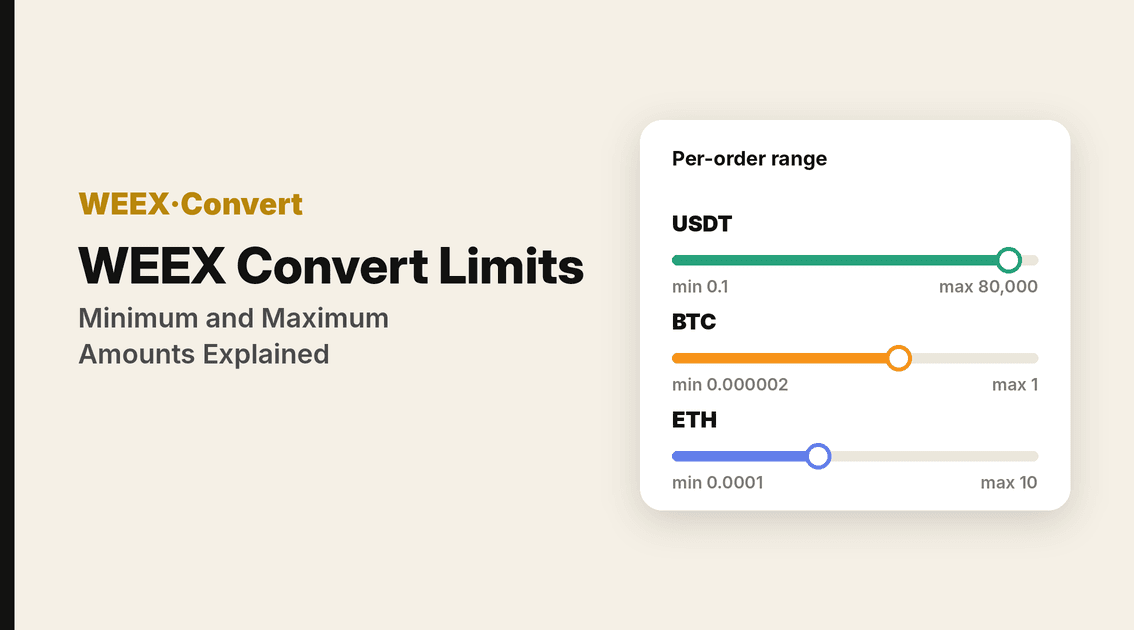
WEEX Convert Limits: Minimum and Maximum Amounts Explained
How to Check a WEEX Convert Order: History, Rate and Status
USDC Significant EMT Status in the EU: What Changes on November 12 Under MiCA
Walrus (WAL) Jumps 30%: Sui Storage Token Rallies on AI Data
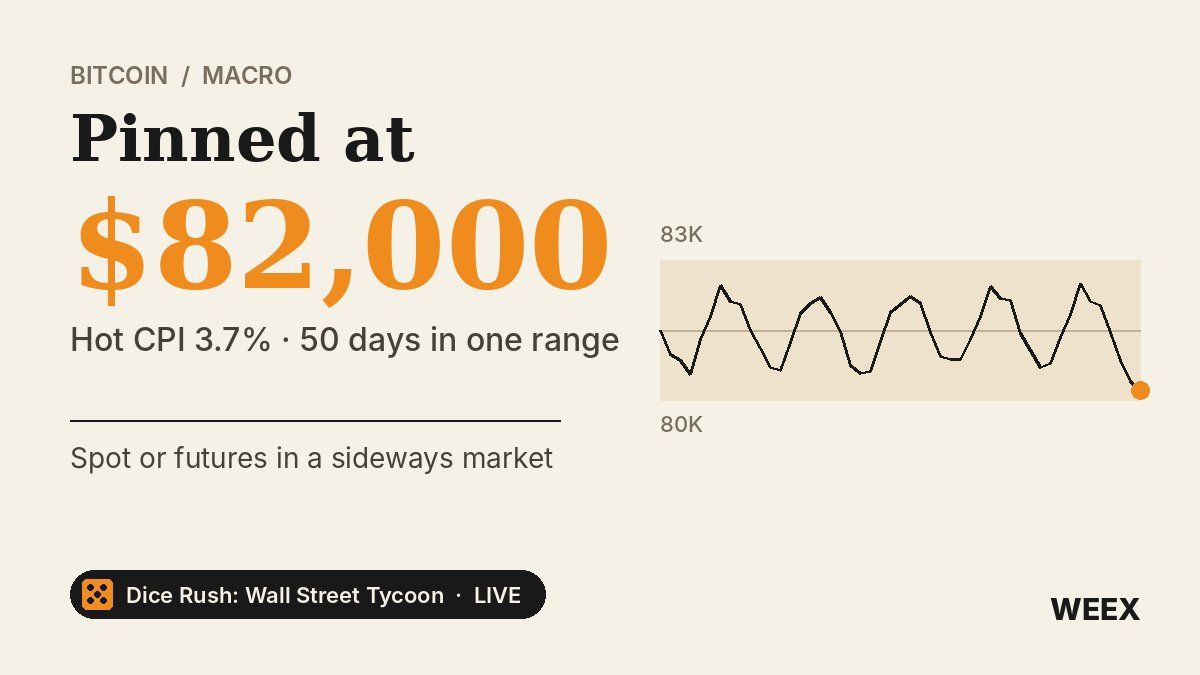
Bitcoin Price After Hot CPI: Why BTC Is Pinned Near $82,000
WEEX Futures PnL: Why Your Three PnL Numbers Rarely Match
WEEX Reduce-Only Order: What It Does and When It Gets Cancelled
WEEX Stop Loss Not Triggered? Check the Trigger, Then the Fill
WEEX Trading Pair Suspended or Delisted? Your Orders and Assets
WEEX Order History: How Orders, Fills and Fees Fit Together
WEEX Minimum Order Size Errors Explained With Rounding Examples





