
WEEX Minimum Order Size Errors Explained With Rounding Examples

 Prefer us on Google

The WEEX minimum order size is the smallest quantity of a coin you can buy or sell in one order, and WEEX's Help Center is explicit that orders below it cannot be submitted or executed. When the order panel says the amount or quantity doesn't meet requirements, though, the minimum is only one possible cause. The same rejection can come from the order's total value, from a price with too many decimals, or from a quantity that gets rounded down below the floor after you type it.
Each pair on WEEX carries its own set of these rules, and they differ by token and trading pair. WEEX's Spot Trading Terms of Use say orders must meet "any other requirements, filters or limits specified by WEEX," and that WEEX may change order-size and tick-size rules per asset. A setting that worked on BTC/USDT last month can therefore fail on a new listing today.
Below, each filter gets its own short explanation, followed by three worked rounding examples with real arithmetic and the places to check a pair's live rules before you click Buy. The rule values in the examples are illustrative, not WEEX's live settings for any pair, as of October 2026.
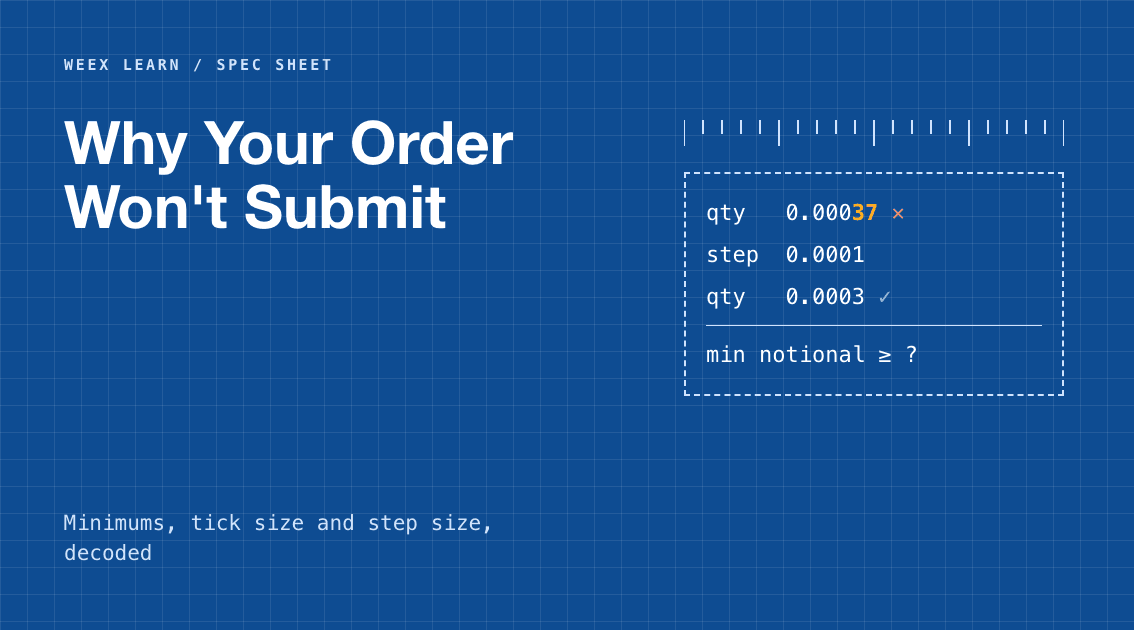
Four Checks Behind the "Doesn't Meet Requirements" Message
Before an order reaches the order book, the exchange checks it against several pair-level filters. WEEX's spot API documentation, as of October 2026, lists the fields that define them for every symbol:
- Minimum order quantity (minTradeAmount): the fewest base-coin units allowed in one order, such as a floor of BTC on BTC/USDT. WEEX's API error 43006 reads "Order quantity is less than the minimum trading amount."
- Maximum order quantity (maxTradeAmount): the ceiling. Error 43005 covers orders that exceed it. Separate per-order caps also apply to market orders.
- Tick size: the smallest price step, in the quote coin. A price that isn't a multiple of it is invalid.
- Step size: the smallest quantity step, in the base coin. A quantity with extra decimals gets truncated or rejected.
There is a fifth check people rarely expect. WEEX's API sets a maximum allowed deviation for limit-order prices (buyLimitPriceRatio and sellLimitPriceRatio). A buy limit priced far above the market, or a sell far below it, can be refused even when the size is fine.
Minimum Quantity vs Minimum Order Value
Many exchanges apply two floors: a quantity minimum in the coin and a notional minimum in USDT (price × quantity). WEEX's published spot documentation clearly defines the quantity minimum. A separate notional (USDT value) minimum is not listed among the published symbol fields as of October 2026. If the order panel on a given pair shows a minimum in USDT, treat that on-screen figure as the rule for that pair; don't assume a number from another exchange.
The practical difference matters most on cheap tokens. A quantity floor of 10 coins costs about 1 USDT on a token trading at 0.10, but 50 USDT on one trading at 5.00. Your USDT budget doesn't decide whether you clear the floor. The coin count does.
Tick Size and Step Size: Three Rounding Examples
These are the errors that frustrate people most, because the number you typed looks valid. Each example uses hypothetical rules so the arithmetic is easy to follow.
Example 1: spending 10 USDT on BTC. Assume BTC trades at 67,321.50 USDT, the step size is 0.00001 BTC, and the minimum quantity is 0.0002 BTC.
- 10 ÷ 67,321.50 = 0.000148540... BTC
- Truncated to the step size: 0.00014 BTC, worth about 9.43 USDT
- 0.00014 is below the 0.0002 floor, so the order is rejected
The fix is to size up, not to retype the same budget. At this price, 0.0002 BTC costs about 13.46 USDT, so a budget of 14 USDT clears the floor with some room for price movement.
Example 2: a 25 USDT order that falls three cents short. Assume a token at 0.4182 USDT with a tick size of 0.0001, a step size of 0.1 tokens, and a hypothetical 25 USDT minimum order value on the pair.
- 25 ÷ 0.4182 = 59.78 tokens
- Truncated to the step size: 59.7 tokens
- 59.7 × 0.4182 = 24.97 USDT, below the 25 USDT floor
Entering a price of 0.41825 fails on a different rule: it has five decimals when the tick size allows four. Rounding the price to 0.4183 and the quantity to 59.8 gives 25.01 USDT, which passes. The general rule is to round your quantity up to the next step when you are close to a value floor, never down.
Example 3: the sell you can't place after a buy. Assume you bought exactly 0.0002 BTC at the 0.0002 minimum, and WEEX's VIP 0 spot fee of 0.100% (per the WEEX fee page as of October 2026) was deducted in BTC.
- 0.0002 × (1 − 0.001) = 0.0001998 BTC in your account
- Truncated to the 0.00001 step: 0.00019 BTC, below the 0.0002 floor
- Result: the whole position cannot be sold as a single order
This is how "dust" gets created. Buying slightly above the minimum, for example 0.00025 BTC, leaves enough after fees to exit in one order.
-- Price
Where to Check a Pair's WEEX Minimum Order Size
WEEX doesn't publish a single static table of spot minimums, and the values can change, so check the live source for the exact pair:
- The order panel itself. Open the pair, such as BTC/USDT spot, and look at the quantity field's hints or the error text. WEEX's minimum order amount guide says the futures minimum is shown in the trading interface. Check the spot panel the same way. Exact labels may differ by app version.
- The decimals the field accepts. If the quantity box refuses a fifth decimal, that tells you the step size. The same applies to the price box and the tick size.
- The spot API exchange information. For developers, WEEX's spot REST documentation exposes minTradeAmount, maxTradeAmount, tickSize, stepSize and the limit-price deviation ratios per symbol through the exchangeInfo endpoint.
- Announcements. WEEX posts changes to minimum order sizes as Help Center notices. One, effective December 19, 2024, cut the displayed minimum to 0.0001 BTC (from 0.001) and 0.001 ETH (from 0.01). Its references to lots, margin and copy trading indicate a derivatives context, so don't read it as a spot rule.
A sensible habit before any small order: work out the coin quantity first, round it to the step size, multiply by the price, and leave 5–10% of headroom above any floor. That covers price drift between typing and submitting, plus the fee haircut on the way out. For more beginner walkthroughs, browse WEEX Learn.
FAQ
1. What is the WEEX minimum order size for BTC on spot?
It is set per pair and can change. Check the live BTC/USDT order panel or the spot API's minTradeAmount field rather than relying on a figure quoted elsewhere, including older announcements.
2. Why does WEEX reject my order when I have enough balance?
Balance isn't the issue. The order breaks a pair rule, usually a quantity below the minimum after step-size rounding, a price that doesn't fit the tick size, or a limit price too far from the market.
3. Can I sell a balance that is smaller than the minimum order size?
Not as a standalone order on that pair. Buy a little more so the total clears the minimum, then sell the combined amount, or check whether your app version offers a small-balance conversion tool.
4. Does a market order avoid the minimum order size?
No. Market orders face the same minimum quantity and step size checks, and WEEX's API also caps the size of a single market order per pair.
This content is provided for general informational purposes only and doesn't constitute financial, investment, legal, or tax advice. Any events, rewards, online promotions, or related information mentioned herein should not be considered a recommendation, solicitation, or invitation to purchase, sell, trade, or otherwise deal in any crypto assets. Crypto assets are highly volatile and may result in loss. The availability of WEEX services, products, and related events may vary by region. You are responsible for ensuring that your participation is in accordance with applicable local laws and regulations.
You may also like
WEEX Futures PnL: Why Your Three PnL Numbers Rarely Match
WEEX Reduce-Only Order: What It Does and When It Gets Cancelled
WEEX Stop Loss Not Triggered? Check the Trigger, Then the Fill
WEEX Funding Fee Explained: Rate, Countdown, Records and Math
WEEX Trading Pair Suspended or Delisted? Your Orders and Assets
WEEX Order History: How Orders, Fills and Fees Fit Together
Cancel WEEX Spot Order: What Returns to Your Balance and When
WEEX Limit Order Not Filled? Read the Book, Then Fix the Order
How to Spot Trade on WEEX: From Pair Choice to a Confirmed Fill

How to Convert ETH to USDT on WEEX: Step-by-Step Guide
How to Convert USDT to BTC on WEEX: Step-by-Step Guide
How to Convert BTC to USDT: A Step-by-Step WEEX Guide
BTC Funding Rate and Open Interest: What Each One Measures and How to Read Them Together
How Transparent Is a Crypto Exchange? Checking Proof of Reserves and Protection Funds
How to Use the WEEX Trust Center: Check Reserves, Protection Fund and Official Contacts
Crypto Leverage Trading Explained: How Perpetual Futures, Margin and Liquidation Work
Bitcoin Margin Trading: BTC Liquidation Math at 3x, 10x and 25x
Crypto Leverage Trading Platform: 6 Checks Before You Deposit
What Is Margin Trading? A $1,000 Example at 3x and 10x Leverage
How to Day Trade Crypto for Beginners: The Math Behind One Trade
Trading Psychology for Beginners: Crypto Traps and Hard Rules
What Is a Bitcoin ETF? How Creation, Custody and Fees Work
What Is Blockchain and How Does It Work? One Transaction, Traced
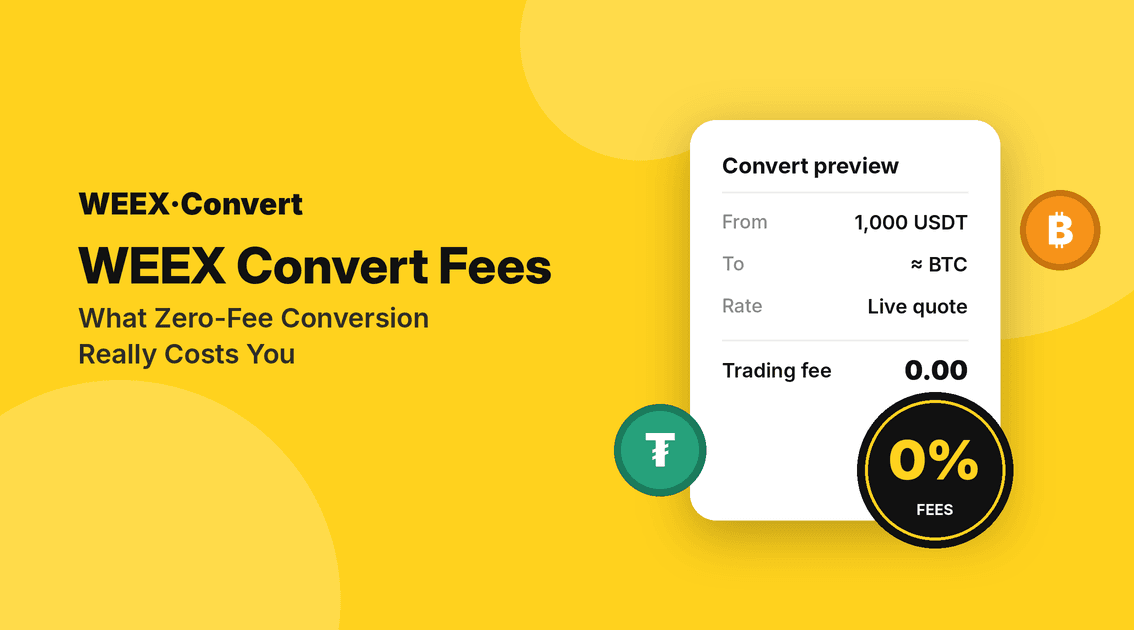
WEEX Convert Fees: What Zero-Fee Conversion Really Costs You
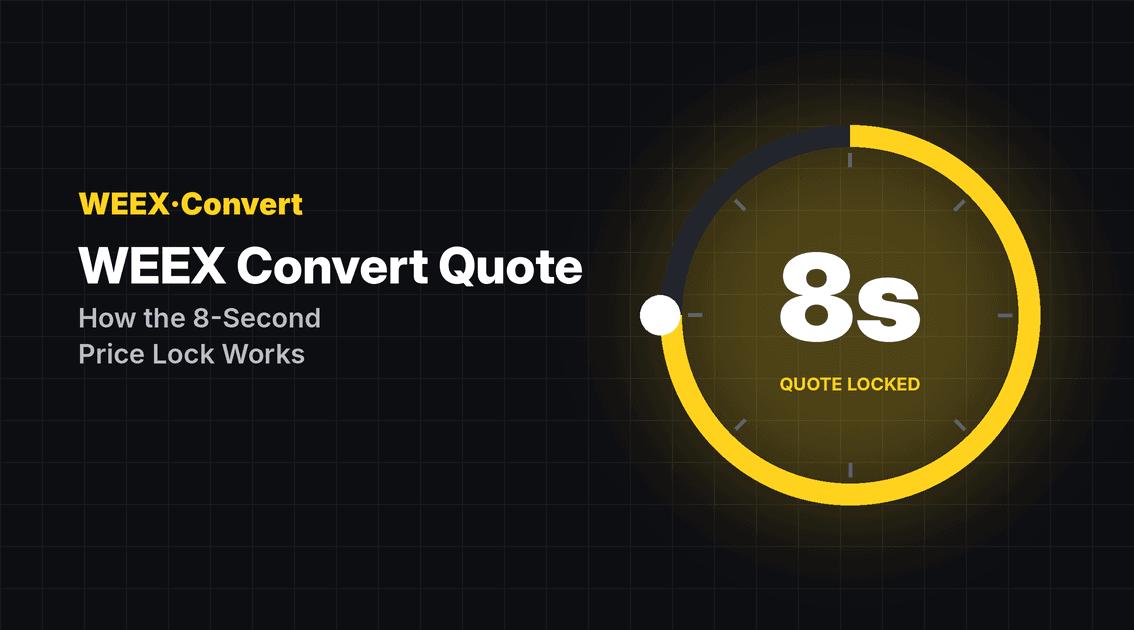
WEEX Convert Quote: How the 8-Second Price Lock Really Works
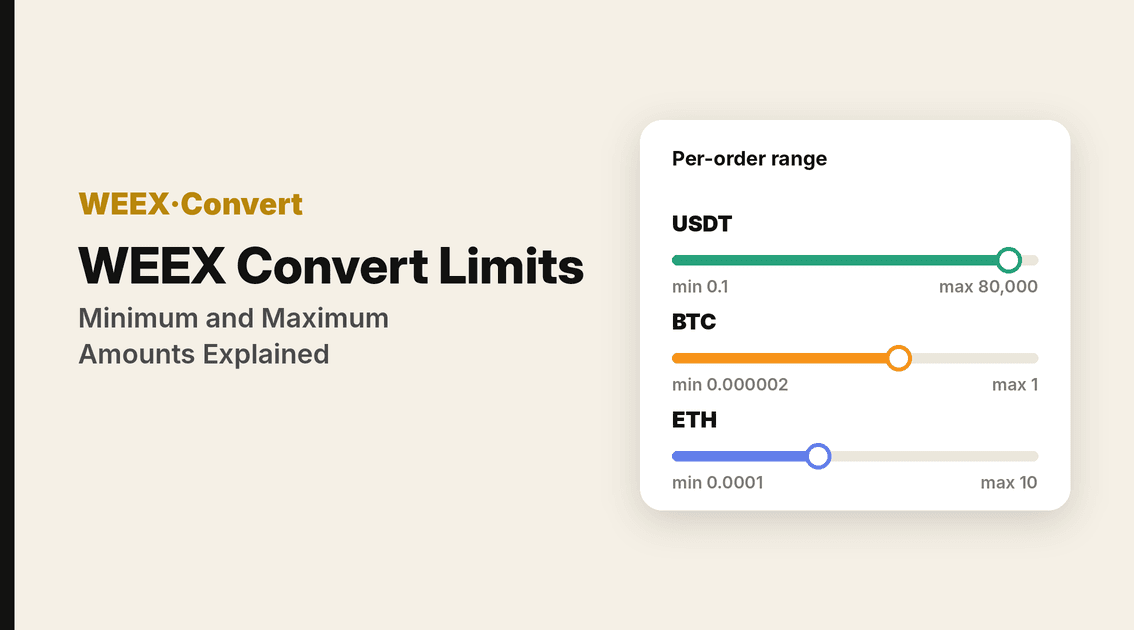
WEEX Convert Limits: Minimum and Maximum Amounts Explained
How to Check a WEEX Convert Order: History, Rate and Status

USDC Significant EMT Status in the EU: What Changes on November 12 Under MiCA
Walrus (WAL) Jumps 30%: Sui Storage Token Rallies on AI Data
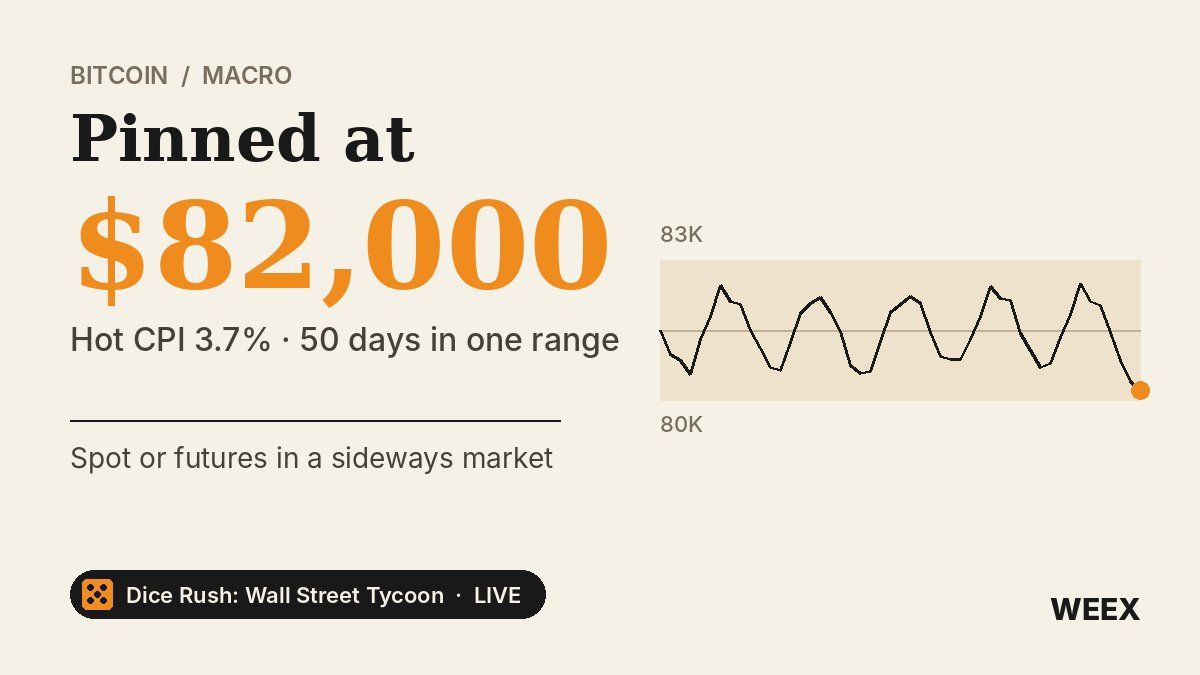
Bitcoin Price After Hot CPI: Why BTC Is Pinned Near $82,000
WEEX Futures PnL: Why Your Three PnL Numbers Rarely Match
WEEX Reduce-Only Order: What It Does and When It Gets Cancelled
WEEX Stop Loss Not Triggered? Check the Trigger, Then the Fill
WEEX Funding Fee Explained: Rate, Countdown, Records and Math
WEEX Trading Pair Suspended or Delisted? Your Orders and Assets
WEEX Order History: How Orders, Fills and Fees Fit Together





