
How to Profit on Prediction Market: A Beginner's Guide to Prediction Market

 Prefer us on Google
Prediction markets are having a moment. In 2026, retail traders, institutions, and even the Federal Reserve are paying close attention. If you're wondering how to make money on prediction markets, the answer isn't guessing—it's understanding how contracts are priced, how settlement works, and how the market reacts to news.
This guide covers what is a prediction market, how to spot mispriced probabilities, and which strategies work for beginners. Think in probabilities. Manage your size. Don't overtrade.
Key Takeaways
- Prediction markets let you buy and sell contracts on future events. The price tells you what the crowd thinks will happen.
- You profit by buying contracts where the crowd's probability is too low compared to your estimate. Hold to settlement or sell when the price corrects.
- Stick to objective events—clear questions, firm deadlines, and official settlement sources. Elections, Fed moves, inflation prints, and earnings reports are good starting points.
- Risk management separates winners from losers. Treat every trade as a test. Size so that three losses in a row don't hurt you. Cut trades when new data contradicts your thesis.
- Regulatory scrutiny is increasing in 2026. The CFTC has reaffirmed its jurisdiction. Enforcement actions are rising. Trade only on public information.
What Is a Prediction Market?
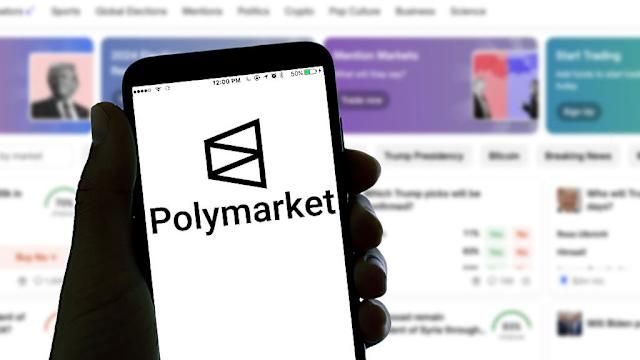
A prediction market is exactly what it sounds like—a place where you trade contracts based on whether something will happen. The CFTC calls them "event contracts." They've existed in U.S. regulated markets for over twenty years.
Here's how they work:
- One contract pays a fixed amount—usually $1—if the event occurs.
- The trading price of that contract tells you the market's probability estimate.
- A contract at $0.70 implies the crowd sees a 70% chance of that outcome.
That's why prediction markets matter. They're not just betting. They're forecasting engines with real money behind them. The Federal Reserve's 2026 research confirms that these markets produce "high-frequency, continuously updated, distributionally rich benchmark forecasts." Translation: they update faster than polls and react to real news in real time.
Why You Can Profit Here
Profit comes from mispricing, not luck.
If a contract trades at $0.40 but you believe the true probability is 60%, you have a potential edge. Buy it. Wait for the market to catch up or for the event to settle. Either way, you profit when the price moves toward reality.
You don't need to be right every time. You just need to be right more often than the market expects—and size your bets so a few wrong calls don't blow you up.
How to Make Money on Prediction Markets: Core Strategies
Strategy 1: Buy Underpriced Contracts
This is the simplest play. Find an event where the market's price looks too low relative to your analysis. Buy. Wait. Profit.
Example: A Fed rate hike contract trades at 40 cents. Economic data—jobs, inflation, Fed speeches—suggests the real chance is closer to 60%. You buy at 40. If the hike happens, you get $1 per contract. If the market re-prices to 55 cents before the decision, you can sell early and take the gain.
Strategy 2: Hold to Settlement
For beginners, this is the safest route. Pick a clean event with a binary outcome. Buy at a price you like. Hold until the event resolves. No chasing. No second-guessing.
Good events for this approach:
- Election winners (who takes office)
- Fed rate decisions (hike, cut, or hold)
- Inflation data (CPI above or below target)
- Earnings reports (beat or miss)
- Sports outcomes (team A wins or loses)
Strategy 3: Trade Around News
Enter before a known catalyst—jobs report, Fed meeting, earnings call, debate—and exit after the market re-prices.
The play:
- Spot an upcoming event with a clear date.
- Get in before the announcement.
- Get out after the market absorbs the news.
The Fed's 2026 paper shows that prediction markets move sharply around macro releases. That's your window.
Strategy 4: Value Trading
Look for contracts that seem mispriced relative to other public data. Polls say one thing. The market says another. That gap is your opportunity.
Warning: Disagreeing with the market doesn't mean you're smarter. You need evidence—not ego. Compare the contract price against polls, economic models, and expert forecasts. If you can't point to a specific reason the market is wrong, you probably are too.
Strategy 5: Relative-Value Trading (Intermediate)
This one's for traders with some experience. Compare two related markets. If they're not priced consistently, buy the cheap one and sell the expensive one.
Skill level: Intermediate. The relationship between two outcomes can break without warning. Proceed carefully.
Best Types of Prediction Markets to Trade
If you're new, start with objective events. Objective means:
- A clear yes/no question
- A firm deadline
- An official settlement source
Good categories for beginners:
- Elections – clear winner, official certification.
- Federal Reserve – rate decisions with published minutes.
- Inflation – CPI or PCE above/below specific thresholds.
- Jobs data – payrolls or claims hitting certain levels.
- Earnings – beat or miss against consensus.
Why objective matters: Subjective contracts invite arguments. Vague wording. Disputes over resolution. Low liquidity. The CFTC bans certain event types outright—terrorism, assassination, war, gaming, unlawful activity—under Regulation 40.11. Stay in the clear zone.
What Changed in 2026: Regulatory and Market Developments
The regulatory picture shifted this year.
- The CFTC pulled its 2024 event-contract proposal in February. In March, it issued a staff advisory encouraging innovation while reminding everyone of their obligations under the Commodity Exchange Act.
- A February court filing reaffirmed the CFTC's exclusive jurisdiction over U.S. commodity derivatives—including prediction markets.
- Enforcement actions are up. Insider information. Fraud. Manipulation. The agency is watching.
- Reuters reported that prediction market platforms are courting institutional money. Cboe is planning to launch contracts with partial payouts later this year.
What this means for you:
- Clearer rules could mean deeper liquidity.
- More institutions could tighten spreads.
- More oversight means stay clean—trade only on public information.
Risk Management: Where Most Traders Lose
The biggest misconception about prediction markets is that you need to be right. You don't. You need to be right often enough with positions small enough that being wrong a few times doesn't end you.
How to Choose the Best Prediction Markets
Not all platforms are equal. Here's what to look for:
- Regulatory status – Is the platform operating within a clear legal framework?
- Liquidity – Are enough traders active to make the price meaningful?
- Event variety – Does the platform offer events you actually understand?
- Fees – What are the trading costs and settlement fees?
Always verify compliance with your local regulations before depositing funds.
Conclusion
Making money on prediction markets isn't complicated. Find mispriced probabilities. Trade clean events you understand. Keep your risk small enough to survive being wrong.
Prediction markets turn uncertainty into numbers. That's their power. They let you act on information before the outcome is known. They can be profitable. But they're not free money.
For beginners: start small. Focus on objective events. Avoid contracts you can't explain in plain English. The regulatory environment in 2026 is clearer than before—lawful participation is welcome, but manipulation and insider trading are not.
Trade with a plan, not a guess. That's the difference between smart participation and expensive noise.
FAQ
Q1: What is a prediction market?
A prediction market is a platform where you buy and sell contracts on future events. The price of each contract reflects the market's estimate of probability. Examples include elections, Fed decisions, and corporate earnings.
Q2: How to make money on prediction markets?
Buy contracts when the implied probability is lower than your estimate. Hold to settlement or sell after the market re-prices. Profit comes from spotting mispriced outcomes, not from guessing.
Q3: What's the best prediction market strategy for beginners?
Start with simple, objective events. Election outcomes or Fed rate decisions work well. Buy at a favorable price and hold to settlement. Fewer decisions mean fewer mistakes.
Q4: Are prediction markets safe for beginners?
Yes, if you're disciplined. Start small. Trade only what you understand. Never risk money you can't afford to lose. Avoid exotic contracts where settlement could be disputed.
Q5: What are the main risks in prediction markets?
Mispricing risk—you might be wrong on probability. Liquidity risk—thin markets can trap you. Regulatory risk—rules can change. Information risk—the market might know something you don't. Trade with a plan and don't overexpose yourself.
Disclaimer: This content is for general informational and educational purposes only and does not constitute financial, investment, legal, or tax advice. Nothing in this article is an offer, recommendation, or solicitation to buy, sell, or trade any asset. Prediction markets carry risk, including potential loss of capital. Please assess risks and confirm local requirements before making any financial decisions.
Disclaimer: This content is provided for general branding and informational purposes only and doesn't constitute financial, investment, legal, or tax advice. Any events, rewards, online events, or related information mentioned herein should not be considered a recommendation, solicitation, or invitation to purchase, sell, trade, or otherwise deal in any crypto assets or to use any services. Crypto assets are highly volatile and may result in loss. WEEX services and online events may not be available in all regions and are subject to applicable laws, regulations, and eligibility requirements. You are responsible for ensuring that your use of WEEX services complies with local laws and for carefully assessing the risks before participating in any crypto-related activities.
You may also like

Is SPCX Stock Price a Buy? What Uber, Airbnb and Rivian's IPO Crashes Tell Investors

SPCX Stock Price Hits All Time Low: What Investors Should Do Right Now

How Will the CLARITY Act and Bank-Grade Stablecoin KYC Rules Change Crypto Trading in 2026

Why Is BitMine Buying Millions of Ethereum Tokens and Staking $9 Billion in ETH in 2026
How to Protect Your Bitcoin from Physical Attacks: Lessons From the NYC Crypto Torture Case in 2026

What Is the NYC Crypto Kidnapping Case? The Soho Bitcoin Attack Explained — 2026 Case Analysis
SpaceX Stock (SPCX): Now Public, and Back Where It Started
USA Rare Earth (USAR): What It Is and How to Trade the Token
NVIDIA Stock in 2026: Real Shares, Tokenized NVDA, and Perpetuals Compared
How to Buy USAR Coin: Buying Tokenized USA Rare Earth Stock the Right Way
WEEX Poker Party Series 4: Draw Cards to Split a $1M USDT Pool
Can TENDIES Coin Recover After the Pullback? Price Outlook Explained
Who Really Makes Money on Prediction Markets? Smart Money vs Retail Traders
The Hidden Problem With Prediction Markets: Who Pays the Winners?
Prediction Markets Are the Future of Finance or Just Gambling?
How Polymarket and Kalshi Turned Predictions Into a Billion-Dollar Business

Why Prediction Markets Are So Hard to Regulate: The CFTC vs SEC Debate

Are Prediction Markets Legal? CFTC vs SEC Regulation Explained
Why Is TSMC Stock Down After a 77% Profit Jump? What Wall Street Is Actually Worried About
Is Samsung Stock a Buy at Its Lowest Level Since the AI Boom Began?
Samsung Stock and the KOSPI Bear Market: What the 30% Decline From Peak Tells Investors
Oil Price Above $90: What the US-Iran War Means for Your Portfolio Right Now
Iran War and Bitcoin: Why Crypto Is Not Acting Like a Safe Haven at $90 Oil
KOSPI Stock Market Enters Bear Market: What a 25% Drop From the Peak Means for Investors
KOSPI Stock Bear Market: What It Means for Samsung, SK Hynix and Korean Chip Stocks
Is the KOSPI Stock Market a Buy After Entering Bear Market Territory?
SK Hynix Leveraged ETFs SKHL SKHX SKHZ: What Each One Does and Who Should Use Them
Barclays Sees 70% Upside for SK Hynix Stock: What the Overweight Rating Means
Is SK Hynix Stock a Buy Now? What the 52 Week Low and IPO Price Break Tell Investors
Is This Really Messi's Last World Cup? What the 2026 Final Means for His Legacy
Is SPCX Stock Price a Buy? What Uber, Airbnb and Rivian's IPO Crashes Tell Investors
SPCX Stock Price Hits All Time Low: What Investors Should Do Right Now
How Will the CLARITY Act and Bank-Grade Stablecoin KYC Rules Change Crypto Trading in 2026
Why Is BitMine Buying Millions of Ethereum Tokens and Staking $9 Billion in ETH in 2026
How to Protect Your Bitcoin from Physical Attacks: Lessons From the NYC Crypto Torture Case in 2026
What Is the NYC Crypto Kidnapping Case? The Soho Bitcoin Attack Explained — 2026 Case Analysis
Contents
Popular coins
Latest articles







