
KOSPI Stock Market Enters Bear Market: What a 25% Drop From the Peak Means for Investors

 Prefer us on Google
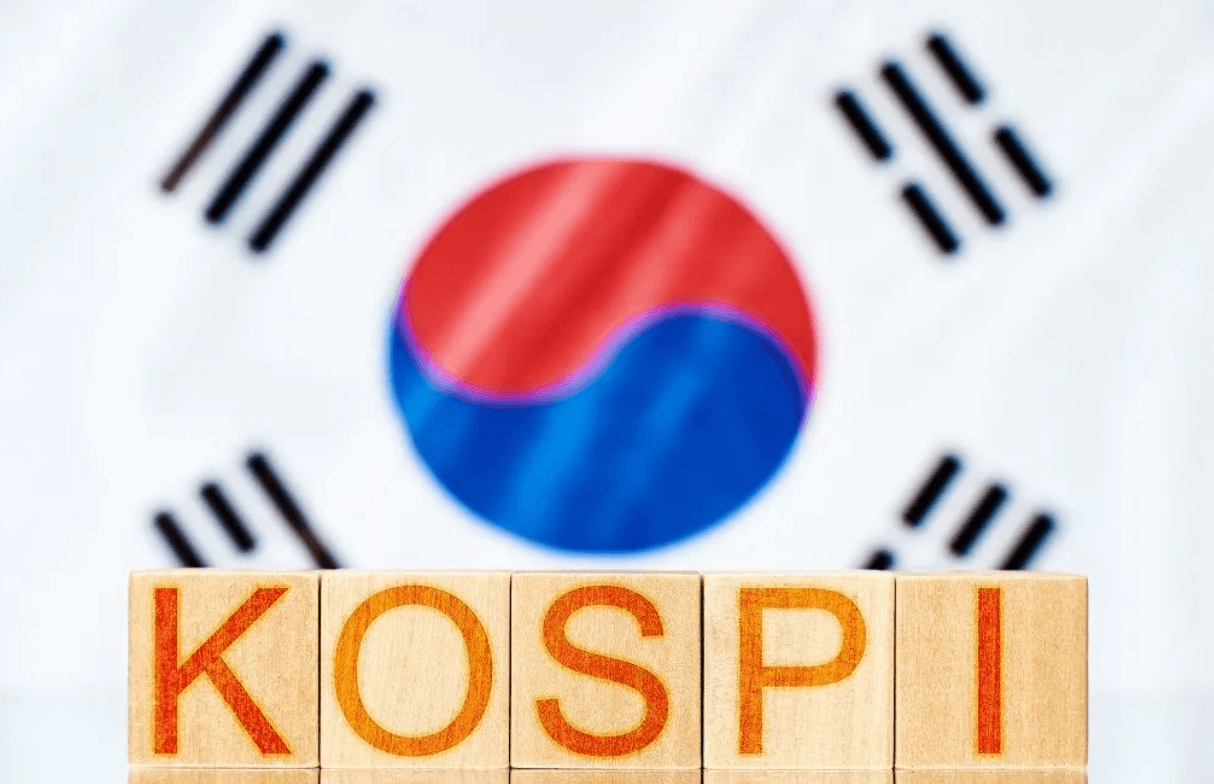
The KOSPI stock market entered technical bear market territory on July 20 in a session that combined three distinct negative forces into a single trading day that the index had no holiday buffer to absorb gradually. The KOSPI stock market fell as low as 6,498 before partially recovering, touching a level more than 25% below the June peak that defines the technical bear market threshold by the conventional definition used by market analysts globally. The KOSPI stock market's entry into bear market territory is not a single day event that arrived without warning. It is the confirmation of a deterioration that has been building since June through a combination of AI sector sentiment shifts, geopolitical escalation, and the specific vulnerabilities of a market where Samsung Electronics and SK Hynix together represent an extraordinary share of total market capitalization.
Understanding what drove today's acceleration, what the bear market designation actually means in practical terms, and what investors in Korean equities should be watching in the coming days is more useful than simply noting the percentage decline.
The Three Forces That Hit the KOSPI Today Simultaneously
Today's KOSPI session was not a simple continuation of the trend that has taken the index 25% below its peak. It was a convergence of three distinct negative catalysts arriving in the same trading window after a long weekend that prevented Korean investors from reacting to any of them in real time.
The Kimi K3 shock is the most structurally significant of the three. China's Kimi K3 open-source AI model launched over the weekend with benchmarks that positioned it as a credible challenger to Anthropic's Claude and OpenAI's GPT at a fraction of the cost. The impact was similar to when China's DeepSeek moment rattled world markets in early 2025. For the KOSPI, the Kimi K3 shock is not primarily about any single Korean company's product being challenged. It is about what lower cost Chinese AI models mean for the AI infrastructure spending trajectory that Samsung Electronics and SK Hynix's valuations depend on.
The US-Iran escalation is the second force. Oil prices jumped as the US and Iran moved closer to resuming an all out war, with the US announcing more attacks for a ninth straight night. Brent crude rose to above $90 per barrel. For Korea specifically, which imports virtually all of its energy and whose manufacturing sector is energy intensive, oil above $90 creates cost pressure that does not affect the United States or energy-exporting nations in the same way. The Korean won simultaneously weakening as oil rises compounds the import cost problem by making dollar-denominated energy purchases more expensive in local currency terms.
The catch up selling dynamic is the third force and the most mechanical of the three. Japan's markets were closed Monday for a holiday. Similarly, Korea observed Constitution Day on Friday July 18, meaning Korean markets did not trade while the Philadelphia Semiconductor Index fell 4.3% and while the Kimi K3 and Iran developments were accumulating as negative overhangs. Today's open required Korean investors to process three trading days of negative global developments in a single session, which is why the intraday decline exceeded what the underlying fundamental shifts alone would have produced.
What Technical Bear Market Actually Means
The 25% decline from the June peak that pushed KOSPI into technical bear market territory is a threshold that carries both analytical meaning and psychological significance worth separating.
The analytical meaning is specific. A 25% decline from the recent peak represents a level of index deterioration that historically correlates with either an economic recession, a significant earnings revision cycle, or a structural reassessment of the growth trajectory that the prior peak was pricing. The KOSPI's move from its June peak to today's low involves all three concerns simultaneously: AI earnings trajectory uncertainty from the Kimi K3 shock, energy cost pressure from the Iran escalation, and the structural question of whether Korean memory chip companies can sustain the premium valuations that the AI memory boom produced.
The psychological significance is equally important for understanding market dynamics in the near term. When an index is officially in bear market territory, institutional investors who had defined their risk parameters around avoiding bear market exposure face systematic selling pressure regardless of their individual stock assessments. Pension funds, insurance companies, and other regulated institutional investors who have Korean equity allocations may be required to reduce those allocations when the benchmark index they track enters bear market territory. That systematic institutional selling creates price pressure that is independent of fundamental valuations.
The drop pushed the index more than 25% below its June peak, meeting the threshold for a technical bear market. The specific statement from Kiwoom Securities researcher Han Ji-young captures the scale of what has happened to individual stocks within the index: since July, the KOSPI has dropped by about 25% from its peak, entering a technical bear market, with a sharp decline of 30 to 40% in leading stocks such as Samsung Electronics, SK Hynix, and Samsung Electro-Mechanics amplifying the sense of decline.
Why Samsung and SK Hynix Are the KOSPI's Specific Vulnerability
One dimension of the KOSPI's bear market that distinguishes it from broader global equity market weakness is the specific concentration of the index in Samsung Electronics and SK Hynix, two companies whose valuations are tied more directly to the AI memory demand cycle than almost any comparable index weighting in global markets.
Samsung Electronics and SK Hynix together represent a disproportionately large share of KOSPI market capitalization. When both companies fall 30% to 40% from their peaks as the AI memory demand narrative faces headwinds from lower-cost Chinese AI models, the index damage extends well beyond what their individual company fundamentals would suggest in isolation.
The specific mechanism is the AI spending multiplier. Samsung and SK Hynix are valued on the assumption that hyperscaler AI capital expenditure continues at rates that sustain extraordinary HBM demand through 2027 and beyond. When a Chinese AI model launches with benchmarks suggesting that AI model performance can be achieved at dramatically lower inference cost, the implied reduction in AI infrastructure spending compresses every company in the supply chain simultaneously. Samsung and SK Hynix absorb that compression most acutely in the KOSPI because their combined weight makes the index's performance track the AI memory trade more closely than the Korean economy's underlying fundamentals.
Samsung Electronics and SK Hynix were the worst performers on the index, falling more than 4% each, tracking losses in broader chipmaking stocks from last week after blowout earnings from TSMC failed to stem a rout in the sector. The fact that TSMC's record quarter last week failed to prevent the rout is the most important signal in that observation. A manufacturing partner reporting extraordinary AI-driven demand was not sufficient to prevent the stocks that supply into that same demand from declining sharply. The market is pricing Kimi K3's implications for future demand rather than celebrating TSMC's confirmation of current demand.
-- Price
The Foreign Investor Signal That Provides a Floor
One specific development within today's session that provides important context for evaluating whether the bear market confirmation represents a capitulation or a continuation is the behavior of foreign investors.
Foreign investors net bought 278.4 billion won in early trading, concentrated in electronics stocks. The fact that foreign investors were net buyers of Samsung Electronics and SK Hynix on the day the KOSPI entered technical bear market territory is the clearest available signal that the selling pressure is coming from domestic sources rather than reflecting a global investor consensus that Korean equities are fundamentally overvalued at current levels.
Individual and foreign investors were net buyers of 351 billion won and 516.1 billion won respectively, but institutional investors sold 921.8 billion won, dragging the index lower. The institutional selling that dominated today's session is consistent with the systematic portfolio adjustment that bear market designation triggers for regulated institutional investors rather than a fundamental reassessment by the long-term holders who understand the AI memory demand cycle most deeply.
Foreign investors buying Korean chip stocks at 30% to 40% below their June peaks while domestic institutions sell is a pattern that has historically preceded recoveries in the KOSPI rather than extended declines. The specific question is whether the Kimi K3 shock represents a temporary sentiment catalyst or a genuine revision of the AI infrastructure spending trajectory that Samsung and SK Hynix's valuations depend on.
What the Kimi K3 Shock Actually Means for Korean Memory Stocks
The Kimi K3 catalyst deserves specific treatment because it is the most structurally significant of the three forces driving today's decline and the one whose implications extend furthest beyond the immediate trading session.
Lower-cost AI models like Kimi K3 create a specific concern for Korean memory stocks through a mechanism that is worth mapping precisely. If AI models can achieve comparable performance at lower computational cost, the inference infrastructure that hyperscalers need to deploy those models requires less GPU compute and therefore less HBM memory per unit of AI capability delivered to end users. The total AI infrastructure spending could remain elevated while the memory intensity per dollar of AI spending declines.
This is the bear case for SK Hynix and Samsung at current valuations. It does not require AI spending to fall. It requires AI spending to become more efficient in ways that reduce the memory bandwidth requirement per AI workload. Lower-cost Chinese models that run effectively on less sophisticated hardware suggest that efficiency improvement is possible, which is what the market is pricing today.
The bull case response is that inference demand grows fast enough to absorb efficiency improvements. More efficient models that cost less to run are adopted more widely, creating more total inference workloads that collectively require more memory than the smaller number of expensive workloads they replace. The history of technology suggests that efficiency improvements typically expand total demand rather than reducing it, which is the argument that foreign investors buying the dip today appear to be making.
What Investors Should Watch in the Coming Days
The KOSPI bear market confirmation creates a specific set of near-term catalysts that will either validate the bear case or provide the positive data that reverses the sentiment that has driven the 25% decline from the June peak.
This week's US hyperscaler earnings are the most important near-term catalyst. Analysts see this week's US hyperscaler earnings as the next catalyst. Microsoft reports on July 29 and Meta reports on July 29 as well. Their commentary on AI infrastructure spending plans, specifically whether the Kimi K3 shock has prompted any reconsideration of capital expenditure trajectories, will be the first authoritative data point on whether the AI spending cycle is intact or moderating.
SK Hynix reports its own Q2 earnings on July 29 as well, providing the most direct available evidence of whether HBM demand is performing at the pace the bull case requires. A strong SK Hynix Q2 with positive Q3 guidance on the same day as Microsoft and Meta would provide a powerful combined signal that the AI memory demand cycle is intact despite the Kimi K3 shock.
The US-Iran situation is the second near-term catalyst with the most binary risk profile. Oil above $90 on sustained US-Iran military exchanges creates energy cost pressure that compounds with the AI uncertainty to produce the specific combination of headwinds the KOSPI is experiencing today. Any diplomatic development that reduces oil price pressure would provide relief to the energy import cost concern that is amplifying Korea's specific vulnerability to the current environment.
For those looking to participate in global financial markets, having access to the right trading platform matters. WEEX offers crypto and stock trading products, covering major global markets including US stocks and digital assets.
Conclusion
The KOSPI stock market entering technical bear market territory on July 20 is the confirmation of a deterioration that three distinct forces have been building simultaneously: the Kimi K3 AI model shock raising questions about AI infrastructure spending efficiency, the US-Iran escalation pushing oil above $90 and creating specific cost pressure for an energy-importing economy, and the catch-up selling from the Constitution Day holiday that forced Korean investors to absorb three days of negative global developments in a single session.
The foreign investor behavior today, net buying of Samsung and SK Hynix as domestic institutions sold, is the most specific signal that the current bear market level reflects sentiment and systematic portfolio adjustment rather than a fundamental reassessment of the AI memory demand cycle. Whether that signal proves correct depends on what this week's US hyperscaler earnings and SK Hynix's own July 29 report reveal about whether the AI infrastructure spending trajectory that Korean chip stock valuations depend on is intact or moderating.
The bear market is confirmed. Whether it extends or reverses is what the next nine days of earnings season will determine.
FAQ
1. Why did the KOSPI stock market enter bear market territory today?
Three forces converged simultaneously. China's Kimi K3 open-source AI model launched with benchmarks challenging leading US AI models at lower cost, raising concerns about AI infrastructure spending efficiency. US-Iran military exchanges pushed Brent crude above $90, creating energy cost pressure for Korea's import-dependent economy. Catch-up selling from the Constitution Day holiday on Friday required Korean markets to absorb three days of negative global developments in a single session.
2. What is a technical bear market and why does 25% matter?
A technical bear market is conventionally defined as a decline of 20% or more from a recent peak. The KOSPI's 25% decline from its June peak exceeds that threshold and signals a level of deterioration that historically correlates with earnings revision cycles, economic stress, or structural reassessments of growth trajectories. The designation also triggers systematic selling from institutional investors who have portfolio constraints around bear market exposure.
3. Why are Samsung Electronics and SK Hynix leading the KOSPI decline?
Both companies represent a disproportionately large share of KOSPI market capitalization and their valuations are tied directly to the AI memory demand cycle. When Chinese AI models suggest that comparable AI performance is achievable at lower computational cost, the implied reduction in memory intensity per AI workload compresses both stocks simultaneously. A 30% to 40% decline in the index's two largest constituents amplifies the overall index move beyond what broader market weakness would produce.
4. Why were foreign investors buying while domestic institutions were selling?
Foreign investors net bought approximately 278 billion won concentrated in electronics stocks while domestic institutional investors sold approximately 922 billion won. The divergence suggests that domestic institutions were making systematic portfolio adjustments triggered by the bear market designation rather than expressing a fundamental view that Korean chip stocks are overvalued at current levels. Foreign investors buying the dip in Samsung and SK Hynix reflects a longer-term assessment that current prices undervalue the AI memory demand cycle's durability.
5. What should investors watch in the coming days after the KOSPI bear market confirmation?
US hyperscaler earnings this week from Microsoft and Meta on July 29 will provide the first authoritative data on whether the Kimi K3 shock has prompted any reconsideration of AI infrastructure spending plans. SK Hynix's Q2 earnings on July 29 will provide the most direct evidence of whether HBM demand is performing at the pace the bull case requires. Any diplomatic development reducing US-Iran tensions would relieve the oil price pressure that is compounding Korea's specific energy import vulnerability.
This content is provided for general informational purposes only and doesn't constitute financial, investment, legal, or tax advice. Any events, rewards, online promotions, or related information mentioned herein should not be considered a recommendation, solicitation, or invitation to purchase, sell, trade, or otherwise deal in any crypto assets. Crypto assets are highly volatile and may result in loss. The availability of WEEX services, products, and related events may vary by region. You are responsible for ensuring that your participation is in accordance with applicable local laws and regulations.
You may also like

Lululemon Stock Crashes to an 8 Year Low Right Before Its New CEO Even Starts
PONS Robinhood Chain Token: What the Buyback Rally Rests On

Dell Stock Surges 9.4% After Smashing Earnings Estimates: What Drove the AI Server Beat
SQQQ Explained: Why the 3x Inverse Nasdaq ETF Bleeds Value

How Safe Are the Crypto Exchanges Pakistani Traders Actually Use? A Security Comparison
XST Coin Price Crosses Into Deep Capitulation Territory: What a 90%+ Decline Actually Signals
XPL/USDT After the August 25 Unlock: Will Ecosystem Incentives Create Demand or Selling Pressure?

SPCX Stock Keeps Swinging Around Its $135 IPO Price : What the Lockup Schedule Still Ahead Actually Means
Best Futures Exchange in Pakistan for 2026? What Leverage, Liquidity, and Liquidation Risk Actually Require

Crypto P2P Trading in Pakistan: Which Exchange Has the Best PKR Marketplace in 2026
Best Crypto Exchange in Pakistan for 2026: What You Need to Know Before Choosing
How to Earn WXT Rewards with WEEX Trade to Earn S6 Event

Adobe Stock Jumps After BlackRock Raises Stake to Over 10%: What an $8.4 Billion Bet Actually Signals
Before Swapping XSolut (XST): How to Check Liquidity, Price Impact, and Failed-Trade Risk 2026
MU Stock and the Apple CXMT Test: What Replacing Micron With Chinese Memory Actually Means
SPCX Stock Price Rebounds 16% From Its All Time Low: Is the Worst Finally Over for SpaceX
Is the Nikkei stock a Buy After Falling 10% From Its 2026 High? What Japanese Stocks Need to Recover
Gold Forum: Where the Polish Discussion Actually Happens — and the Question It Argues About Most
Samsung Stock Price Prediction 2026-2027: Can Samsung Reach $250 After the July Selloff?
SPCX Stock Price and the $116 Billion Lockup Expiry Tomorrow: What Actually Happens on August 6
MSTF Stock and the $100 Billion Azure Milestone: What Crossing This Threshold Actually Changes
AMD Stock vs Nvidia Stock: Who Is Winning the AI Chip Race Heading Into Q2 Earnings?
AMD Stock Before August 4 Earnings: What the Helios Ramp and Data Center Crossing $6.5 Billion Actually Mean
Microsoft Stock Jumps After Azure Grows 43%: What the Biggest Cloud Beat in Years Actually Means
AAPL Stock at $5 Trillion Market Cap Falls 6%: Is Now the Time to Buy or Wait?
AMD Stock Falls 6% as Wedbush Raises Target to $600: What the Disconnect Means for Investors
Samsung Stock Is 30% Below Its Peak: What Getting Back to Record Highs Actually Requires
Tesla Stock Is Betting Everything on Robotaxi and Optimus: What Investors Are Actually Paying For
Microsoft Stock Before July 29 Earnings: What Azure Growth Rate Actually Needs to Show
Tesla Stock Is Down 17% in 2026: What Q2 Earnings Need to Deliver to Turn the Story Around
Lululemon Stock Crashes to an 8 Year Low Right Before Its New CEO Even Starts
PONS Robinhood Chain Token: What the Buyback Rally Rests On
Dell Stock Surges 9.4% After Smashing Earnings Estimates: What Drove the AI Server Beat
SQQQ Explained: Why the 3x Inverse Nasdaq ETF Bleeds Value
How Safe Are the Crypto Exchanges Pakistani Traders Actually Use? A Security Comparison
XST Coin Price Crosses Into Deep Capitulation Territory: What a 90%+ Decline Actually Signals


