
Who Really Makes Money on Prediction Markets? Smart Money vs Retail Traders

 Prefer us on Google

Prediction markets are often presented as a simple way to profit from forecasting the future. However, the reality is different: most profits are concentrated among a small group of experienced traders, while many retail participants struggle to generate consistent returns.
The key advantage in prediction markets is not simply being right, but identifying when market prices do not match actual probabilities.
Prediction Market Profits Are Concentrated Among Few Winners
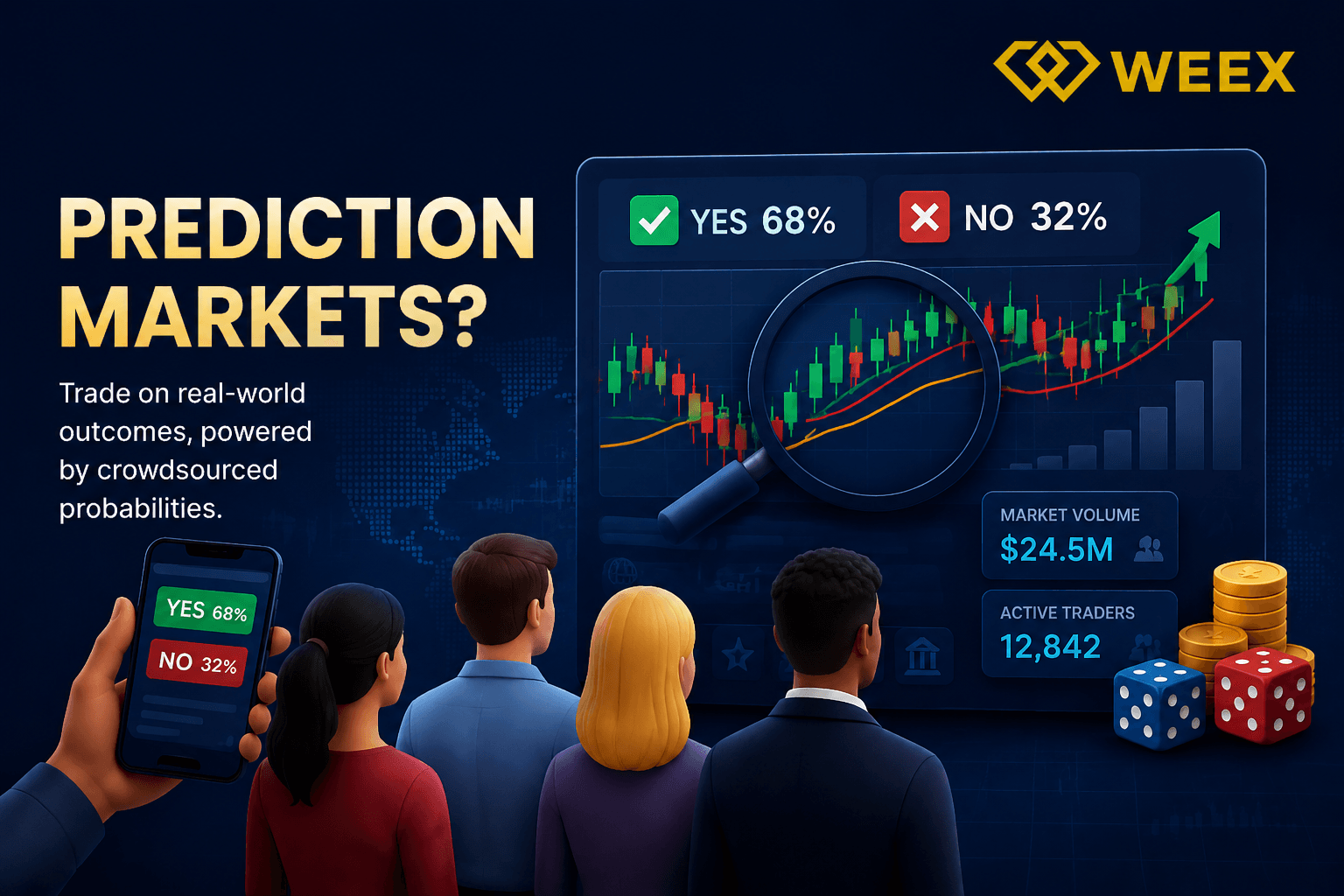
Prediction markets allow users to trade contracts based on future events, with prices reflecting the market’s estimated probability. Although anyone can participate, profits are not evenly distributed.
According to research analyzing Polymarket trading activity from November 2022 to September 2025, around 71% of users experienced losses, while only about 28% achieved positive returns. The same research found that profits were highly concentrated among top-performing traders, with the top 1% capturing a significant share of total gains.
This suggests that prediction markets operate more like professional trading environments than simple prediction games. Having access to the market does not mean having an equal chance of winning.
Who Are the Main Winners in Prediction Markets?
Skilled Traders: Finding Mispriced Probabilities
The most successful traders are often those who understand probability rather than simply making predictions.
A casual trader may think:
“Will this event happen?”
A skilled trader asks:
“Is the market pricing this event correctly?”
For example, if a contract trades at a 60% probability, but a trader believes the real probability is closer to 80% based on data and research, the price difference may create a trading opportunity.
This approach requires continuous research, faster information processing, and the ability to recognize when the market is wrong.
Market Makers: Profiting From Market Structure
Market makers play a different role from ordinary traders. Instead of predicting individual events, they provide liquidity by offering prices for buyers and sellers.
Their advantage comes from managing trading activity, spreads, and market efficiency rather than correctly guessing every outcome.
This means prediction markets are not only about forecasting. They are also financial markets where execution, liquidity, and trading strategies influence results.
Information Advantage Traders: The Insider Trading Debate
Some prediction market profits have also raised concerns about information advantages.
Certain markets have seen unusual trading activity before major events, leading to questions about whether some participants had access to information earlier than others. However, information advantages represent only one part of the market’s profit structure.
Many successful traders rely instead on research, probability analysis, and faster reactions to new information.
The challenge for prediction markets is maintaining a balance between efficient information discovery and a fair environment for participants.
Why Do Many Retail Traders Lose Money?
The biggest mistake among retail traders is treating prediction markets as simple yes-or-no bets.
Professional traders focus on probability differences. For example, a contract priced at $0.20 does not automatically mean it is a good opportunity. The important question is whether the actual probability is higher or lower than the market price suggests.
Emotional decisions also create disadvantages. Users may chase popular events, overestimate familiar topics, or place trades based on personal opinions rather than objective analysis.
In prediction markets, having an opinion is not enough. The advantage comes from finding where the market may be mispricing information.
Does Smart Money Make Prediction Markets Accurate?
Prediction markets are often associated with the idea of “wisdom of crowds,” suggesting that many participants together can create accurate forecasts.
However, a major reason these markets work may be the presence of highly skilled traders. These participants analyze information, identify pricing errors, and adjust positions faster than others, helping market prices move closer to reality.
This creates an important distinction:
Prediction markets can produce accurate forecasts, but that does not mean every participant can profit from them.
The accuracy may come from a small group of informed traders, while many retail users mainly provide liquidity and trading volume.
What Should Beginners Know Before Entering Prediction Markets?
Prediction markets can provide valuable insights into future events, but they should not be viewed as an easy way to make money.
Successful participation requires understanding probability, researching specific markets, managing risk, and recognizing personal limitations.
The biggest difference between winners and losers is often not confidence, but whether they can objectively evaluate information and avoid emotional decisions.
As prediction markets continue to grow, the real question is not only how accurately they predict the future, but also who benefits from that prediction process.
Disclaimer: This content is provided for general branding and informational purposes only and doesn't constitute financial, investment, legal, or tax advice. Any events, rewards, online events, or related information mentioned herein should not be considered a recommendation, solicitation, or invitation to purchase, sell, trade, or otherwise deal in any crypto assets or to use any services. Crypto assets are highly volatile and may result in loss. WEEX services and online events may not be available in all regions and are subject to applicable laws, regulations, and eligibility requirements. You are responsible for ensuring that your use of WEEX services complies with local laws and for carefully assessing the risks before participating in any crypto-related activities.
You may also like

Tesla Stock Is Down 17% in 2026: What Q2 Earnings Need to Deliver to Turn the Story Around

What Is Mark Cuban's Stock Options Philosophy? How SpaceX Turned Welders Into Millionaires

SPCX Stock Price and the $25 Billion Short Position: Is a Short Squeeze Coming?

Is SPCX Stock Price a Buy? What Uber, Airbnb and Rivian's IPO Crashes Tell Investors
SPCX Stock Price Hits All Time Low: What Investors Should Do Right Now

How Will the CLARITY Act and Bank-Grade Stablecoin KYC Rules Change Crypto Trading in 2026

Why Is BitMine Buying Millions of Ethereum Tokens and Staking $9 Billion in ETH in 2026

How to Protect Your Bitcoin from Physical Attacks: Lessons From the NYC Crypto Torture Case in 2026
What Is the NYC Crypto Kidnapping Case? The Soho Bitcoin Attack Explained — 2026 Case Analysis

SpaceX Stock (SPCX): Now Public, and Back Where It Started
USA Rare Earth (USAR): What It Is and How to Trade the Token
NVIDIA Stock in 2026: Real Shares, Tokenized NVDA, and Perpetuals Compared
How to Buy USAR Coin: Buying Tokenized USA Rare Earth Stock the Right Way
WEEX Poker Party Series 4: Draw Cards to Split a $1M USDT Pool
Can TENDIES Coin Recover After the Pullback? Price Outlook Explained
The Hidden Problem With Prediction Markets: Who Pays the Winners?
Prediction Markets Are the Future of Finance or Just Gambling?
How Polymarket and Kalshi Turned Predictions Into a Billion-Dollar Business

Why Prediction Markets Are So Hard to Regulate: The CFTC vs SEC Debate
Are Prediction Markets Legal? CFTC vs SEC Regulation Explained
Why Is TSMC Stock Down After a 77% Profit Jump? What Wall Street Is Actually Worried About
Is Samsung Stock a Buy at Its Lowest Level Since the AI Boom Began?
Samsung Stock and the KOSPI Bear Market: What the 30% Decline From Peak Tells Investors
Oil Price Above $90: What the US-Iran War Means for Your Portfolio Right Now
Iran War and Bitcoin: Why Crypto Is Not Acting Like a Safe Haven at $90 Oil
KOSPI Stock Market Enters Bear Market: What a 25% Drop From the Peak Means for Investors
KOSPI Stock Bear Market: What It Means for Samsung, SK Hynix and Korean Chip Stocks
Is the KOSPI Stock Market a Buy After Entering Bear Market Territory?
SK Hynix Leveraged ETFs SKHL SKHX SKHZ: What Each One Does and Who Should Use Them
Barclays Sees 70% Upside for SK Hynix Stock: What the Overweight Rating Means
Tesla Stock Is Down 17% in 2026: What Q2 Earnings Need to Deliver to Turn the Story Around
What Is Mark Cuban's Stock Options Philosophy? How SpaceX Turned Welders Into Millionaires
SPCX Stock Price and the $25 Billion Short Position: Is a Short Squeeze Coming?
Is SPCX Stock Price a Buy? What Uber, Airbnb and Rivian's IPO Crashes Tell Investors
SPCX Stock Price Hits All Time Low: What Investors Should Do Right Now
How Will the CLARITY Act and Bank-Grade Stablecoin KYC Rules Change Crypto Trading in 2026
Contents
Popular coins
Latest articles



