
Why Is TSMC Stock Down After a 77% Profit Jump? What Wall Street Is Actually Worried About

 Prefer us on Google



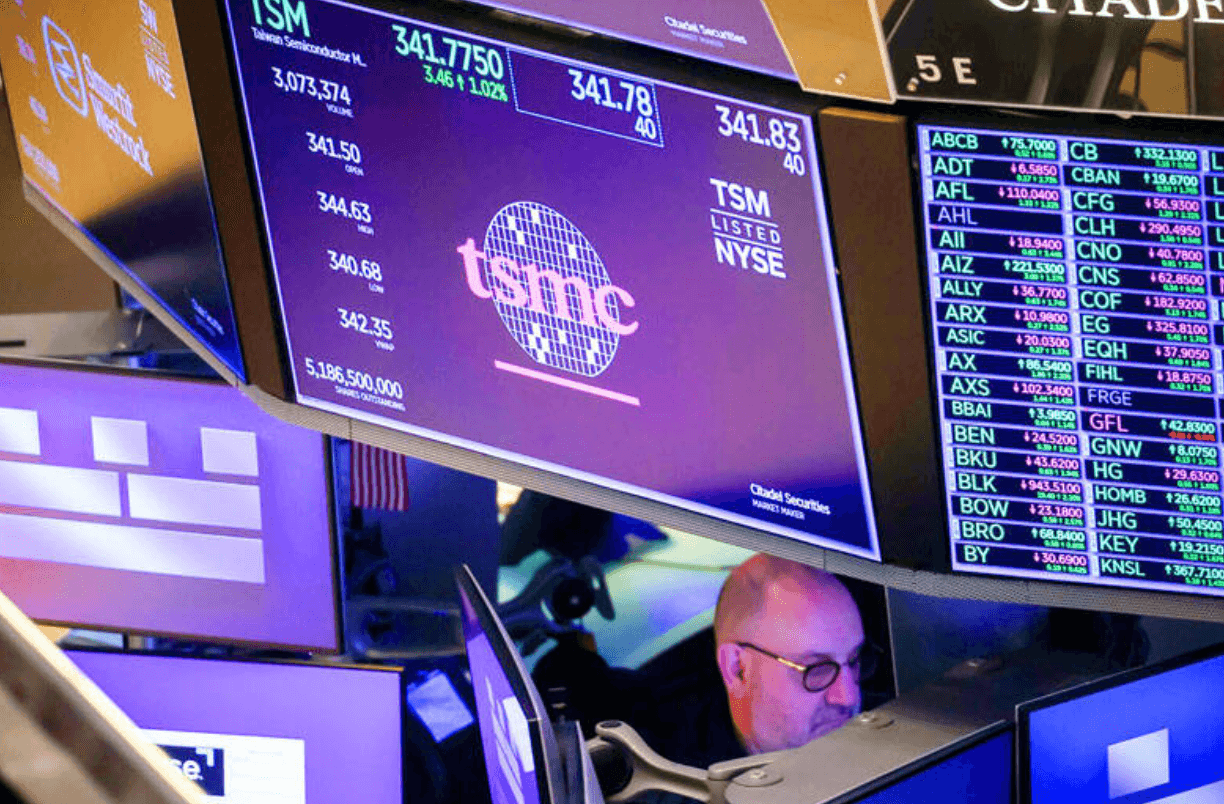
TSMC stock falling after a 77% profit jump is the semiconductor sector's second consecutive demonstration in two weeks that extraordinary earnings results do not automatically produce positive stock price reactions when the market is focused on something other than the reported quarter. TSMC stock's post earnings decline follows the same pattern as Samsung's decline on record profit growth on July 7, and the mechanism behind both declines is similar enough to reveal something important about what the market is actually pricing in AI chip stocks right now. TSMC stock at current levels is not pricing the profit growth that Q2 delivered. It is pricing the specific concerns about what comes after Q2 that the earnings call revealed and that the Kimi K3 shock amplified in the same week.
Understanding what Wall Street is actually worried about requires separating the headline beat from the forward looking signals that moved the stock.
The Capex Upgrade That Triggered the Initial Concern
The single most important disclosure from TSMC's Q2 earnings call that the 77% profit headline obscured is the capital expenditure upgrade from the prior range of $52 billion to $56 billion to the new range of $60 billion to $64 billion.
That upgrade of approximately $8 billion at the midpoint is not a routine revision. It represents a 15% increase in already extraordinary capital expenditure guidance, arriving in the same quarter where the company is reporting record profits. The combination of record profits and immediately higher capital expenditure is not unusual for a company in TSMC's position, but the specific magnitude of the upgrade and its timing relative to free cash flow trajectory created the concern that drove the post-earnings selling.
Free cash flow is the variable that the capex upgrade most directly affects, and free cash flow is what institutional investors use to value TSMC on a discounted cash flow basis rather than on an earnings multiple basis. When TSMC raises capex guidance by $8 billion at the midpoint, it is telling investors that the cash the business generates will be consumed by infrastructure investment at a higher rate than previously modeled. For investors whose TSMC valuation was built on a specific free cash flow trajectory, the capex upgrade requires downward revision of near-term free cash flow that mechanically reduces the present value calculation even if the long-term revenue trajectory is unchanged or improved.
The specific concern is not that TSMC is spending too much. It is that the $60 billion to $64 billion capex range arriving simultaneously with questions about AI demand efficiency from the Kimi K3 shock creates an uncomfortable combination: spending more on capacity precisely when the demand that capacity serves is being questioned.
Why the Kimi K3 Timing Made Everything Worse
TSMC stock would have faced some post-earnings selling from the capex upgrade alone based on the free cash flow compression mechanics described above. The specific severity of the decline reflects the Kimi K3 AI model shock arriving in the same week as the earnings release.
China's Kimi K3 open-source AI model launched with benchmarks positioning it as a competitive alternative to leading US AI models at dramatically lower inference cost. The market's immediate interpretation was that lower-cost AI models reduce the memory and compute intensity of AI workloads, which reduces demand for the advanced chips that TSMC manufactures for Nvidia, AMD, and Apple.
For TSMC stock specifically, the Kimi K3 concern operates through the HPC revenue concentration. High-performance computing including AI chips represented 66% of TSMC's Q2 revenue. A company whose majority revenue comes from a single platform category faces the most direct impact when demand efficiency concerns arise about that platform. The 66% HPC concentration that was a bull case strength in the earnings report became a concentration risk concern in the Kimi K3 context.
The timing asymmetry between the Kimi K3 shock and the TSMC earnings created a specific dynamic. Investors who planned to evaluate TSMC's earnings report on its own merits were instead evaluating it simultaneously with a development that called into question the demand trajectory the earnings confirmed. The result was that the strong Q2 data was discounted against the forward uncertainty that Kimi K3 introduced rather than being valued on its own terms.
What the Chairman's Hold Your Shares Call Actually Signals
TSMC Chairman Mark Liu's public statement telling investors to hold their shares is the kind of management communication that is unusual enough to deserve specific interpretation rather than simple acknowledgment.
Corporate executives and chairmen of major publicly listed companies rarely make explicit recommendations about their own stock to the market. The legal and regulatory framework around executive communications about company securities creates strong disincentives for anything that could be construed as market manipulation or selective disclosure. When a chairman makes a public hold your shares recommendation despite those constraints, it signals a specific and strongly held view about the relationship between current prices and fundamental value.
Liu's statement reflects a view that the post-earnings selling is driven by factors the chairman considers temporary or mischaracterized relative to TSMC's actual business trajectory. The specific factors he is most likely responding to are the Kimi K3 demand efficiency concern and the capex upgrade free cash flow concern, both of which his internal view of TSMC's order book and manufacturing commitments would allow him to assess with more precision than any external analyst can.
A chairman who believed the post earnings selling reflected legitimate fundamental concerns would not make a public hold recommendation because doing so with unfavorable information would create legal liability. The hold recommendation is therefore implicitly a signal that the internal view of TSMC's demand pipeline contradicts the market's interpretation of what Kimi K3 means for AI chip demand.
The 85% Customer Concentration Risk That Rarely Gets Discussed
One specific concern that the Q2 results highlighted but that received less attention than the capex upgrade is the revenue concentration in TSMC's top ten customers, which represents approximately 85% of total revenue.
Customer concentration at 85% in the top ten is not unusual for a foundry whose business model depends on serving the largest chip designers in the world. Apple, Nvidia, AMD, Qualcomm, and Broadcom together represent a large share of global advanced chip demand, and the foundry that serves all of them will naturally have high customer concentration.
The concern that the 85% figure introduces in the context of the Kimi K3 shock is the correlation of demand reduction risk. If lower-cost Chinese AI models reduce AI infrastructure spending, the effect does not diversify across TSMC's customer base. It hits the HPC customers that represent 66% of revenue simultaneously. Apple's smartphone chips, which represent approximately 22% of revenue and are unrelated to AI inference efficiency, provide some protection. But the correlation between the customers that represent the majority of TSMC's revenue and the specific demand trajectory being questioned by Kimi K3 is high enough to make the concentration figure relevant in the current environment.
Why Taiwan Geopolitical Risk Re-Emerged This Week
One dimension of the post-earnings TSMC stock decline that is specific to this week rather than to the earnings report itself is the re-emergence of Taiwan geopolitical risk as an active investor concern rather than a background factor.
The US-Iran escalation that pushed oil above $90 this week is not directly related to Taiwan. But the ninth consecutive night of US-Iran military exchanges without diplomatic resolution has reminded investors of the more general proposition that geopolitical conflicts can escalate unexpectedly and that the geopolitical risk premium assigned to companies with concentrated operations in politically sensitive locations is not a permanent constant but a variable that changes with the global security environment.
TSMC's primary manufacturing base in Taiwan is approximately 110 miles from mainland China. Investors who were comfortable with that proximity when the global security environment felt stable are reassessing the geopolitical risk premium in a week when the US is conducting military strikes for a ninth consecutive night against a different adversary. The re-emergence of geopolitical risk sensitivity in the investor community is not a TSMC specific development, but it hits TSMC more directly than most large-cap technology companies because of the specific geographic concentration of its manufacturing.
The $200 billion total US investment commitment partially mitigates this concern by demonstrating that TSMC is actively building manufacturing capacity outside Taiwan. But the US fabs will not reach meaningful production volumes until 2028 and beyond, which means the Taiwan geopolitical risk premium remains in the near-term valuation regardless of the long-term mitigation trajectory.
What the Analyst Target Raises Tell You
Multiple analysts raised their TSMC stock price targets following the Q2 report, which creates a specific and informative contrast with the stock price decline.
Barclays raised its TSMC price target from $625 to $650. TD Cowen raised from $400 to $440. DA Davidson raised from $450 to $500. The pattern of analyst target raises concurrent with stock price declines is structurally similar to what happened with Samsung two weeks ago and reflects the same dynamic: analysts are responding to the reported business performance while the market is responding to the forward concerns that the earnings call introduced.
The specific implication for investors is that the analyst community's upward target revisions following the earnings report represent an assessment of TSMC's twelve-month fundamental value that incorporates the Q2 data. The market's downward price reaction represents an assessment of the near-term sentiment environment that incorporates the Kimi K3 shock and the capex upgrade concern.
Both assessments are simultaneously true and resolve on different timelines. Analysts are right that TSMC's fundamental business is worth more than current prices if the AI demand trajectory sustains. The market is right that the near-term sentiment environment has introduced specific concerns that were not present before the earnings call. Whether the fundamental trajectory or the sentiment environment dominates TSMC stock's direction over the next several weeks depends on which of the two resolves first.
Is the Post-Earnings Decline a Buying Opportunity
The question that the hold your shares recommendation from the chairman and the analyst target raises inevitably creates is whether the post earnings TSMC stock decline is a buying opportunity or the beginning of a more extended compression.
The bull case for buying after the decline rests on the same arguments that the chairman is implicitly making. The 77% profit growth, the 66% HPC revenue concentration, the $200 billion US investment commitment, and the CoWoS capacity expansion that removes the packaging bottleneck are all factors that support higher prices than the post-earnings level on any reasonable twelve-month fundamental view.
The bear case for waiting rests on the specific near-term headwinds that have not resolved. The Kimi K3 demand efficiency question will not be answered by TSMC's own quarterly results. It will be answered by hyperscaler AI capital expenditure decisions over the next several quarters. The capex upgrade free cash flow concern will persist through the period when the upgraded investment is being deployed without yet generating the revenue that justifies it. The Taiwan geopolitical risk premium has re-emerged in the investor community at a moment when the global security environment is less stable than it was when TSMC was 52% higher earlier in the year.
For those looking to participate in global financial markets, having access to the right trading platform matters. WEEX offers crypto and stock trading products, covering major global markets including US stocks and digital assets.
Conclusion
TSMC stock's post-earnings decline on a 77% profit jump is Wall Street's response to three specific concerns that the earnings call introduced rather than to any fundamental deterioration in the business that the 77% figure confirmed.
The capex upgrade to $60 billion to $64 billion compresses near-term free cash flow in ways that require downward revision to discounted cash flow models even when the long-term revenue trajectory improves. The Kimi K3 shock arriving simultaneously with the earnings release created a forward demand uncertainty that the backward looking Q2 beat could not overcome in a single day's trading. The Taiwan geopolitical risk premium re-emerged in a week when the global security environment became less stable.
The chairman's hold your shares recommendation and the multiple analyst target raises both signal that informed parties believe the post-earnings selling has pushed TSMC stock below fundamental value. Whether that assessment proves correct depends on whether hyperscaler AI capital expenditure plans confirm that Kimi K3 represents temporary sentiment disruption rather than structural demand revision.
FAQ
1. Why did TSMC stock fall after reporting 77% profit growth?
Three specific concerns drove the post-earnings decline rather than the reported quarter's performance. The capex upgrade from $52 billion to $56 billion to $60 billion to $64 billion compresses near-term free cash flow and requires downward revision to discounted cash flow models. The Kimi K3 AI model efficiency shock arrived simultaneously with earnings, creating forward demand uncertainty. Taiwan geopolitical risk re-emerged as an active investor concern in a week when US-Iran military exchanges entered their ninth consecutive night.
2. What does TSMC's capex upgrade to $64 billion mean for investors?
The upgrade of approximately $8 billion at the midpoint from prior guidance represents a 15% increase in already extraordinary capital expenditure. For investors valuing TSMC on free cash flow rather than earnings multiples, the upgrade requires reducing near-term free cash flow projections even when long-term revenue trajectory improves. The concern is amplified by the simultaneous Kimi K3 demand efficiency questions, which creates the uncomfortable combination of spending more on capacity precisely when the demand that capacity serves is being questioned.
3. What did TSMC's chairman mean by saying hold your shares?
TSMC Chairman Mark Liu's public hold your shares recommendation is an unusual communication that signals a strongly held view that the post-earnings selling is driven by factors the chairman considers temporary or mischaracterized relative to TSMC's actual business trajectory. The internal view of TSMC's order book and manufacturing commitments allows the chairman to assess Kimi K3's impact on actual demand with more precision than external analysts. The public recommendation implicitly signals that the internal demand picture contradicts the market's interpretation.
4. Why does 66% HPC revenue concentration matter when Kimi K3 launches?
High-performance computing including AI chips represents 66% of TSMC's Q2 revenue. When lower-cost Chinese AI models raise concerns about AI infrastructure spending efficiency, the impact does not diversify across TSMC's customer base. It hits the HPC customers representing the majority of revenue simultaneously. The 22% smartphone revenue provides some protection but the correlation between TSMC's revenue concentration and the specific demand trajectory being questioned is high enough to make 66% HPC concentration a vulnerability in the Kimi K3 context.
5. Should investors buy TSMC stock after the post-earnings decline?
The bull case rests on the chairman's hold recommendation, multiple analyst target raises from Barclays to $650, TD Cowen to $440, and DA Davidson to $500, and the fundamental business performing at record levels. The bear case rests on unresolved Kimi K3 demand uncertainty, capex upgrade free cash flow compression persisting through the deployment period, and re-emerged Taiwan geopolitical risk premium. The resolution depends on whether hyperscaler AI capital expenditure decisions confirm that Kimi K3 represents temporary sentiment rather than structural demand revision.
Disclaimer: This content is provided for general branding and informational purposes only and doesn't constitute financial, investment, legal, or tax advice. Any events, rewards, online events, or related information mentioned herein should not be considered a recommendation, solicitation, or invitation to purchase, sell, trade, or otherwise deal in any crypto assets or to use any services. Crypto assets are highly volatile and may result in loss. WEEX services and online events may not be available in all regions and are subject to applicable laws, regulations, and eligibility requirements. You are responsible for ensuring that your use of WEEX services complies with local laws and for carefully assessing the risks before participating in any crypto-related activities.
You may also like

Tesla Stock Is Down 17% in 2026: What Q2 Earnings Need to Deliver to Turn the Story Around
What Is Mark Cuban's Stock Options Philosophy? How SpaceX Turned Welders Into Millionaires
SPCX Stock Price and the $25 Billion Short Position: Is a Short Squeeze Coming?

Is SPCX Stock Price a Buy? What Uber, Airbnb and Rivian's IPO Crashes Tell Investors
SPCX Stock Price Hits All Time Low: What Investors Should Do Right Now

How Will the CLARITY Act and Bank-Grade Stablecoin KYC Rules Change Crypto Trading in 2026
Why Is BitMine Buying Millions of Ethereum Tokens and Staking $9 Billion in ETH in 2026
How to Protect Your Bitcoin from Physical Attacks: Lessons From the NYC Crypto Torture Case in 2026
What Is the NYC Crypto Kidnapping Case? The Soho Bitcoin Attack Explained — 2026 Case Analysis
SpaceX Stock (SPCX): Now Public, and Back Where It Started
USA Rare Earth (USAR): What It Is and How to Trade the Token
NVIDIA Stock in 2026: Real Shares, Tokenized NVDA, and Perpetuals Compared
How to Buy USAR Coin: Buying Tokenized USA Rare Earth Stock the Right Way
WEEX Poker Party Series 4: Draw Cards to Split a $1M USDT Pool
Can TENDIES Coin Recover After the Pullback? Price Outlook Explained
Who Really Makes Money on Prediction Markets? Smart Money vs Retail Traders
The Hidden Problem With Prediction Markets: Who Pays the Winners?
Prediction Markets Are the Future of Finance or Just Gambling?
How Polymarket and Kalshi Turned Predictions Into a Billion-Dollar Business
Why Prediction Markets Are So Hard to Regulate: The CFTC vs SEC Debate
Are Prediction Markets Legal? CFTC vs SEC Regulation Explained
Is Samsung Stock a Buy at Its Lowest Level Since the AI Boom Began?
Samsung Stock and the KOSPI Bear Market: What the 30% Decline From Peak Tells Investors
Oil Price Above $90: What the US-Iran War Means for Your Portfolio Right Now
Iran War and Bitcoin: Why Crypto Is Not Acting Like a Safe Haven at $90 Oil
KOSPI Stock Market Enters Bear Market: What a 25% Drop From the Peak Means for Investors
KOSPI Stock Bear Market: What It Means for Samsung, SK Hynix and Korean Chip Stocks
Is the KOSPI Stock Market a Buy After Entering Bear Market Territory?
SK Hynix Leveraged ETFs SKHL SKHX SKHZ: What Each One Does and Who Should Use Them
Barclays Sees 70% Upside for SK Hynix Stock: What the Overweight Rating Means
Tesla Stock Is Down 17% in 2026: What Q2 Earnings Need to Deliver to Turn the Story Around
What Is Mark Cuban's Stock Options Philosophy? How SpaceX Turned Welders Into Millionaires
SPCX Stock Price and the $25 Billion Short Position: Is a Short Squeeze Coming?
Is SPCX Stock Price a Buy? What Uber, Airbnb and Rivian's IPO Crashes Tell Investors
SPCX Stock Price Hits All Time Low: What Investors Should Do Right Now
How Will the CLARITY Act and Bank-Grade Stablecoin KYC Rules Change Crypto Trading in 2026
Contents
Popular coins
Latest articles





