
Difference Between Blockchain and Bitcoin

 Prefer us on Google
For beginners in cryptocurrency, the terminology can be confusing. Some use "Bitcoin" when discussing blockchain technology, while others say "blockchain" when referring to cryptocurrencies in general. However, these terms aren’t interchangeable—they represent distinct but related concepts. Understanding their differences is key. Below, we explain the basics of blockchain, cryptocurrencies, and Bitcoin.
Here is a Very Basic Analogy
- Websites are a technology designed for sharing information online.
- Search engines are among the most common and widely recognized applications of website technology.
- Google, in turn, is one of the most popular and well-known search engines.
Similarly:
- Blockchain is a decentralized technology for storing data in secure, linked blocks.
- Cryptocurrency is the most widely recognized application of blockchain technology.
- Bitcoin, as the first and most dominant cryptocurrency, remains its flagship example.
Blockchain
Blockchain is a decentralized digital ledger technology where each block securely links to the previous one through cryptographic hashes, containing timestamped transaction data. This distributed structure across multiple computers ensures security and transparency, eliminating single points of failure while preventing tampering. While best known for powering Bitcoin and other cryptocurrencies, blockchain's applications extend far beyond digital assets to any system requiring verifiable, trustless record-keeping.
Bitcoin
Bitcoin, launched in 2009 by the anonymous Satoshi Nakamoto, was the first cryptocurrency. Designed as a decentralized payment system, it relies on cryptography and mathematical proofs. Though the most prominent, Bitcoin isn’t alone—many other cryptocurrencies exist, each with unique features. Some operate on existing blockchains, while others built their own from scratch.
A key feature of Bitcoin is its limited supply—capped at 21 million coins, ensuring scarcity. This contrasts with other cryptocurrencies, which may have different supply models. Details like circulating supply and price are publicly available, such as on Binance Info.
Bitcoin’s open-source protocol allows anyone to review or modify its code. A global community of developers contributes to its ongoing evolution, ensuring transparency and innovation in the network.
Final Thoughts
Understanding crypto begins with grasping three key layers: blockchain (the foundational technology) and Bitcoin (the pioneering application). Like websites powering search engines, blockchain enables cryptocurrencies—with Bitcoin as its breakthrough example. While interconnected, these terms aren’t interchangeable. Clarity here unlocks smarter exploration of the crypto space.
-- Price
This content is provided for general informational purposes only and doesn't constitute financial, investment, legal, or tax advice. Any events, rewards, online promotions, or related information mentioned herein should not be considered a recommendation, solicitation, or invitation to purchase, sell, trade, or otherwise deal in any crypto assets. Crypto assets are highly volatile and may result in loss. The availability of WEEX services, products, and related events may vary by region. You are responsible for ensuring that your participation is in accordance with applicable local laws and regulations.
You may also like
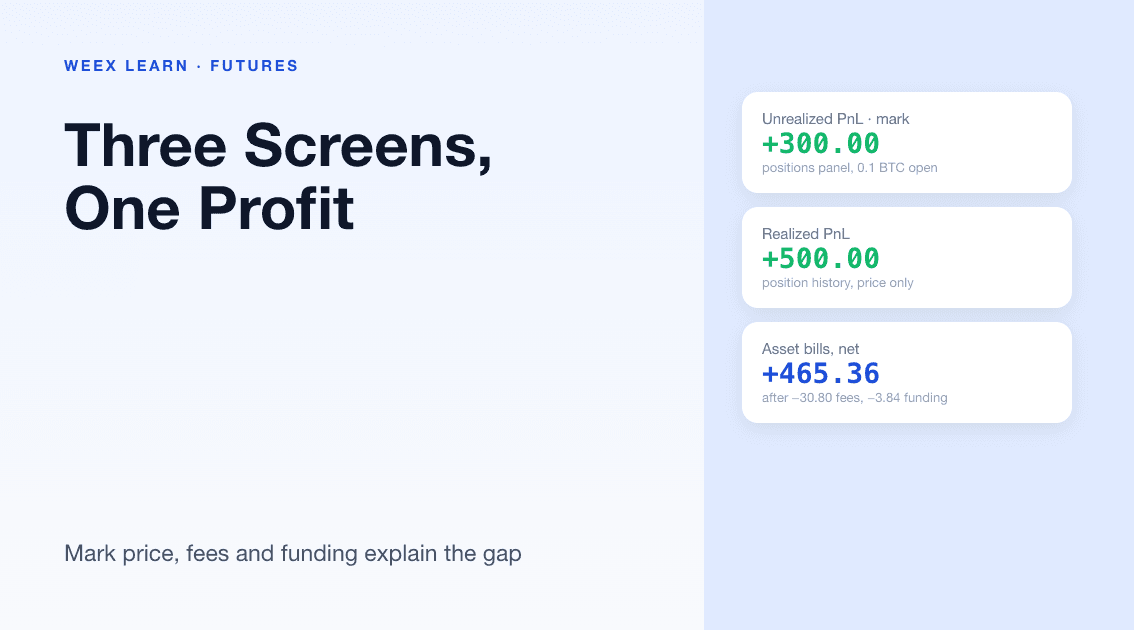
WEEX Futures PnL: Why Your Three PnL Numbers Rarely Match
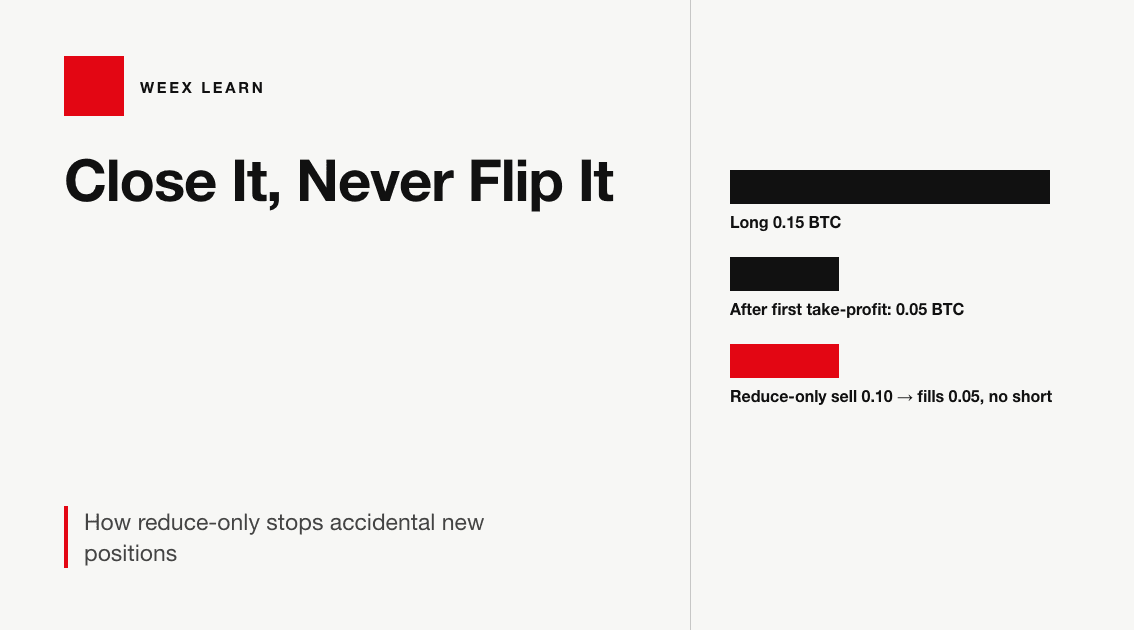
WEEX Reduce-Only Order: What It Does and When It Gets Cancelled
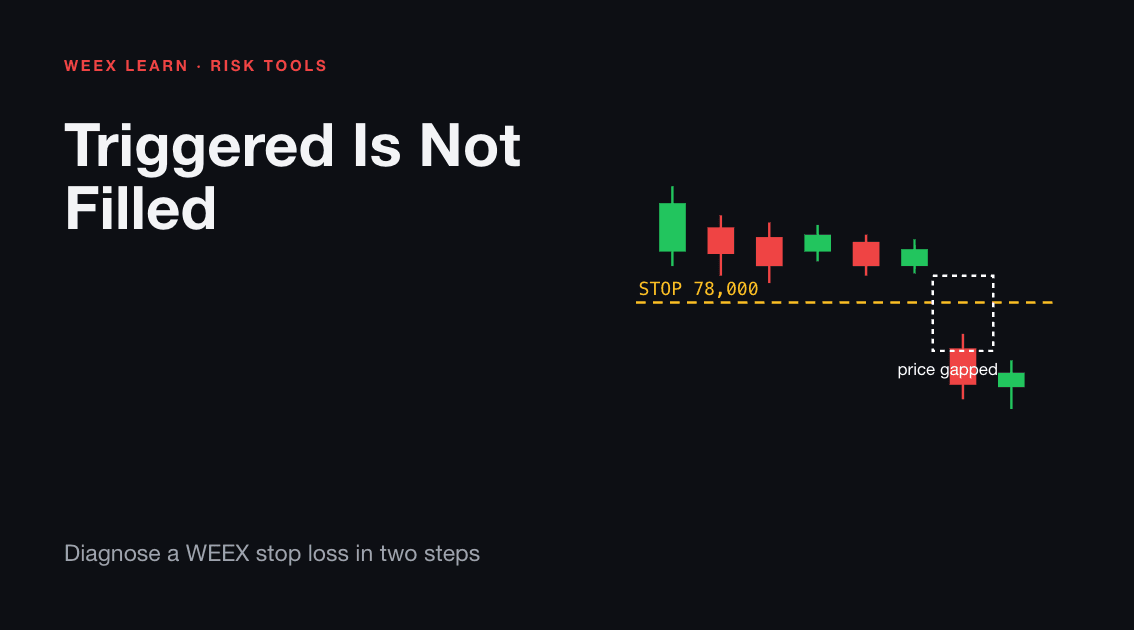
WEEX Stop Loss Not Triggered? Check the Trigger, Then the Fill
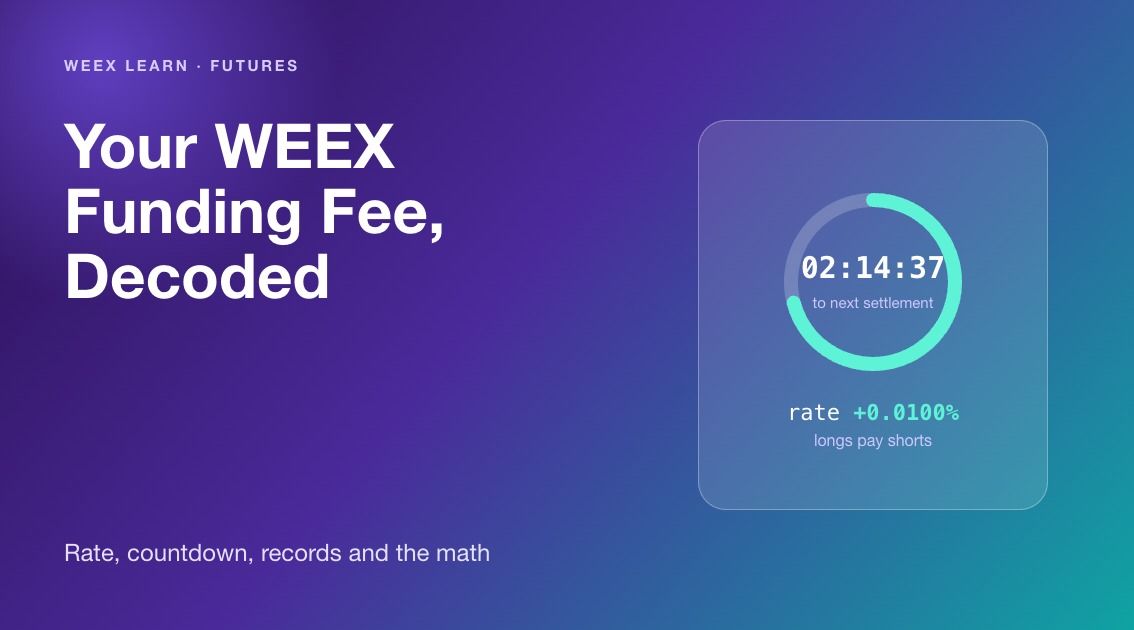
WEEX Funding Fee Explained: Rate, Countdown, Records and Math
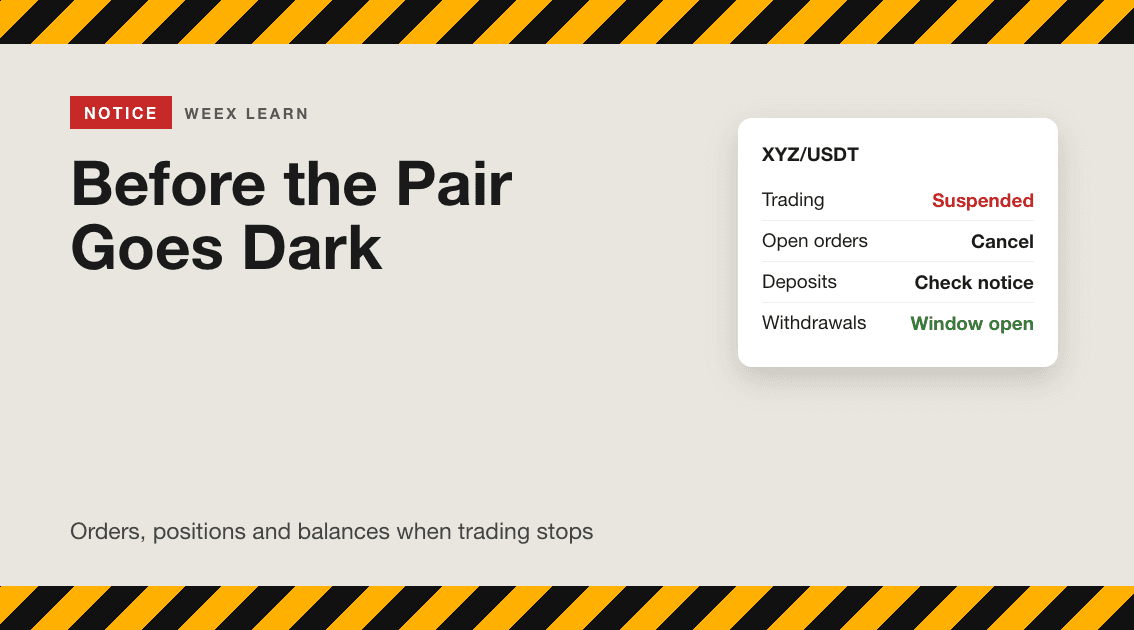
WEEX Trading Pair Suspended or Delisted? Your Orders and Assets
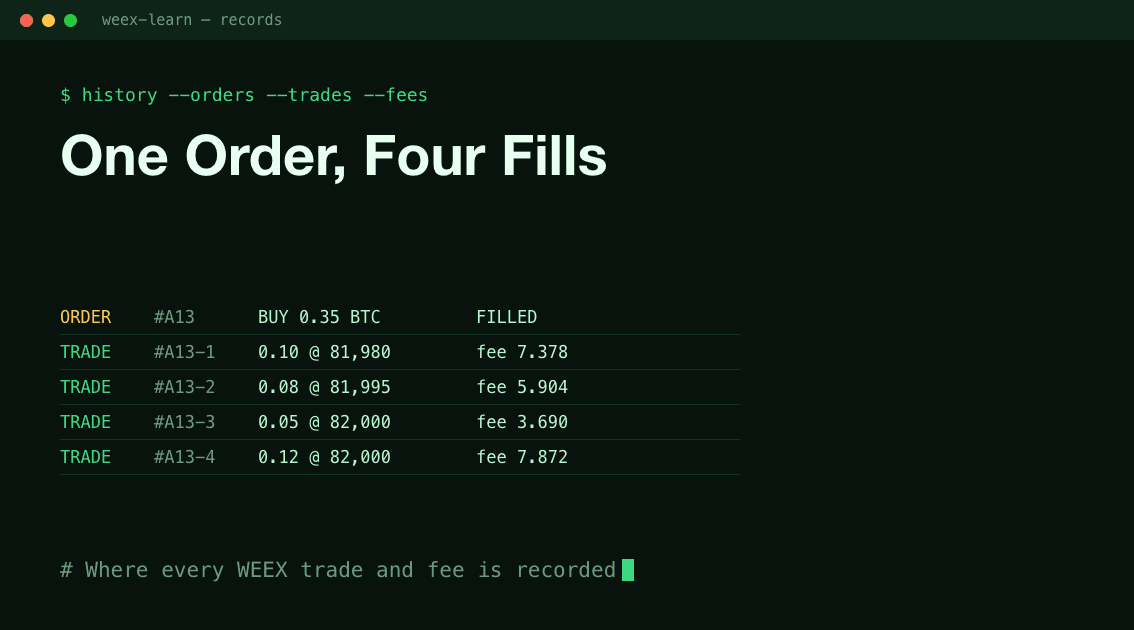
WEEX Order History: How Orders, Fills and Fees Fit Together
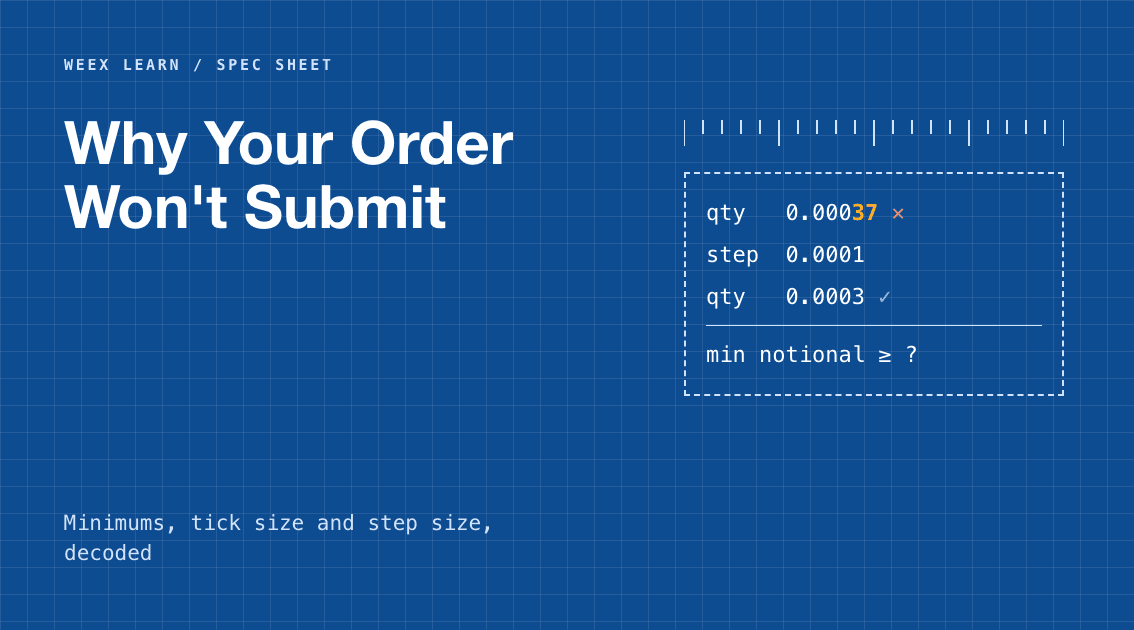
WEEX Minimum Order Size Errors Explained With Rounding Examples

Cancel WEEX Spot Order: What Returns to Your Balance and When
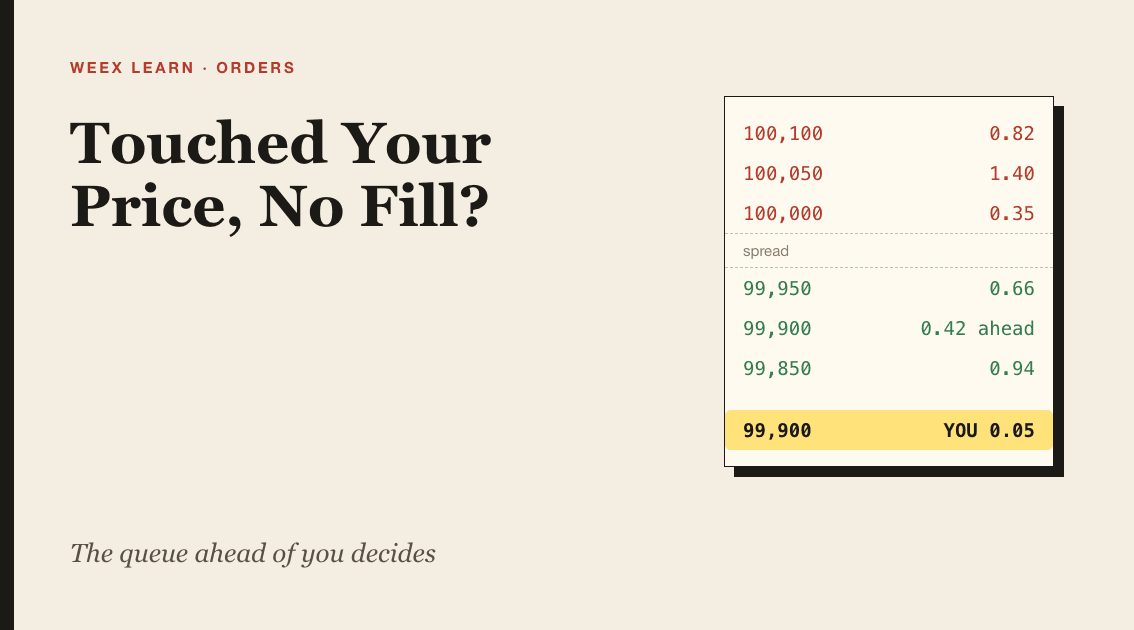
WEEX Limit Order Not Filled? Read the Book, Then Fix the Order
How to Spot Trade on WEEX: From Pair Choice to a Confirmed Fill
How to Convert ETH to USDT on WEEX: Step-by-Step Guide
How to Convert USDT to BTC on WEEX: Step-by-Step Guide
How to Convert BTC to USDT: A Step-by-Step WEEX Guide
BTC Funding Rate and Open Interest: What Each One Measures and How to Read Them Together
How Transparent Is a Crypto Exchange? Checking Proof of Reserves and Protection Funds
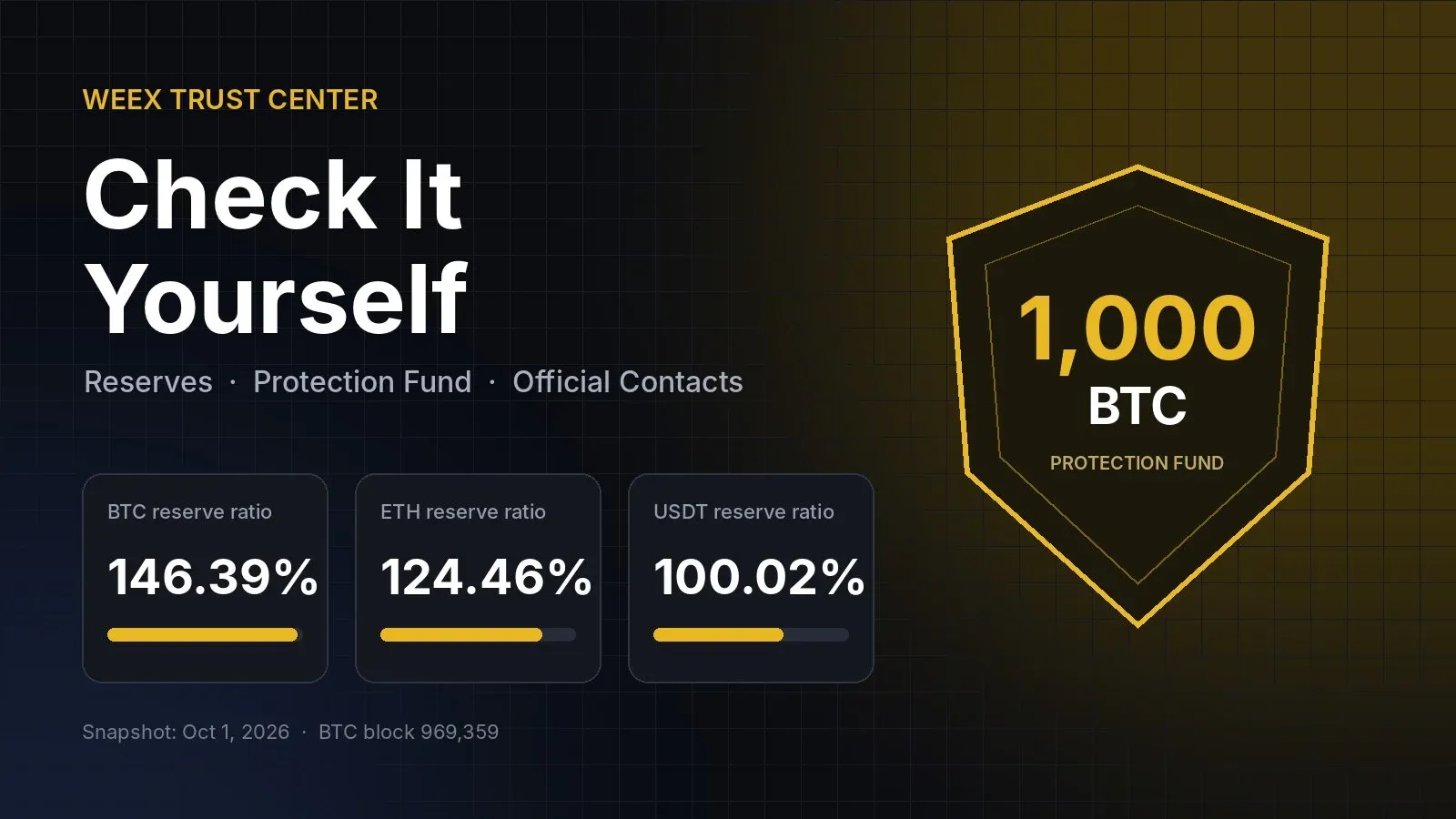
How to Use the WEEX Trust Center: Check Reserves, Protection Fund and Official Contacts

Crypto Leverage Trading Explained: How Perpetual Futures, Margin and Liquidation Work
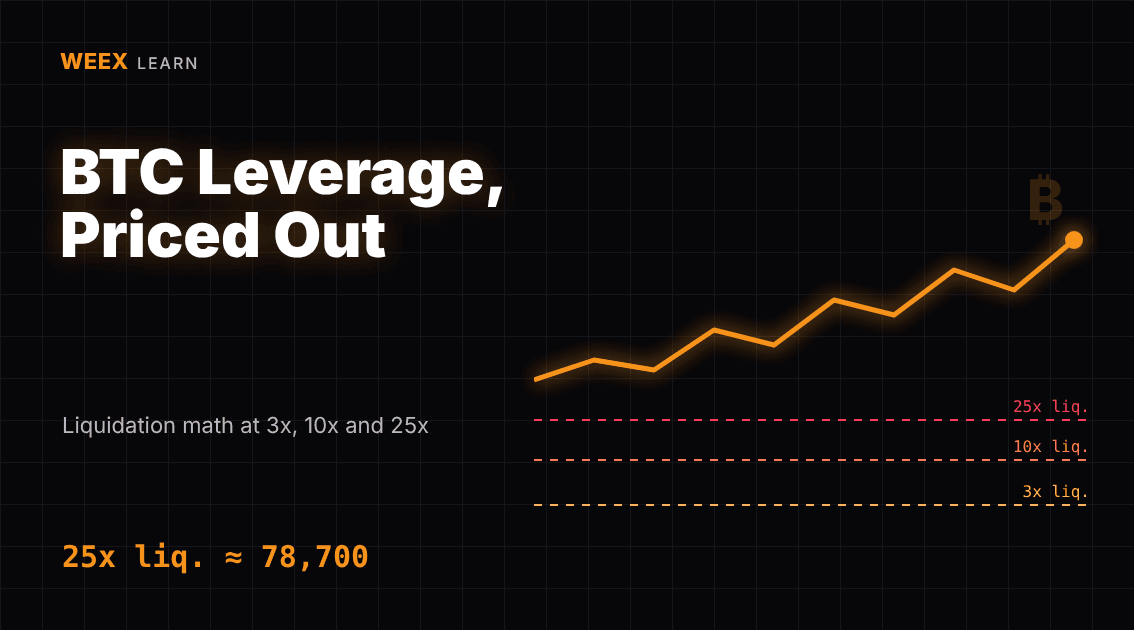
Bitcoin Margin Trading: BTC Liquidation Math at 3x, 10x and 25x

Crypto Leverage Trading Platform: 6 Checks Before You Deposit
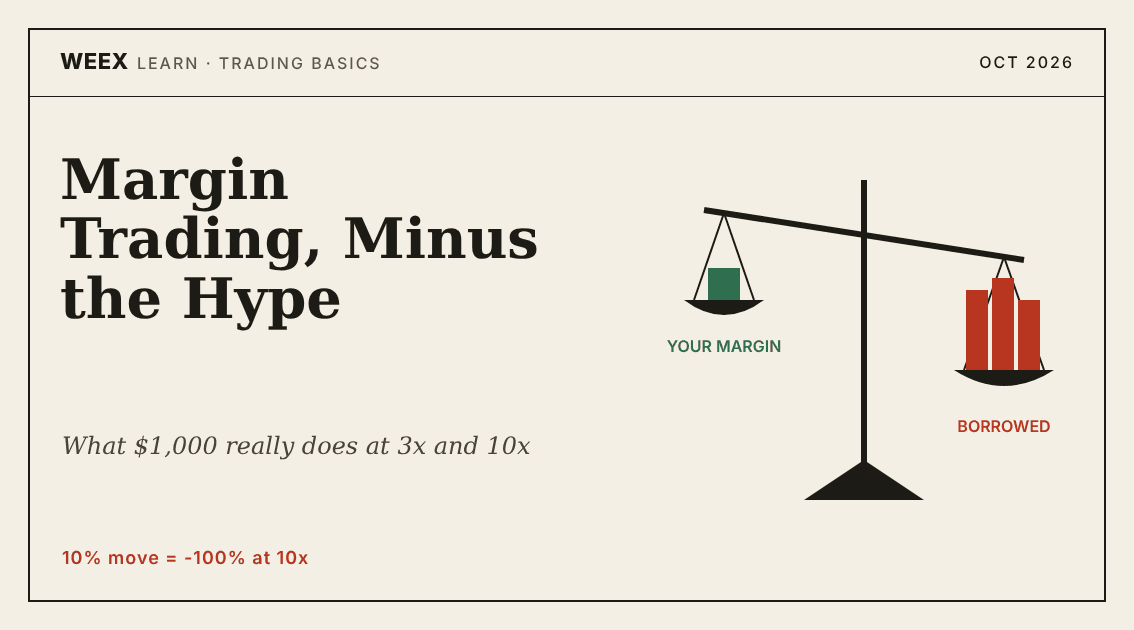
What Is Margin Trading? A $1,000 Example at 3x and 10x Leverage
How to Day Trade Crypto for Beginners: The Math Behind One Trade
Trading Psychology for Beginners: Crypto Traps and Hard Rules
What Is a Bitcoin ETF? How Creation, Custody and Fees Work
What Is Blockchain and How Does It Work? One Transaction, Traced
WEEX Convert Fees: What Zero-Fee Conversion Really Costs You

WEEX Convert Quote: How the 8-Second Price Lock Really Works
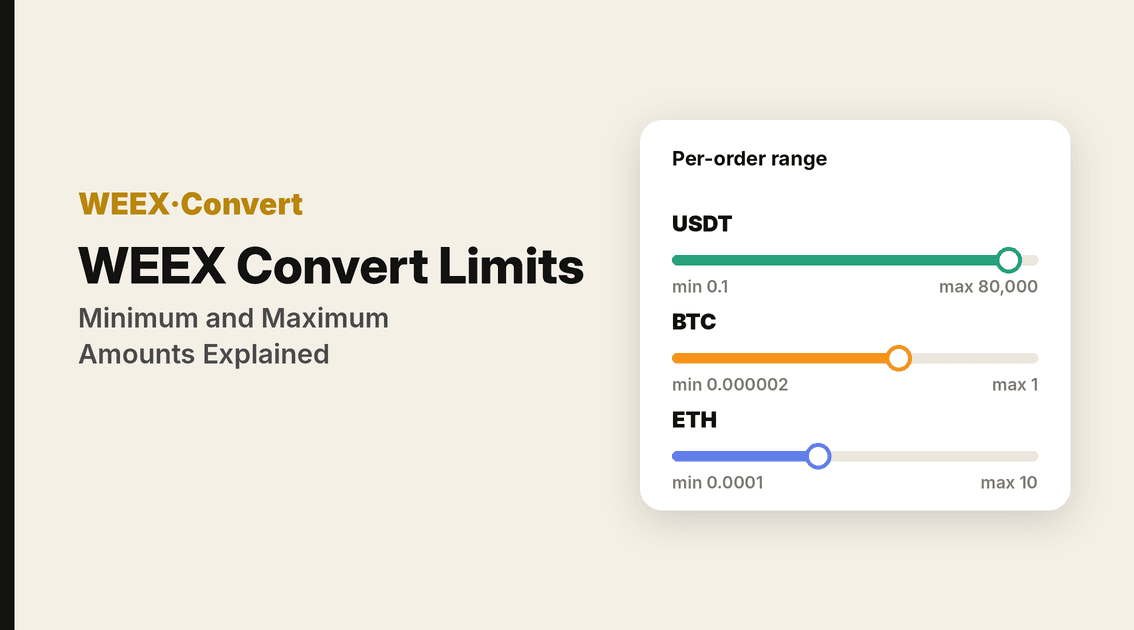
WEEX Convert Limits: Minimum and Maximum Amounts Explained
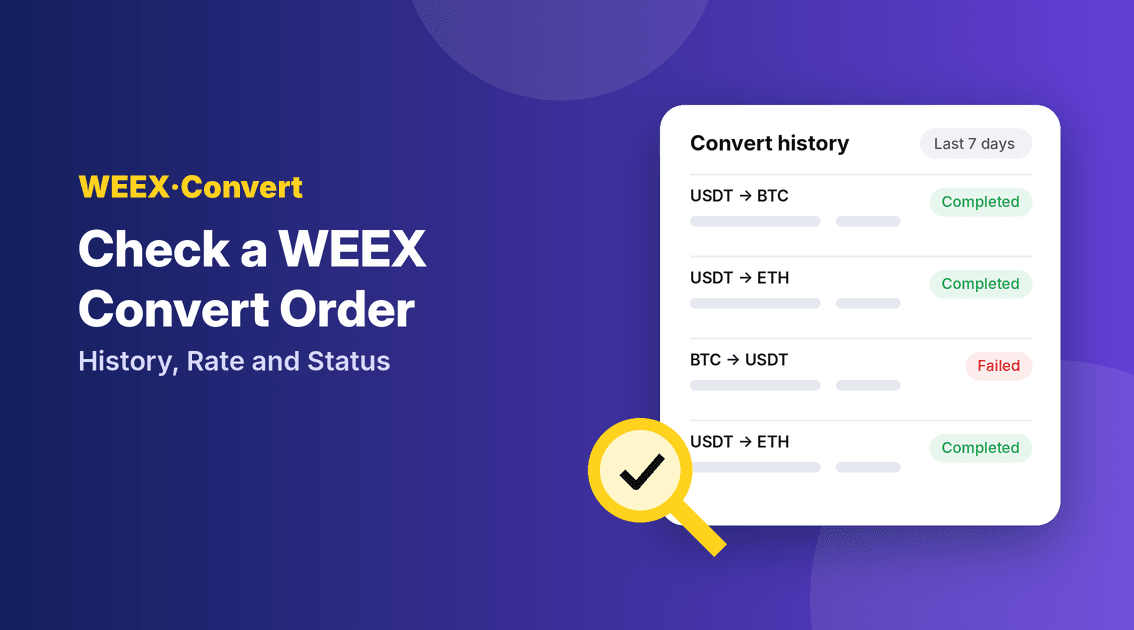
How to Check a WEEX Convert Order: History, Rate and Status
USDC Significant EMT Status in the EU: What Changes on November 12 Under MiCA
Walrus (WAL) Jumps 30%: Sui Storage Token Rallies on AI Data
WEEX Futures PnL: Why Your Three PnL Numbers Rarely Match
WEEX Reduce-Only Order: What It Does and When It Gets Cancelled
WEEX Stop Loss Not Triggered? Check the Trigger, Then the Fill
WEEX Funding Fee Explained: Rate, Countdown, Records and Math
WEEX Trading Pair Suspended or Delisted? Your Orders and Assets
WEEX Order History: How Orders, Fills and Fees Fit Together





