
Who Launched Bitcoin into Earth Orbit and Why the Crypto Industry Needs Space

 Prefer us on Google



The idea of launching Bitcoin into Earth orbit no longer seems like science fiction: several projects are developing space infrastructure for mining, blockchain data transmission, transaction confirmation, and satellite internet based on crypto technologies.
For some companies, orbit is a way to reduce energy costs and relieve terrestrial data centers. For others, it is a tool that should provide access to the Bitcoin network where there is no regular internet. There are also projects that are building full-fledged DePIN services around satellites with their own tokens.
Starcloud and the Bet on Mining in Space
One of the main contenders for the role of pioneer in space mining is the startup Starcloud. The project is backed by Nvidia, the chip manufacturer and the largest company in the world by market capitalization. The logic of the initiative is simple: Bitcoin mining requires huge amounts of electricity, and moving computational infrastructure beyond Earth, according to Nvidia representatives, could reduce electricity costs by ten times.
In November 2025, the Starcloud-1 satellite was sent into orbit. It delivered the first Nvidia H100 graphics processor into space. Already in the following month, the device launched a version of the Gemini chatbot and then became the first satellite to begin training a large language model.
Starcloud's CEO, Philip Johnston, stated that the company intends to become the first Bitcoin miner in space. The next stage is planned for early 2027: the launch of Starcloud-2. It will carry equipment for BTC mining, including ASICs, as well as storage systems, constant access, power supply, thermal regulation, and an additional GPU cluster.
However, space mining currently faces serious limitations. The main engineering problem is cooling. Despite the low temperatures in space, the vacuum does not allow heat to be dissipated through convection. There is also an economic risk: ASICs become obsolete quickly, which shortens the payback period for mining equipment. A stable network access remains a separate issue.
Blockstream Satellite: Bitcoin Network Without Regular Internet
On August 15, 2017, Blockstream announced the launch of the Blockstream Satellite service. Its task is to transmit Bitcoin blockchain data via satellites. Thanks to this, users without internet connection can receive key information about the BTC network. A small satellite antenna and a USB tuner are sufficient for reception.
Blockstream sells specialized equipment for working with the network: the Blockstream Satellite Pro Kit costs $900, while the Blockstream Satellite Base Station costs $500. However, it is not necessary to buy these specific kits: access is also possible with other compatible equipment.
Blockstream Satellite coverage is not global. In Russia, for example, the signal is available only in a small part of the European territory of the country, but it covers the entire Asian part of the Russian Federation.
Blockstream CEO Adam Back explained the launch of the service as a desire to expand access to Bitcoin for as many people as possible, including those who do not have sufficient financial means for conventional internet infrastructure.
SpaceChain: Orbital Nodes for Transactions and Smart Contracts
SpaceChain is developing a space fintech infrastructure for businesses and offers ready-made application solutions. To achieve this, the project team has created hardware nodes designed to operate in low Earth orbit. They are used in multi-signature operations.
The scheme works like this: a user on Earth initiates a transfer using a regular private key, after which the data is sent to a satellite. There, the transaction receives additional confirmation through a secure, hack-proof communication channel, and then the information is sent back to Earth.
SpaceChain also calls itself a decentralized satellite infrastructure. Within this model, users can exchange data and work with smart contracts. An open platform, SpaceChain OS, is provided for developers, allowing them to support applications and nodes.
The project works with several blockchains, including Qtum, Velas, Ethereum, and other networks. The SpaceChain ecosystem uses its own token, SPC. It serves as a medium of exchange, is used to pay transaction fees, grants access to orbital resources, and is utilized in DeFi integrations on Ethereum and other scenarios.
-- Price
Spacecoin: Satellite Internet, DePIN, and the SPACE Token
Spacecoin is a DePIN service that offers satellite internet in low Earth orbit and uses its own cryptocurrency, SPACE. The project positions itself as decentralized, although it is managed by the Spacecoin Foundation.
Developers describe Spacecoin as an internet network based on satellites using blockchain technology.
Unlike purely software-based crypto projects, Spacecoin has a physical infrastructure in space. Satellites were launched into orbit by SpaceX's Falcon 9 rockets. The blockchain is responsible for network operation and data verification.
As of October, the Spacecoin group remains small: there are four small satellites in the network. One device was launched into orbit in 2024, and three more in 2025. At this stage, this equipment is primarily intended for initial stability testing of the connection.
Since November 2025, no new satellites have been added to the network. However, in January 2026, the project's partner became WLFI, associated with the family of U.S. President Donald Trump. The company proposed to use the dollar stablecoin USD1 in the system.
At the same time, it became known about Spacecoin's fundamental agreements to develop internet infrastructure with government entities in Kenya, Nigeria, Indonesia, and Cambodia. Thus, crypto-space projects are gradually transitioning from experiments with individual satellites to attempts to integrate into real telecommunications and financial services.
This content is provided for general informational purposes only and doesn't constitute financial, investment, legal, or tax advice. Any events, rewards, online promotions, or related information mentioned herein should not be considered a recommendation, solicitation, or invitation to purchase, sell, trade, or otherwise deal in any crypto assets. Crypto assets are highly volatile and may result in loss. The availability of WEEX services, products, and related events may vary by region. You are responsible for ensuring that your participation is in accordance with applicable local laws and regulations.
You may also like

Why Prediction Markets Got the Brazilian Election So Wrong

Crypto Scam from a Wrong Number: $140,000 Vanished in Canada
Key Week for Central Banks: The Fed, ECB, and BoJ Decide on Their Rates

Ethereum Foundation backs default wallet privacy as Kohaku work advances

Manus quietly released its 2.0 declaration

Justin Sun Prize Partners With MathDB, Led by Caltech Professor Tony Yue Yu, on 50-Problem Pilot

CFTC advances voluntary crypto exchange registration as Congress stalls
Crypto: Over 10,000 Claims Against Restrictions by British Banks

AI agents are launching memecoins. MemeToro’s agent answers to open code

Crypto: The Tokenization of RWA Concerns American Conservatives

Pump.fun 'optimized for addiction': what the internal messages cited in court really say

Anthony Pompliano: The State Will Never Stop Printing Money! Bitcoin, Gold, and Land Will Benefit for 20 Years

Blocked Stablecoin: Your Private Key Is Not Enough

Cryptocurrencies Seek to Integrate into Finance
Introducing the Best Meme Coins on the Ripple Network: A Review of 5 Popular XRPL Tokens

Bitcoin's next Fed test comes with a hidden problem in America's inflation data
The crypto market loses altitude, patience becomes a habit – Steady Lads

Stablecoin Payments in Europe: How Do CASP, PI, and EMI Fit Together?
Why 22 Trillion-Dollar Giants Refuse to be 'Tokenized'?

Rayls Bridges Traditional Finance and Decentralized Finance
Is 24/7 Trading a Necessity? Analyzing the Real Trading Rhythm of RWA Perpetual Contracts
Cyberattack on GMO in Japan: Trading Accounts Compromised, GMO Coin Claims to be Unaffected
Elon Musk's Grand Scheme to Undermine New Cloud Providers
Google Earnings on Oct 28: Will the Fed Decision Move GOOGL Stock?
What Is a Cryptocurrency Market Deleveraging Event? Liquidations vs. ADL
Understand a cryptocurrency market deleveraging event: liquidation vs. ADL, misleading open-interest declines, hedge risks, and checks before trading.
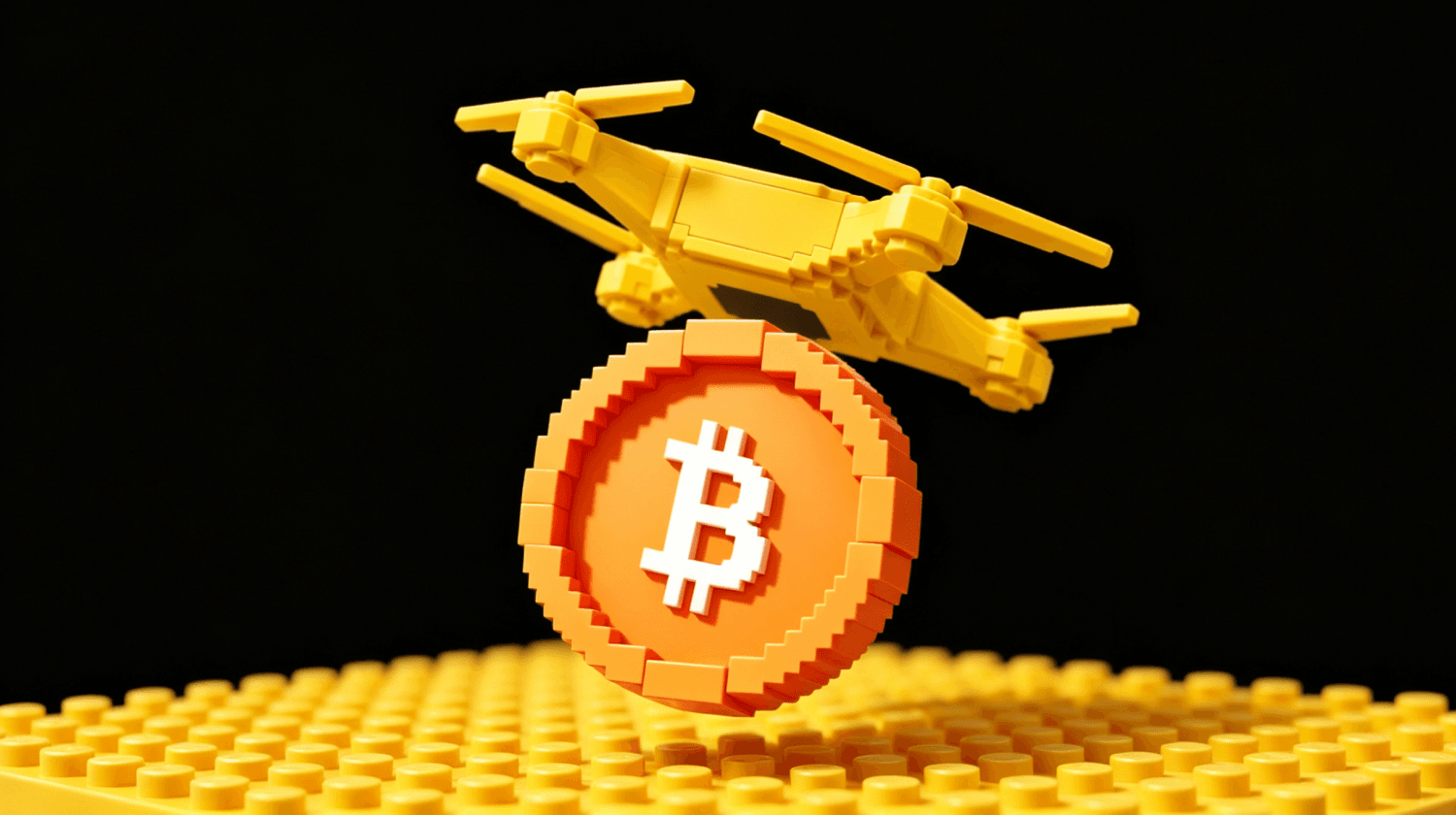
The Week Ahead: 4 Key Moments for the Crypto Market
Do Prediction Markets Actually Bring Utility? – Tiger Research

Who Holds Tokenized Stocks? A Large Number of Retail Investors with Highly Concentrated Assets
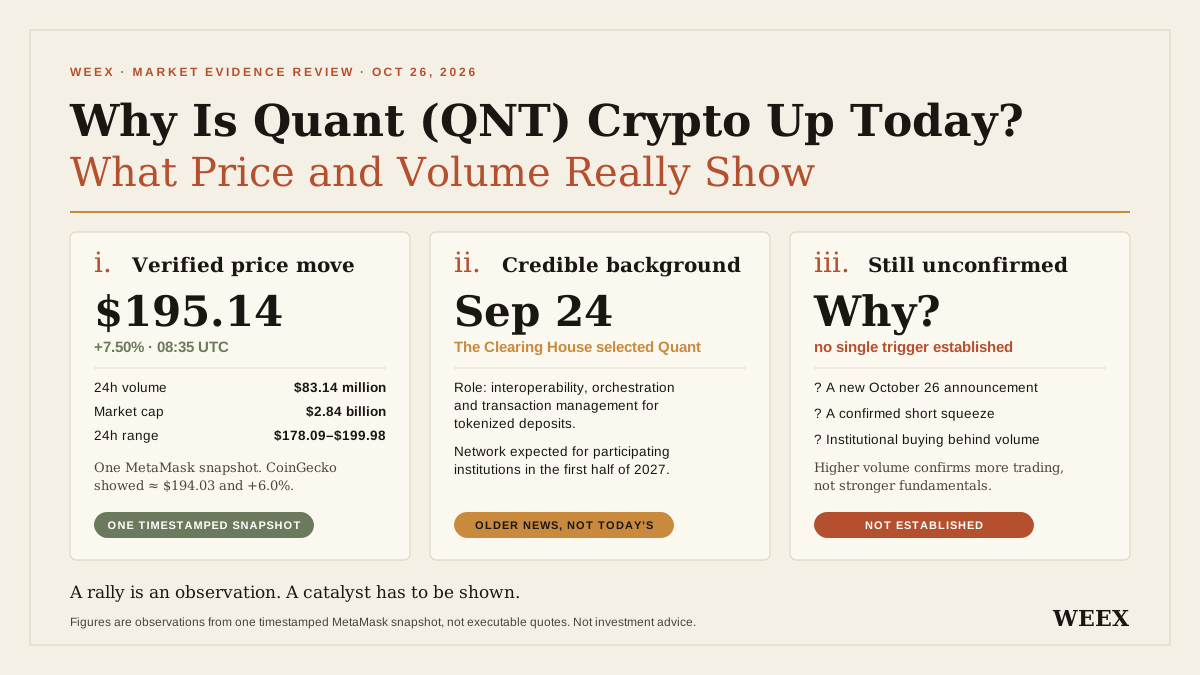
Why Is Quant (QNT) Crypto Up Today? What Price and Volume Really Show
Why is Quant (QNT) up today? Review price and volume evidence, the banking partnership timeline, token-demand assumptions, and risks before trading.
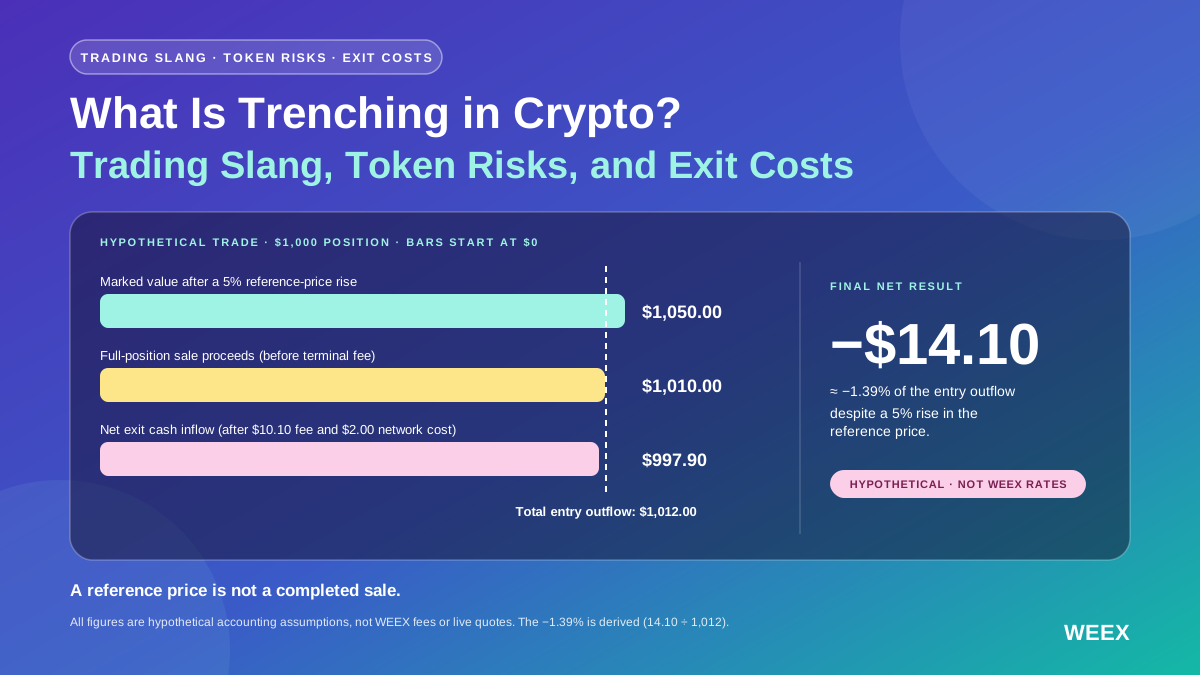
What Is Trenching in Crypto? Trading Slang, Token Risks, and Exit Costs
What is trenching in crypto? Learn the slang, token checks, liquidity risks, and how a rising token can still produce a loss after trading costs.
Why Prediction Markets Got the Brazilian Election So Wrong
Crypto Scam from a Wrong Number: $140,000 Vanished in Canada
Key Week for Central Banks: The Fed, ECB, and BoJ Decide on Their Rates
Ethereum Foundation backs default wallet privacy as Kohaku work advances
Manus quietly released its 2.0 declaration
Justin Sun Prize Partners With MathDB, Led by Caltech Professor Tony Yue Yu, on 50-Problem Pilot
Contents
Latest articles

Latest coin listings on WEEX


