
CFTC advances voluntary crypto exchange registration as Congress stalls

 Prefer us on Google
The U.S. Commodity Futures Trading Commission has advanced a voluntary federal registration pathway for crypto exchanges, Chairman Mike Selig has said, as Congress has yet to enact a crypto market-structure law.
Summary
- Federal registration would offer a pathway for exchanges providing leveraged, margined, or financed retail crypto trading.
- Financing offers could bring some fully paid transactions into the contemplated federal framework.
- Exchange safeguards would address token listings, customer funds, conflicts, and proof of reserves.
- Dec. 14 is the comment deadline stated in the published Federal Register notice.
In an Oct. 26 X post, Mike Selig said that the agency is developing the pathway to bring crypto exchanges closer to the protections applied in American derivatives markets.
"Crypto markets deserve the same time-tested protections that have governed America's derivatives markets for generations."
His post accompanied a Bloomberg TV interview and repeated his position that the CFTC can proceed with parts of its crypto agenda using powers it already holds.
Crypto markets deserve the same time-tested protections that have governed America's derivatives markets for generations.
While Congress has yet to act, the @CFTC is advancing a voluntary federal registration pathway for crypto exchanges, bringing them closer to the gold... pic.twitter.com/54lXpBZQHv
--- Mike Selig (@ChairmanSelig) October 26, 2026
CFTC registration would cover a defined set of transactions
The CFTC opened its consultation on Oct. 5 through an advance notice of proposed rulemaking covering Regulation Crypto Asset Transactions, or CTX, and Regulation Crypto Asset Markets, or CAM.
The agency's release identifies Section 2(c)(2)(D) of the Commodity Exchange Act as the statutory basis. Its planned framework concerns retail commodity transactions involving crypto assets offered with leverage, margin, or financing.
As crypto.news previously reported, the agency submitted the framework for White House review on Sep. 17. The filing followed the Senate's failed Sep.15 procedural vote on the CLARITY Act, which ended 49--50 against the 60 votes needed to advance.
In his Oct. 5 explanation, Selig described federal registration as an option for exchanges seeking one federal market regulator. Participating venues could offer retail customers margined, leveraged, or financed crypto trading, which he distinguished from ordinary spot activity on state-licensed platforms.
Selig acknowledged that the agency cannot require all crypto assets to trade on registered platforms without congressional action. His published explanation says the contemplated rules would establish requirements for exchanges that choose the federal route.
Published as an advance notice, the October consultation seeks input before potential future rulemaking, the agency said. The announcement does not put a completed CAM framework into effect.
A financing offer could bring fully paid trades into scope
The CFTC's notice takes a preliminary view that an offer of leverage can reach transactions even when customers do not actually borrow. The document identifies onboarding paperwork, exchange terms and margin agreements as possible ways to make such an offer.
Where an offer covers an account or product class, the agency preliminarily considers transactions covered by it subject to the framework even if individually paid in full. Its analysis distinguishes assets held as an exchange's internal book entry from assets actually delivered to customers.
An Oct. 12 examination of the crypto transaction boundaries described actual delivery within 28 days as an exception to the relevant exchange-trading requirement. The statutory exception depends on delivery, rather than simply the appearance of an asset balance in an account.
Fenwick attorneys Kevin Kirby, Noah Solowiejczyk, Ryan Straus and Igor Voloshin examined the notice in an Oct. 8 analysis. They said a spot-only exchange making no covered offer of leverage could remain state-licensed, subject to the CFTC's anti-fraud and anti-manipulation authority.
Their analysis identified customer control of private keys, and access to staking or governance rights where relevant, as elements of the agency's preliminary delivery interpretation. They noted that exchange-controlled cold storage would not itself establish customer control.
Exchange safeguards would address listings and customer funds
At Fordham Law's Oct. 5 blockchain symposium, Selig said the CAM framework would build on statutory designated contract market principles covering listings, market surveillance, customer funds, conflicts and system safeguards.
Selig identified token distribution, concentrated ownership, lockups, vesting schedules, programmed issuance and buybacks as factors exchanges might need to assess when determining whether an asset is susceptible to manipulation.
His remarks contemplated proof-of-reserves obligations for venues holding customer assets in pooled accounts. He described required involvement by futures commission merchants, or FCMs, which would manage customer accounts and funds under disclosure, capital and segregation requirements.
The chairman said FCM involvement would bring applicable anti-money-laundering, customer-identification and suspicious-activity reporting obligations. The agency is seeking views on adapting those requirements to crypto activity.
Steptoe's Oct. 9 legal analysis said a CAM would be a subcategory of designated contract market subject to 23 statutory core principles through tailored requirements. Existing designated contract markets could offer covered crypto transactions under their current registrations, according to the firm's reading of the notice.
State-law treatment remains a question in the consultation
Steptoe identified the CFTC's preliminary argument that Congress intended comprehensive federal regulation of covered transactions to displace varying state requirements for trading facilities offering them. Fenwick separately listed protection from state law and customer-asset treatment in bankruptcy among unresolved questions.
The Oct. 5 consultation outlined the agency's request for information on abusive practices, crypto-specific compliance and the proposed registration subcategory. The agency says submissions will be publicly posted.
The SEC has pursued a separate securities-offering framework. Its Aug. 18 Regulation Crypto Assets proposal would create exemptions for certain investment contracts involving crypto assets, including a one-time allowance of up to $5 million over four years and another allowing up to $75 million in each 12-month period.
The securities regulator said both exemptions would require narrative disclosures. Issuers using the larger exemption would need to provide financial statements and meet continuing reporting requirements.
The notice appeared in the Federal Register on Oct. 13. Its published text sets Dec. 14, 2026, as the deadline for comments.
This content is provided for general informational purposes only and doesn't constitute financial, investment, legal, or tax advice. Any events, rewards, online promotions, or related information mentioned herein should not be considered a recommendation, solicitation, or invitation to purchase, sell, trade, or otherwise deal in any crypto assets. Crypto assets are highly volatile and may result in loss. The availability of WEEX services, products, and related events may vary by region. You are responsible for ensuring that your participation is in accordance with applicable local laws and regulations.
You may also like

Ethereum Foundation backs default wallet privacy as Kohaku work advances

Manus quietly released its 2.0 declaration

Justin Sun Prize Partners With MathDB, Led by Caltech Professor Tony Yue Yu, on 50-Problem Pilot

Crypto: Over 10,000 Claims Against Restrictions by British Banks

AI agents are launching memecoins. MemeToro’s agent answers to open code

Crypto: The Tokenization of RWA Concerns American Conservatives

Pump.fun 'optimized for addiction': what the internal messages cited in court really say

Anthony Pompliano: The State Will Never Stop Printing Money! Bitcoin, Gold, and Land Will Benefit for 20 Years

Blocked Stablecoin: Your Private Key Is Not Enough

Cryptocurrencies Seek to Integrate into Finance

Introducing the Best Meme Coins on the Ripple Network: A Review of 5 Popular XRPL Tokens

Bitcoin's next Fed test comes with a hidden problem in America's inflation data
The crypto market loses altitude, patience becomes a habit – Steady Lads

Stablecoin Payments in Europe: How Do CASP, PI, and EMI Fit Together?

Why 22 Trillion-Dollar Giants Refuse to be 'Tokenized'?

Rayls Bridges Traditional Finance and Decentralized Finance

Is 24/7 Trading a Necessity? Analyzing the Real Trading Rhythm of RWA Perpetual Contracts

Cyberattack on GMO in Japan: Trading Accounts Compromised, GMO Coin Claims to be Unaffected

Elon Musk's Grand Scheme to Undermine New Cloud Providers
Google Earnings on Oct 28: Will the Fed Decision Move GOOGL Stock?
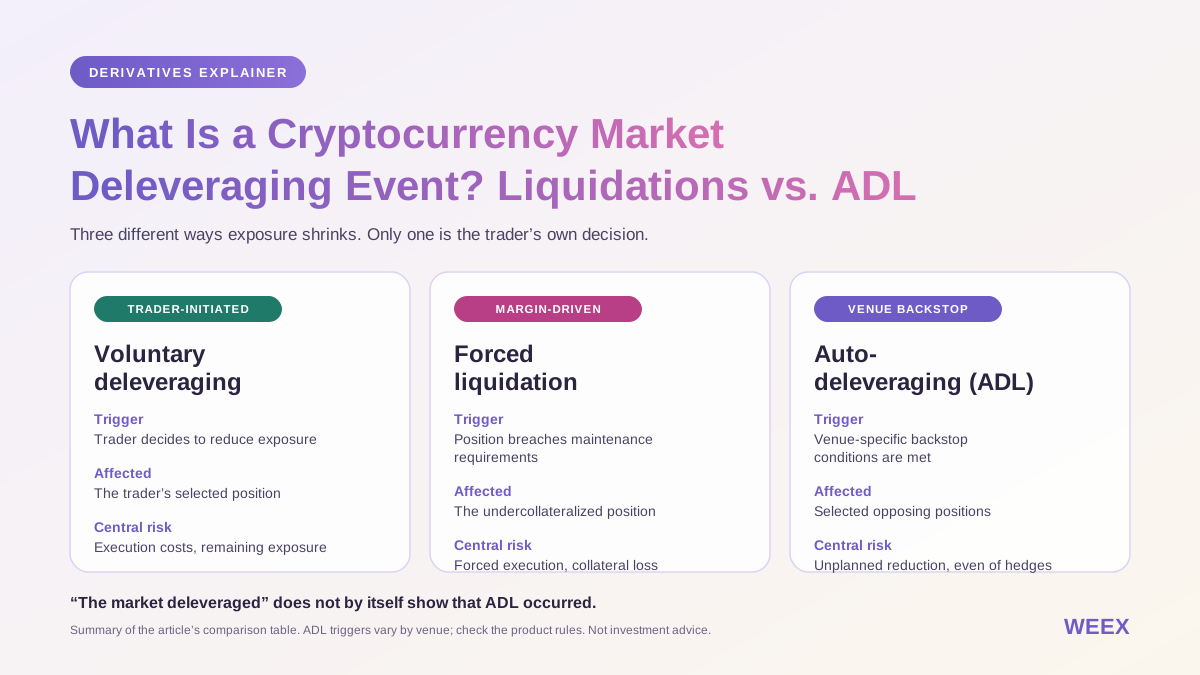
What Is a Cryptocurrency Market Deleveraging Event? Liquidations vs. ADL
Understand a cryptocurrency market deleveraging event: liquidation vs. ADL, misleading open-interest declines, hedge risks, and checks before trading.

The Week Ahead: 4 Key Moments for the Crypto Market
Do Prediction Markets Actually Bring Utility? – Tiger Research

Who Holds Tokenized Stocks? A Large Number of Retail Investors with Highly Concentrated Assets
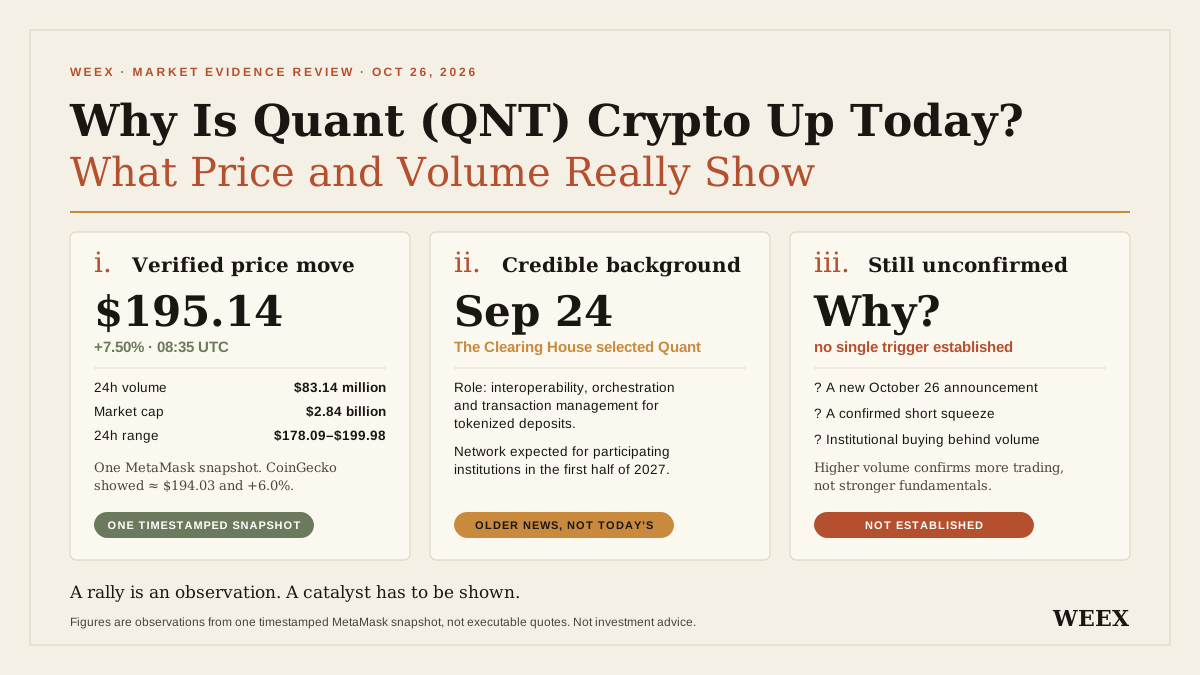
Why Is Quant (QNT) Crypto Up Today? What Price and Volume Really Show
Why is Quant (QNT) up today? Review price and volume evidence, the banking partnership timeline, token-demand assumptions, and risks before trading.
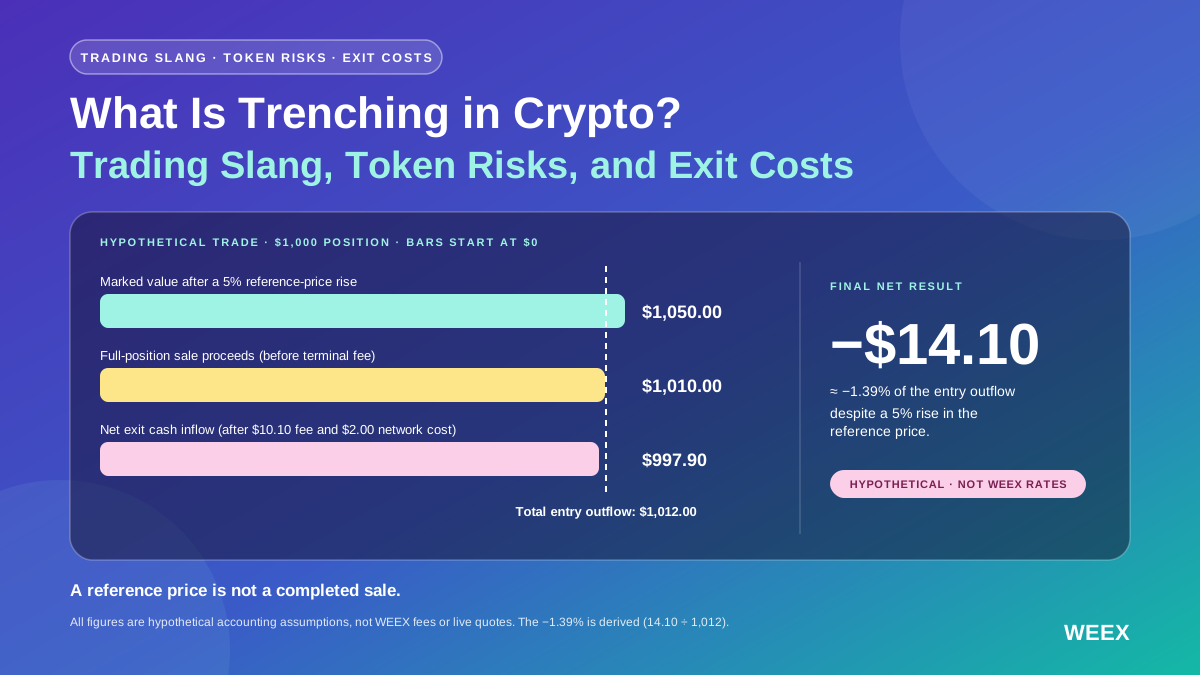
What Is Trenching in Crypto? Trading Slang, Token Risks, and Exit Costs
What is trenching in crypto? Learn the slang, token checks, liquidity risks, and how a rising token can still produce a loss after trading costs.

Flash Loans Secure Two Governance Seats: What Does the X100 Theft Teach the Industry?
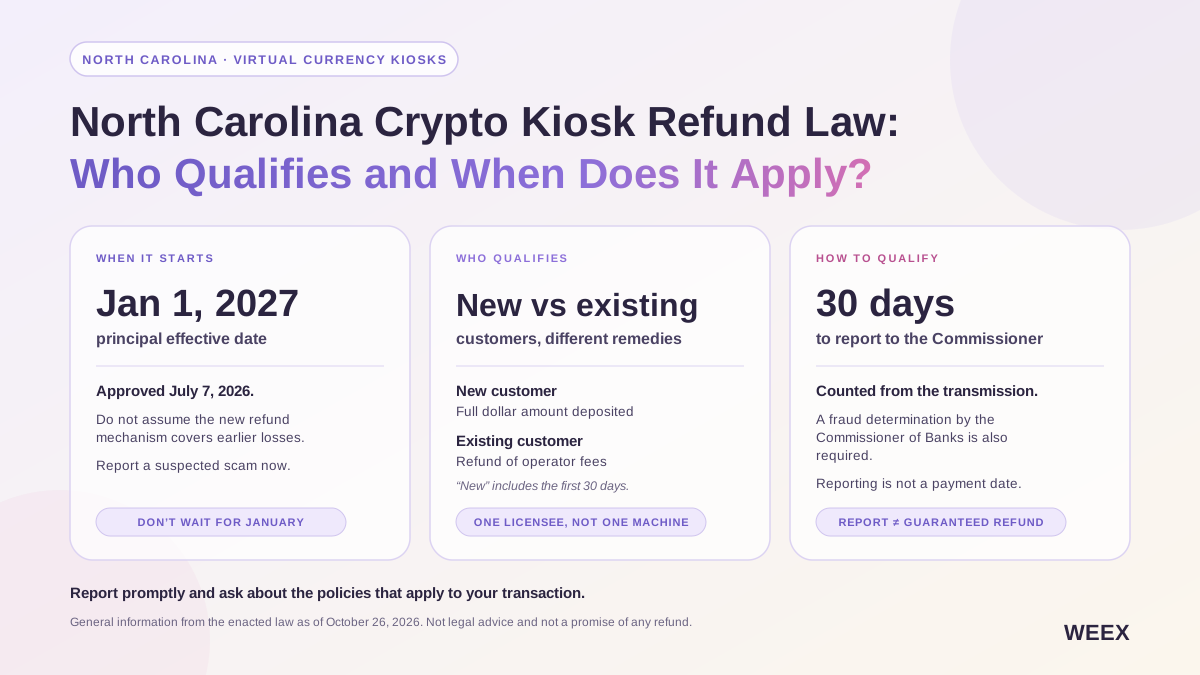
North Carolina Crypto Kiosk Refund Law: Who Qualifies and When Does It Apply?
Understand North Carolina’s crypto kiosk refund law: the January 2027 start date, who qualifies, reporting deadlines, and documents victims should keep.
AI Reduces Vulnerability Discovery Costs, Crypto Industry Divided in Response
Ethereum: Glamsterdam postponed after risks detected on 13 contracts
Ethereum Foundation backs default wallet privacy as Kohaku work advances
Manus quietly released its 2.0 declaration
Justin Sun Prize Partners With MathDB, Led by Caltech Professor Tony Yue Yu, on 50-Problem Pilot
Crypto: Over 10,000 Claims Against Restrictions by British Banks
AI agents are launching memecoins. MemeToro’s agent answers to open code
Crypto: The Tokenization of RWA Concerns American Conservatives


