
Crypto Scam from a Wrong Number: $140,000 Vanished in Canada

 Prefer us on Google


A misplaced SMS, followed by months of conversation. A resident of Guelph, Ontario, lost approximately 140,000 Canadian dollars in a crypto scam that started from a simple "wrong number." Part of the money was funneled through crypto ATMs that Canada is looking to ban.
Key points of this article:
- A resident of Guelph, Ontario, fell victim to a crypto scam, losing around 140,000 Canadian dollars after responding to a text message allegedly sent by mistake.
- Canada is considering banning cryptocurrency ATMs, a tool frequently used by scammers to launder money, after significant losses due to fraud have been reported.
Crypto Scam from a Wrong Number: The Guelph Scenario
It all began several months ago with a text message. The recipient believed it was a wrong number and replied.
Her interlocutor maintained the conversation, gained her trust, and then directed her towards investing in cryptocurrencies. According to a statement from the Guelph police released on October 23, 2026, he convinced her to open accounts with several crypto platforms.
She deposited her "investments" via bank transfers and through deposits at cryptocurrency ATMs. On the screen, her balance significantly increased.
Then came the withdrawal request. She was told that she first needed to pay substantial fees. The result: approximately 140,000 Canadian dollars lost.
This scheme has a name among fraud specialists, pig butchering, literally meaning "the butchering of the pig." The victim is fattened with fake gains displayed on a platform controlled by the scammers, then drained when she wants to recover her investment. The "fees" for withdrawal serve as the final extraction.
Canada Wants to Disconnect Crypto ATMs
The Canadian Anti-Fraud Centre (CAFC) reported approximately 351 million dollars in losses in the first half of 2026. Investment fraud remains at the top with 139.6 million, and the agency estimates that only 5 to 10% of fraud cases are reported to them.
Crypto kiosks have been under scrutiny for a long time. As early as 2023, an internal analysis by FINTRAC, the Canadian financial intelligence unit, described them as the method that fraudsters would still prefer to collect and launder their victims' money. For the year 2024 alone, the CAFC estimated losses reported via these machines at 14.2 million dollars.
Ottawa made a decision in April. The spring 2026 economic update proposed banning crypto ATMs across the country to deprive scammers of a favored method for robbing their victims. The country had nearly 4,000 of them, one of the densest networks in the world. No effective date was set at the time of the announcement.
The Guelph police reiterate the basic guideline against this type of crypto scam. Be wary of any call, email, or SMS that demands quick action, and contact the supposed sender yourself before moving any money. Victims, even without loss, can report incidents to the CAFC.
The scheme is not local. In the United States, authorities have already seized 225 million dollars related to pig butchering scams.
-- Price
This content is provided for general informational purposes only and doesn't constitute financial, investment, legal, or tax advice. Any events, rewards, online promotions, or related information mentioned herein should not be considered a recommendation, solicitation, or invitation to purchase, sell, trade, or otherwise deal in any crypto assets. Crypto assets are highly volatile and may result in loss. The availability of WEEX services, products, and related events may vary by region. You are responsible for ensuring that your participation is in accordance with applicable local laws and regulations.
You may also like

CFTC advances voluntary crypto exchange registration as Congress stalls

Blocked Stablecoin: Your Private Key Is Not Enough

BTCPay merges API key fix, latest release still predates patch

Cyberattack on GMO in Japan: Trading Accounts Compromised, GMO Coin Claims to be Unaffected
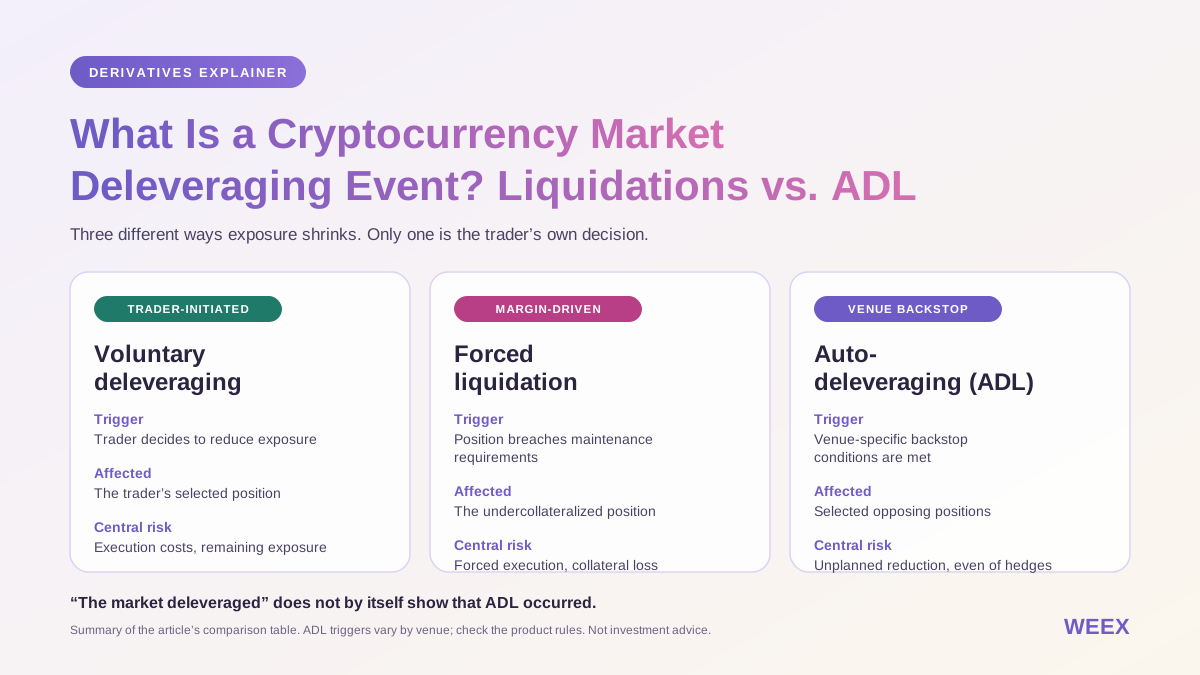
What Is a Cryptocurrency Market Deleveraging Event? Liquidations vs. ADL
Understand a cryptocurrency market deleveraging event: liquidation vs. ADL, misleading open-interest declines, hedge risks, and checks before trading.

LND Releases v0.21.5-beta.rc1 with Fee Estimate Limits

Monero community backs 45 XMR proposal for core development

Canada proposes direct stablecoin cash-outs for small holders with a 1% fee cap

The Superintendency of the Securities Market of Panama Excludes Cryptocurrencies from Its Oversight

Paolo Ardoino wants AI to run Bitcoin mines. Who gets permission to act?

Electrum Releases Version 4.8.3 to Fix Bitcoin Wallet Flaw
Crypto: Transfers from Canada to Three Asian Countries Surge by 141%

DSN MUI Awaits Exchange Infrastructure from OJK for Sharia Crypto Assets

Circle launches USDC auctions for institutions to collect fees
Swedish Government Office Bans ChatGPT and Claude, Retains Microsoft Copilot

Overview of Cryptocurrency Asset Regulation Series (11): South Africa, From FSCA License to Cross-Border Reporting

Ethereum staking yield is losing to cash rates, so why are investors still lining up?

AI Security 'Black October'... "The Era of Hacking for Everyone Has Arrived"

Kraken continues Monero listing, withdraws customer survey

New OCC stablecoin rule resets redemptions, and banks face big shifts

What Is an Agentic Activities Launchpad? Inside AX1 Console 2.0

"Without Changing the Nature of Government Bonds" Toward Tokenization: Progmat's Saito Explains

How to Reconstruct an Enterprise-Level AI Data Platform When Data Moves Towards Understanding?
Management Before Capital: The Need for Agent-Specific Accounts
Sam Price Discusses the $5 Billion Bitcoin Battle
SSV Labs Proposes Extension of Network Hosting Services to Mid-2027

LDP Proposes Establishing a Cyber Response Headquarters Ahead of Cybersecurity Crisis, Emphasizing Cryptocurrency Tracking and Post-Quantum Cryptography

Bitmine Ends ETH Purchases After Reaching 5% of Supply
USDC Listed as the EU's First 'Significant E-Money Token'

Grupo Caldeira OTC and Urban Announce Merger and Create Institutional Platform for Virtual Assets
CFTC advances voluntary crypto exchange registration as Congress stalls
Blocked Stablecoin: Your Private Key Is Not Enough
BTCPay merges API key fix, latest release still predates patch
Cyberattack on GMO in Japan: Trading Accounts Compromised, GMO Coin Claims to be Unaffected
What Is a Cryptocurrency Market Deleveraging Event? Liquidations vs. ADL
Understand a cryptocurrency market deleveraging event: liquidation vs. ADL, misleading open-interest declines, hedge risks, and checks before trading.
LND Releases v0.21.5-beta.rc1 with Fee Estimate Limits


