
Goldman Sachs Q3 EPS Hits $17.01: What It Means for GS Stock

 Prefer us on Google

Goldman Sachs (NYSE: GS) reported third-quarter 2026 net revenue of $18.68 billion, net earnings of $5.29 billion and diluted earnings per share of $17.01. Annualized return on common equity reached 18.7%, while quarterly revenue was the second highest in the firm’s history.
Strong results did not produce a sustained earnings-day rally. GS stock opened higher before retreating, closing October 13 at $891.91, down 0.23%. The next question is whether trading and investment banking growth can support stronger future earnings expectations.
Readers tracking upcoming earnings can explore the WEEX U.S. stock earnings prediction event. Registered users can allocate points to bullish or bearish predictions, starting from one point. Submissions cannot be withdrawn, and rounds close 10 minutes before earnings. Goldman’s latest prediction window has already closed; other available rounds follow the event page.
Another activity, WEEX Dice Rush: Wall Street Tycoon, combines dice-based gameplay with stock predictions. Participation requirements, tasks and rewards follow the published rules.
Goldman Sachs Q3 Earnings: What Does $17.01 EPS Mean?
The results demonstrate substantial earnings capacity, but EPS should be evaluated alongside net income, share-count changes and revenue sources.
Key Metric | Q3 2026 Result |
|---|---|
Net revenue | $18.68 billion |
Net earnings | $5.29 billion |
Diluted EPS | $17.01 |
Annualized return on common equity | 18.7% |
Quarterly revenue ranking | Second highest |
Source: Goldman Sachs’ official earnings announcement.
Second-highest quarterly revenue reflects strong business activity. It does not establish that subsequent quarters will maintain the same level.
Results Exceeded a Reported Consensus Estimate
According to FactSet figures cited by Barron’s, analysts expected EPS of $12.86 and revenue of $16.83 billion. Goldman exceeded both estimates.
Consensus estimates vary between providers, so comparisons should identify their source.
What Drove Goldman Sachs’ Earnings?
Equity Trading Led Growth
Reuters reported that equity trading revenue increased 72% year over year to $6.44 billion. Investment banking fees rose 21% to $3.22 billion, while asset and wealth management revenue also grew.
The breadth of growth matters, although equity trading was particularly strong. Investors should watch whether client trading and financing demand remain elevated.
FICC Performance Was More Subdued
Fixed income, currencies and commodities revenue totaled $3.47 billion, down 1% year over year.
The quarter therefore showed uneven trading performance rather than strength across every business.
Investment Banking Remains Cyclical
Advisory and underwriting revenues depend on financing demand and completed transactions. Interest rates, valuation disagreements and market uncertainty can delay deals and revenue recognition.
In asset and wealth management, net inflows and recurring management fees are important measures of durability. These revenues help assess how much earnings depend on fluctuating trading activity.
GS Stock Price Analysis: Why Did Shares Reverse After Earnings?
Recent regular-session closing prices show that GS remained below $900 before the earnings announcement.
Date | Closing Price | Daily Change |
|---|---|---|
October 7, 2026 | $887.21 | −1.11% |
October 8, 2026 | $882.59 | −0.52% |
October 9, 2026 | $895.32 | +1.44% |
October 12, 2026 | $893.95 | −0.15% |
October 13, 2026 | $891.91 | −0.23% |
On October 13, GS opened at $923.00, reached $931.00 and fell to $891.01. Trading volume was approximately 4.94 million shares, compared with 2.06 million the previous session.
Closing near the session low suggests the early advance lacked sustained buying support. Higher volume indicates increased trading activity following the announcement.
Profit-taking, valuation concerns and broader market conditions may have contributed. One session cannot identify a single cause or confirm a long-term reversal.
These figures refer to underlying GS shares. WEEX stock tokens and futures have separate pricing mechanisms.
-- Price
GS Stock Forecast: Levels to Watch
The following scenarios interpret recent historical prices rather than provide guaranteed targets.
| Scenario | Condition | Reference Range |
|---|---|---|
| Recovery | Holding above $900–$906 with stronger volume | $923–$931 |
| Consolidation | Support near $880 without sustained upside | $880–$906 |
| Further weakness | A sustained break below approximately $880 | $868–$877 |
The ranges reflect recent session highs and lows, including earnings-day prices.
Higher earnings forecasts, sustained client activity and stronger market sentiment could support recovery. Falling trading revenue, expense pressure or slower capital markets activity could weigh on shares.
For related coverage, explore the Goldman Sachs Tokenized Stock (Ondo) price prediction. GSon should be distinguished from GS shares and WEEX Stock Spot 2.0.
What Risks Matter After Goldman’s Earnings?
Trading revenue fluctuates with client demand. Volatility can increase hedging activity, but extreme conditions may also cause clients to reduce exposure.
Investment banking revenue depends on transactions completing, while strong earnings do not automatically imply an attractive valuation. If optimistic expectations are already reflected in the price, even an earnings beat may produce only a temporary rally.
How to Access GS-Linked Products on WEEX
Step 1: Prepare Your Account and Funds
New users can register on WEEX and complete required account checks. WEEX offers spot, futures and TradFi services and publishes Proof of Reserves information.
If you already hold digital assets, select a supported asset and deposit network, obtain your WEEX address and transfer funds. Sending and receiving networks must match; include any required memo or tag. Prepare USDT for the selected product.
Otherwise, check WEEX Quick Buy or the WEEX P2P marketplace. Availability, payment methods and fees follow the displayed terms.

Step 2: Choose Stock Tokens or Futures
Open the GS/USDT stock token trading pair, or browse the WEEX stock token market.
WEEX Stock Spot 2.0 is distinct from Ondo, xStocks and other third-party tokenized assets. Its synthetic tokens track selected stock or ETF prices and trade using USDT without an external brokerage account.
Tokens do not represent underlying shares or confer shareholder status, voting rights, meeting participation, dividends or other shareholder benefits. Orders are not routed to Nasdaq, NYSE or external brokers. Execution prices are determined by WEEX’s corresponding market.
The Goldman Sachs Tokenized Stock (Ondo) buying guide covers a separate product category.
Alternatively, access the GS/USDT futures trading pair or the WEEX TradFi market. Futures involve margin, leverage and liquidation risk. Check current trading availability and rules.
Step 3: Review and Submit Orders
For stock tokens, enter the quantity, choose a supported Market Order or Limit Order, review pricing and fees, and submit.
For futures, select margin mode, leverage, Long or Short direction and position size. Consider Stop Loss and Take Profit settings, and review liquidation estimates, fees and funding rates.
FAQ
1. What was Goldman Sachs’ Q3 EPS?
Diluted EPS was $17.01, with net earnings of $5.29 billion.
2. Does strong earnings growth guarantee GS upside?
No. Earnings expectations, valuation and broader market conditions also influence prices.
3. Which GS price levels matter next?
Watch support near $880 and whether shares reclaim $900–$906.
4. Do WEEX GS tokens represent Goldman shares?
No. They are synthetic price-tracking assets without underlying ownership or shareholder rights.
5. Is Goldman’s latest earnings prediction still open?
No. Predictions close 10 minutes before earnings under the event rules.
Related Articles
This content is provided for general informational purposes only and doesn't constitute financial, investment, legal, or tax advice. Any events, rewards, online promotions, or related information mentioned herein should not be considered a recommendation, solicitation, or invitation to purchase, sell, trade, or otherwise deal in any crypto assets. Crypto assets are highly volatile and may result in loss. The availability of WEEX services, products, and related events may vary by region. You are responsible for ensuring that your participation is in accordance with applicable local laws and regulations.
You may also like

Onchain Fees: Crypto Protocols Earn $4 Billion in the Third Quarter

Tom Lee Did It Again. Bitmine Spent $24 Million on Ethereum, but Purchases Are Decreasing

Bitcoin Threatened by a Fragile American Economy and Persistent Inflation

Why Prediction Markets Got the Brazilian Election So Wrong

Crypto Scam from a Wrong Number: $140,000 Vanished in Canada
Key Week for Central Banks: The Fed, ECB, and BoJ Decide on Their Rates

Ethereum Foundation backs default wallet privacy as Kohaku work advances

Manus quietly released its 2.0 declaration

Justin Sun Prize Partners With MathDB, Led by Caltech Professor Tony Yue Yu, on 50-Problem Pilot

CFTC advances voluntary crypto exchange registration as Congress stalls

Crypto: Over 10,000 Claims Against Restrictions by British Banks

AI agents are launching memecoins. MemeToro’s agent answers to open code

Crypto: The Tokenization of RWA Concerns American Conservatives

Pump.fun 'optimized for addiction': what the internal messages cited in court really say

Anthony Pompliano: The State Will Never Stop Printing Money! Bitcoin, Gold, and Land Will Benefit for 20 Years

Blocked Stablecoin: Your Private Key Is Not Enough

Cryptocurrencies Seek to Integrate into Finance

Introducing the Best Meme Coins on the Ripple Network: A Review of 5 Popular XRPL Tokens

Bitcoin's next Fed test comes with a hidden problem in America's inflation data
The crypto market loses altitude, patience becomes a habit – Steady Lads

Stablecoin Payments in Europe: How Do CASP, PI, and EMI Fit Together?
Why 22 Trillion-Dollar Giants Refuse to be 'Tokenized'?

Rayls Bridges Traditional Finance and Decentralized Finance

Is 24/7 Trading a Necessity? Analyzing the Real Trading Rhythm of RWA Perpetual Contracts
Cyberattack on GMO in Japan: Trading Accounts Compromised, GMO Coin Claims to be Unaffected
Elon Musk's Grand Scheme to Undermine New Cloud Providers
Google Earnings on Oct 28: Will the Fed Decision Move GOOGL Stock?
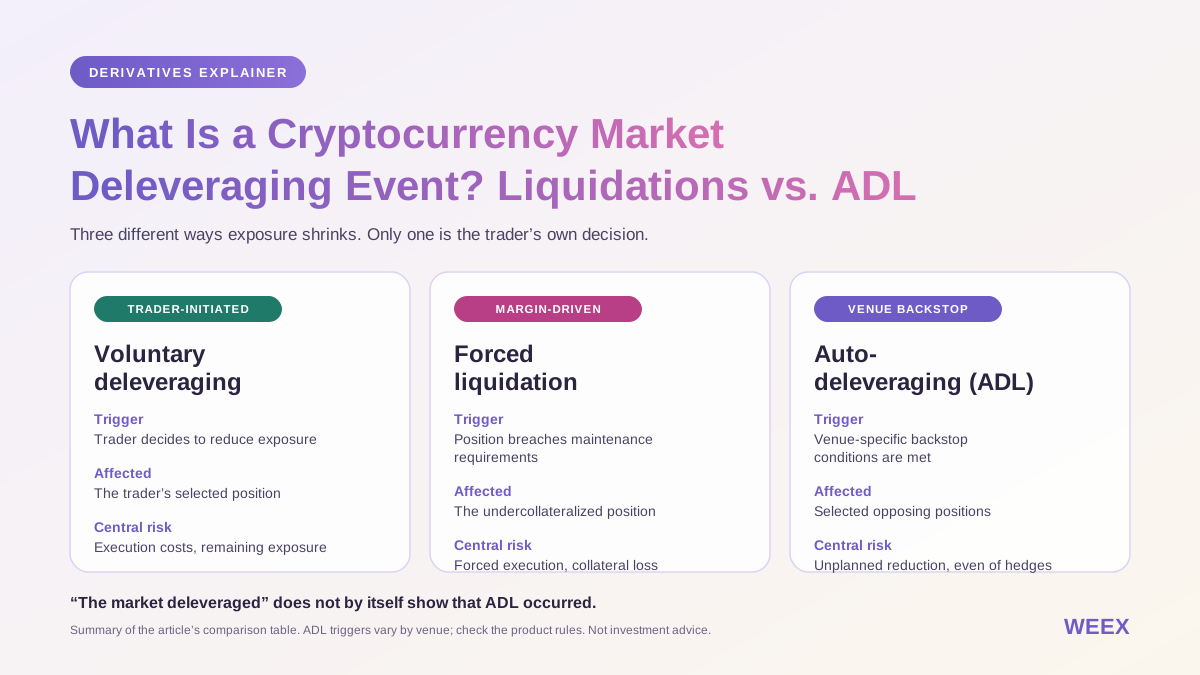
What Is a Cryptocurrency Market Deleveraging Event? Liquidations vs. ADL
Understand a cryptocurrency market deleveraging event: liquidation vs. ADL, misleading open-interest declines, hedge risks, and checks before trading.
The Week Ahead: 4 Key Moments for the Crypto Market
Do Prediction Markets Actually Bring Utility? – Tiger Research
Onchain Fees: Crypto Protocols Earn $4 Billion in the Third Quarter
Tom Lee Did It Again. Bitmine Spent $24 Million on Ethereum, but Purchases Are Decreasing
Bitcoin Threatened by a Fragile American Economy and Persistent Inflation
Why Prediction Markets Got the Brazilian Election So Wrong
Crypto Scam from a Wrong Number: $140,000 Vanished in Canada
Key Week for Central Banks: The Fed, ECB, and BoJ Decide on Their Rates


