
Stablecoin Payments Surge 45% Despite No New Supply

 Prefer us on Google


The stablecoin market is experiencing a revealing paradox. The total supply in circulation has hardly changed in 2026, remaining around $305 billion with only a 0.4% increase since January. However, the money that already exists in the ecosystem is circulating much faster, now passing through the hands of Visa, Mastercard, and Stripe.
According to data from a report by Allium, an on-chain analysis firm, stablecoin payments reached $482 billion in the first nine months of the year, a 45% increase compared to the previous year. The number of transactions surged even more: 71%, surpassing 1 billion operations. This is pure monetary velocity, without supply inflation.
For those following the evolution of the crypto market, the most relevant data may not be the total volume, but what it says about the usage profile. Stablecoins are shifting from being instruments of speculation and arbitrage on exchanges to becoming real payment rails.
Stablecoin Cards Grow Tenfold in a Year
Cards linked to stablecoins represent the most aggressive growth segment. Spending with this type of card reached $3.9 billion by September, ten times the amount recorded in the same period last year. An important detail: 84% of the increase in card transactions came from purchases under $50.
This is not institutional movement. These are individuals buying coffee, paying for transportation, subscribing to services. It is the kind of granular adoption that transforms financial infrastructure into consumption habits.
Still, it is worth sizing up the phenomenon. The volume of stablecoin cards in the second quarter amounted to only 0.03% of the $4 trillion processed by Visa in the same period. The share is tiny, but it is exactly this gap that attracts payment giants to the game.
What Visa, Mastercard, and Stripe Are Building
Three announcements in the same week made it clear that the world's largest payment networks are no longer experimenting with stablecoins. They are integrating.
Mastercard launched its Global Money Platform in partnership with BVNK, a stablecoin infrastructure company it acquired in August. The platform unifies traditional currency accounts, stablecoin balances, conversions, card spending, and bank transfers into a single integration. Banks and fintechs can offer accounts that combine fiat currency and stablecoins. The first to onboard were Nuvei and Marqeta.
Stripe, for its part, is developing cards with Plasma XPL that support balances in dollars, euros, Brazilian reais, Mexican and Colombian pesos, as well as eligible stablecoins. The proposal is to allow the customer to spend from the balance that best matches the currency of the purchase, eliminating unnecessary conversions. The infrastructure already covers more than 30 countries, with plans to reach over 100 by the end of the year.
Visa has brought stablecoins to the side of international payment financing. Inyo Global, focused on orchestrating payments for fintechs and banks, became the first to commercially use Visa Direct's stablecoin pre-financing service. In practice, payment companies can use USDC, Circle's stablecoin, to finance international transfers in almost real-time, without relying on the windows of the traditional banking system. The recipient continues to receive through conventional channels.
For those following Stripe's expansion in the crypto universe, the move confirms a trend that has been gaining traction: stablecoins as a layer of efficiency within the existing infrastructure, rather than as a parallel system.
What the Data Really Shows (and What It Hides)
There is an important methodological caveat in the numbers. Of the gross total of $97.9 trillion in stablecoin transfers in the first nine months of 2026, Allium classified only $2.4 trillion, or 2.5%, as end-user activity. The remainder is movement between exchanges, decentralized finance protocols, and automated transactions.
The estimate of $482 billion in payments comes from this filtered universe of $2.4 trillion. It is still a significant number, but quite different from what the gross volume suggests at first glance. Those analyzing the crypto ecosystem need to keep this filter in mind to avoid confusing market activity with real adoption.
Even with this consideration, the growth rate is remarkable. A jump of 45% in volume and 71% in the number of transactions, in a year when supply remained practically stable, indicates that the turnover of digital money is accelerating due to genuine demand, not by the issuance of new tokens.
-- Price
Why Convergence Matters Now
The central point of this movement is the dissolution of the boundary between "traditional" and "digital" money. As Patrick Mollard, co-founder of Fipto, a stablecoin-based corporate payments company, summarized: companies do not want separate crypto infrastructure operating alongside their existing financial operations. They want to transition between fiat currency and stablecoins within the same environment.
This is a shift in mindset that goes beyond technology. For years, the crypto market has tried to build alternative financial systems. What is happening now is different: incumbent networks are absorbing the functionality of stablecoins into their own structures. For the end user, the experience tends to be invisible. They pay with a card, settlement occurs in USDC behind the scenes, and the merchant receives local currency.
For investors and financial professionals, the practical implication is twofold. First, the value of stablecoins consolidates as infrastructure, not as a speculative asset. Second, the companies that dominate the global payment rails are building competitive advantages that are hard to replicate, as we have already discussed in our coverage of asset tokenization.
The stablecoin market may even seem stagnant when looking at the total supply. But inside, the velocity of money tells a completely different story.
This content is informative and educational and does not constitute investment advice. Past performance is not indicative of future results.
This content is provided for general informational purposes only and doesn't constitute financial, investment, legal, or tax advice. Any events, rewards, online promotions, or related information mentioned herein should not be considered a recommendation, solicitation, or invitation to purchase, sell, trade, or otherwise deal in any crypto assets. Crypto assets are highly volatile and may result in loss. The availability of WEEX services, products, and related events may vary by region. You are responsible for ensuring that your participation is in accordance with applicable local laws and regulations.
You may also like

Crypto: The French tax authorities could receive data from foreign platforms

Bitcoin options show premium ahead of Fed decision

Why Third Parties Again? A Review of Coinbase's Supply Chain Risks and Defense Dilemmas

Ethereum’s $3 billion blockspace bet hinges on who gets to produce the next block

Crypto: USDC Overtakes USDT in the European Market

Challenges in Investigating Sources of Funds for Virtual Assets: Issues with Closed Exchanges and Personal Wallets

BlackRock and SBI Explore Yen Stablecoin Link for Tokenised Funds

Coinbase and Thunes Tie Stablecoins to Local Bank and Wallet Payouts

X100 governance flaws trigger $6M loss due to a flash loan

Bitget UEX Daily Report | Nasdaq Leads Tech Rally; Consumer Confidence Rebounds; Federal Reserve Decision Approaching (October 28, 2026)
Bitcoin: Small Holders Leave, Big Buyers Step In

Monad Wins a Stablecoin Card Infrastructure Deal With Reap and Meru

Social Media Shutdown: Senate Considers One-Hour Removal, Crypto Anti-Censorship on Alert
Fidelity: Fed deemed too lenient, bond yields at highest in 20 years

Interview: Erald Ghoos (OKX) on MiCA, the Dollar, and the Future of EU Payments
Why JPMorgan Raised the Target Price for Yushu Technology to 995 Yuan
Standard Chartered Launches RLUSD Custody, Plans Collateral Model

Solana Launches Delivery-Versus-Payment Tool for Atomic Securities Settlement

Solana Leads Euro Stablecoin Issuances: The Circle Effect Behind the Numbers

Bitcoin at $90,000: The $68 Million Bet on the U.S. Midterm Elections
Pump.fun 'optimized for addiction': what the internal messages cited in court really say

Rayls Bridges Traditional Finance and Decentralized Finance
The Week Ahead: 4 Key Moments for the Crypto Market
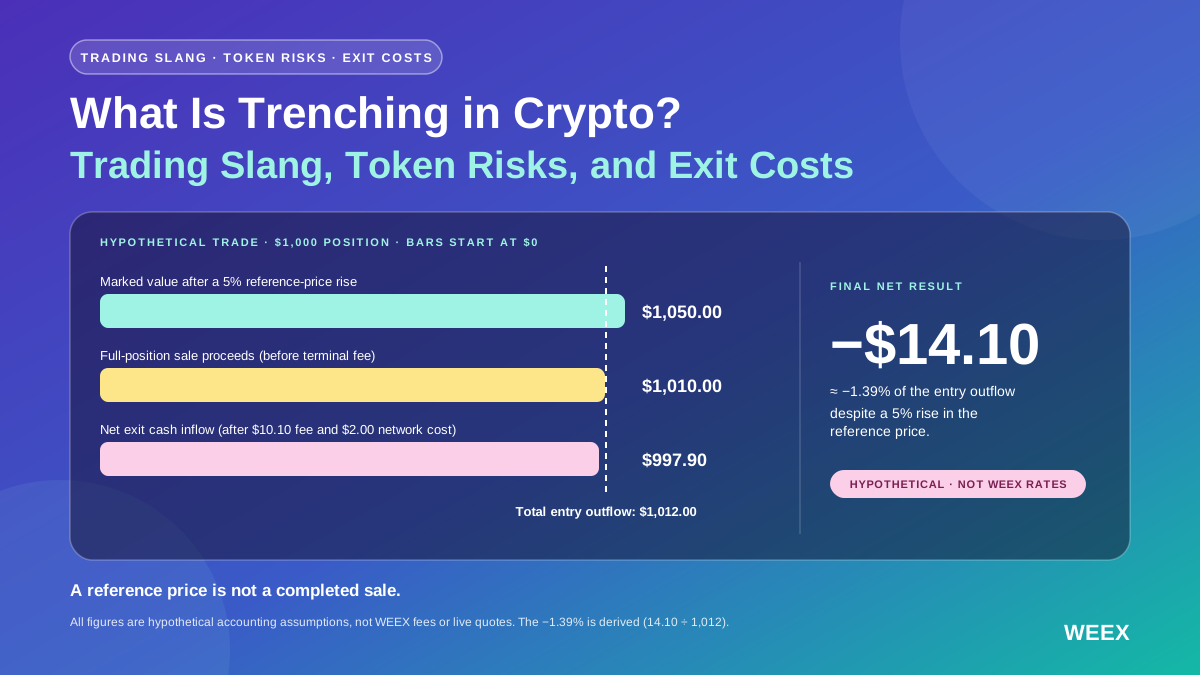
What Is Trenching in Crypto? Trading Slang, Token Risks, and Exit Costs
What is trenching in crypto? Learn the slang, token checks, liquidity risks, and how a rising token can still produce a loss after trading costs.
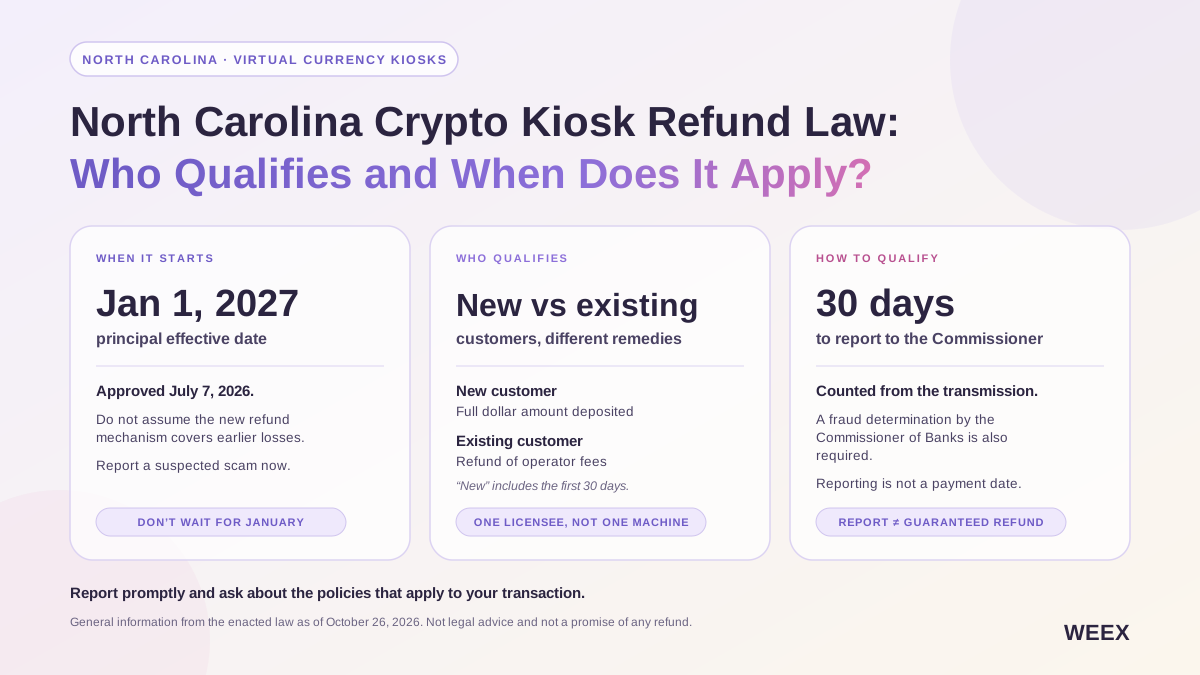
North Carolina Crypto Kiosk Refund Law: Who Qualifies and When Does It Apply?
Understand North Carolina’s crypto kiosk refund law: the January 2027 start date, who qualifies, reporting deadlines, and documents victims should keep.

[Bitcoin $0 Controversy②] "$0 is an Exaggeration"... Reasons Wall Street Disagrees
[ETH Letter] Meritz Securities Reviews Tokenization of Korean Securities Based on OP Stack
Progressive Party Opposes Further Delay of Cryptocurrency Income Tax

JPMorgan's Tokenized Fund on Solana: What MONY and JLTXX Mean for Institutional Adoption of RWA
Real and Fake Cryptocurrency Market Makers: What Makes a Market Maker Legitimate?
Crypto: The French tax authorities could receive data from foreign platforms
Bitcoin options show premium ahead of Fed decision
Why Third Parties Again? A Review of Coinbase's Supply Chain Risks and Defense Dilemmas
Ethereum’s $3 billion blockspace bet hinges on who gets to produce the next block
Crypto: USDC Overtakes USDT in the European Market
Challenges in Investigating Sources of Funds for Virtual Assets: Issues with Closed Exchanges and Personal Wallets


