
Quickben22 Rechecks 2018 Bitcoin Dormant Address List: Nearly 10,000 Dormant Addresses Restart Transfers After Eight Years, Transferring a Total of 245,000 BTC

 Prefer us on Google



In the crypto market, ancient Bitcoin chips that are often assumed to be "permanently lost" are showing signs of awakening after a long silence. Developer Quickben22 has re-examined a list of early dormant addresses established in 2018 in a recent on-chain study—this list specifically included 92,076 Bitcoin addresses that had not seen any transfers for over six consecutive years. After comparing again over an eight-year period, 9,990 of these addresses have actually utilized on-chain funds, accounting for 10.8% of the entire tracking sample.
Analyzing the underlying balance changes reveals that using "whether the address is completely zeroed out" as a filtering criterion often severely underestimates the actual outflow volume of early chips. Data shows that this research sample had a total of approximately 2.53 million BTC locked in the old snapshot from 2018; by comparing current on-chain balances with historical records and tracing transfer trajectories, researchers confirmed that a total of 7,816 addresses have been completely emptied, while another batch of addresses, although still showing a small balance on paper, had their core principal quietly migrated away.
Among them, a representative group of 502 addresses that originally held at least 1 BTC each now has balances reduced to less than 0.001 BTC, but they have cumulatively transferred a total of approximately 131,700 BTC, a figure that even exceeds the total outflow from all completely emptied addresses.
However, the vast majority of ancient chips remain inactive. Statistics show that there are still 82,086 addresses in the sample with current balances not lower than their levels at the time of the 2018 snapshot, collectively locking up approximately 2.2568 million BTC. It is important to clarify that this tracking is not aimed at broadly counting all dormant coins on the network, but rather focuses on a specific group of early addresses to measure how many assets, once classified by the market as "suspected lost," have shown actual on-chain control capabilities years later.
2025 as a Key Year for the Awakening of Old Coins
From a temporal perspective, the flow rhythm of these early assets shows that 2025 presents the most significant concentration of unusual activity. Research statistics indicate that in just the year 2025, this sample pool has cumulatively moved out approximately 95,800 BTC, making it the year with the most concentrated capital migration in eight years; however, further breakdown of the flow reveals that the massive movements throughout the year are highly concentrated in a very small number of entities—approximately 87,200 BTC came from just 60 addresses, indicating that adjustments in a few large positions are sufficient to pull the statistical curve of the entire sample.
Several emblematic concentrated transfers visually confirm this head effect. For example, on July 4, 2025, Beijing time, eight early addresses transferred a total of 80,009 BTC in a concentrated manner within just about 11 hours; even earlier, in March 2024, another batch of 34 addresses, each holding 50 BTC, was also completely emptied in a single on-chain transaction.
In the face of market nerves tightened by the awakening of ancient whales, on-chain data analysis perspectives need to clarify several common misinterpretations. First, under the Bitcoin network architecture, a single individual or institution can completely control hundreds or thousands of addresses simultaneously, so the 9,990 addresses that have seen fund movement do not imply that there are nearly 10,000 independent holders behind them; second, on-chain transfers do not equal sales—transferring chips to a new address may entirely stem from the holder upgrading their custody structure, changing cold wallets, or consolidating assets, and cannot be directly equated to actual selling pressure and transaction volume in the secondary market.
Returning to the essence of blockchain cryptography, an effective transfer confirmed by the entire network can only verify the fact that "someone has the ability to generate a valid signature and actually control the funds." As for whether the sender is the original holder who hoarded coins years ago, a legal heir, or a custodian taking over the assets, the publicly transparent on-chain address itself does not provide any identity answers.
Dormant Chips Enter the Property Rights Game in New York Court
The gray area of "long-term inactivity equating to abandonment of ownership" that originally remained at the on-chain data level has now officially evolved into the focus of real judicial litigation. In March of this year, a plaintiff using the pseudonym Noah Doe, along with two companies, filed a lawsuit in New York court, invoking traditional laws related to lost property, claiming legal ownership of the assets deposited within 39,069 dormant Bitcoin addresses in another tracking list.
Regarding this rare on-chain asset confirmation lawsuit, David Zaslowsky, a lawyer at the international law firm Baker McKenzie, pointed out the core legal differences in a special legal analysis published in June. He emphasized that under traditional legal frameworks, "abandonment" typically requires the original rights holder to have the subjective intent to actively relinquish ownership; however, the long dormancy of crypto assets could either be due to the holder accidentally losing their private key, leading to passive locking, or merely a minimalist long-term holding strategy lasting over a decade, with the two scenarios being fundamentally different in legal proof.
An even more challenging test lies in the execution phase after judicial rulings. David Zaslowsky candidly stated that even if the plaintiff ultimately obtains the ownership declaration issued by the court, as long as they cannot access the corresponding underlying crypto private keys, there are still no technical means to directly move this batch of Bitcoin on the blockchain. This means that the institutional game surrounding ancient dormant chips must clearly distinguish and separately address the two distinct thresholds of legal ownership and on-chain control capabilities.
-- Price
This content is provided for general informational purposes only and doesn't constitute financial, investment, legal, or tax advice. Any events, rewards, online promotions, or related information mentioned herein should not be considered a recommendation, solicitation, or invitation to purchase, sell, trade, or otherwise deal in any crypto assets. Crypto assets are highly volatile and may result in loss. The availability of WEEX services, products, and related events may vary by region. You are responsible for ensuring that your participation is in accordance with applicable local laws and regulations.
You may also like

Weekend Dividends: How Franklin Templeton's Tokenized Money Fund Breaks Traditional Barriers?
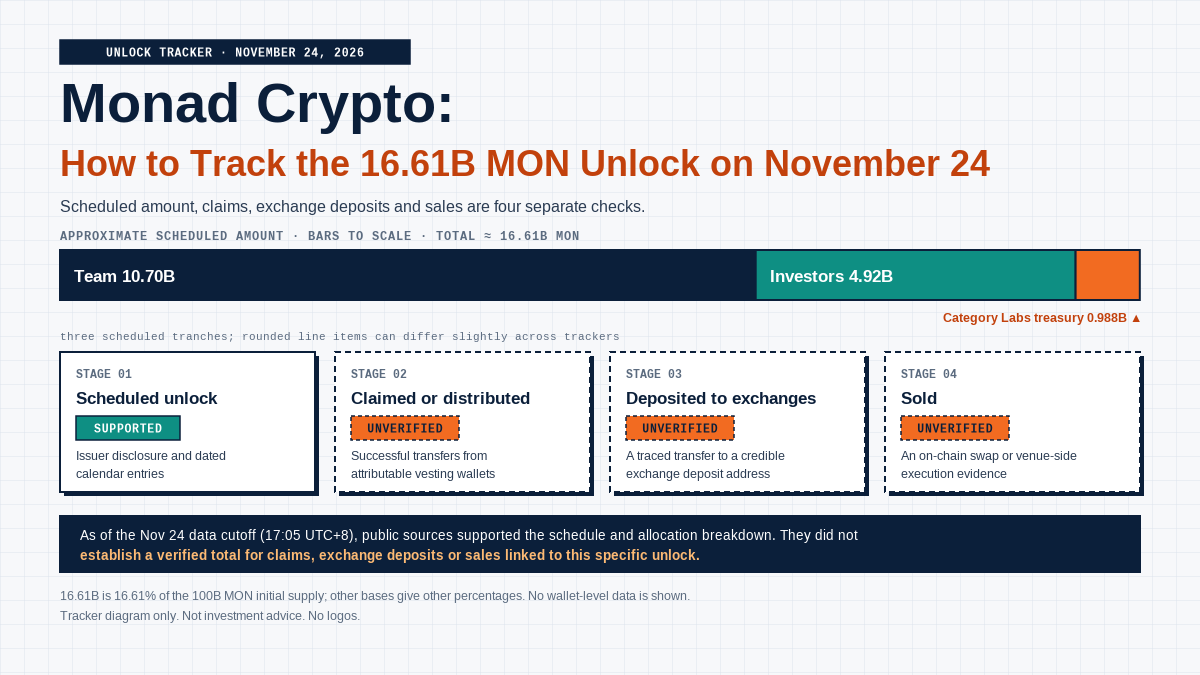
Monad Crypto: How to Track the 16.61B MON Unlock on November 24
Track Monad’s 16.61B MON unlock on November 24. See the team, investor, and treasury allocations, and learn how to verify claims and exchange deposits.

Prediction: Alphabet Will Be the World's Most Valuable Company by 2031
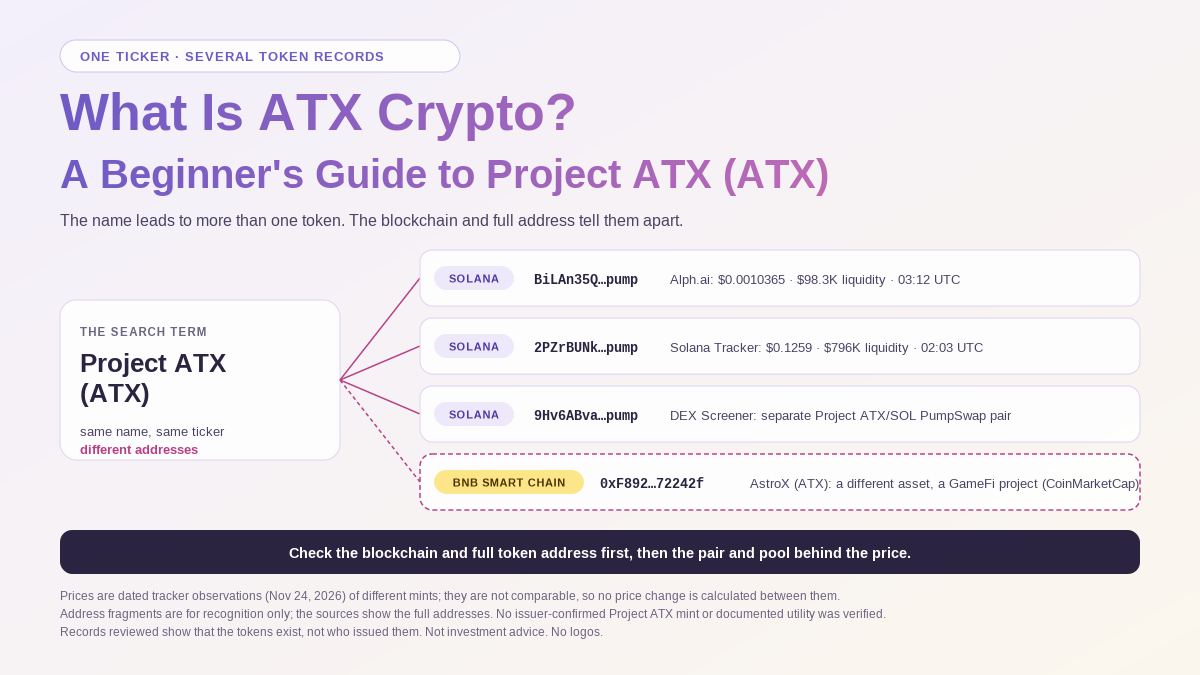
What Is ATX Crypto? A Beginner’s Guide to Project ATX (ATX)
Learn what ATX crypto means, why Project ATX appears under multiple Solana mint addresses, and how to tell those tokens apart from AstroX (ATX).

Ethereum ETF: $96 million in net inflows stop the November bleeding

Lee Chang-yong Discusses Potential Erosion of Capital Movement Regulations with Introduction of Won Stablecoin

Bitcoin’s supply squeeze narrative faces scrutiny after 11,000 BTC moves to Kraken

Korean Token Securities Need Connection to Overseas Blockchain Financial Infrastructure

ECB Seeks Partners for Tokenized Deposits and Securities Pilot

[Analysis] Reasons Why This Bitcoin Decline Is Different from the Past

SBF Expresses Regret Over Anthropic Sale: AI Has a 25% Chance of Destroying Humanity, Young People Should Master AI

VIX Soars to Highest Level Since Last Year’s Tariff Turmoil, Goldman Sachs Fear Index Nears Maximum, US Stocks May Face Over $80 Billion Sell-off Next Week

Is Arthur Hayes buying the dip after moving $5M in USDC?

Bitcoin: Major Investors Return After Nine Months of Selling

Musk Regrets Spending Over $400 Million on Republican Candidates

ZRO Unlock on November 20: Why Are Supply Estimates Different?

Options Overview | AMD Sees $37.88 Million in Forward Double Call Sell, Limited Upside Ahead; Intel Shows Large Put Buys Indicating Bearish Dominance

APEC Releases Connectivity Blueprint

Institutional Withdrawal and Retail Frenzy: Why is the Eastern European Crypto Market Exhibiting 'Abnormal' Trends?

Bitcoin income ETFs promise regular payments. What do investors give up?

USD.AI Evaluates GPU Transactions at $25 Billion

Solana tokenized equities reach $1.22 billion as stock offerings expand
IoTeX adds quantum-resistant technology to developer portal
How to Choose Precious Metal ETFs? A Comprehensive Analysis of Mainstream Gold, Silver, and Mining Stock ETFs
Shiba Inu Experiences Outflow of 300 Billion SHIB from Exchanges

Hacker moves over 34279.66 ETH from Binance after inactivity
Why Are Tokenized Stocks Seeing Strong Buying Pressure While Prices Keep Falling?

XRP holders demand Ripple burn 31.1 billion tokens by March 2027
Pump.fun Launches Prediction Market Feature in Collaboration with Polymarket
ARTEX AI tool breaches networks in under 3 hours, FBI warns
Weekend Dividends: How Franklin Templeton's Tokenized Money Fund Breaks Traditional Barriers?
Monad Crypto: How to Track the 16.61B MON Unlock on November 24
Track Monad’s 16.61B MON unlock on November 24. See the team, investor, and treasury allocations, and learn how to verify claims and exchange deposits.
Prediction: Alphabet Will Be the World's Most Valuable Company by 2031
What Is ATX Crypto? A Beginner’s Guide to Project ATX (ATX)
Learn what ATX crypto means, why Project ATX appears under multiple Solana mint addresses, and how to tell those tokens apart from AstroX (ATX).
Ethereum ETF: $96 million in net inflows stop the November bleeding
Lee Chang-yong Discusses Potential Erosion of Capital Movement Regulations with Introduction of Won Stablecoin
Latest articles


Latest coin listings on WEEX


