
VIX Soars to Highest Level Since Last Year’s Tariff Turmoil, Goldman Sachs Fear Index Nears Maximum, US Stocks May Face Over $80 Billion Sell-off Next Week

 Prefer us on Google



On November 21, as US stocks faced a severe sell-off on Friday, two major market risk indicators on Wall Street issued simultaneous warnings. The Chicago Board Options Exchange Volatility Index (VIX), known as the "fear index," briefly touched 40, marking its highest level since the tariff turmoil in April 2025. Meanwhile, Goldman Sachs' fear index rose to 9 points, close to the maximum of 10 points. Goldman Sachs traders warned that as systematic investors continue to reduce their equity exposure, US stocks may face a new wave of massive sell-off pressure in the coming week.
Goldman Sachs' trading department noted that this round of sell-off has spread to systematic investors who rely on quantitative models and market trends for trading. According to their estimates, in the past month, trend-following traders, including Commodity Trading Advisors (CTAs), have sold approximately $57 billion worth of stocks, turning their net positions in US stocks into a net short position of $19 billion.
More concerning is that Goldman’s model indicates that in the coming week, even if US stocks maintain sideways fluctuations, CTAs may further sell about $65.8 billion worth of stocks; if the stock market rises, the expected sell-off scale is $28.6 billion; if the market continues to decline, the potential sell-off could reach as high as $80.6 billion.
This means that the pressure currently facing US stocks comes not only from investors actively withdrawing from risk assets but may also be further impacted by passive reductions in quantitative trading strategies.
VIX Soars to 40, But Analysts Say Market Has Not Yet Entered Full Panic Hedging
As the S&P 500 index fell 3.6% on Friday, recording its worst weekly performance in seven months, the VIX index, which measures expected volatility in the market over the next 30 days, surged sharply towards the end of trading, briefly reaching 40.
However, Mandy Xu, head of derivatives market intelligence at Cboe Global Markets, pointed out that this VIX surge is more of a mechanical reaction to the sharp decline in the stock market rather than investors scrambling to buy put options at any cost. Xu estimated that over 80% of the VIX increase is due to the decline in the S&P 500 index and its chain effects on the pricing of longer-term options, rather than a sudden spike in demand for downside protection. She stated that short-term market uncertainty has significantly increased, but this does not necessarily mean that investors' fear levels have risen to the same extent.
Historically, when the VIX rises above 30, it usually indicates that the market is under significant pressure, but similar situations can occur several times a year and often do not last more than a few days.
However, some investors have begun to bet on further increases in market volatility. Matthew Thompson, managing partner at Thompson Capital Management, stated that the current market environment may create conditions for a significant upward movement in the VIX. The firm has established long positions in volatility through VIX futures.
Goldman Sachs Warns That Quantitative Trading Sell-off May Create a Vicious Cycle
Unlike the VIX, which primarily reflects expected volatility in the options market, Goldman Sachs' fear index rising to 9 points highlights that the internal sell-off pressure in the stock market is intensifying. Goldman Sachs traders pointed out that one of the most concerning risks currently is that trend-following investment strategies may amplify market declines.
These strategies typically adjust positions dynamically based on market price trends and volatility. When stock prices continue to fall and market volatility rises, related models may trigger further reductions in positions or the establishment of short positions.
The resulting selling pressure may further depress stock prices, creating a reinforcing cycle of falling prices and systematic reductions. According to Goldman’s model, in a scenario where the stock market continues to decline, CTAs may sell up to $80.6 billion worth of stocks in the coming week. Even if the market does not decline further, related strategies may still generate hundreds of billions of dollars in selling pressure.
However, these figures are model estimates and not confirmed sell orders; the actual trading scale still depends on subsequent market trends.
Anthropic’s IPO Fails to Reverse Market Sentiment, AI Investment Return Concerns Persist
Another important backdrop to this round of US stock declines is the deepening investor concerns over the massive capital expenditures in the artificial intelligence (AI) industry. Although Anthropic (ANT.US) completed the world’s largest initial public offering (IPO), the market had previously hoped that this significant listing event would reinvigorate investor risk appetite, but the actual effect fell short of expectations.
Goldman Sachs traders noted in their report that many investors originally hoped Anthropic’s IPO would serve as a turning point for the market adjustment, prompting funds to flow back into risk assets before the end of the year.
However, this expectation did not materialize. Goldman Sachs traders stated that the lack of this key driving force makes it difficult for the market to absorb the current selling pressure. Meanwhile, investors are increasingly worried about whether the massive investments made by tech giants in AI infrastructure, chips, and computing power will generate sufficient returns to support the high valuations of the entire industry.
NVIDIA (NVDA.US) recent volatility has further exacerbated these concerns, with the company’s stock price plummeting 14% on Friday, down nearly 50% from its peak on October 6. Tech stocks have thus become the hardest hit in this round of sell-off. The Nasdaq 100 index fell 5.6% on Friday, recording its worst weekly performance since March 2020. The Philadelphia Semiconductor Index also plunged 11%, dragged down by significant declines in chip stocks like NVIDIA.
Sell-off Spreads to Retail Favorites and Cryptocurrency Stocks, Defensive Sectors Relatively Strong
In addition to large tech stocks, the market sell-off pressure is also spreading to more speculative assets. Goldman Sachs data shows that the basket of popular stocks among retail investors compiled by the firm fell 8.9%, indicating that stocks previously favored by individual investors are facing significant selling pressure. Additionally, Goldman Sachs’ basket of Bitcoin-sensitive stocks fell 11%, reflecting that cryptocurrency-related stocks are also impacted by declining risk appetite.
Signs of market funds shifting towards defensive sectors are also becoming increasingly evident. Goldman Sachs’ performance indicator for cyclical stocks relative to defensive stocks fell 3.2%, indicating that defensive stocks are performing relatively stronger.
Analysts pointed out that when the market simultaneously faces AI valuation adjustments, systematic fund reductions, and rising volatility, the sell-off that was originally concentrated in a few tech stocks may further spread to other high-risk assets.
Overall, the surge in the VIX and Goldman Sachs’ fear index nearing maximum reflects that US stocks are currently facing two different but interconnected pressures. On one hand, the sharp decline in stock prices drives a rapid increase in expected volatility in the options market; on the other hand, the ongoing reductions in trend-following strategies may further amplify the market decline.
Although analysts believe that the market has not yet entered a state of full panic hedging, Goldman Sachs’ model predicts that even if US stocks stabilize in the short term, potential selling pressure from systematic funds may continue to pose challenges. In the coming week, the adjustment of positions in quantitative trading strategies and whether tech stocks can stop declining will be key to determining whether the market deteriorates further.
-- Price
This content is provided for general informational purposes only and doesn't constitute financial, investment, legal, or tax advice. Any events, rewards, online promotions, or related information mentioned herein should not be considered a recommendation, solicitation, or invitation to purchase, sell, trade, or otherwise deal in any crypto assets. Crypto assets are highly volatile and may result in loss. The availability of WEEX services, products, and related events may vary by region. You are responsible for ensuring that your participation is in accordance with applicable local laws and regulations.
You may also like

Quickben22 Rechecks 2018 Bitcoin Dormant Address List: Nearly 10,000 Dormant Addresses Restart Transfers After Eight Years, Transferring a Total of 245,000 BTC

Weekend Dividends: How Franklin Templeton's Tokenized Money Fund Breaks Traditional Barriers?
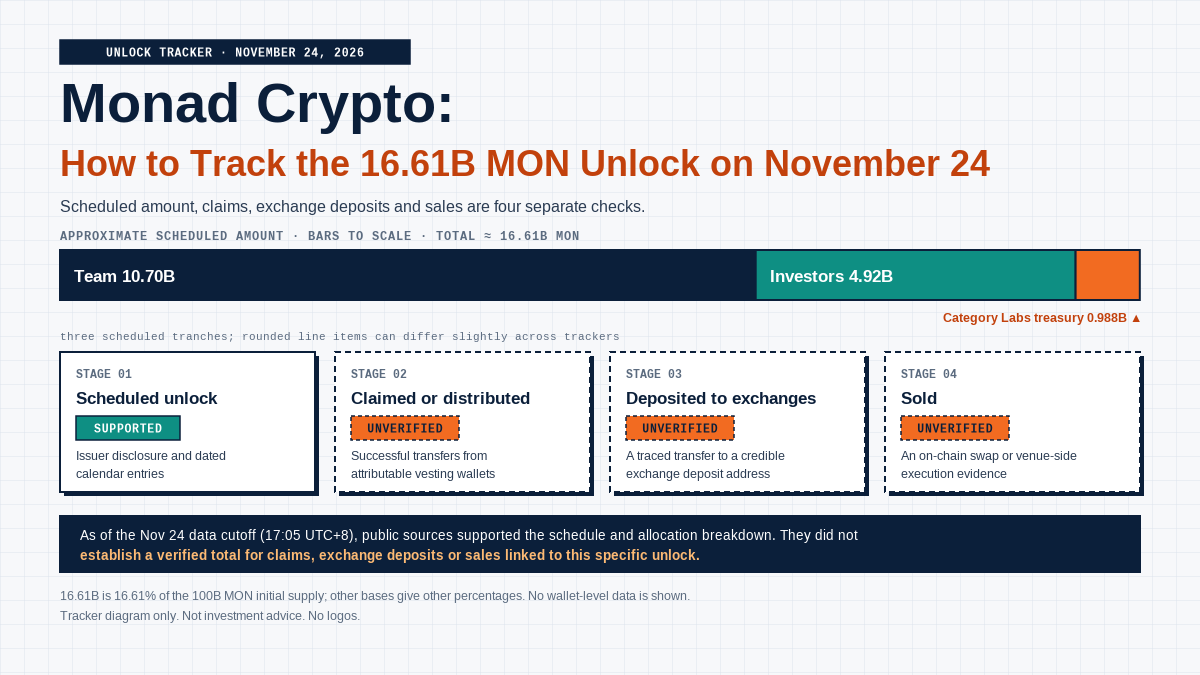
Monad Crypto: How to Track the 16.61B MON Unlock on November 24
Track Monad’s 16.61B MON unlock on November 24. See the team, investor, and treasury allocations, and learn how to verify claims and exchange deposits.

Prediction: Alphabet Will Be the World's Most Valuable Company by 2031
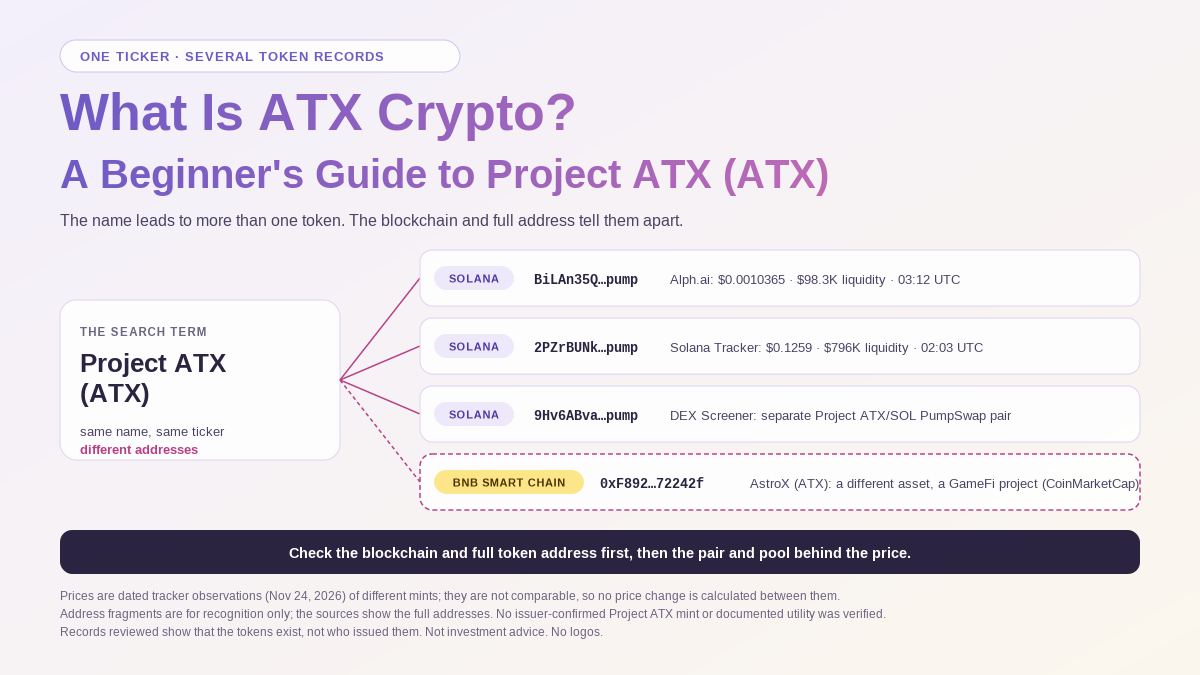
What Is ATX Crypto? A Beginner’s Guide to Project ATX (ATX)
Learn what ATX crypto means, why Project ATX appears under multiple Solana mint addresses, and how to tell those tokens apart from AstroX (ATX).

Ethereum ETF: $96 million in net inflows stop the November bleeding

Lee Chang-yong Discusses Potential Erosion of Capital Movement Regulations with Introduction of Won Stablecoin

Bitcoin’s supply squeeze narrative faces scrutiny after 11,000 BTC moves to Kraken

Korean Token Securities Need Connection to Overseas Blockchain Financial Infrastructure

ECB Seeks Partners for Tokenized Deposits and Securities Pilot

[Analysis] Reasons Why This Bitcoin Decline Is Different from the Past

SBF Expresses Regret Over Anthropic Sale: AI Has a 25% Chance of Destroying Humanity, Young People Should Master AI

Is Arthur Hayes buying the dip after moving $5M in USDC?

Bitcoin: Major Investors Return After Nine Months of Selling

Musk Regrets Spending Over $400 Million on Republican Candidates

ZRO Unlock on November 20: Why Are Supply Estimates Different?

Options Overview | AMD Sees $37.88 Million in Forward Double Call Sell, Limited Upside Ahead; Intel Shows Large Put Buys Indicating Bearish Dominance

APEC Releases Connectivity Blueprint

Institutional Withdrawal and Retail Frenzy: Why is the Eastern European Crypto Market Exhibiting 'Abnormal' Trends?

Bitcoin income ETFs promise regular payments. What do investors give up?
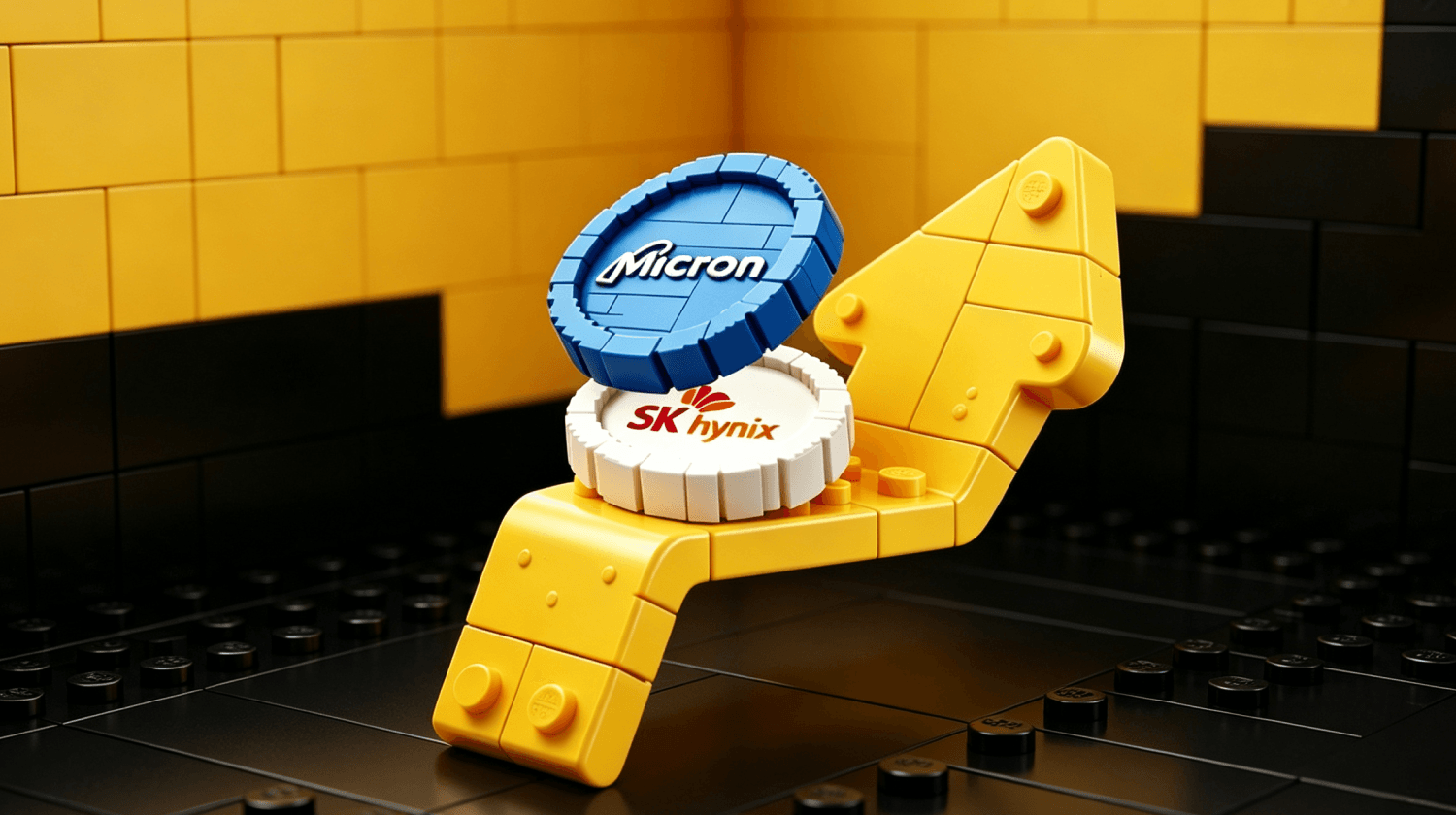
USD.AI Evaluates GPU Transactions at $25 Billion

Solana tokenized equities reach $1.22 billion as stock offerings expand
IoTeX adds quantum-resistant technology to developer portal
How to Choose Precious Metal ETFs? A Comprehensive Analysis of Mainstream Gold, Silver, and Mining Stock ETFs
Shiba Inu Experiences Outflow of 300 Billion SHIB from Exchanges

Hacker moves over 34279.66 ETH from Binance after inactivity
Why Are Tokenized Stocks Seeing Strong Buying Pressure While Prices Keep Falling?

XRP holders demand Ripple burn 31.1 billion tokens by March 2027
Pump.fun Launches Prediction Market Feature in Collaboration with Polymarket
ARTEX AI tool breaches networks in under 3 hours, FBI warns
Quickben22 Rechecks 2018 Bitcoin Dormant Address List: Nearly 10,000 Dormant Addresses Restart Transfers After Eight Years, Transferring a Total of 245,000 BTC
Weekend Dividends: How Franklin Templeton's Tokenized Money Fund Breaks Traditional Barriers?
Monad Crypto: How to Track the 16.61B MON Unlock on November 24
Track Monad’s 16.61B MON unlock on November 24. See the team, investor, and treasury allocations, and learn how to verify claims and exchange deposits.
Prediction: Alphabet Will Be the World's Most Valuable Company by 2031
What Is ATX Crypto? A Beginner’s Guide to Project ATX (ATX)
Learn what ATX crypto means, why Project ATX appears under multiple Solana mint addresses, and how to tell those tokens apart from AstroX (ATX).
Ethereum ETF: $96 million in net inflows stop the November bleeding
Latest articles


Latest coin listings on WEEX


