
Fogo Foundation Reports Unauthorized Transfer of 400 Million FOGO Tokens

 Prefer us on Google


The Fogo Foundation reported that an unknown attacker has transferred approximately 400 million FOGO tokens, while the blockchain continues to operate normally and efforts with exchanges, authorities, and forensic experts are ongoing.
- The Fogo Foundation attributed the transfer of approximately 400 million FOGO tokens to an unknown attacker.
- The incident has not affected the Fogo blockchain, which continues to operate normally.
- The organization has notified exchanges and is coordinating the investigation with authorities and forensic experts.
The Fogo Foundation reported that it was recently compromised by an unknown attacker, in an incident that allegedly resulted in the transfer of approximately 400 million FOGO tokens to an address linked to the aggressor. The announcement, dated August 29 in the UTC+8 timezone, opened an investigation into the access used and the destination of the assets, although the organization has not yet publicly identified the perpetrator or provided a detailed technical explanation.
According to information released by KuCoin based on a report from ME News, the foundation immediately notified relevant exchanges and began coordinating actions with authorities and forensic analysis specialists. The response aims to track the movement of the tokens and limit the possibilities of trading the funds, but no names of platforms, additional addresses, or specific measures applied to the involved accounts have been disclosed.
What Happened to the FOGO Tokens
The central fact of the case is a transfer of approximately 400 million FOGO tokens from the foundation to an address associated with the attacker. This figure represents the volume reported by the organization and does not, by itself, equate to a monetary valuation of the damage, as the original news does not provide a market price, a reference quote, or an estimate of the total value of the assets.
The foundation described the episode as a compromise of its own structure, not as a general disruption of the network. This distinction is relevant for users, as unauthorized access to the accounts or reserves of an entity does not necessarily imply that the attacker has altered the consensus mechanism, the blocks, or the transactions of the entire blockchain.
The organization also did not attribute the incident to a specific group, person, or jurisdiction. By classifying the perpetrator as unknown, the statement keeps the investigation open and avoids presenting any hypothesis about the access route, the tools used, or the identity of the holder of the receiving address as conclusive.
The temporal reference also requires precision: the report places the announcement on August 29 under the UTC+8 timezone and notes that the compromise occurred recently, without providing an exact time or a complete timeline of the transfers. For now, the confirmed data is limited to the reported compromise, the approximate volume moved, and the address that the foundation identified as linked to the attacker.
The Fogo Network Remains Operational
One of the main messages from the foundation is to separate the unauthorized transfer of assets from the operation of the Fogo blockchain. The entity assured that the incident did not affect the network itself, which continues to function normally, so the announcement does not describe a service outage or an interruption in transaction processing.
Fogo presents itself in the disclosed information as a Layer 1 network based on SVM architecture. Generally speaking, a Layer 1 chain maintains its own validation and recording infrastructure, while SVM refers to an environment compatible with the execution of programs developed for the Solana virtual machine; however, the news does not attribute the incident to a specific failure of that technology.
The operational continuity of the network does not diminish the seriousness of the compromise suffered by the foundation. A blockchain can continue producing blocks while a related entity loses control over a reserve of tokens, so users must distinguish between the availability of the infrastructure and the security of the accounts managing funds or project allocations.
The organization did not report a pause in the network, a rollback of transactions, or a modification of the protocol. It also did not indicate that validators or general users had lost funds, so any conclusion about a broader impact would exceed the confirmed facts so far.
Coordination with Exchanges and Authorities
After detecting the transfer, the foundation stated that it immediately notified the relevant exchanges. This type of notification allows platforms to be alerted about possible deposits related to the moved funds, although the available statement does not confirm that any exchange has frozen assets, blocked an account, or rejected operations linked to the flagged address.
Cooperation with forensic experts aims to reconstruct the sequence of the incident by analyzing addresses, on-chain movements, and possible points of access. This work can help identify patterns and track the tokens, but the published information does not detail which firm is involved, what tools will be used, or if there is already a preliminary conclusion about the method employed.
The foundation also stated that it is coordinating actions with the authorities, without specifying which agencies received the notification or in which jurisdiction the investigation is taking place. This reserve prevents anticipating legal outcomes and forces treating any hypotheses about responsible parties, accomplices, or asset recovery as unconfirmed.
The case illustrates why post-incident communication must differentiate between verified facts, ongoing measures, and promises of follow-up. In this episode, the transferred amount, the attacker's address, the notifications, and the continuity of the network are part of the announcement; the identity of the aggressor, the intrusion mechanism, and the final destination of the tokens remain open.
What to Expect from Upcoming Updates
The foundation has committed to promptly disclose new updates, a promise that places transparency at the center of the response. Upcoming statements could specify when the transfer was detected, which accounts were compromised, what additional movements were observed, and what measures the notified platforms adopted, but none of these details are confirmed in the initial information.
For ecosystem participants, the coming hours and days will be important to differentiate the original movement from any subsequent transfers. Public tracking of the flagged address may provide signals about attempts to split, exchange, or move the tokens, although observing a transaction does not in itself prove who controls an address nor guarantees the recovery of the funds.
It will also be relevant for Fogo to explain whether the impact was limited to a reserve managed by the foundation or if it involved other connected systems. So far, the organization has maintained that the blockchain continues to operate normally and has not reported additional losses among users, so the confirmed scope remains confined to the approximately 400 million FOGO transferred.
As the investigation progresses, the incident adds pressure on the management of treasuries and institutional accounts within digital asset projects. Fogo's technical continuity may prevent a network disruption, but trust will depend on the foundation providing a clear timeline, keeping exchanges informed, and accurately explaining what happened without confusing the security of the protocol with that of its custodians.
The available information does not allow us to assert that the tokens have been sold, recovered, or frozen, nor that the network has suffered a structural vulnerability. For now, the fact communicated by the foundation is that an unknown attacker allegedly transferred approximately 400 million FOGO from a reserve of the organization, while it maintains coordination with exchanges, authorities, and forensic experts.
-- Price
This content is provided for general informational purposes only and doesn't constitute financial, investment, legal, or tax advice. Any events, rewards, online promotions, or related information mentioned herein should not be considered a recommendation, solicitation, or invitation to purchase, sell, trade, or otherwise deal in any crypto assets. Crypto assets are highly volatile and may result in loss. The availability of WEEX services, products, and related events may vary by region. You are responsible for ensuring that your participation is in accordance with applicable local laws and regulations.
You may also like

Fogo mainnet back online after recovery of 237 million stolen tokens

Fogo Mainnet Has Been Stopped For 46 Hours With No Restart Timeline

Bitcoin's next Fed test comes with a hidden problem in America's inflation data
The crypto market loses altitude, patience becomes a habit – Steady Lads

Stablecoin Payments in Europe: How Do CASP, PI, and EMI Fit Together?
Why 22 Trillion-Dollar Giants Refuse to be 'Tokenized'?

Rayls Bridges Traditional Finance and Decentralized Finance
Is 24/7 Trading a Necessity? Analyzing the Real Trading Rhythm of RWA Perpetual Contracts
Cyberattack on GMO in Japan: Trading Accounts Compromised, GMO Coin Claims to be Unaffected
Elon Musk's Grand Scheme to Undermine New Cloud Providers

Google Earnings on Oct 28: Will the Fed Decision Move GOOGL Stock?
What Is a Cryptocurrency Market Deleveraging Event? Liquidations vs. ADL
Understand a cryptocurrency market deleveraging event: liquidation vs. ADL, misleading open-interest declines, hedge risks, and checks before trading.
The Week Ahead: 4 Key Moments for the Crypto Market

Do Prediction Markets Actually Bring Utility? – Tiger Research
Who Holds Tokenized Stocks? A Large Number of Retail Investors with Highly Concentrated Assets
Why Is Quant (QNT) Crypto Up Today? What Price and Volume Really Show
Why is Quant (QNT) up today? Review price and volume evidence, the banking partnership timeline, token-demand assumptions, and risks before trading.
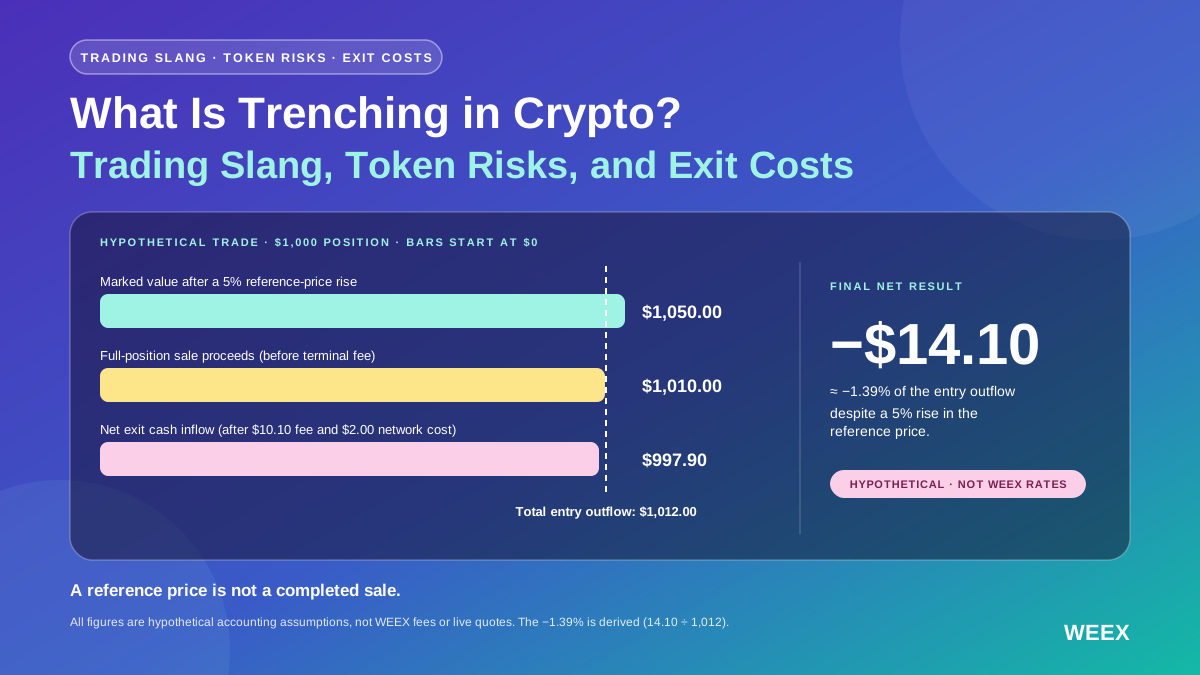
What Is Trenching in Crypto? Trading Slang, Token Risks, and Exit Costs
What is trenching in crypto? Learn the slang, token checks, liquidity risks, and how a rising token can still produce a loss after trading costs.

Flash Loans Secure Two Governance Seats: What Does the X100 Theft Teach the Industry?
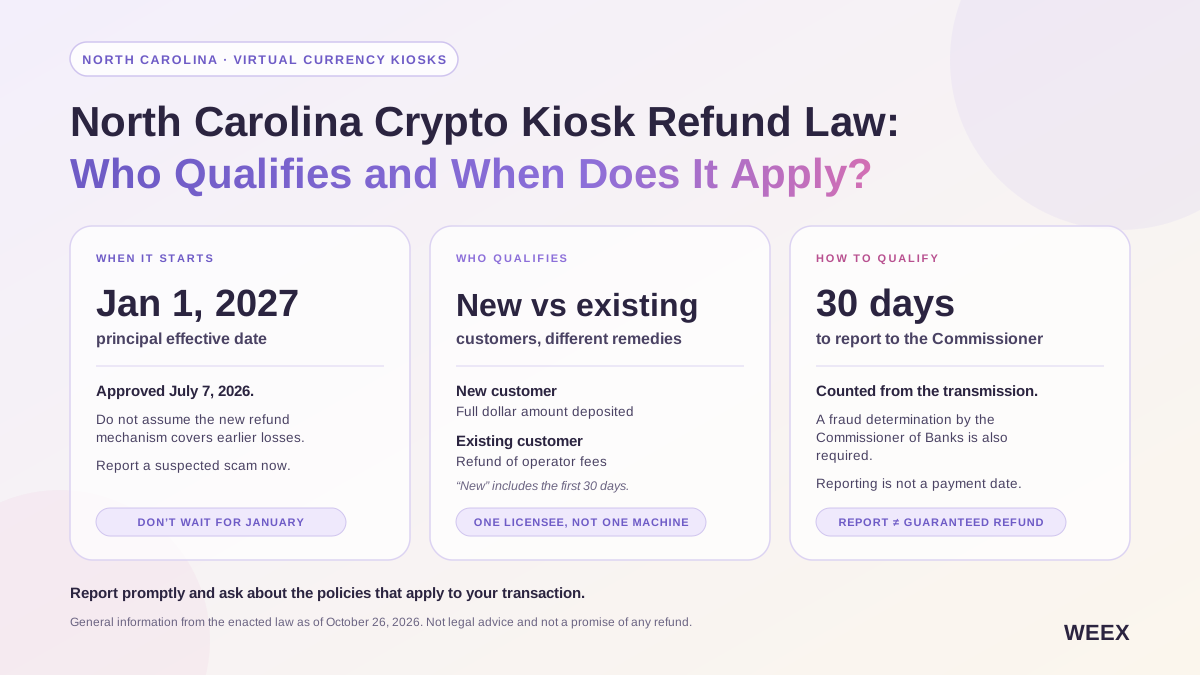
North Carolina Crypto Kiosk Refund Law: Who Qualifies and When Does It Apply?
Understand North Carolina’s crypto kiosk refund law: the January 2027 start date, who qualifies, reporting deadlines, and documents victims should keep.

AI Reduces Vulnerability Discovery Costs, Crypto Industry Divided in Response
Ethereum: Glamsterdam postponed after risks detected on 13 contracts

Who is Making Money from Digital Dollars? Profit Sharing Among Stablecoin Issuers, Distributors, and Payment Providers
Pump.fun: Why Displayed Gains Can Mislead Copy-Trading Enthusiasts
Diverging Sentiment in Altcoins: How Whales Operate Amid Market Panic

ECB says digital euro will give Europe control over its payment systems

IOSG: After KBW and TOKEN2049, with the crypto tide receding, who is still building?

Monero community backs 45 XMR proposal for core development

Risks Accumulate in the Global Economy: Double Threat from Trump, Debt Alarm in Artificial Intelligence

SEC's Crypto New Regulation Public Comment Period Ends: How Far Are We from 'Compliant ICO'?

HSBC Launches Hong Kong Dollar Stablecoin RedCoin on PayMe, Expanding to Over 3.3 Million Users and 100,000 Merchants
Fogo mainnet back online after recovery of 237 million stolen tokens
Fogo Mainnet Has Been Stopped For 46 Hours With No Restart Timeline
Bitcoin's next Fed test comes with a hidden problem in America's inflation data
The crypto market loses altitude, patience becomes a habit – Steady Lads
Stablecoin Payments in Europe: How Do CASP, PI, and EMI Fit Together?
Why 22 Trillion-Dollar Giants Refuse to be 'Tokenized'?
Contents
Latest articles


Latest coin listings on WEEX


