
Japan’s 4% bond yield spike threatens the low-cost borrowing strategy behind corporate Bitcoin buying

 Prefer us on Google



Japan's 30-year government-bond auction cleared at a 4.079% average yield on Sept. 3, underscoring a tougher backdrop for future capital raised by Metaplanet to buy Bitcoin. The long bond is a market signal; the nearer test for the company is the price of shorter-tenor debt and refinancing.
The average yield rose 14.2 basis points from 3.937% at the previous 30-year auction on Aug. 6. Japan's Sept. 1 10-year auction averaged 2.995%, placing the 4% threshold at the long end rather than across the entire curve. The Bank of Japan, meanwhile, maintains an operating guideline of around 1% for the uncollateralized overnight call rate.
Metaplanet's existing fixed obligations retain their contractual cash flows. Its ¥8 billion 20th-series ordinary bond is zero-coupon and matures on April 23, 2027, while its inaugural BitBonds carry fixed coupons. The shift in Japanese yields instead raises the benchmark for future issuance and refinancing.
That leaves a narrower version of Metaplanet's funding advantage intact. The bilateral zero-coupon bond protects near-term cash flow, but repeating such favorable terms at the scale required for sustained Bitcoin purchases remains uncertain.
Metaplanet BitBonds face a shorter-tenor funding test
Metaplanet's inaugural 21st through 24th-series BitBonds total ¥200 million, pay fixed coupons ranging from roughly 4.0% to 4.3%, and mature in about three years. Recent government auctions cleared at average yields of 1.708% for two-year debt and 2.163% for five-year debt.
A straight-line interpolation between those official results produces an estimated three-year sovereign benchmark of 1.8597%. The estimate is an analytical tenor comparison rather than a traded three-year quote or a cash-flow duration calculation.
Against it, the inaugural BitBonds pay an estimated premium of about 214 to 244 basis points. Future coupons would rise if the sovereign benchmark increased while Metaplanet's credit spread stayed constant. A wider credit spread would add further pressure.
The bond terms explain why investors may require that premium. The BitBonds are unrated, unsecured and unguaranteed senior obligations. They carry transfer restrictions, and secondary-market liquidity is unassured. Metaplanet has said later series may differ in maturity and interest rate according to market conditions and investor demand.
Existing instruments face a different equation. Higher rates can affect their market value, while the stated coupon and principal cash flows remain fixed. The company's 20th-series ordinary bond funded Bitcoin purchases before all expected cash arrived from its 27th-series stock acquisition rights. Part of the warrant proceeds was designated to repay the bond, allowing Metaplanet to bring forward funding without an annual coupon bill.
Metaplanet's funding channels carry different costs
Metaplanet was already drawing on several channels at midyear. At June 30, it reported 43,000 BTC, $414 million drawn from a $500 million Bitcoin-collateralized credit facility, ¥67.486 billion of short-term borrowings, ¥8 billion of bonds due within one year and ¥1.805 billion of first-half interest expense.
Second-quarter Bitcoin purchases used proceeds from the 20th-series bond, the credit facility, the 27th-series rights and Bitcoin-income revenue. This mix kept purchases moving while mNAV remained below 1.0x for most of the half and the company made no discretionary common-share allotments during the quarter. The funding inventory therefore separates into two parts: fixed structures protect current economics, while each new round of capital faces prevailing market terms.
Scale turns a coupon into a constraint
The inaugural BitBond issue is too small to transform Metaplanet's economics. At 4.15%, the midpoint of its coupon range, annual interest on ¥200 million is about ¥8.3 million, equivalent to roughly 0.07% of the company's ¥11.4 billion full-year operating-profit forecast.
The same rate applied to larger illustrative programs produces a different result:
| Illustrative BitBond principal | Annual interest at 4.15% | Share of ¥11.4bn operating-profit forecast |
|---|---|---|
| ¥200 million | ¥8.3 million | About 0.07% |
| ¥10 billion | ¥415 million | About 3.6% |
| ¥100 billion | ¥4.15 billion | About 36.4% |

The ¥10 billion and ¥100 billion rows are sensitivities rather than issuance forecasts. They show why the ability to expand the program at acceptable rates matters more than the first tranche's small coupon bill.
A one-percentage-point increase on an illustrative ¥100 billion program would add ¥1 billion to annual interest. At an assumed Bitcoin purchase price of ¥12.5 million, that amount equals 80 BTC a year when the additional interest comes entirely from cash otherwise available for accumulation.
Metaplanet could instead meet the expense through operating cash flow or another financing source. The 80 BTC figure applies only to the stated price and cash-use assumptions. Its purpose is to translate a rate move into the company's capacity to add Bitcoin for each share outstanding.
The balance-sheet effect grows faster than the headline drama. A 4.079% 30-year sovereign yield changes little about a ¥200 million BitBond issue. A large future debt program near the current coupon range would consume a meaningful portion of forecast operating profit before any additional rise in the benchmark or credit spread.
-- Price
Equity access depends on Metaplanet's valuation
The 27th-series rights generally may be exercised only when company-notified mNAV is at least 1.01x. No rights were exercised in August. At Aug. 31, 947,300 rights representing 94.73 million potential shares remained, equal to about 7.0% of the company's 1.345 billion issued shares.
That leaves a material but conditional dilution overhang. If the mNAV threshold prevents exercise, warrant-funded Bitcoin purchases may stall and the proceeds intended partly for repaying the zero-coupon bond arrive more slowly. If the threshold is satisfied and exercises resume, Metaplanet gains funding while existing holders absorb more shares.
The company also held authority to repurchase as many as 150 million shares for up to ¥75 billion through Oct. 28. It bought zero shares in August and zero cumulatively under that authorization through Aug. 31, leaving buybacks absent from the period's offset to potential dilution.
For the first half, Metaplanet's issuer-defined measure of Bitcoin holdings per 1,000 fully diluted shares increased 9.6% to 0.0263554 BTC. The reported funding mix was accretive over that period. Future accretion becomes harder as debt principal expands, coupons rise or more rights convert into shares.
Japan's Sept. 3 auction therefore tests Metaplanet's funding advantage at the margin. The zero-coupon bridge preserves the clearest benefit on existing terms, and the BitBond program demonstrates access to fixed-rate yen debt at a meaningful premium over a comparable sovereign tenor. The next funding round's price and scale will determine how much of that advantage continues to reach Bitcoin per share.
This content is provided for general informational purposes only and doesn't constitute financial, investment, legal, or tax advice. Any events, rewards, online promotions, or related information mentioned herein should not be considered a recommendation, solicitation, or invitation to purchase, sell, trade, or otherwise deal in any crypto assets. Crypto assets are highly volatile and may result in loss. The availability of WEEX services, products, and related events may vary by region. You are responsible for ensuring that your participation is in accordance with applicable local laws and regulations.
You may also like

LME Tightens Constraints on Large Aluminum Market Positions

JPMorgan: Physical AI's 'ChatGPT Moment' Expected as Early as Next Year

Bernstein Releases 'AI Sell-off Misjudgment List': Dell, Broadcom Among Top Picks, CoreWeave 'Hasn't Fallen Enough'
Where can Bitcoin count toward a US exchange’s operating reserves?

Why Is the ATX Crypto Price Different Across Platforms? Project ATX (ATX) Explained
See why the ATX crypto price varies across platforms. Compare Project ATX mint addresses, PumpSwap pools, and swap quotes for the same trade size.

Interpretation of South Korea's Digital Asset Law Proposal: ICO Ban Lifted, Banks to Lead Stablecoin
Tiger International's Q3 Customer Assets Surpass $64.8 Billion, Setting New Records in Hong Kong Market Net Inflows of Nearly $1 Billion

Ethereum ETF: $96 million in net inflows stop the November bleeding

Jito Proposal Allocates New Revenue Stream to Foundation Before Sharing with DAO After Reaching $20 Million

Aave’s USDC loans surge 36% to $2.6 billion as liquid collateral share plunges

TBV Connects with AAVE: Borrowing Money Without Giving Up Bitcoin, But Only 20 Coins Can Be Initially Accommodated
XRP borrowers face a $207,500 tipping point as one vault dominates an $8 million market

Wells Fargo Upgrades U.S. Large-Cap Stocks to 'Most Preferred' Rating, Last Week's Plunge Provides Buying Opportunity

LlamaRisk Proposes to Lower Collateral Rates for Coinbase Tokenized Stocks on Aave V4

Bonding Curve and LP Incentives: Key Modules and Evolution Trends of New Token Liquidity Mechanisms
India's Central Bank Proposes 'Trusted Person' Confirmation for Electronic Transfers

PAXG puts gold in a wallet. Getting the bullion out is another matter

XRP Ledger lending upgrade just 5 votes away from approval
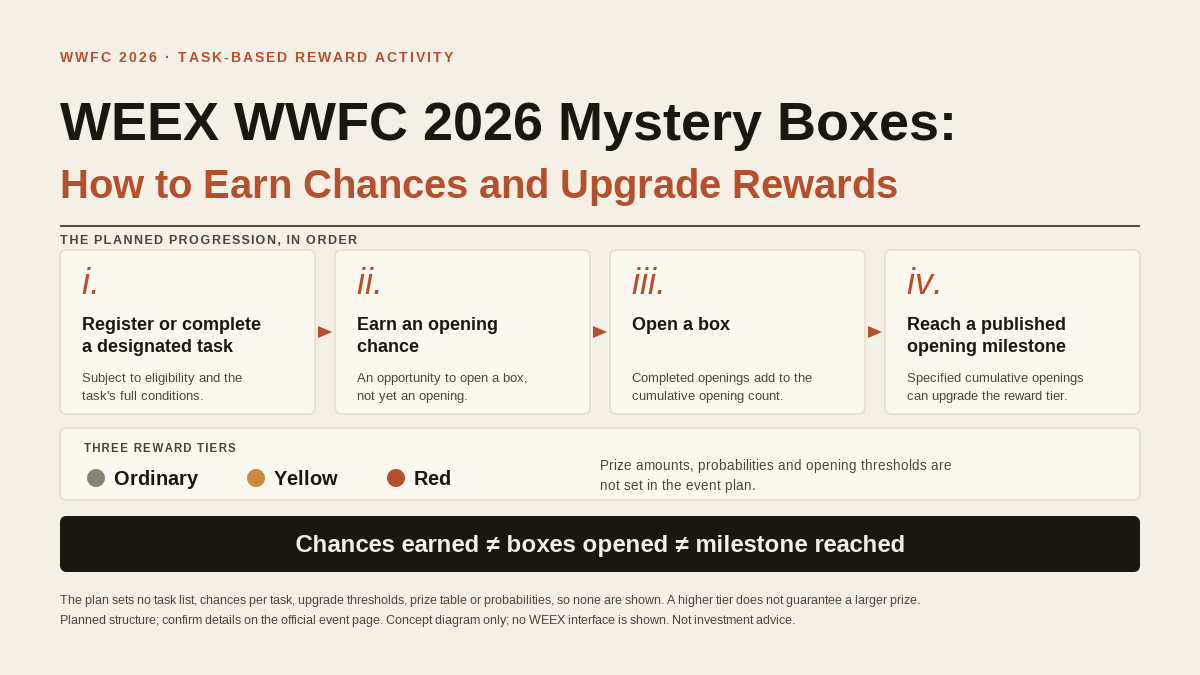
WEEX WWFC 2026 Mystery Boxes: How to Earn Chances and Upgrade Rewards
Explore WEEX WWFC 2026 mystery boxes: how to earn opening chances, understand three reward tiers, and track cumulative openings toward reward upgrades.

Crypto PNL vs Trading Volume: How WEEX WWFC 2026 Leaderboards Work
Compare crypto PNL, trading volume, and ROI with worked examples, and learn how to read the four planned WEEX WWFC 2026 leaderboards accurately.

Cardano’s $5M event budget faces 5 times more opposition

Repaying a Bitcoin-backed loan on Sui can leave you waiting to withdraw native BTC

Why Bitcoin’s quantum security upgrade may take years

Cysic CEO: Over 6 Million BTC Public Keys Exposed, Accounting for 31.2% of Circulation

Penetrating Social Trading Ledgers: Who is Really Making Profits Amidst the Traffic Noise?

Nearly two-thirds of Square Bitcoin payments were under $20

India Plans to Ease Disclosure Requirements for Foreign Investment Funds
Overview of 6 New AI Mining Projects: Perhaps the Most Noteworthy Track After Privacy Narratives
Bitcoin buyers face a trading issue as stablecoins just suffer their biggest supply drop since 2022
Will the Market Rebound After Thanksgiving? Bank of America: Likely Short-Term, Major Trends Require Three Conditions
LME Tightens Constraints on Large Aluminum Market Positions
JPMorgan: Physical AI's 'ChatGPT Moment' Expected as Early as Next Year
Bernstein Releases 'AI Sell-off Misjudgment List': Dell, Broadcom Among Top Picks, CoreWeave 'Hasn't Fallen Enough'
Where can Bitcoin count toward a US exchange’s operating reserves?
Why Is the ATX Crypto Price Different Across Platforms? Project ATX (ATX) Explained
See why the ATX crypto price varies across platforms. Compare Project ATX mint addresses, PumpSwap pools, and swap quotes for the same trade size.
Interpretation of South Korea's Digital Asset Law Proposal: ICO Ban Lifted, Banks to Lead Stablecoin
Latest articles


Latest coin listings on WEEX


