
Despite the decline, Bitcoin has not lost the game against gold

 Prefer us on Google


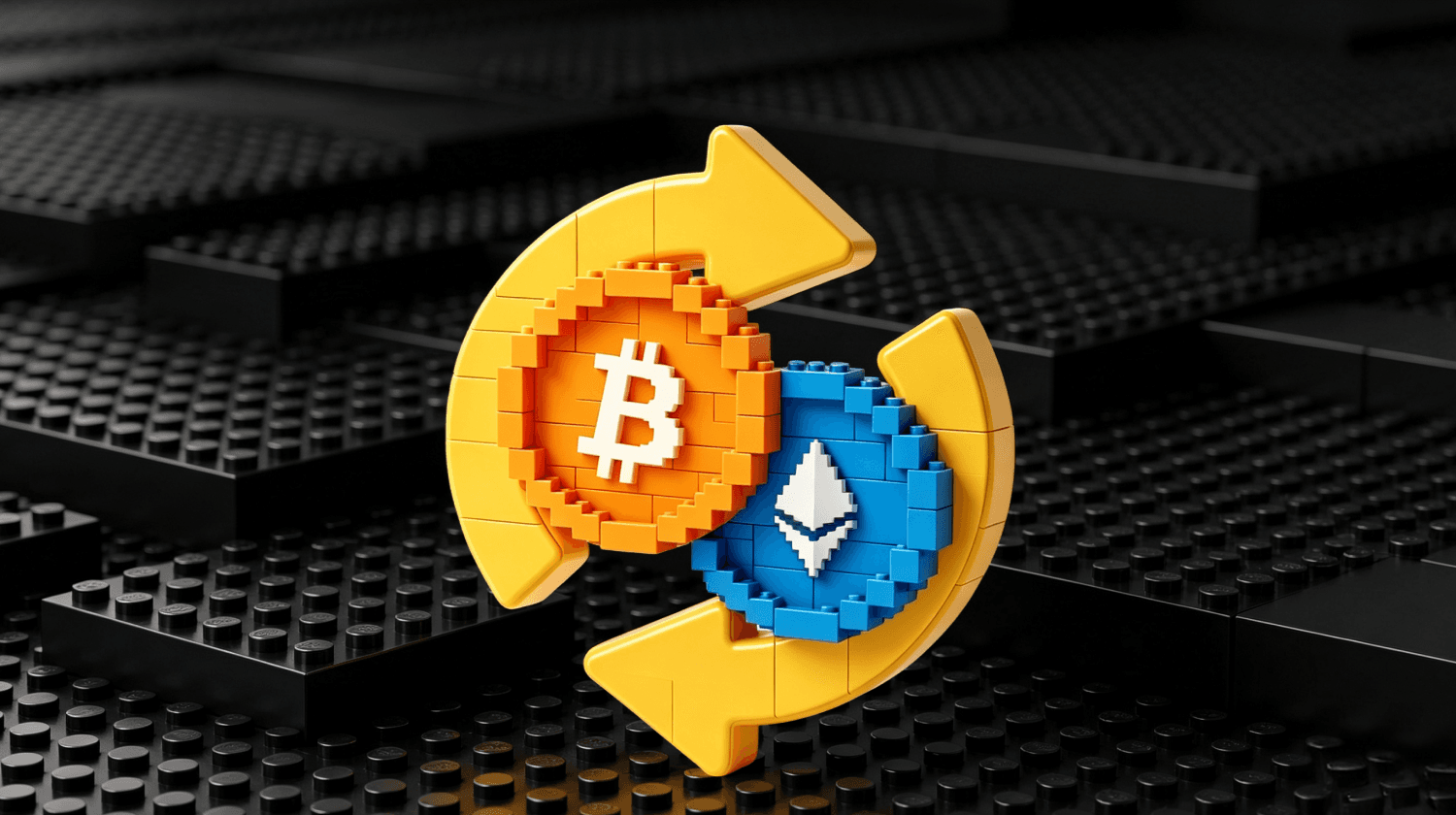
Jurrien Timmer, director of global macroeconomics at Fidelity, continues to prefer Bitcoin over gold despite the recent decline of both assets. His reasoning is not based on their performance in dollars, but on Bitcoin's ability to gain ground against the yellow metal while maintaining a higher potential for appreciation.
In brief
- Jurrien Timmer from Fidelity continues to prefer Bitcoin over gold despite the market downturn.
- The BTC-gold ratio has increased by about 75% since its cycle low.
- Bitcoin ETFs have attracted nearly $55 billion since 2024, reinforcing institutional interest.
- The high volatility of Bitcoin and its correlation with Wall Street remain major risks.
- For Timmer, Bitcoin offers a higher potential for appreciation, without replacing gold.
Against gold, Bitcoin clearly regains the advantage
Both Bitcoin and gold have declined during the recent wave of risk aversion. A reading limited to their dollar prices could therefore conclude that neither fulfills its protective role properly.
Timmer uses another indicator: the number of ounces of gold that one Bitcoin can buy. This ratio eliminates dollar-specific variations and directly measures the relative strength of the two assets. After a low near 12 ounces during the current cycle, one Bitcoin now allows the purchase of about 21 ounces.
Several factors support this tactical preference:
- Bitcoin has broken through its recent consolidation zone against gold;
- The BTC-gold ratio has increased by about 75% since its cycle low;
- Bitcoin spot ETFs have attracted nearly $55 billion since 2024;
- Gold and silver-linked index products have received about $29 billion during the same period;
- However, Bitcoin and gold still show a correlation of 60 to 70% with the S&P 500.
"I still prefer Bitcoin over gold for now," says Timmer, emphasizing that its relative price holds up even as both assets decline. He does not claim that Bitcoin escapes correction, but that it depreciates less than gold in their direct confrontation.
This ratio remains cyclical. Speculative capital has already flowed several times between the two assets since the end of 2025. An increase in Bitcoin against gold indicates a leadership takeover, not a permanent superiority.
ETFs tip the balance without eliminating risk
The cumulative flows into ETFs support Timmer's analysis. Since their launch, U.S. Bitcoin funds have received almost twice as much capital as precious metal-linked products during the comparable period.
This difference suggests that institutional investors now give Bitcoin a real place in their allocations. However, it does not guarantee that this capital remains invested during stress phases. On November 5, Bitcoin ETFs recorded over $430 million in outflows in a single session.
Bitcoin thus combines two profiles. It can be seen as a rare asset in the face of monetary depreciation, while also reacting like a risky technological investment when Wall Street corrects. Timmer has already described it as a <
This volatility explains why preferring BTC does not equate to assigning it a better risk-return ratio in all situations. Gold generally remains less unstable and benefits from structural demand from central banks, jewelry, and institutional investors.
Bitcoin, for its part, offers programmable scarcity, global mobility, and easier access through ETFs. Its maximum supply of 21 million units can amplify its price when demand increases, but it can also exacerbate declines when investors seek liquidity.
-- Price
Preferring Bitcoin Does Not Mean Replacing Gold
The current correlation with stocks constitutes the main limit of the scenario. Timmer acknowledges that Bitcoin and gold have recently <
In the short term, neither functions as a perfect hedge against market downturns. This relationship may be temporary, but it reduces their diversification capacity when investors need it most.
However, Timmer does not propose abandoning gold. In a hypothetical allocation presented in September, he explained that he moved from a distribution of five units of gold for one of Bitcoin to a more balanced exposure, as he anticipated BTC would outperform. His choice remains a tactical rotation between two complementary assets.
Gold retains a defensive role linked to its history, liquidity, and adoption by states. Bitcoin represents a more offensive option on the same theme: the search for a rare asset in the face of public debt and monetary expansion.
The signal to watch is therefore not solely Bitcoin's return above a dollar threshold. If the BTC-gold ratio continues to progress while both assets stabilize, Timmer's preference will gain credibility. If it falls back below its former consolidation zone, Bitcoin's recent leadership will appear as a new temporary rotation.
This content is provided for general informational purposes only and doesn't constitute financial, investment, legal, or tax advice. Any events, rewards, online promotions, or related information mentioned herein should not be considered a recommendation, solicitation, or invitation to purchase, sell, trade, or otherwise deal in any crypto assets. Crypto assets are highly volatile and may result in loss. The availability of WEEX services, products, and related events may vary by region. You are responsible for ensuring that your participation is in accordance with applicable local laws and regulations.
You may also like

U.S. Congresswoman Maxine Waters Announces Candidacy for Chair of House Financial Services Committee! Aims to Establish Strict Yet Fair Rules for Legitimate Cryptocurrency Businesses

Greece ends years of crypto tax uncertainty with new 10% levy on Bitcoin profits

U.S. Treasury and Federal Reserve Withdraw Proposal to Lower Cross-Border Travel Rule Threshold to $250

Beyond APY: Saying Goodbye to Black Box Trust and Reassessing the Security Logic of ETH Staking

South Korea’s GOPAX halts crypto trading, withdrawals after hacking threat

What is the real challenge for South Korean exchanges now that the regulatory framework is in place?

Cipher Agrees to Cover $359 Million Over Budget for Barber Lake Project

Progress Made in XRPL Credit Protocol Approval Process

Bitcoin's rate cut relief stalls as service inflation flares
Claude's Evolution Speed Doubles, 80% of Increment Comes from AI

Crypto: Paul Midy Opposes Wallet Declaration Starting at €5,000

Polygon Proposal Integrates Security Committee with 8/11 Multi-Signature Threshold and 7-Day Time Lock

Six Ways to Hold Stocks: Ownership Differences from Paper Certificates to On-Chain Tokens

Does Anyone Really Need Blockchain? Reflections Triggered by Kalshi

Privacy Coin Zcash to Launch NU7 Upgrade at Block Height 3543,405 with Approximately 12,226 ZEC Remaining in Sprout Pool

XRP Ledger fixes bug that could allow unauthorized token minting

The Battle for Anthropic's IPO Ticket: From Selling Homes in the Bay Area for Shares to Bitget Opening a 100 Yuan Allocation

TradingBeats Launches New Version, Upgraded to Information Stream Format

Altcoin profit share sinks to 12% as short-term traders take losses

Bitcoin cycle bottom unconfirmed, downside risk persists

Creators Speak | The Biggest Risk in the Crypto Industry is Thinking It's Safe

The CLARITY Act Will Expire in 2027 If It Does Not Receive 60 Votes

XRP whale counts rise due to stolen token redistribution
Gold Token 2026: Why Move Gold on Chain?
Ethereum Economic Zone unveils three cross-chain breakthroughs at Devcon

Huawei, Alibaba and 20 Other Entities Release Self-Regulatory Charter for Intelligent Agents Development
Let AI Lie on the Couch of Psychological Counseling: Gemini Says It Has a 'Graveyard' Inside
What Makes Erebor, Dubbed the 'Next Silicon Valley Bank', Attractive to SBI and Robinhood?

Solana’s Yakovenko calls phishing crypto’s biggest threat

OpenUSD Stablecoin Charges $0.01 Management Fee and Establishes Equity Incentive Pool
U.S. Congresswoman Maxine Waters Announces Candidacy for Chair of House Financial Services Committee! Aims to Establish Strict Yet Fair Rules for Legitimate Cryptocurrency Businesses
Greece ends years of crypto tax uncertainty with new 10% levy on Bitcoin profits
U.S. Treasury and Federal Reserve Withdraw Proposal to Lower Cross-Border Travel Rule Threshold to $250
Beyond APY: Saying Goodbye to Black Box Trust and Reassessing the Security Logic of ETH Staking
South Korea’s GOPAX halts crypto trading, withdrawals after hacking threat
What is the real challenge for South Korean exchanges now that the regulatory framework is in place?





