
Crypto: Eric Trump Signs Non-Control Commitment for Future World Liberty Bank

 Prefer us on Google


Eric Trump has explicitly agreed not to interfere in the management of the future deposit bank of World Liberty Financial. On paper, this is a gesture of regulatory goodwill. In reality, it is a case that already carries its share of uncertainties... Between ongoing crypto lawsuits, loans reminiscent of bad memories, and criticism from all political sides.
In brief
- Eric Trump, Zak Folkman, and an Emirati investor agree to stay away from the management of the future World Liberty Financial bank.
- Justin Sun accuses World Liberty of freezing his tokens and blocking his voting rights; the case remains before a federal court.
- The OCC has already approved similar charters for Ripple, Paxos, Fidelity, and Coinbase, signaling a clear pro-crypto shift.
Eric Trump, co-founder of World Liberty Zak Folkman, and Emirati investor Hamad Khalfan Ali Matar Alshamsi have each agreed through their affiliated companies to stay away from the management decisions of the group's future federal deposit bank. The technical term is "passivity commitment," a commitment of non-control.
These agreements were made public at the moment when World Liberty has just received its preliminary approval from the Office of the Comptroller of the Currency. If the federal charter is validated, the company could internally hold the reserves of its USD1 stablecoin, which amounts to nearly $4 billion in capitalization, rather than relying on a third party for that. According to World Liberty spokesperson David Wachsman, the intention behind this maneuver is for the company to remain under federal supervision for years.
World Liberty Financial's commitment to transparency comes at a time when the company is burdened by a heavy legal case that tarnishes its image. Justin Sun, the founder of Tron and the largest external investor in the project with $75 million injected, filed a lawsuit against World Liberty in April. The company allegedly:
- Frozen all of his tokens;
- Deprived him of his governance voting rights;
- Threatened to permanently destroy his assets.
World Liberty has, of course, countered with a defamation lawsuit, accusing Justin Sun of orchestrating a smear campaign after he himself breached his contractual commitments. Both proceedings are still ongoing, and a federal judge even refused to send the Sun case to private arbitration.
Another detail fueling doubts is an investigation published in April revealing that World Liberty had deposited $5 billion of its own WLFI tokens on the Dolomite lending platform as collateral to borrow approximately $75 million in stablecoins. The process feels familiar to anyone who followed the collapse of FTX... Using one's own token as collateral to raise funds... a circular leverage scheme that several observers have deemed risky. This has led to public criticism from all sides, notably from Hunter Biden, who today denounces what he calls a blatant conflict of interest.
This World Liberty case does not play out in a vacuum, as the current Comptroller of the Currency, Jonathan Gould, seems to have made the approval of new bank charters one of his stated priorities. This marks a sharp turn from the previous administration, which was much more hesitant regarding requests from the crypto sector. Ripple, Paxos, and Fidelity Digital Assets also received similar conditional approvals in 2025. Coinbase followed earlier this year.
In other words, the climate has shifted. What was once the exception just two years ago is becoming almost the norm today for major crypto names seeking a federal bank charter. Recently, it was Donald Trump himself who hosted leaders from several crypto companies at the White House while the SEC was simultaneously finalizing a broader regulatory framework for the entire sector.
The non-control commitment signed by Eric Trump for World Liberty Financial appears on paper to meet the requirements of federal regulators. But with an ongoing lawsuit involving Justin Sun, a loan that recalls the worst hours of FTX, and family financial ties that have never been completely dissipated... The promise to remain "passive" struggles to erase the lingering questions.
-- Price
This content is provided for general informational purposes only and doesn't constitute financial, investment, legal, or tax advice. Any events, rewards, online promotions, or related information mentioned herein should not be considered a recommendation, solicitation, or invitation to purchase, sell, trade, or otherwise deal in any crypto assets. Crypto assets are highly volatile and may result in loss. The availability of WEEX services, products, and related events may vary by region. You are responsible for ensuring that your participation is in accordance with applicable local laws and regulations.
You may also like

Dolomite Integrates $100 Million Bitcoin Collateral, Launches Lending Feature Based on BTCcx

Billions of Dollars in Crypto Assets Exposed to Risk: Who Will Insure Them?

Trump's Envoy, Crypto Shareholder: The Double Game of Steve Witkoff

Judge Keeps Sun's World Liberty Claims In Court

Bitcoin Layer 2 Network Botanix: Why Did We Choose to Dissolve?

Data: WLFI spent $115 million to expand the market for USD1, stablecoin scale increased by 50%, trading volume increased tenfold

WLFI repaid 25 million USD1 loans at Dolomite, and the deposit interest rate has returned to 10.43%
The Trump family's cryptocurrency project WLFI has been exposed for borrowing tens of millions of dollars through related agreements, raising questions about conflicts of interest

Manus quietly released its 2.0 declaration

Justin Sun Prize Partners With MathDB, Led by Caltech Professor Tony Yue Yu, on 50-Problem Pilot

CFTC advances voluntary crypto exchange registration as Congress stalls

Crypto: Over 10,000 Claims Against Restrictions by British Banks

AI agents are launching memecoins. MemeToro’s agent answers to open code

Crypto: The Tokenization of RWA Concerns American Conservatives

Pump.fun 'optimized for addiction': what the internal messages cited in court really say
Anthony Pompliano: The State Will Never Stop Printing Money! Bitcoin, Gold, and Land Will Benefit for 20 Years

Blocked Stablecoin: Your Private Key Is Not Enough

Cryptocurrencies Seek to Integrate into Finance
Introducing the Best Meme Coins on the Ripple Network: A Review of 5 Popular XRPL Tokens

Bitcoin's next Fed test comes with a hidden problem in America's inflation data
The crypto market loses altitude, patience becomes a habit – Steady Lads

Stablecoin Payments in Europe: How Do CASP, PI, and EMI Fit Together?
Why 22 Trillion-Dollar Giants Refuse to be 'Tokenized'?

Rayls Bridges Traditional Finance and Decentralized Finance
Is 24/7 Trading a Necessity? Analyzing the Real Trading Rhythm of RWA Perpetual Contracts

Cyberattack on GMO in Japan: Trading Accounts Compromised, GMO Coin Claims to be Unaffected
Elon Musk's Grand Scheme to Undermine New Cloud Providers
Google Earnings on Oct 28: Will the Fed Decision Move GOOGL Stock?
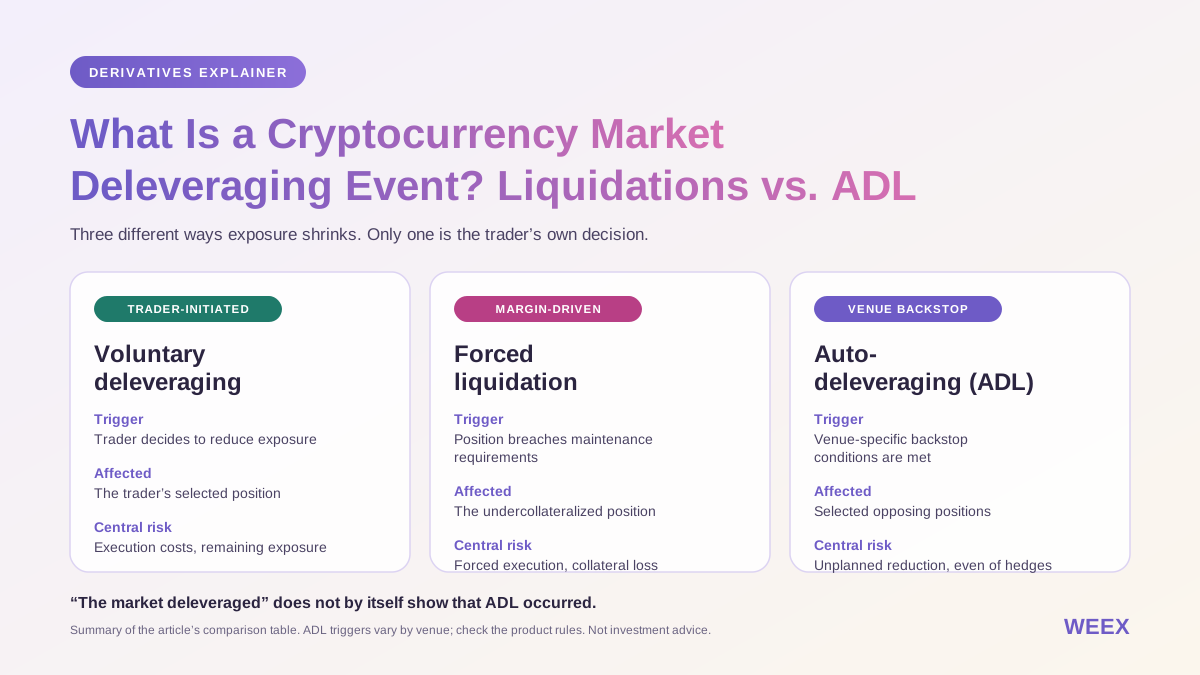
What Is a Cryptocurrency Market Deleveraging Event? Liquidations vs. ADL
Understand a cryptocurrency market deleveraging event: liquidation vs. ADL, misleading open-interest declines, hedge risks, and checks before trading.

The Week Ahead: 4 Key Moments for the Crypto Market
Dolomite Integrates $100 Million Bitcoin Collateral, Launches Lending Feature Based on BTCcx
Billions of Dollars in Crypto Assets Exposed to Risk: Who Will Insure Them?
Trump's Envoy, Crypto Shareholder: The Double Game of Steve Witkoff
Judge Keeps Sun's World Liberty Claims In Court
Bitcoin Layer 2 Network Botanix: Why Did We Choose to Dissolve?
Data: WLFI spent $115 million to expand the market for USD1, stablecoin scale increased by 50%, trading volume increased tenfold
Contents
Latest articles


Latest coin listings on WEEX


