
Solana vs Ethereum: Which Blockchain Is Better in 2025?

 Prefer us on Google

Since its launch in 2020, Solana has sparked intense discussion within the crypto community, often framed as a direct competitor to Ethereum. The Solana vs Ethereum debate continues to engage developers, investors, and enthusiasts, each advocating for the strengths of their preferred platform.
Supporters of Solana emphasize its exceptional transaction speed, scalability, and minimal fees—features that make it attractive for high-frequency applications and mass adoption. On the other side, Ethereum loyalists highlight its deeply rooted ecosystem, progressive decentralization, and the impactful Ethereum 2.0 upgrade, which introduced major improvements in scalability and energy efficiency.
Both platforms bring distinct advantages and limitations to the table. The better choice ultimately depends on the user’s specific goals—whether that’s building decentralized applications, executing micro-transactions, or participating in decentralized governance.
Key Takeaways
- Ethereum is a well-established platform with a vast developer community and a time-tested security model.
- Solana delivers ultra-fast transaction speeds—up to 65,000 TPS—and extremely low fees, positioning it as a strong candidate for high-performance dApps.
- The Ethereum 2.0 upgrade markedly improved scalability and reduced energy consumption, tackling some of the network’s most pressing challenges.
- Solana’s innovative Proof of History (PoH) mechanism supports high throughput but has been accompanied by network outages, prompting questions about reliability and decentralization.
What is Ethereum and How Does It Work?
Launched in 2015 by Vitalik Buterin and other contributors, Ethereum was conceived to extend the utility of blockchain beyond simple payments. It introduced smart contracts—self-executing agreements with terms embedded directly in code—which became the foundation for decentralized applications (dApps).
Ethereum’s ecosystem spans numerous domains including decentralized finance (DeFi), non-fungible tokens (NFTs), gaming, and identity solutions. The network is powered by its native cryptocurrency, Ether (ETH), used to pay for transaction fees and computational services.
Originally relying on a Proof-of-Work (PoW) consensus mechanism, Ethereum transitioned to Proof-of-Stake (PoS) with its 2.0 upgrade. This shift significantly boosted energy efficiency and allowed more participants to engage in network validation by staking ETH.
Real-World Applications of Ethereum:
- Decentralized Finance (DeFi) : Ethereum is the backbone of most DeFi platforms, enabling lending, borrowing, and trading without intermediaries.
- Non-Fungible Tokens (NFTs): The majority of NFT creation and trading occurs on Ethereum, supporting digital art, collectibles, and intellectual property.
- Supply Chain Management: Enterprises use Ethereum to bring transparency and traceability to supply chains, reducing fraud and ensuring authenticity.
What is Solana and How Does It Work?
Founded by Anatoly Yakovenko and launched in 2020, Solana entered the market with a focus on high scalability and speed. Its hybrid consensus model—Proof of History (PoH) combined with Proof of Stake (PoS) —enables the network to process up to 65,000 transactions per second with minimal latency.
Solana’s native token, SOL, is used for paying transaction fees, staking, and governance. The platform is particularly well-suited for applications requiring high throughput and real-time processing.
Use Cases Where Solana Excels:
- High-Frequency Trading: Supports real-time trading and arbitrage opportunities.
- Web3 and Social dApps: Powers responsive and scalable decentralized social platforms.
- Gaming and NFTs: Delivers seamless experiences for play-to-earn games and NFT marketplaces.
Solana vs Ethereum: A Feature-by-Feature Comparison
td {white-space:nowrap;border:0.5pt solid #dee0e3;font-size:10pt;font-style:normal;font-weight:normal;vertical-align:middle;word-break:normal;word-wrap:normal;}
Feature | Ethereum | Solana |
| Consensus Mechanism | Proof of Stake (PoS) | Proof of History (PoH) + PoS |
Transaction Speed | 15–30 TPS | Up to 65,000 TPS |
Transaction Fees | Variable, often high during congestion | Low, typically less than $0.01 |
Ecosystem Maturity | Large and established | Rapidly growing |
Security Model | Highly decentralized and robust | Faster but less proven |
Ideal For | DeFi, NFTs, enterprise solutions | Gaming, HFT, high-scale dApps |
Consensus Mechanism
Ethereum uses Proof of Stake (PoS) , a energy-efficient system where validators are chosen to create new blocks based on the amount of ETH they stake. This model encourages participation and enhances security.
Solana uses a novel combination of Proof of History (PoH) and Proof of Stake. PoH timestamps transactions before they are processed, significantly reducing validation time and enabling extreme throughput.
Scalability and Transaction Speed
Ethereum has historically struggled with scalability, leading to slow transactions and high fees during peak usage. While Layer-2 solutions and Ethereum 2.0 have improved throughput, the base layer remains limited to 15–30 TPS.
Solana is built for scale from the ground up, supporting tens of thousands of transactions per second. This makes it better suited for applications requiring instant finality.
Transaction Costs
Ethereum’s gas fees can become prohibitively expensive—sometimes exceeding $50 per transaction—making small transactions and frequent interactions impractical for many users.
Solana offers transactions for a fraction of a cent, appealing to developers and users conducting high-volume or micro-transactions.
Developer and Community Support
Ethereum benefits from the largest developer community in the blockchain space, extensive learning resources, and a mature tooling environment.
Solana is newer but growing quickly, attracting developers interested in high-performance applications and low-cost deployment.
Market Performance and Trends
Both ETH and SOL have shown significant market volatility. ETH is widely regarded as blue-chip crypto with strong institutional holding, while SOL is seen as a high-growth asset influenced by ecosystem expansion and technical upgrades. Investors analyzing the Solana Ethereum correlation volatility often find that while both assets respond to broader market trends, their different technological focus and adoption cycles can lead to diverging short-term performance. For those considering portfolio allocation, evaluating the Solana Ethereum correlation volatility Sharpe ratio can provide insights into risk-adjusted returns when holding both assets.
Risks and Challenges
- Ethereum: Still faces challenges related to network congestion and gas fees. Its shift to full sharding is ongoing.
- Solana: Has experienced several network outages, raising concerns over stability and decentralization. Its validator set is also smaller than Ethereum’s.
Future Outlook
Ethereum continues to evolve through community-driven proposals and upgrades aimed at enhancing usability, security, and scalability.
Solana is focused on improving network stability and expanding its ecosystem through strategic partnerships and developer incentives. As interoperability becomes increasingly important, the ability to bridge Solana to Ethereum and swap Ethereum to Solana will play a crucial role in enabling capital flow between these ecosystems. Developers are continuously improving cross-chain infrastructure, with a reliable Solana bridge to Ethereum being essential for users looking to move assets between these networks seamlessly.
Ethereum vs Solana: Pros and Cons
Ethereum
- Pros:
- Largest dApp ecosystem
- High security and decentralization
- Strong institutional adoption
- Cons:
- High gas fees during peak demand
- Complexity for new users
- Slower transaction speed
Solana
- Pros:
- Extremely fast and cheap transactions
- Ideal for high-throughput applications
- Growing developer interest
- Cons:
- Past network outages
- Smaller validator set
- Less battle-tested than Ethereum
Final Thoughts: Which One Is Right for You?
Your choice between Ethereum and Solana should align with your priorities:
- Choose Ethereum if you value a mature, secure, and widely adopted platform with the broadest range of applications and deepest market liquidity.
- Choose Solana if you need very fast and inexpensive transactions for applications like high-frequency trading, gaming, or social dApps, and are comfortable with a newer, rapidly evolving platform.
Always conduct your own research and consider factors such as risk tolerance, technical requirements, and long-term vision before investing or building.
Conclusion
Both Solana and Ethereum offer unique opportunities in the fast-evolving crypto landscape. Whether you're drawn to Ethereum’s established ecosystem and reliability or Solana’s speed and low-cost transactions, having a trusted platform to trade these top assets is essential.
For users looking to diversify across both ecosystems, the ability to bridge Solana to Ethereum or swap Ethereum to Solana becomes increasingly valuable. These cross-chain functionalities allow investors to capitalize on the strengths of both platforms while managing their exposure to the Solana Ethereum correlation volatility.
At WEEX, you can trade SOL and ETH with confidence. Enjoy competitive fees, deep liquidity, and a user-friendly interface designed for both beginners and experienced traders. Plus, with robust security measures and 24/7 customer support, WEEX ensures a seamless and secure trading experience.
Don’t miss out—expand your portfolio with Solana and Ethereum on a platform built for performance and reliability.
Start trading SOL and ETH on WEEX now!
Further Reading
- Buying the Crypto Dip: A Risky Gamble or Smart Move?
- Solana Price Prediction: Can Solana Hit $1,000?
- How to Trade Crypto Responsibly?
Disclaimer: The opinions expressed in this article are for informational purposes only. This article does not constitute an endorsement of any of the products and services discussed or investment, financial, or trading advice. Qualified professionals should be consulted prior to making financial decisions.
-- Price
This content is provided for general informational purposes only and doesn't constitute financial, investment, legal, or tax advice. Any events, rewards, online promotions, or related information mentioned herein should not be considered a recommendation, solicitation, or invitation to purchase, sell, trade, or otherwise deal in any crypto assets. Crypto assets are highly volatile and may result in loss. The availability of WEEX services, products, and related events may vary by region. You are responsible for ensuring that your participation is in accordance with applicable local laws and regulations.
You may also like

TSLA Stock After the Flying Roadster Reveal: What the Q3 Results, SpaceX Merger Talk and Analysts Say

FTR Coin After the Roadster Hype: Why Flying Tesla Roadster Fell Back and What to Check Before Trading
What Is HeyElsa (ELSA) Crypto and How Does It Work?
Flying Tesla Roadster (FTR) Coin: What Is It and What to Check Before Trading a Roadster Memecoin
Best Crypto Platform for Beginners: Pick by Goal, Not Brand
Ethereum Glamsterdam Hits 200M Gas on Sepolia: What Changes After the Upgrade?

How to Buy New Crypto Before Listing: 5 Routes and Their Traps
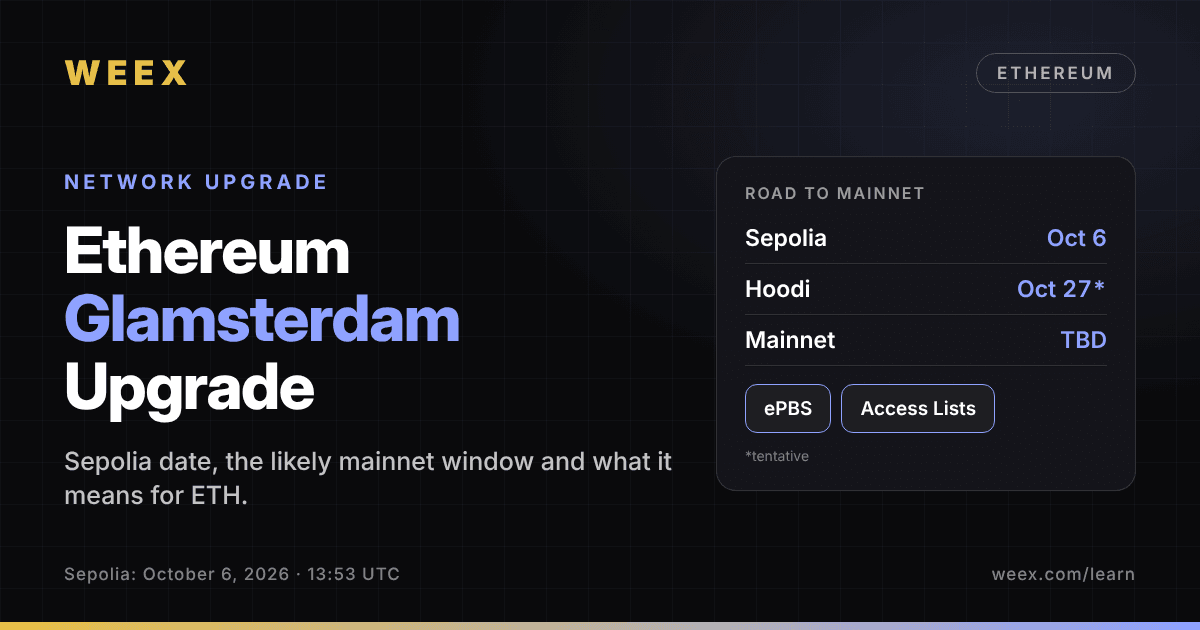
Ethereum Glamsterdam Upgrade: Sepolia Date and ETH Price Impact
Best Crypto Wallet App in 2026: How to Choose Between Hot, Cold, Custodial, and Web3 Wallets
What Is a Decentralized Crypto Exchange (DEX)? How It Works, Costs, Risks, and When to Use One
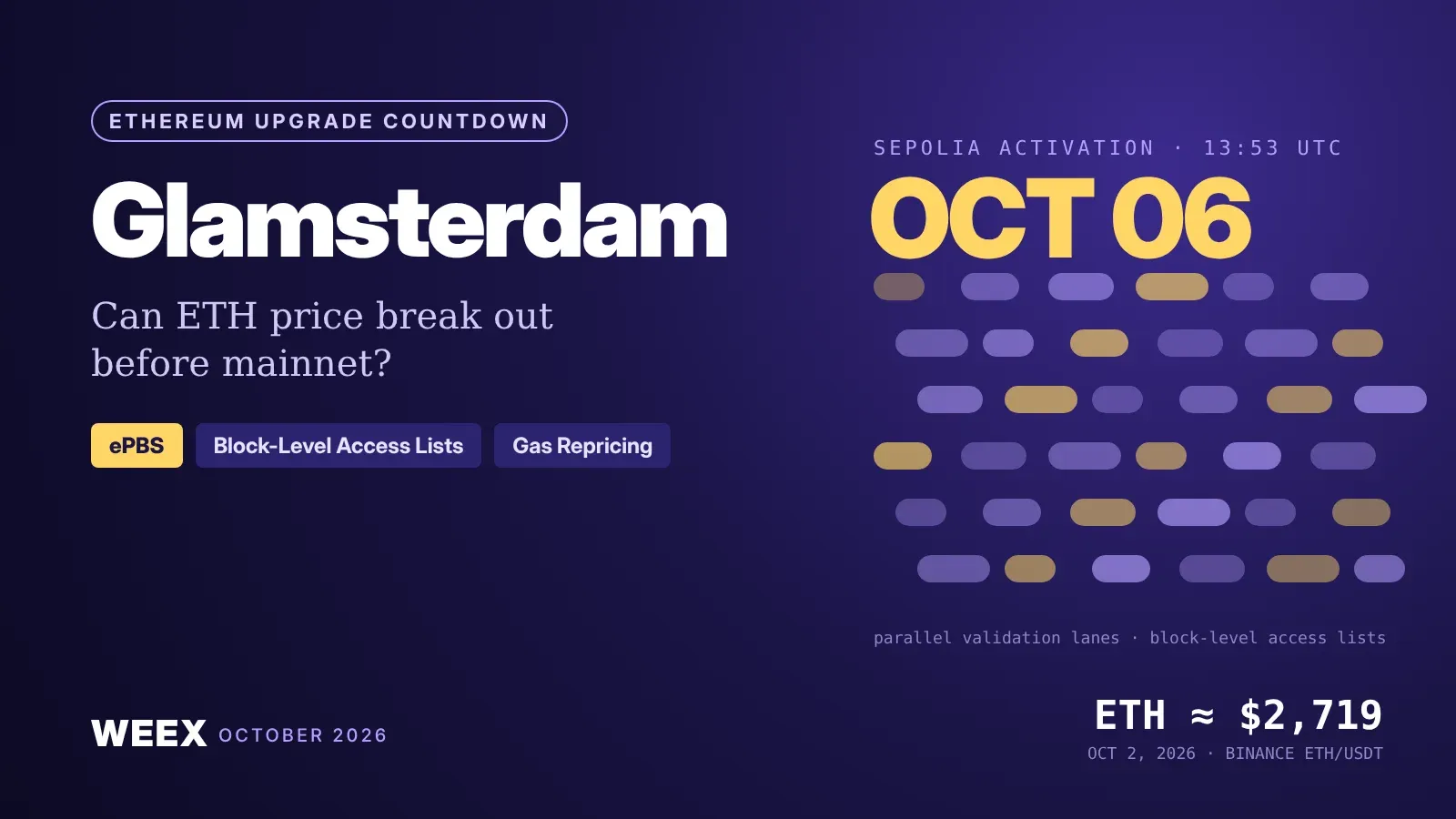
Ethereum Glamsterdam Upgrade Countdown: Can ETH Price Break Out?
What Is Coinbase Wrapped Zcash (cbZEC)? How It Brings Zcash to Base Without Native ZEC Privacy
What Is Gno.land (GNOT)? How GnoVM, Storage Deposits, Tokenomics, and GovDAO Work

Phantom Wallet vs MetaMask: What's the Difference
What a Blockchain Explorer Can and Cannot Tell You
How to Look Up a Wallet Address and Transaction History
龙虾 (Lobster) 0 Fee on WEEX: How to Buy Spot and Trade Futures

Circle's Arc Mainnet Is Live: Can It Actually Close the Gap With Tether's USDT?
What Is a Blockchain Explorer and How Does It Work?
Is SafePal Safe? A Look at Its Security Features
What Is SafePal Wallet? A Complete Beginner's Guide
LONGARC Token Explained: Arc Chain Stock Memes, Contract, Risks
What Is Aptos (APT)? Complete Layer-1 Blockchain Guide
HYPE Futures Trading Strategy: Sizing Rules Around Unlocks
Donald Trump Oil Stock Investments: 9 Names, 6 Tradable Now

MetaMask Transaction Stuck or Failed? Here's How to Fix It
XST Stock: Why This Ticker Points to Four Completely Different Companies
What Is Arbitrum (ARB) and How Does This Ethereum Layer 2 Work?
Plasma Released 88.89 Million XPL Tokens Today—Why the Allocation Matters
What Is IMX Crypto? How Immutable's Layer 2 Became the Largest Web3 Gaming Blockchain
TSLA Stock After the Flying Roadster Reveal: What the Q3 Results, SpaceX Merger Talk and Analysts Say
FTR Coin After the Roadster Hype: Why Flying Tesla Roadster Fell Back and What to Check Before Trading
What Is HeyElsa (ELSA) Crypto and How Does It Work?
Flying Tesla Roadster (FTR) Coin: What Is It and What to Check Before Trading a Roadster Memecoin
Best Crypto Platform for Beginners: Pick by Goal, Not Brand
Ethereum Glamsterdam Hits 200M Gas on Sepolia: What Changes After the Upgrade?


