
Does a Negative Funding Rate Mean a Short Squeeze Is Coming?

 Prefer us on Google


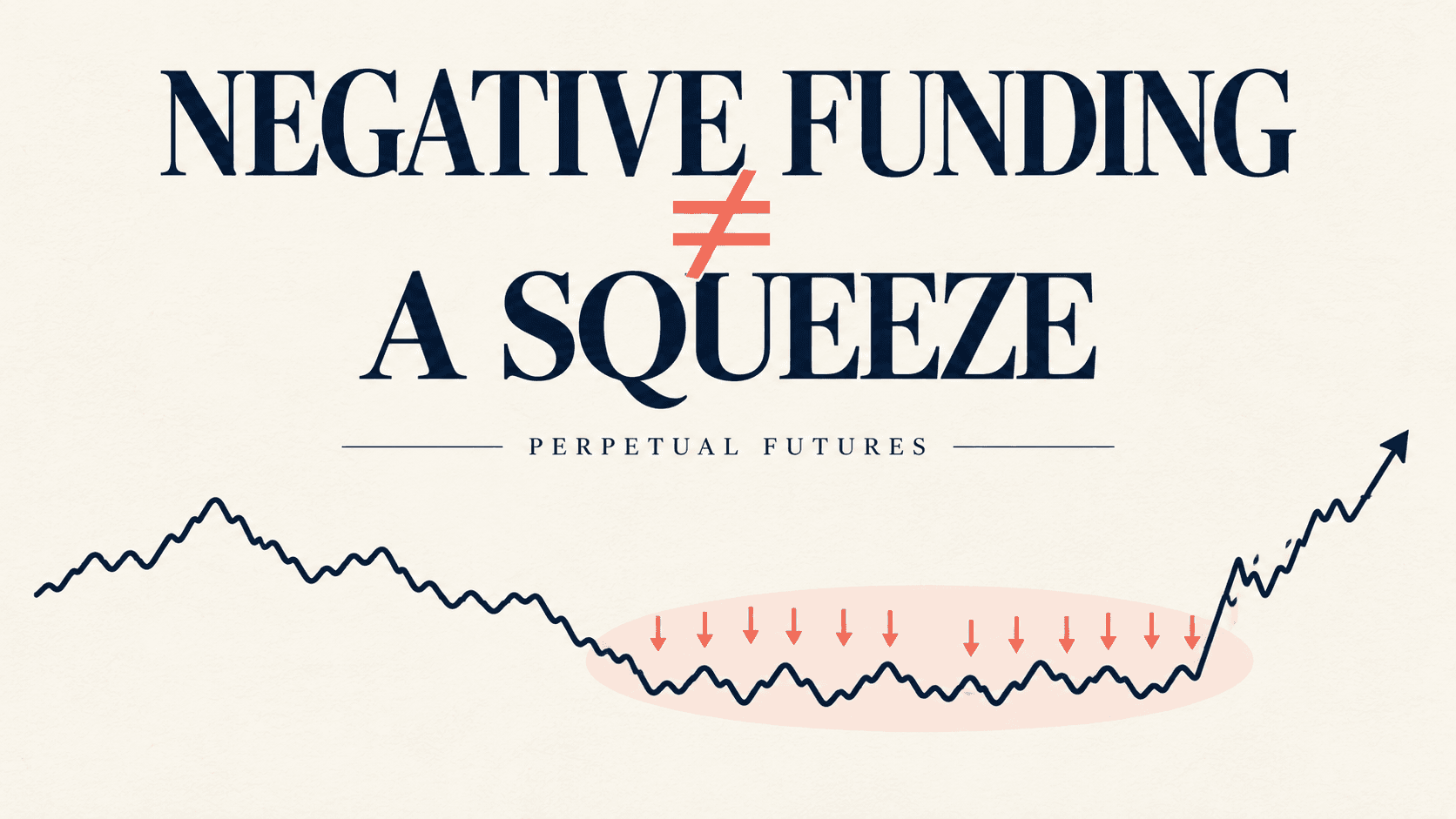
A negative funding rate means short holders generally pay long holders at a perpetual futures contract’s funding settlement. It can reflect demand to hold shorts or a contract trading below its reference price, but it does not mean a short squeeze is coming. A squeeze requires buying pressure strong enough to force short positions to close. To judge whether that setup is developing, traders need to examine funding alongside open interest, price action, liquidity, and the contract’s settlement rules.
The common claim that “negative funding is bullish” skips the decisive step. Funding identifies a payment condition; it does not show that shorts are trapped or that buyers can push price through their exit levels. In my view, using the rate alone as a reversal signal is a poor reading of derivatives data. It turns evidence of bearish positioning into a price forecast without checking what could actually force the market higher.
What Does Negative Funding Actually Tell You?
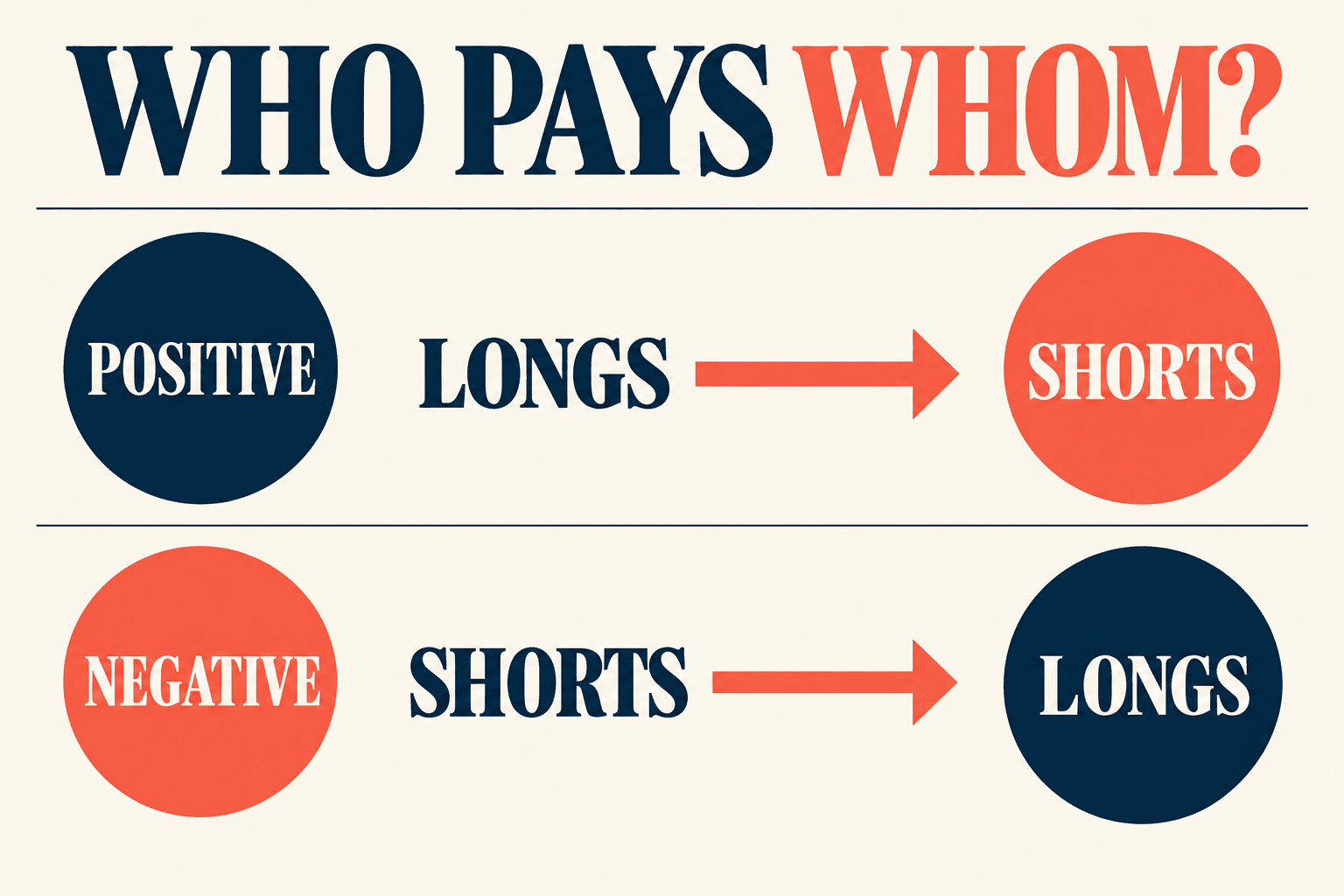
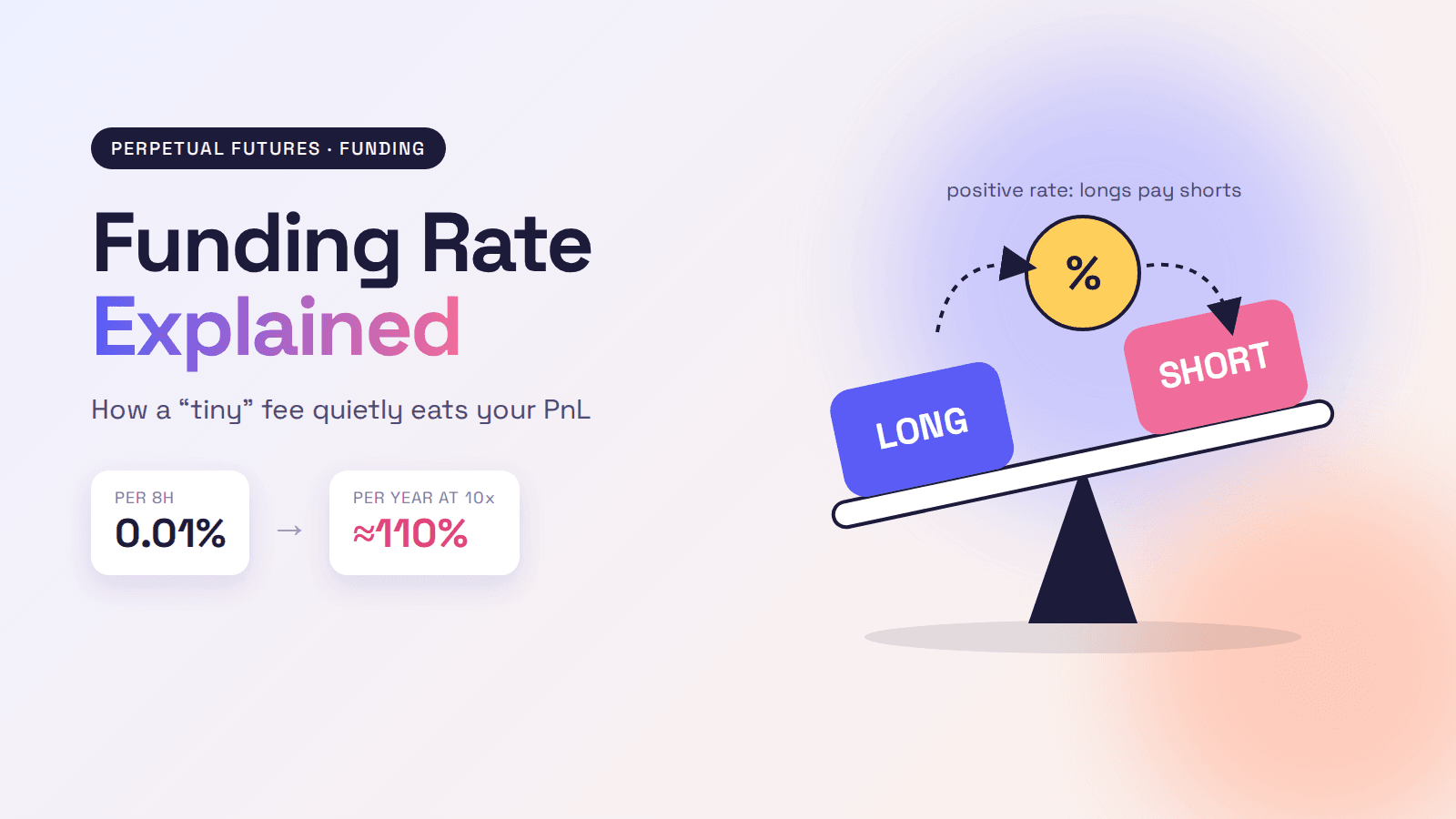
Perpetual futures have no scheduled expiry. Funding payments help keep their prices close to a reference market. When the funding rate is negative, short positions generally pay long positions at settlement; when it is positive, longs generally pay shorts. WEEX and Coinbase both describe this direction of payment in their product documentation.
That tells you who pays whom, subject to the contract’s rules. It does not reveal why every trader holds a position. Some shorts may be directional bets on a decline. Others may hedge spot holdings or another exposure. A negative rate also does not show where those traders entered, how much margin they have, or the prices at which they might have to close.
The distinction matters because a short squeeze is a sequence of trades, not a funding-rate reading. Price rises, short holders close or are liquidated, their buying adds to the move, and that pressure can prompt more shorts to exit. Negative funding may be part of the conditions preceding that sequence. It cannot establish that the sequence has begun.
Why Can Negative Funding Persist While Price Falls?
Shorts paying funding may still profit if the market declines enough to outweigh that cost. A trader holding a hedge may also accept the payment as the cost of reducing another risk. For those reasons, negative funding can persist during a falling market without causing an immediate reversal.
The size of the payment matters separately from its sign. WEEX describes its funding fee as the funding rate multiplied by position value. Position value is not simply the margin deposited. A small percentage can therefore have a meaningful effect on a large position, while receiving a payment cannot protect a long position from a larger adverse price move.
For a simplified illustration, a −0.01% rate applied to a 10,000 USDT position value implies a 1 USDT payment from a short at that settlement, before any product-specific adjustments. That is an arithmetic example, not a live rate or a forecast. A 1% move against the position would be far larger. Funding alone cannot make the directional risk disappear.
When Does a Short-Squeeze Setup Become More Credible?
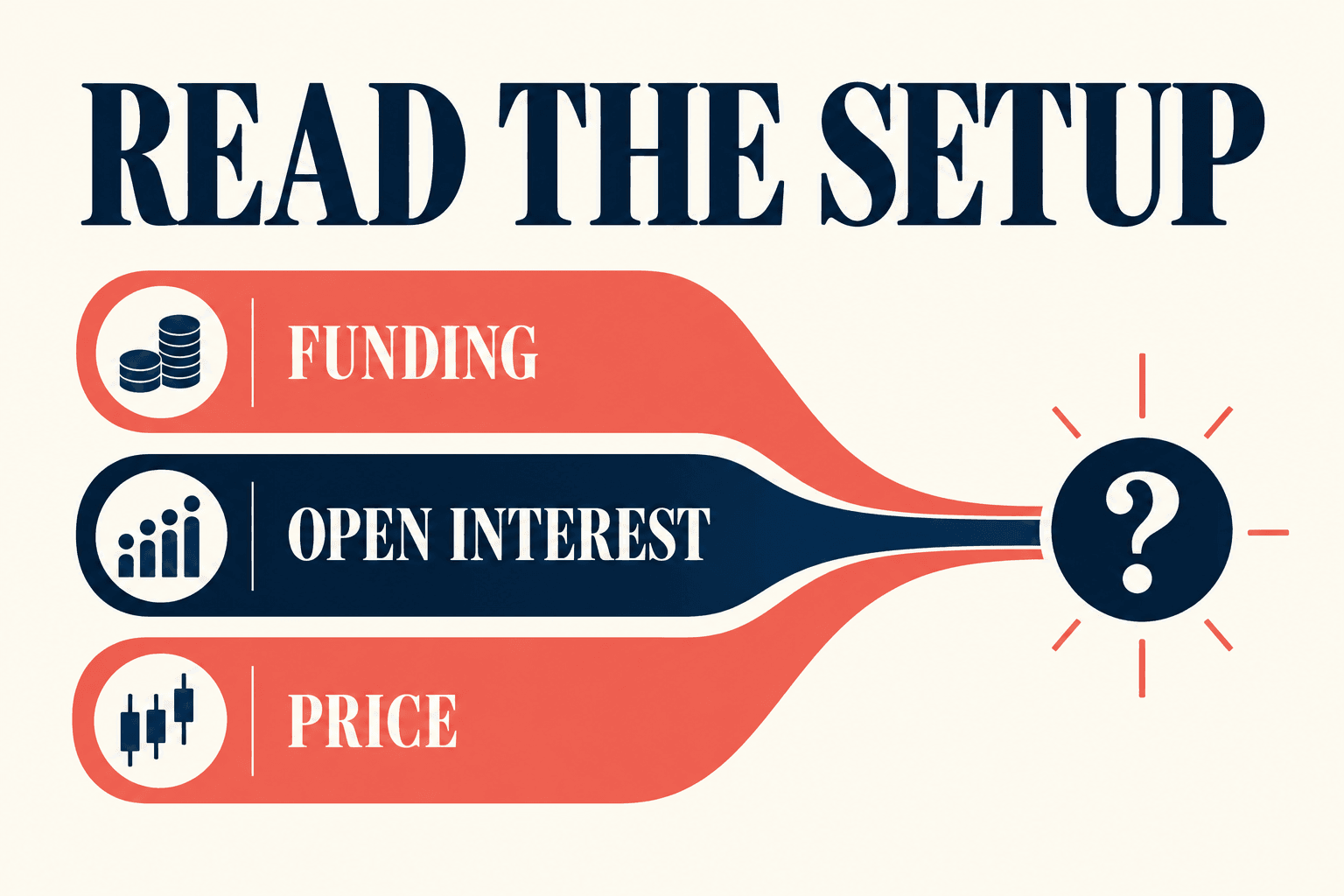
The useful question is whether the market contains shorts that may have to buy back into rising prices. Negative funding is one clue, but the following readings must make sense together:
| Observation | What it may suggest | What it cannot prove |
|---|---|---|
| Negative funding persists | Holding shorts has a funding cost at successive settlements | Shorts are near liquidation |
| Open interest rises while price is weak | More contracts remain open as the market moves | The new exposure is entirely directional short selling |
| Price reclaims a well-observed level with stronger buying | Shorts may face pressure if the move holds | Forced covering has already started |
| Open interest falls during a sharp rise | Positions are closing as price advances | Every closing position is a liquidated short |
This table is an interpretation framework, not measured WEEX market data. Open interest counts outstanding contracts, with a long and a short side to each contract. It does not label every participant’s motive. MetaMask’s open-interest guide likewise recommends reading it with price, volume, and funding context rather than treating an isolated change as a trade signal.
A more credible squeeze thesis needs a path from positioning to forced buying. For example, persistent negative funding, substantial outstanding positions, and a sharp price move through an area where shorts may need to reduce exposure form a more coherent hypothesis than negative funding alone. Even then, public aggregate data cannot identify every account’s entry or liquidation level. The thesis remains uncertain until the price and position data support it.
-- Price
How Should You Check the Rate on WEEX?
Start with the specific perpetual contract, rather than a funding screenshot from another exchange or an earlier date. Check the displayed rate, its next settlement time, and whether the figure is a forecast or a completed payment. The rate and schedule can differ by contract and change over time.
WEEX states that funding applies when a position is held at its settlement time and that settlement times vary by trading pair. Its API documentation also distinguishes the most recent rate from a forecast rate and provides the next funding time and data timestamp. Those distinctions are important when someone claims a rate visible now is the amount every trader has already paid.
Then calculate the potential payment against position value, and consider it alongside trading fees, execution costs, margin, and the possible price move. Funding is a transfer between position holders under WEEX’s stated mechanism; it is separate from a maker or taker trading fee. If you are researching the mechanics before placing a trade, WEEX’s funding-fee rules are the appropriate starting point. Check the live contract details before relying on any displayed schedule or estimate.
Frequently Asked Questions
1. Does Negative Funding Mean Most Traders Are Short?
No. It can indicate greater demand to maintain short exposure under a contract’s funding mechanism, but every open futures contract has a long and a short side. The funding rate does not count how many individual traders are on each side or explain their hedges.
2. Can a Short Squeeze Happen When Funding Is Positive?
Yes. Funding describes a payment condition at a point in time, while a squeeze describes shorts being pressured to close during a price rise. The rate can change as the market moves.
3. Do Long Traders Automatically Profit From Negative Funding?
No. An eligible long may receive a funding payment at settlement, but price losses, trading fees, and execution costs can exceed it. Whether a payment occurs and how much is received depend on the contract rules and the position at settlement.
WEEX Editorial View: Treat Funding as Context, Not a Trigger
Negative funding deserves attention because it tells traders something concrete about the cost of maintaining short exposure. Calling it a guaranteed squeeze signal, however, asks the indicator to do work it cannot do. The stronger editorial judgment is to wait for evidence that buying is pressuring open positions, then test that reading against open interest and the contract’s actual funding record. A negative number on its own is a condition to investigate, not a reason to predict a reversal.
Sources
- WEEX Help Center, “Funding Fees”, accessed September 29, 2026. The page lists a November 30, 2021 publication date; current contract details should be checked on the trading surface.
- WEEX API Documentation, “Get Current Funding Rate”, accessed September 29, 2026. The page does not provide an exact publication or update timestamp.
- Coinbase Help, “Funding rates (International Derivatives)”, accessed September 29, 2026. The source did not provide an exact publication or data timestamp.
- MetaMask, “What Is Open Interest in Perps and Why Does It Matter?”, published April 20, 2026; accessed September 29, 2026.
This content is provided for general informational purposes only and doesn't constitute financial, investment, legal, or tax advice. Any events, rewards, online promotions, or related information mentioned herein should not be considered a recommendation, solicitation, or invitation to purchase, sell, trade, or otherwise deal in any crypto assets. Crypto assets are highly volatile and may result in loss. The availability of WEEX services, products, and related events may vary by region. You are responsible for ensuring that your participation is in accordance with applicable local laws and regulations.
You may also like
What Is Coinbase Wrapped HYPE (cbHYPE)? How It Works on Base, 1:1 Backing, Risks, and HYPE Conversion
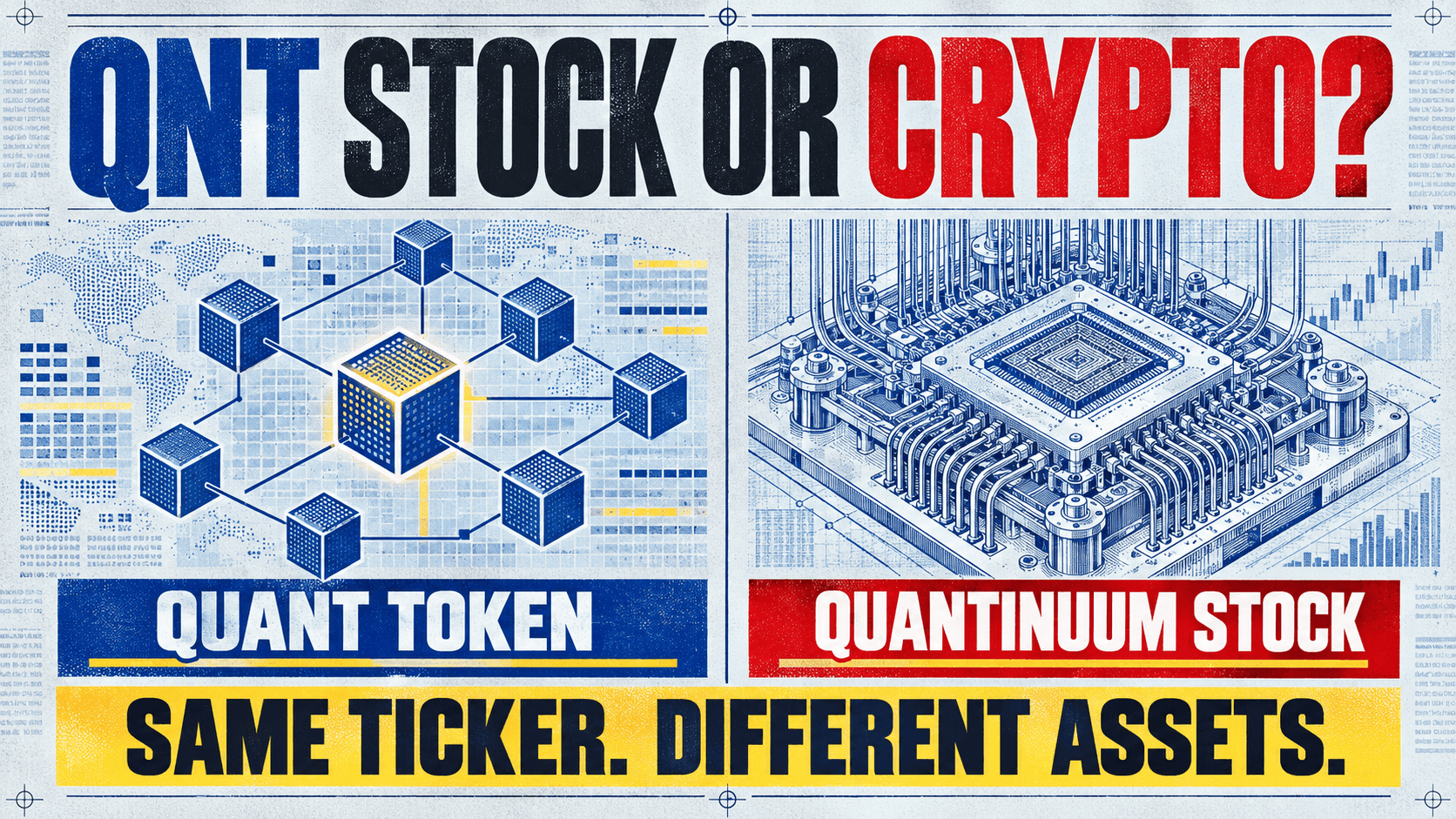
Is QNT a Stock or Crypto? Quant (QNT) and Quantinuum Stock Are Not the Same Asset
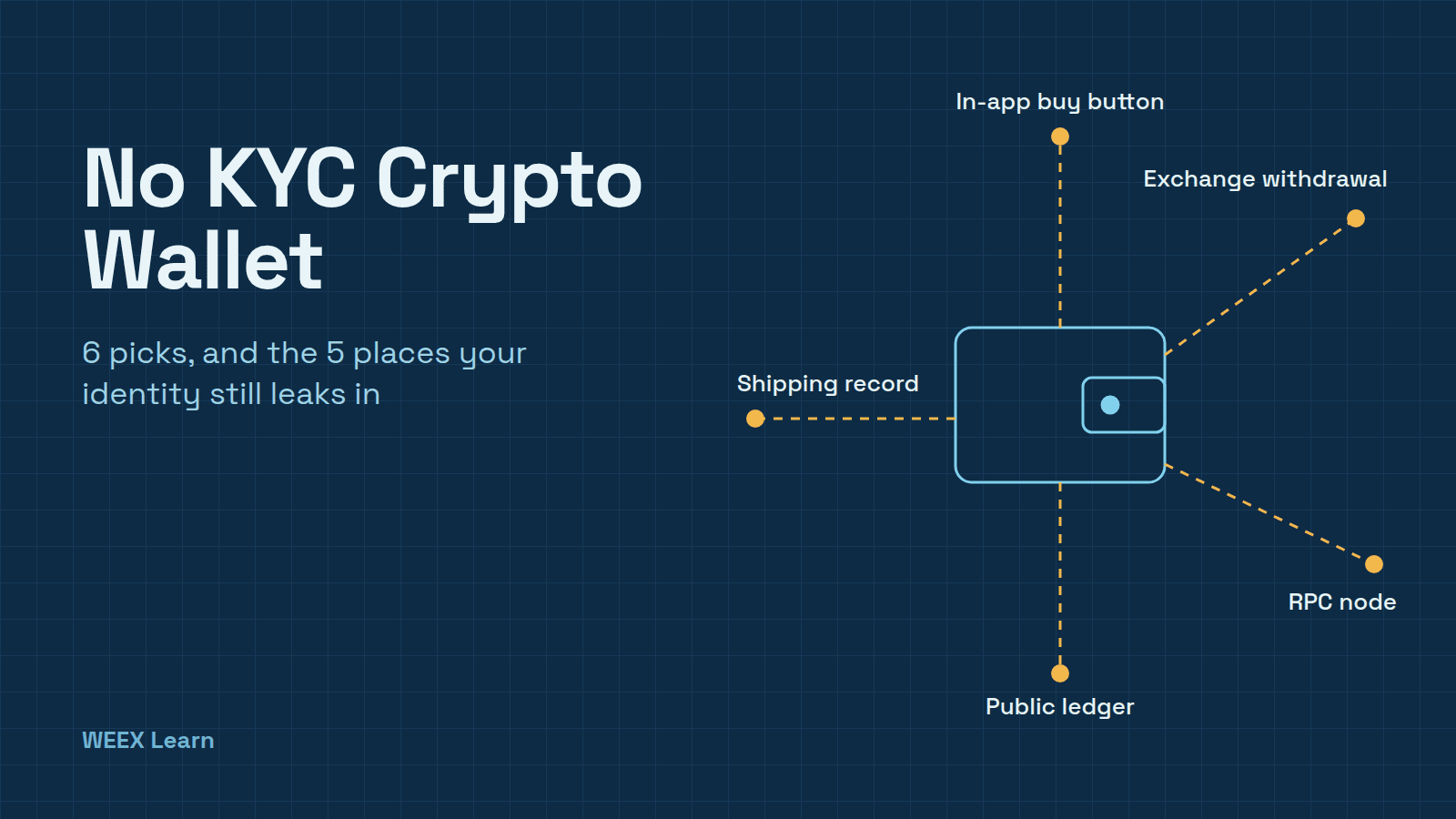
No KYC Crypto Wallet: 6 Picks and 5 Places Your ID Still Leaks
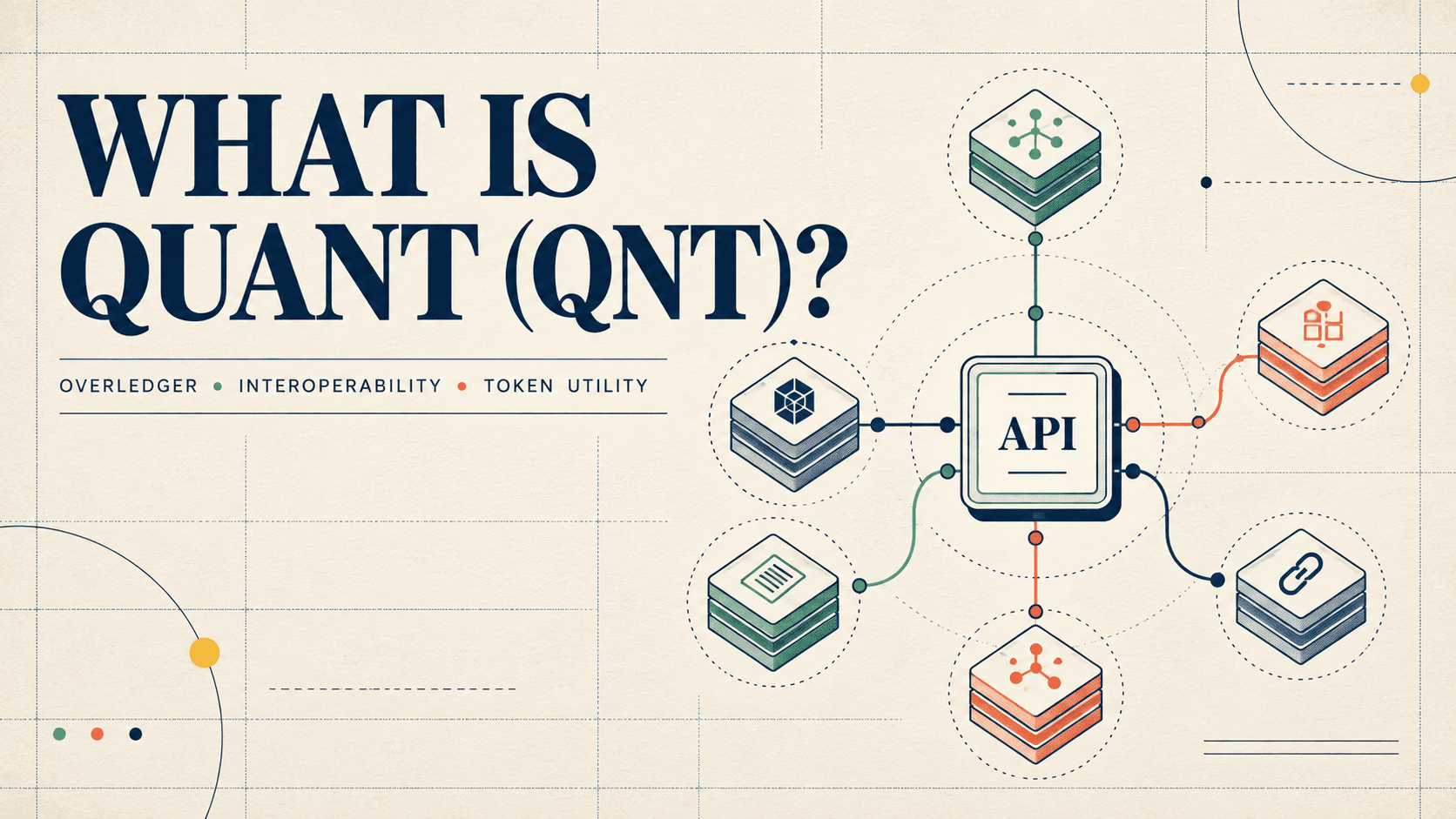
What Is Quant (QNT) Crypto? How Overledger Works, QNT Utility, and Token Supply Explained
Best Decentralized Crypto Wallet for Beginners: What Self-Custody Really Asks of You

Best Crypto Exchange for Beginners 2026: What Actually Matters When Choosing One
Best Crypto Cold Wallet 2026: Top Picks Matched to How You Hold
How to Connect Phantom Wallet to a Solana DApp
How to Install and Set Up Phantom Wallet
Funding Rate Crypto: What BTC and ETH Are Paying Right Now
INTC Stock Surged 14%: Intel Only Has Enough Chips for Half Its Clients
XPL Unlock on Sept 25: How to Long or Short Plasma Futures Safely
Bitcoin Funding Rate After a $648M Short Squeeze: What Longs Pay
What Is Blockchain Technology? Follow One Transaction to See

How Does Mining Actually Work on Pi Network?
What Is Pi Network? A Complete Beginner's Guide
How to Look Up a Wallet Address and Transaction History
Funding Rate Explained: How Perpetual Futures Fees Hit Your PnL
PENGU Airdrop on WEEX: Get 10 USDT in PENGU Before October 6
BTC Futures Trading on WEEX: Claim BTC Rewards Before Sep 25
What Is a Funding Rate? How Perpetual Futures Charge Longs and Shorts
How Does WEEX KYC Verification Work? A Taiwan User Guide
Macro Protocol (MTP): Listing Status and a Safe Verification Guide
Lumentum (LITE) Perpetual Futures: Why 25x Leverage Is the Limit
Lisk Chain Shutdown October 31: How to Move LSK Safely
What Is BONK? WEEX Spot and 1000BONK Futures Status and Risk Checks
What Is BRETT? WEEX Spot and Futures Status and Risk Checks
What Is FLOKI? WEEX Spot and 1000FLOKI Futures Status and Risk Checks
What Is WIF (dogwifhat)? WEEX Spot and Futures Status and Risk Checks
How to Test a Trading Strategy on WEEX Demo Before Going Live
What Is Coinbase Wrapped HYPE (cbHYPE)? How It Works on Base, 1:1 Backing, Risks, and HYPE Conversion
Is QNT a Stock or Crypto? Quant (QNT) and Quantinuum Stock Are Not the Same Asset
No KYC Crypto Wallet: 6 Picks and 5 Places Your ID Still Leaks
What Is Quant (QNT) Crypto? How Overledger Works, QNT Utility, and Token Supply Explained
Best Decentralized Crypto Wallet for Beginners: What Self-Custody Really Asks of You
Best Crypto Exchange for Beginners 2026: What Actually Matters When Choosing One




