
South Korea clears way for courts to seize and sell Bitcoin for unpaid debts under new November rules

 Prefer us on Google


South Korea has established procedures for courts to seize and sell debtors' cryptocurrency to satisfy civil claims.
On Oct. 12, the Supreme Court promulgated Rule 3280, introducing standardized procedures for freezing, transferring, and liquidating digital assets to recover unpaid debts. The regulations take effect on Nov. 1 and cover cryptocurrencies held on exchanges and in private wallets.
One provision allows court officers to take possession of directly held crypto before debtors receive formal notice of an attachment order, potentially limiting opportunities to move assets beyond creditors' reach.
The changes come as cryptocurrency holdings increasingly feature in South Korean debt-recovery proceedings, prompting authorities to establish consistent procedures for assets that can be transferred rapidly without relying on traditional financial intermediaries.
Crypto exchanges face new obligations under debt-recovery rules
Under the framework, creditors seeking repayment from cryptocurrency held on exchanges can obtain court orders attaching a debtor's right to receive those assets.
Once an attachment order is served, the exchange or other custodian must prevent the transfer of covered assets to the debtor, who is also prohibited from disposing of the claim or receiving the cryptocurrency.
Creditors can also ask courts to compel custodians to disclose information about the targeted holdings within one week of receiving the order.
The required information includes whether the custodian recognizes the debtor's claim, the type and quantity of cryptocurrencies held, and whether other creditors have existing claims or priority rights over the assets.
The disclosure obligation applies when creditors seek it through the prescribed court procedure, giving them a means to identify assets available for repayment and potential competing claims.
For cryptocurrencies held directly by debtors, courts can prohibit transfers and order the assets delivered to an enforcement officer.
The rules permit that transfer to occur before the attachment order is formally served on the debtor. If the officer receives the cryptocurrency first, the attachment becomes effective upon receipt.
However, enforcement against self-custodied assets could remain challenging where debtors control the private keys needed to authorize transfers.
Once creditors attach cryptocurrencies, they can seek additional court orders to recover their value.
Judges may authorize transfers to creditors at court-determined valuations or direct enforcement officers to arrange sales through virtual asset service providers.
For exchange-held crypto, the rules also permit sales through the existing custodian, transfers to accounts controlled by enforcement officers, or conversion into assets that can be more easily liquidated.
Sales must use the prevailing market price on the transaction date or another appropriate valuation, introducing a defined process for assets whose prices can fluctuate sharply during enforcement proceedings.
Debtors retain the ability to appeal decisions authorizing asset transfers or sales, which take effect only after becoming final. The regulations also establish procedures for restoring assets when enforcement is withdrawn or canceled.
The Supreme Court said the amendments are intended to improve legal certainty and consistency as courts handle a growing number of cryptocurrency-related enforcement cases.
The Nov. 1 implementation will also cover proceedings already before the courts, with existing attachment and preservation orders remaining valid. Exchanges and other custodians handling those cases will need to apply the new disclosure, transfer and sale procedures once the regulations take effect.
-- Price
This content is provided for general informational purposes only and doesn't constitute financial, investment, legal, or tax advice. Any events, rewards, online promotions, or related information mentioned herein should not be considered a recommendation, solicitation, or invitation to purchase, sell, trade, or otherwise deal in any crypto assets. Crypto assets are highly volatile and may result in loss. The availability of WEEX services, products, and related events may vary by region. You are responsible for ensuring that your participation is in accordance with applicable local laws and regulations.
You may also like

Leon Wankum Predicts Bitcoin Will Outgrow Real Estate Market

Blockstream Executive Peter Bain: Bitcoin Holding $81K Signals Bull Run

Bitcoin-to-Nasdaq Ratio Turns Bullish After 235 Sessions

PHP Exploit Takes Down Government and Hospital Websites

Galaxy Believes Bitcoin Bear Market Ended in June, Recommends Buying and Holding

Empery Invests $65 Million to Acquire 25% Stake in AI Data Center

Bitcoin's next Fed test comes with a hidden problem in America's inflation data

The crypto market loses altitude, patience becomes a habit – Steady Lads

Bitcoin's flat trend vs. S&P 500 signals risk warning, says Bloomberg analyst

Cyberattack on GMO in Japan: Trading Accounts Compromised, GMO Coin Claims to be Unaffected

Mark Cuban compares Bitcoin to meme stocks
Electrum patches Bitcoin vulnerability allowing payment redirection
The Week Ahead: 4 Key Moments for the Crypto Market

Security Researcher Exploits PHP2Shell Vulnerability to Breach Bounty Website, Earns Approximately $2000 in Bitcoin Rewards
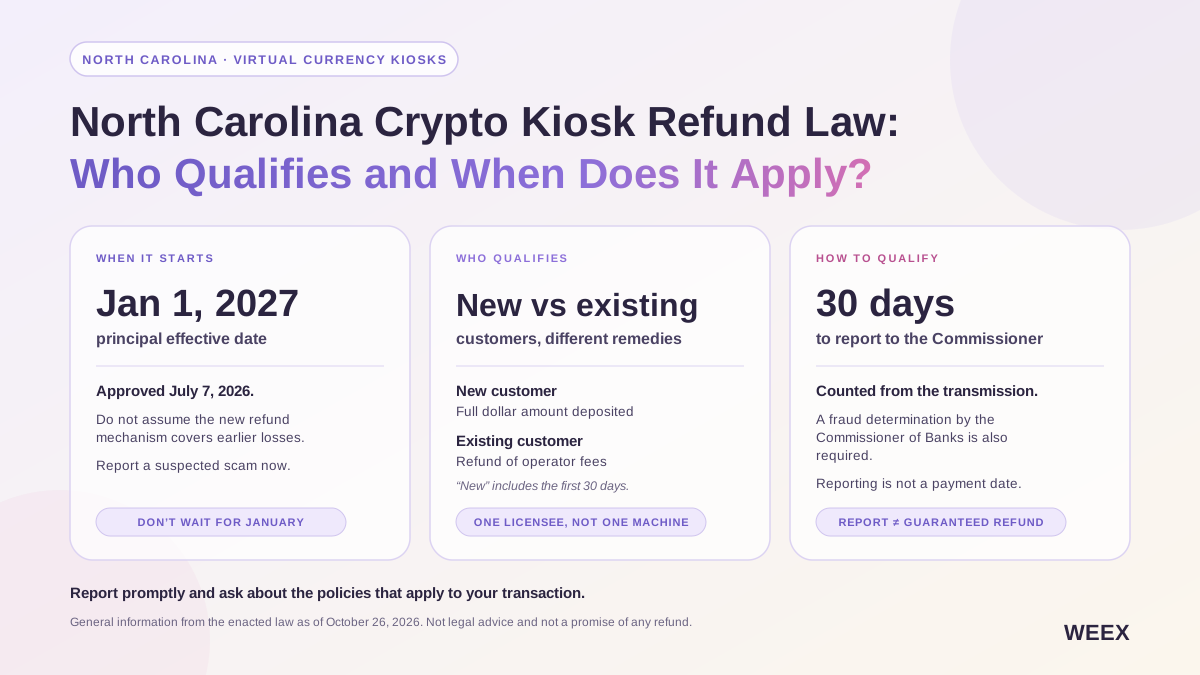
North Carolina Crypto Kiosk Refund Law: Who Qualifies and When Does It Apply?
Understand North Carolina’s crypto kiosk refund law: the January 2027 start date, who qualifies, reporting deadlines, and documents victims should keep.
US Startup Successfully Develops Artificial Gold, Highlighting Bitcoin Scarcity

Sam Price Claims Bitcoin Has Been Declared Dead Multiple Times

Mr&强 Analyzes Bitcoin Support and Resistance Areas

Franklin Templeton Launches Two Dividend Reinvestment Bitcoin ETFs

Interest on U.S. corporate bonds with CCC rating rises to 17.99 percent

LND Releases v0.21.5-beta.rc1 with Fee Estimate Limits

FOUNDATION Faces Spam Attack from Spoofed Domain Names
Bitcoin Core Changes Rules for Disclosing Security Vulnerabilities

New York Man Sentenced to 51 Months in Prison for Telecom Fraud and Money Laundering

[Bitcoin $0 Controversy②] "$0 is an Exaggeration"... Reasons Wall Street Disagrees

WEEX Exclusive:Gold Breaks Below $4,000, Bitcoin Pulls Back Below $80,000 | WEEX TradFi Daily(October 26, 2026)

Gold Breaks Below $4,000, Bitcoin Pulls Back Below $80,000 | WEEX TradFi Daily(October 26, 2026)
At the October 23 close, major indexes were mixed, with the Dow weaker. Brent crude rose to about $116.7, a near six-month high, and energy led; gold briefly fell below $4,000 as Bitcoin pulled back toward $80,000. Cybersecurity stocks strengthened last week, with CrowdStrike up nearly 12%. Markets are watching whether Bitcoin’s correction is nearing its end, along with earnings from Verizon, Cadence, Celestica and Amkor today.

The Superintendency of the Securities Market of Panama Excludes Cryptocurrencies from Its Oversight

Michael Saylor: Strategy's Core Business is Bitcoin-Based Digital Credit Products

Bitcoin and gold among worst-performing assets in 2023
Leon Wankum Predicts Bitcoin Will Outgrow Real Estate Market
Blockstream Executive Peter Bain: Bitcoin Holding $81K Signals Bull Run
Bitcoin-to-Nasdaq Ratio Turns Bullish After 235 Sessions
PHP Exploit Takes Down Government and Hospital Websites
Galaxy Believes Bitcoin Bear Market Ended in June, Recommends Buying and Holding
Empery Invests $65 Million to Acquire 25% Stake in AI Data Center
Contents
Latest articles




Latest coin listings on WEEX


