
Lagarde: EU funds should bear initial losses for chip factories and data center projects

 Prefer us on Google



Key Points
- European Central Bank President Christine Lagarde stated that EU public funds should bear the initial losses for large chip factories and data center projects to attract private capital.
- Lagarde warned that if access to critical infrastructure or advanced AI models is cut off, Europe’s dependence on foreign technology will expose it to greater risks.
- According to estimates, to increase Europe’s share of global AI computing power from about 5% to 15% by 2030, approximately €1.3 trillion (equivalent to $1.43 trillion) will be needed.
On November 20, 2026, Friday, in Frankfurt, Germany, European Central Bank President Christine Lagarde delivers a speech at the 36th Frankfurt European Banking Congress.
European Central Bank President Christine Lagarde stated on Friday that EU public funds should bear the initial losses for major chip factories and data center projects to attract private capital investment.
She will step down as President of the European Central Bank in February next year and said during her speech at the Frankfurt European Banking Congress on Friday: "When we identify a challenge that requires a European-level solution, we should strengthen the European institutions that can implement the solution."
"For technology projects like chip factories and data centers that require European-scale capacity, a public-private partnership mechanism should be established at the European level. EU budgets and other public funds should bear the initial losses to leverage private capital."
Lagarde had previously warned that Europe’s existing data center capacity is insufficient to meet domestic demand, and the EU’s plans to build up to seven AI super factories are still inadequate.
Currently, the infrastructure projects driven by the AI boom are controversial, complex, and costly. Spain has introduced regulations for data centers, the U.S. has imposed export controls on AI chips, and CBS News polls show that more than half of voters in the U.S. midterm elections consider data center construction an important issue, with rising public opposition. Denmark has also implemented a policy to pause data center construction to control electricity consumption.
This speech reviewed her more than seven years as president. Lagarde discussed the longstanding issues facing the EU: insufficient competitiveness and the long-stalled construction of a capital markets union; she also addressed new challenges, namely the EU’s high dependence on external imports for critical raw materials and technology.
"By the time everyone realizes that action must be taken, the best window of opportunity has often passed. Taking action before the issues fully manifest is one of the hardest lessons for policymakers. This means incurring costs upfront for future returns," she said during her speech.
Lagarde cited examples of successful decisive decisions by the EU: the €800 billion pandemic recovery fund, support for Ukraine in geopolitical and financial terms, and a significant increase in defense spending (especially in Germany).
However, she stated that the capital markets union and regulatory system have yet to be fully integrated, and for every year of delay, there will be a situation where "more European savings flow overseas, and domestic growth-oriented companies turn to seek financing abroad."
She reiterated the estimated data: to increase Europe’s share of global AI computing power from 5% to 15% by 2030, an investment of €1.3 trillion is needed.
"But as long as we can still procure computing power from overseas vendors and access cutting-edge AI models, it is difficult to persuade all parties to incur high costs for this."
"Whether it is the losses already incurred or the risks that may be encountered in the future, the cost of inaction is real. However, this cost rarely becomes clear, making it difficult to form a broad consensus for reform like that seen during the pandemic or in aid to Ukraine."
"This is the core dilemma of European policymaking. We can see the problems early on, but we always wait until the issues can no longer be ignored before taking action. By that time, it is almost too late. Lost industries are hard to reclaim; once external dependencies are exploited by adversaries, our economic sovereignty is exposed to risks.",summary:
-- Price
This content is provided for general informational purposes only and doesn't constitute financial, investment, legal, or tax advice. Any events, rewards, online promotions, or related information mentioned herein should not be considered a recommendation, solicitation, or invitation to purchase, sell, trade, or otherwise deal in any crypto assets. Crypto assets are highly volatile and may result in loss. The availability of WEEX services, products, and related events may vary by region. You are responsible for ensuring that your participation is in accordance with applicable local laws and regulations.
You may also like

Ethereum: AI Becomes a More Urgent Threat than Quantum

OPEC+ to Finalize 2027 Production Policy Amid Intensified Uncertainty from Iran War and Internal Disputes

The Battle of Personal Agents: Ambition and Restraint

Payment Giant Stripe Negotiates Acquisition Offer Valued Over $200 Billion, Launches Stablecoin Spending Card with Deel

Ansem and Satoshi Nakamoto: Living Under the Same 'Stolen' Roof

Quickben22 Rechecks 2018 Bitcoin Dormant Address List: Nearly 10,000 Dormant Addresses Restart Transfers After Eight Years, Transferring a Total of 245,000 BTC

Flop Labs Led by Arthur Hayes Launches FLOP Testnet, Initial Airdrop Scoring Not Yet Started

Bank of America Releases 2027 Investment Outlook: Global Stock Markets Could Rise 4%-8%! Improved Financial Environment Allows for Cryptocurrency Investments
Bitcoin developers propose fix for transaction verification gap affecting Lightning wallets

UBS Downgrades Aixtron to Sell, Expects AI Optical Communication Equipment Demand to Slow by 2028, Shares Plunge Over 10%

Unitree Stock Hits 20% Limit-Up: What Drove the November 23 Surge
Unitree Robotics (688836) hit its 20% limit-up at ¥708 on Nov 23, 2026. See the price data, the reported catalysts, the valuation context and what is unconfirmed.
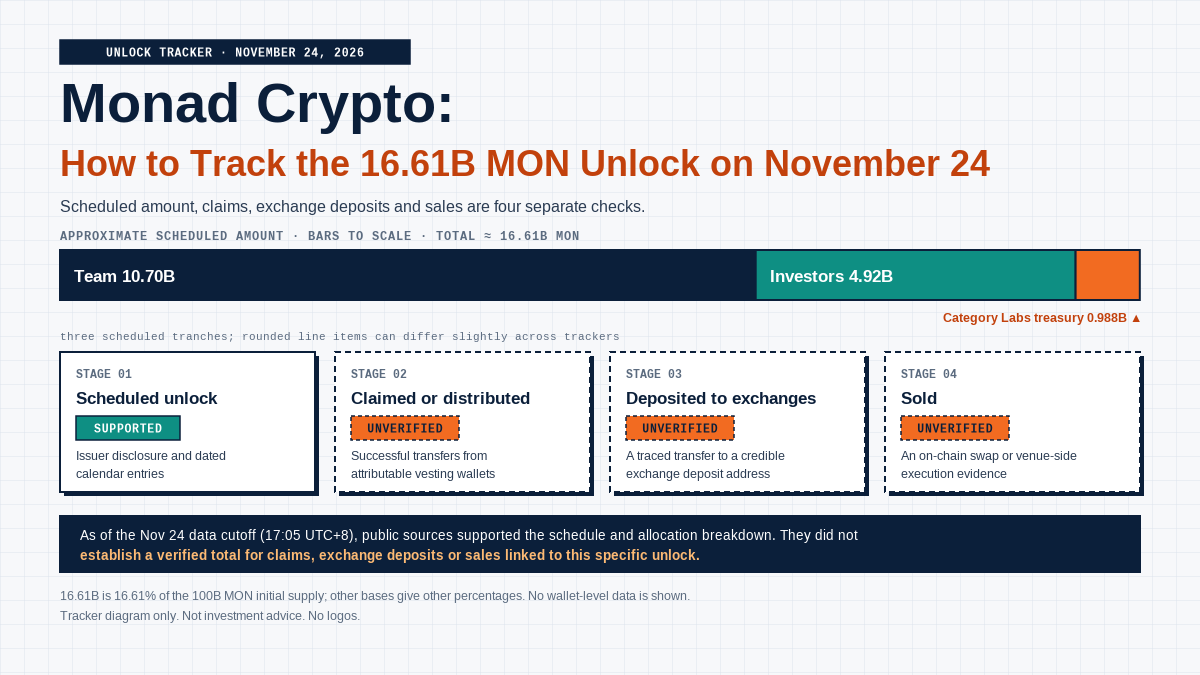
Monad Crypto: How to Track the 16.61B MON Unlock on November 24
Track Monad’s 16.61B MON unlock on November 24. See the team, investor, and treasury allocations, and learn how to verify claims and exchange deposits.

China Launches AI Standardization Pilot in Five Free Trade Zones
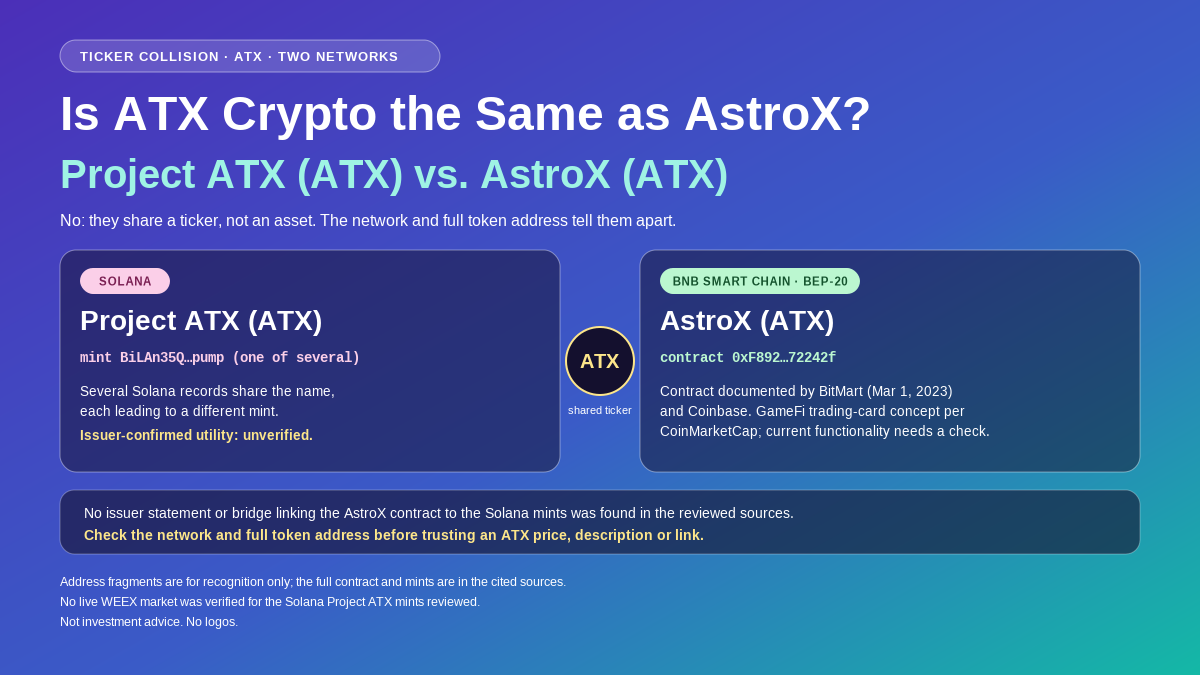
Is ATX Crypto the Same as AstroX? Project ATX (ATX) vs. AstroX (ATX)
Compare Project ATX on Solana with AstroX on BNB Smart Chain. Learn how to verify each token address before trusting an ATX price or buying guide.

Bayer Signals Future Pharmaceutical Deals May Target Mid-Stage Clinical Assets

Ethereum ETF: $96 million in net inflows stop the November bleeding
AI Agents in Payments: Cards Dominate, Yet Stablecoins Fill the 'Gap'|a16z Frontier

Grayscale Claims Bitcoin and Major Assets Are Oversold, Market Outlook Affected by AI Risks

Jensen Huang's "Miraculous Return" Forces Investment Banks to Rewrite Reports Overnight

Applied Digital Stock Surged 20% on a Hyperscaler Deal. What to Know About Its $41 Billion in Leases

Hewlett Packard Enterprise Q4 Earnings Exceed Market Expectations, Board Approves $5 Billion Stock Buyback Plan

Nvidia vs. SpaceX: The AI Revolution Is Big Enough for Both. Here's the Better Buy.

Bitcoin’s supply squeeze narrative faces scrutiny after 11,000 BTC moves to Kraken

Reactions Prove 167-Year-Old Riemann Hypothesis with Help from Claude; Are We Close to Superintelligence?

3 Unstoppable AI Stocks to Buy Hand Over Fist Before the End of 2026

Texas Pacific Land Company Acquires EagleRock Land in $3 Billion All-Stock Deal

Central Bank Anti-Money Laundering Bureau Emphasizes Need for Enhanced Cooperation Against Cross-Border Money Laundering Networks

Sandisk Just Split Its Stock 8-for-1. Is It Time to Buy?

XRP Ledger lending upgrade just 5 votes away from approval

Media: Jensen Huang and His Wife Have Accumulated Vast Wealth
Ethereum: AI Becomes a More Urgent Threat than Quantum
OPEC+ to Finalize 2027 Production Policy Amid Intensified Uncertainty from Iran War and Internal Disputes
The Battle of Personal Agents: Ambition and Restraint
Payment Giant Stripe Negotiates Acquisition Offer Valued Over $200 Billion, Launches Stablecoin Spending Card with Deel
Ansem and Satoshi Nakamoto: Living Under the Same 'Stolen' Roof
Quickben22 Rechecks 2018 Bitcoin Dormant Address List: Nearly 10,000 Dormant Addresses Restart Transfers After Eight Years, Transferring a Total of 245,000 BTC
Latest articles


Latest coin listings on WEEX


