
Injective releases new whitepaper weeks after first U.S. INJ ETF launch

 Prefer us on Google



Injective has released a new whitepaper detailing its blockchain infrastructure for real-world assets, decentralized trading, and artificial intelligence, nearly two weeks after the first U.S.-listed exchange-traded fund tracking its native INJ token began trading on Nasdaq.
Summary
- Injective has released a new whitepaper outlining its blockchain infrastructure for real world assets, decentralized trading, and AI applications.
- Canary Capital's Staked INJ ETF began trading on Nasdaq on November 5, offering investors direct exposure to INJ and potential staking rewards.
- The whitepaper details Injective's shared trading infrastructure, tokenized asset issuance, and support for automated financial services.
- Injective's tokenomics include annual issuance parameters between 2.2% and 4.4% alongside a recurring program that permanently burns INJ tokens.
In a November 18 X post, the Layer 1 blockchain project pointed investors toward its latest whitepaper while drawing attention to the Canary Staked INJ ETF, which launched on November 5 under the ticker INJC.
$INJC is the first official U.S. listed Injective ETF. If you're new to $INJ, start with the source.
The new Whitepaper explains how Injective issues real world assets and gives them utility across markets, apps and AI agents.
Full whitepaper 👇 pic.twitter.com/122kwbXBhB --- Injective 🥷 (@injective) November 18, 2026
The fund, managed by Canary Capital, gives investors exposure to INJ through traditional brokerage accounts while seeking additional returns from staking the cryptocurrency.
Meanwhile, the October 2026 whitepaper, titled Injective: A Finance-Native Layer-1 Blockchain, explains how the network has developed from an Ethereum-based exchange settlement protocol into an independent blockchain with financial services built directly into its infrastructure.
Canary Staked INJ ETF offers exposure to token and staking rewards
The Canary Staked INJ ETF began trading on Nasdaq on November 5, becoming the first U.S.-listed exchange-traded fund to offer direct exposure to Injective's native cryptocurrency.
Unlike investment products that track futures contracts, INJC holds INJ directly and participates in the blockchain's proof-of-stake validation process to generate staking rewards.
According to its SEC registration statement, the fund intends to stake at least 90% of its eligible INJ holdings under normal market conditions, with BitGo Bank & Trust serving as its digital asset custodian.
The ETF charges an annual sponsor fee of 1.10%, while staking rewards, after applicable expenses, contribute to the fund's net asset value.
INJC started trading with $15 million in net assets and 600,000 outstanding shares. By November 6, its assets had reached $16.12 million, according to figures previously reported by crypto.news.
Injective Labs CEO Eric Chen and Canary Capital CEO Steven McClurg attended Nasdaq's opening bell ceremony on November 6 to celebrate the listing.
Injective whitepaper outlines infrastructure for tokenized assets
The newly published whitepaper replaces Injective's original December 2018 document, which described a decentralized exchange settlement protocol operating on Ethereum.
Since then, Injective has developed into an independent proof-of-stake blockchain with native financial modules that handle trading, asset issuance, market data, and settlement.
A central component is its shared onchain orderbook, which allows applications to access the same liquidity infrastructure without maintaining separate trading systems.
The network uses frequent batch auctions to match orders at a uniform clearing price within each block. According to the whitepaper, the mechanism is designed to reduce front-running and the advantages traders might gain from faster transaction submissions.
For real-world assets, Injective provides TokenFactory and Permissions modules that allow institutions to issue tokens and apply restrictions on who can hold, receive, or transfer them.
The blockchain supports iAssets, a separate class of cash-settled derivatives that track external financial instruments without giving investors ownership of the underlying assets.
Injective's MultiVM architecture allows Ethereum Virtual Machine and WebAssembly applications to access the same token balances and financial services.
The whitepaper reports block production times of approximately 600 milliseconds, with transactions reaching deterministic finality once validators commit a block.
The network's financial infrastructure is expected to undergo further changes through its proposed Veyra upgrade, scheduled for November 24 if approved through governance.
The proposal includes expanded cross-chain functionality, request-for-quote trading, and infrastructure for future confidential transactions.
AI payments and INJ tokenomics feature in updated design
Injective's whitepaper dedicates a separate section to autonomous AI agents, describing how software applications can access financial services through standardized developer tools.
Its Model Context Protocol infrastructure allows compatible agents to retrieve market data, prepare transactions, and interact with trading functions while transaction authorization remains subject to assigned permissions.
The network supports x402 payments using USDC, allowing automated software to purchase data, computing resources, and other online services.
The document details INJ's dynamic issuance mechanism, which adjusts token emissions according to the proportion of supply committed to staking.
Following a January 2026 governance decision, annual issuance parameters were set between 2.2% and 4.4%, with a target staking ratio of 60%.
Injective's Community BuyBack program separately uses contributed ecosystem revenue to distribute rewards to participating INJ holders in exchange for tokens that are permanently burned.
Under the exchange module's fee structure, 60% of positive trading fees flow into the protocol revenue pool supporting the program, while the remaining 40% goes to designated fee recipients.
-- Price
This content is provided for general informational purposes only and doesn't constitute financial, investment, legal, or tax advice. Any events, rewards, online promotions, or related information mentioned herein should not be considered a recommendation, solicitation, or invitation to purchase, sell, trade, or otherwise deal in any crypto assets. Crypto assets are highly volatile and may result in loss. The availability of WEEX services, products, and related events may vary by region. You are responsible for ensuring that your participation is in accordance with applicable local laws and regulations.
You may also like

Ethereum: AI Becomes a More Urgent Threat than Quantum

OPEC+ to Finalize 2027 Production Policy Amid Intensified Uncertainty from Iran War and Internal Disputes

The Battle of Personal Agents: Ambition and Restraint

Payment Giant Stripe Negotiates Acquisition Offer Valued Over $200 Billion, Launches Stablecoin Spending Card with Deel

Ansem and Satoshi Nakamoto: Living Under the Same 'Stolen' Roof

Quickben22 Rechecks 2018 Bitcoin Dormant Address List: Nearly 10,000 Dormant Addresses Restart Transfers After Eight Years, Transferring a Total of 245,000 BTC

Flop Labs Led by Arthur Hayes Launches FLOP Testnet, Initial Airdrop Scoring Not Yet Started

Bank of America Releases 2027 Investment Outlook: Global Stock Markets Could Rise 4%-8%! Improved Financial Environment Allows for Cryptocurrency Investments
Bitcoin developers propose fix for transaction verification gap affecting Lightning wallets

UBS Downgrades Aixtron to Sell, Expects AI Optical Communication Equipment Demand to Slow by 2028, Shares Plunge Over 10%

Unitree Stock Hits 20% Limit-Up: What Drove the November 23 Surge
Unitree Robotics (688836) hit its 20% limit-up at ¥708 on Nov 23, 2026. See the price data, the reported catalysts, the valuation context and what is unconfirmed.
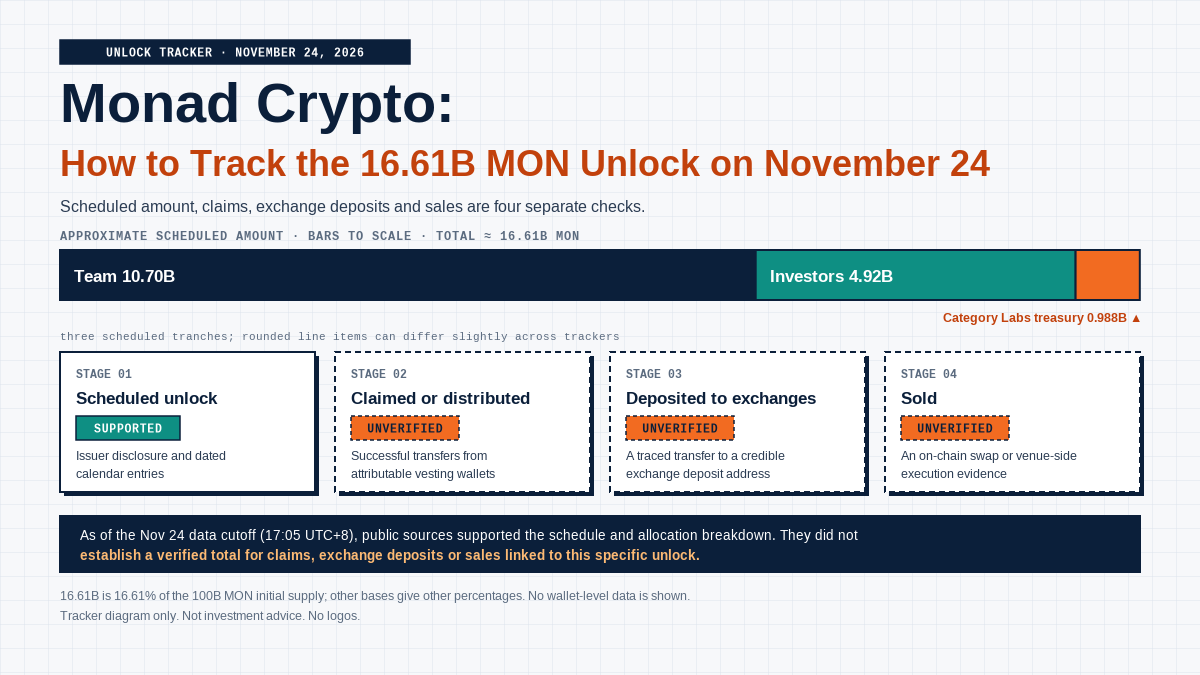
Monad Crypto: How to Track the 16.61B MON Unlock on November 24
Track Monad’s 16.61B MON unlock on November 24. See the team, investor, and treasury allocations, and learn how to verify claims and exchange deposits.

China Launches AI Standardization Pilot in Five Free Trade Zones
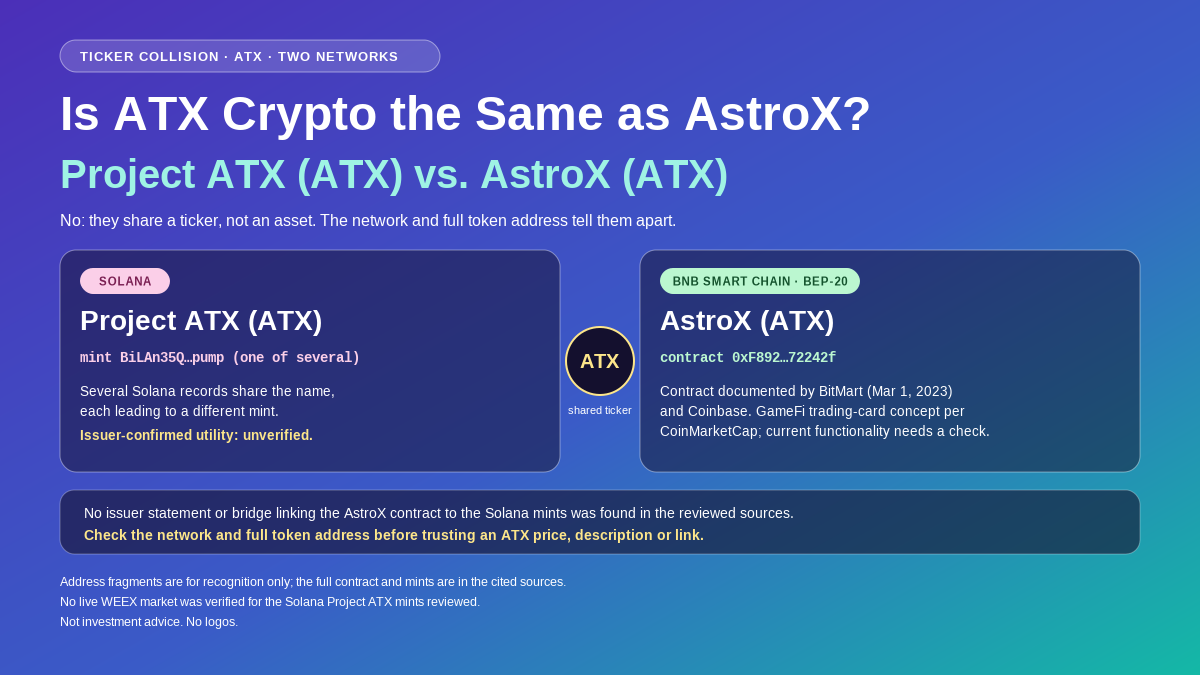
Is ATX Crypto the Same as AstroX? Project ATX (ATX) vs. AstroX (ATX)
Compare Project ATX on Solana with AstroX on BNB Smart Chain. Learn how to verify each token address before trusting an ATX price or buying guide.

Bayer Signals Future Pharmaceutical Deals May Target Mid-Stage Clinical Assets

Ethereum ETF: $96 million in net inflows stop the November bleeding
AI Agents in Payments: Cards Dominate, Yet Stablecoins Fill the 'Gap'|a16z Frontier

Grayscale Claims Bitcoin and Major Assets Are Oversold, Market Outlook Affected by AI Risks

Jensen Huang's "Miraculous Return" Forces Investment Banks to Rewrite Reports Overnight

Applied Digital Stock Surged 20% on a Hyperscaler Deal. What to Know About Its $41 Billion in Leases

Hewlett Packard Enterprise Q4 Earnings Exceed Market Expectations, Board Approves $5 Billion Stock Buyback Plan

Nvidia vs. SpaceX: The AI Revolution Is Big Enough for Both. Here's the Better Buy.

Bitcoin’s supply squeeze narrative faces scrutiny after 11,000 BTC moves to Kraken

Reactions Prove 167-Year-Old Riemann Hypothesis with Help from Claude; Are We Close to Superintelligence?

3 Unstoppable AI Stocks to Buy Hand Over Fist Before the End of 2026

Texas Pacific Land Company Acquires EagleRock Land in $3 Billion All-Stock Deal

Central Bank Anti-Money Laundering Bureau Emphasizes Need for Enhanced Cooperation Against Cross-Border Money Laundering Networks
Sandisk Just Split Its Stock 8-for-1. Is It Time to Buy?

XRP Ledger lending upgrade just 5 votes away from approval

Media: Jensen Huang and His Wife Have Accumulated Vast Wealth
Ethereum: AI Becomes a More Urgent Threat than Quantum
OPEC+ to Finalize 2027 Production Policy Amid Intensified Uncertainty from Iran War and Internal Disputes
The Battle of Personal Agents: Ambition and Restraint
Payment Giant Stripe Negotiates Acquisition Offer Valued Over $200 Billion, Launches Stablecoin Spending Card with Deel
Ansem and Satoshi Nakamoto: Living Under the Same 'Stolen' Roof
Quickben22 Rechecks 2018 Bitcoin Dormant Address List: Nearly 10,000 Dormant Addresses Restart Transfers After Eight Years, Transferring a Total of 245,000 BTC
Latest articles


Latest coin listings on WEEX


