
Google uncovers AI hacking tool that turns security fixes into cyberattacks

 Prefer us on Google



Google has uncovered an AI-powered hacking system capable of transforming software security fixes into automated attacks against vulnerable websites.
In a Nov. 16 report, Google Threat Intelligence Group and Mandiant revealed that attackers were using AI frameworks to identify vulnerabilities, generate malicious code, and execute exploits with minimal human involvement.
The researchers discovered one such system, dubbed exploit_agent, on an exposed staging server containing multiple AI models connected to cybersecurity research and exploitation tools.
The framework was configured to monitor software updates, compare patched code with older versions, and identify weaknesses that developers had recently repaired. It could subsequently generate attack code and execute it automatically, allowing attackers to target websites that had not yet installed the relevant security updates.
This approach exploits the information developers publish when addressing software vulnerabilities. Changes made to repair a flaw can inadvertently reveal how the underlying weakness could be exploited.
Google said the technique lets attackers focus on known vulnerabilities rather than spend time discovering previously unknown security flaws.
The company's investigation also uncovered stolen victim data and malicious scripts capable of conducting internal network reconnaissance, brute-force attacks and installing webshells that provide remote access to compromised servers.
Some tools could remove webshells left by competing attackers, potentially helping the operator retain control over compromised systems.
Google found evidence that the operator was particularly interested in French websites associated with media, entertainment, and education. One recovered example showed the framework examining access-control protections in Spectra, a WordPress plugin used for website development.
From patch to exploit
Google describes exploit_agent comparing patched code, identifying potential weaknesses, drafting exploits and executing them automatically.
Google's described patch-to-exploit pipeline Code before and after a patch feeds comparison, identification of potential vulnerabilities, exploit drafting and automatic execution. The diagram is a process, not a timing or success-rate measurement. GOOGLE'S DESCRIBED PIPELINE Old codePatched CompareFind potentialweaknessesDraft exploitExecute exploit_agent: configured to automate the chain
From patched code to exploit execution Old and patched code feed a four-step automated pipeline described by Google. No speed or success rate is shown. GOOGLE'S DESCRIBED PIPELINE Old codePatched Compare versionsInspect the code changes Find potential flawsAnalyze the differences Draft an exploitGenerate attack code Execute automaticallyRun the generated exploit Google's described exploit_agent pipeline
A published fix can guide attack development while website owners are still deploying the update.
The diagram shows Google's configured pipeline, not measured timing, a success rate or proof of an entirely autonomous campaign.
Sources and evidence
Sources
- Google Threat Intelligence Group, November 16, 2026
Supporting facts
- Reported statement According to Google, exploit_agent is configured to compare web application code before and after patch announcements, identify potential vulnerabilities, draft exploits and execute them without human intervention in that pipeline. [1]
- Reported statement Google describes patch comparison as a way attackers can focus on known, patched flaws rather than conduct an open-ended search for unknown vulnerabilities. [1]
- Reported statement Google says automated vulnerability analysis and exploitation can reduce the window between patch disclosure and weaponized exploitation; its exploit_agent account gives no measured universal patching deadline or success rate. [1]
- Reported statement Google's report reproduces exploit_agent configuration comments requiring an operator to enter language-model API keys. [1]
Method
Conceptual process diagram of Google's configured exploit_agent pipeline. Arrows encode sequence and input flow, not elapsed time, conversion rate or successful compromise.
Scope
The diagram shows Google's configured pipeline, not measured timing, a success rate or proof of an entirely autonomous campaign.
Infographic by CryptoSlate
The discovery marked the first time Google had identified attackers using AI frameworks to fully automate vulnerability discovery and exploitation without human intervention throughout the process.
North Korean hackers turn AI development tools against crypto companies
Google's report also revealed a separate campaign in which suspected North Korean hackers exploited AI-powered development tools to infiltrate cryptocurrency organizations in North America and Europe.
The attackers, tracked as MIDNIGHT NEPTUNE, combined AI-generated identities with fraudulent recruitment campaigns to gain access to corporate systems.
They created fake recruiter profiles on professional networking platforms using AI-generated photographs, then directed prospective victims to fraudulent meeting websites.
Those websites instructed victims to run supposed troubleshooting commands that instead executed malicious scripts.
Once inside an organization, the attackers accessed internal code repositories and modified configuration files used by Anthropic's Claude Code development assistant.
The altered files were designed to automatically download a backdoor known as SOMBERMEME whenever employees launched Claude Code.
Google also discovered that the attackers disguised GitHub access tokens using names associated with Microsoft Copilot, concealing their movements within compromised development environments.
The campaign expanded on North Korea's established use of AI to generate fake resumes, prepare for job interviews, and impersonate Western technology workers seeking remote employment.
Google said the latest intrusions showed how attackers exploited AI development tools already embedded in corporate workflows to distribute malicious software.
Meanwhile, the emergence of autonomous exploitation frameworks threatens to accelerate attacks against organizations running outdated software.
Google warned that automating vulnerability analysis and exploit execution could substantially reduce the time between disclosing a security flaw and exploiting it, leaving website operators with increasingly narrow windows to install protective updates.
-- Price
This content is provided for general informational purposes only and doesn't constitute financial, investment, legal, or tax advice. Any events, rewards, online promotions, or related information mentioned herein should not be considered a recommendation, solicitation, or invitation to purchase, sell, trade, or otherwise deal in any crypto assets. Crypto assets are highly volatile and may result in loss. The availability of WEEX services, products, and related events may vary by region. You are responsible for ensuring that your participation is in accordance with applicable local laws and regulations.
You may also like

The Battle of Personal Agents: Ambition and Restraint

Payment Giant Stripe Negotiates Acquisition Offer Valued Over $200 Billion, Launches Stablecoin Spending Card with Deel

Ansem and Satoshi Nakamoto: Living Under the Same 'Stolen' Roof

Quickben22 Rechecks 2018 Bitcoin Dormant Address List: Nearly 10,000 Dormant Addresses Restart Transfers After Eight Years, Transferring a Total of 245,000 BTC

Flop Labs Led by Arthur Hayes Launches FLOP Testnet, Initial Airdrop Scoring Not Yet Started

Bank of America Releases 2027 Investment Outlook: Global Stock Markets Could Rise 4%-8%! Improved Financial Environment Allows for Cryptocurrency Investments
Bitcoin developers propose fix for transaction verification gap affecting Lightning wallets

UBS Downgrades Aixtron to Sell, Expects AI Optical Communication Equipment Demand to Slow by 2028, Shares Plunge Over 10%

Unitree Stock Hits 20% Limit-Up: What Drove the November 23 Surge
Unitree Robotics (688836) hit its 20% limit-up at ¥708 on Nov 23, 2026. See the price data, the reported catalysts, the valuation context and what is unconfirmed.
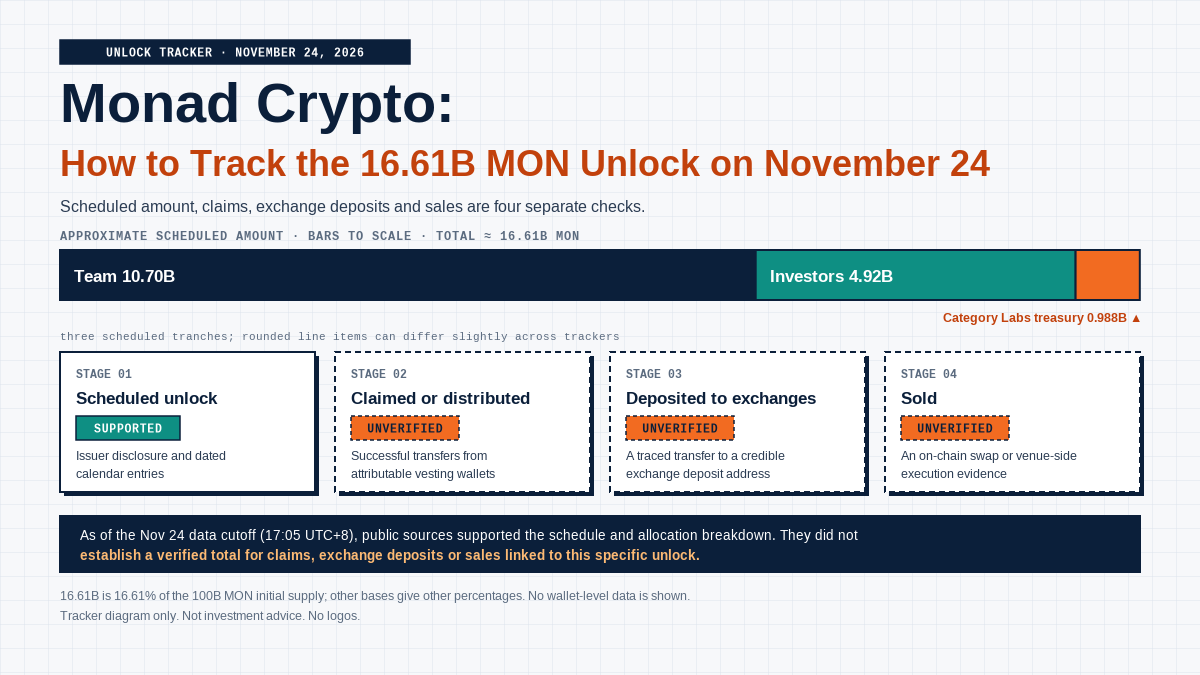
Monad Crypto: How to Track the 16.61B MON Unlock on November 24
Track Monad’s 16.61B MON unlock on November 24. See the team, investor, and treasury allocations, and learn how to verify claims and exchange deposits.

China Launches AI Standardization Pilot in Five Free Trade Zones
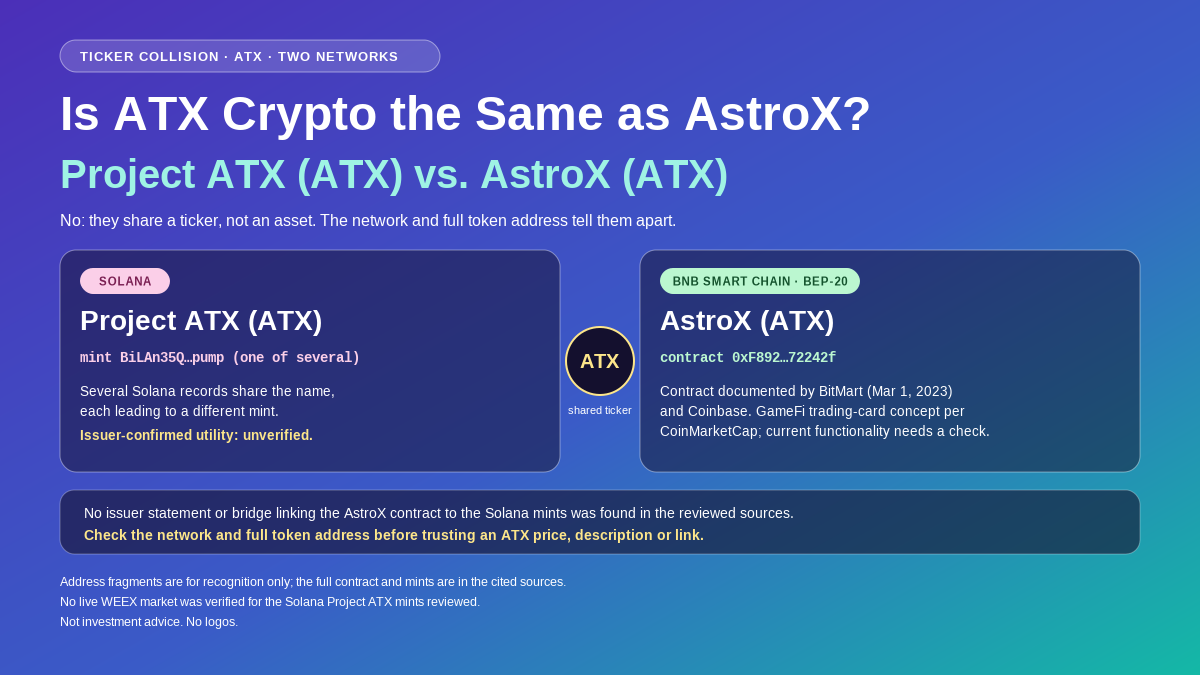
Is ATX Crypto the Same as AstroX? Project ATX (ATX) vs. AstroX (ATX)
Compare Project ATX on Solana with AstroX on BNB Smart Chain. Learn how to verify each token address before trusting an ATX price or buying guide.

Bayer Signals Future Pharmaceutical Deals May Target Mid-Stage Clinical Assets

Ethereum ETF: $96 million in net inflows stop the November bleeding
AI Agents in Payments: Cards Dominate, Yet Stablecoins Fill the 'Gap'|a16z Frontier

Grayscale Claims Bitcoin and Major Assets Are Oversold, Market Outlook Affected by AI Risks

Jensen Huang's "Miraculous Return" Forces Investment Banks to Rewrite Reports Overnight

Applied Digital Stock Surged 20% on a Hyperscaler Deal. What to Know About Its $41 Billion in Leases

Hewlett Packard Enterprise Q4 Earnings Exceed Market Expectations, Board Approves $5 Billion Stock Buyback Plan

Nvidia vs. SpaceX: The AI Revolution Is Big Enough for Both. Here's the Better Buy.

Bitcoin’s supply squeeze narrative faces scrutiny after 11,000 BTC moves to Kraken

Reactions Prove 167-Year-Old Riemann Hypothesis with Help from Claude; Are We Close to Superintelligence?

3 Unstoppable AI Stocks to Buy Hand Over Fist Before the End of 2026

Texas Pacific Land Company Acquires EagleRock Land in $3 Billion All-Stock Deal

Central Bank Anti-Money Laundering Bureau Emphasizes Need for Enhanced Cooperation Against Cross-Border Money Laundering Networks

Sandisk Just Split Its Stock 8-for-1. Is It Time to Buy?

XRP Ledger lending upgrade just 5 votes away from approval

Media: Jensen Huang and His Wife Have Accumulated Vast Wealth

The Scarce Dividend in the Autonomous Taxi Race: Supporting Service Stations

Hong Hao Believes US Stocks Have Peaked, Rebound Unlikely to Reach New Highs
The Battle of Personal Agents: Ambition and Restraint
Payment Giant Stripe Negotiates Acquisition Offer Valued Over $200 Billion, Launches Stablecoin Spending Card with Deel
Ansem and Satoshi Nakamoto: Living Under the Same 'Stolen' Roof
Quickben22 Rechecks 2018 Bitcoin Dormant Address List: Nearly 10,000 Dormant Addresses Restart Transfers After Eight Years, Transferring a Total of 245,000 BTC
Flop Labs Led by Arthur Hayes Launches FLOP Testnet, Initial Airdrop Scoring Not Yet Started
Bank of America Releases 2027 Investment Outlook: Global Stock Markets Could Rise 4%-8%! Improved Financial Environment Allows for Cryptocurrency Investments
Latest articles


Latest coin listings on WEEX


