
Four Deals, $11 Billion Each, Four Months: What SpaceX's AI Compute Streak Actually Means

 Prefer us on Google
SpaceX's CFO Bret Johnsen stood on stage at the Goldman Sachs Communacopia and Technology Conference on September 10 and disclosed the company's fourth major AI compute hosting deal in less than a year, this one worth roughly $1.11 billion a month starting December 1. Stack it against the three that came before, and SpaceX has assembled a portfolio of AI infrastructure contracts that, once all four are billing simultaneously, points toward more than $28 billion in annualized recurring revenue from compute capacity alone, a business line that barely existed inside the company a year ago.
The headline number is easy to state. What actually matters is the specific structure underneath these four deals, because that structure is doing more to explain SpaceX's current growth story, and its real risk profile, than the dollar figure on its own.
The Four Deals, Laid Out Side by Side
Putting the actual contracts next to each other makes the pace clearer than any single announcement does on its own. Anthropic is paying SpaceX approximately $1.25 billion per month for access to Colossus infrastructure through May 2029, using the full capacity of Colossus 1 in Memphis. Alphabet's Google signed a separate agreement worth $920 million per month, beginning October 2026 and running through June 2029. In July, SpaceX closed a $6.7 billion, six-month deal with an undisclosed customer. And now the newest agreement, also with an unnamed counterparty, adds another $1.11 billion a month starting in December, worth roughly $13.3 billion annualized once it reaches full capacity.
Layer those first three together and SpaceX was already generating north of $3.2 billion a month in compute revenue before this latest deal even started billing. Add the new contract's eventual run rate, and Johnsen's own figures put the total AI infrastructure business at over $3.4 billion a month, or roughly $41.1 billion annualized, by the time all four are fully active in December, according to reporting compiled by Basenor citing AI Business and Pulse 2.0. That's a business generating close to what Starlink itself produces, built almost entirely in the span of a single year.

Why the 90 Day Exit Clause Matters More Than the Headline Figure
Here's the detail that separates a genuinely durable revenue base from something closer to opportunistic capacity rental, and it's the part of this story that gets the least attention relative to the dollar totals. Johnsen has been explicit that almost all of these hosting deals, including the newest one, carry roughly six-month commitments structured with a 90-day exit provision available to either party. That's not a footnote. It means the $28 billion to $41 billion in annualized revenue being cited isn't backed by multi-year, non-cancelable contracts in the way that figure might imply at first glance.
This structure exists by design, not by accident. Johnsen has described the short-term nature of these agreements as giving SpaceX flexibility to reclaim compute capacity for its own internal projects when needed, rather than being locked into serving third party AI customers indefinitely. That's a genuinely different business logic than a traditional data center operator signing a decade long colocation lease. SpaceX is treating its compute capacity as a flexible asset it can redirect, which means the current revenue run rate reflects demand conditions right now more than it guarantees revenue conditions three or five years out.
What $100 Billion in Annualized Revenue Actually Requires
Johnsen tied the newest deal directly to a specific target: reaching $100 billion in company-wide annualized recurring revenue by the end of 2026, a figure he said the company now has "even more conviction" in hitting. Context matters here. SpaceX's own June quarter annualized revenue run rate stood at approximately $31 billion, according to MarketWatch's reporting, which means the year-end target represents more than tripling that figure within roughly six months, an aggressive jump even accounting for the AI compute deals layered on top of existing Starlink and launch revenue.
The company's underlying quarterly results back up how fast this specific segment has been scaling. SpaceX's SEC filing for the quarter ended June 30, 2026 shows AI solutions and infrastructure revenue increasing by $1.883 billion year over year, with $1.6 billion of that specifically attributed to AI infrastructure revenue as the company began offering cloud services to customers, alongside a separate $258 million increase tied to Grok and X subscription revenue. That's the compute business showing up directly in reported financials, not just in forward looking guidance from a conference stage.
-- Price
Why This Matters for How SPCX Stock Gets Valued Going Forward
The practical consequence of this shift is worth stating directly: SpaceX's valuation is increasingly being underwritten by data center economics rather than by its launch manifest or satellite broadband subscriber growth alone. A rocket and satellite company generating a meaningful share of its near-term revenue from renting out GPU capacity, power, and cooling to AI labs is a different investment thesis than the one that existed when SPCX first went public, and it's one that carries a different risk profile entirely, tied to AI infrastructure demand cycles rather than launch cadence or Starlink subscriber additions.
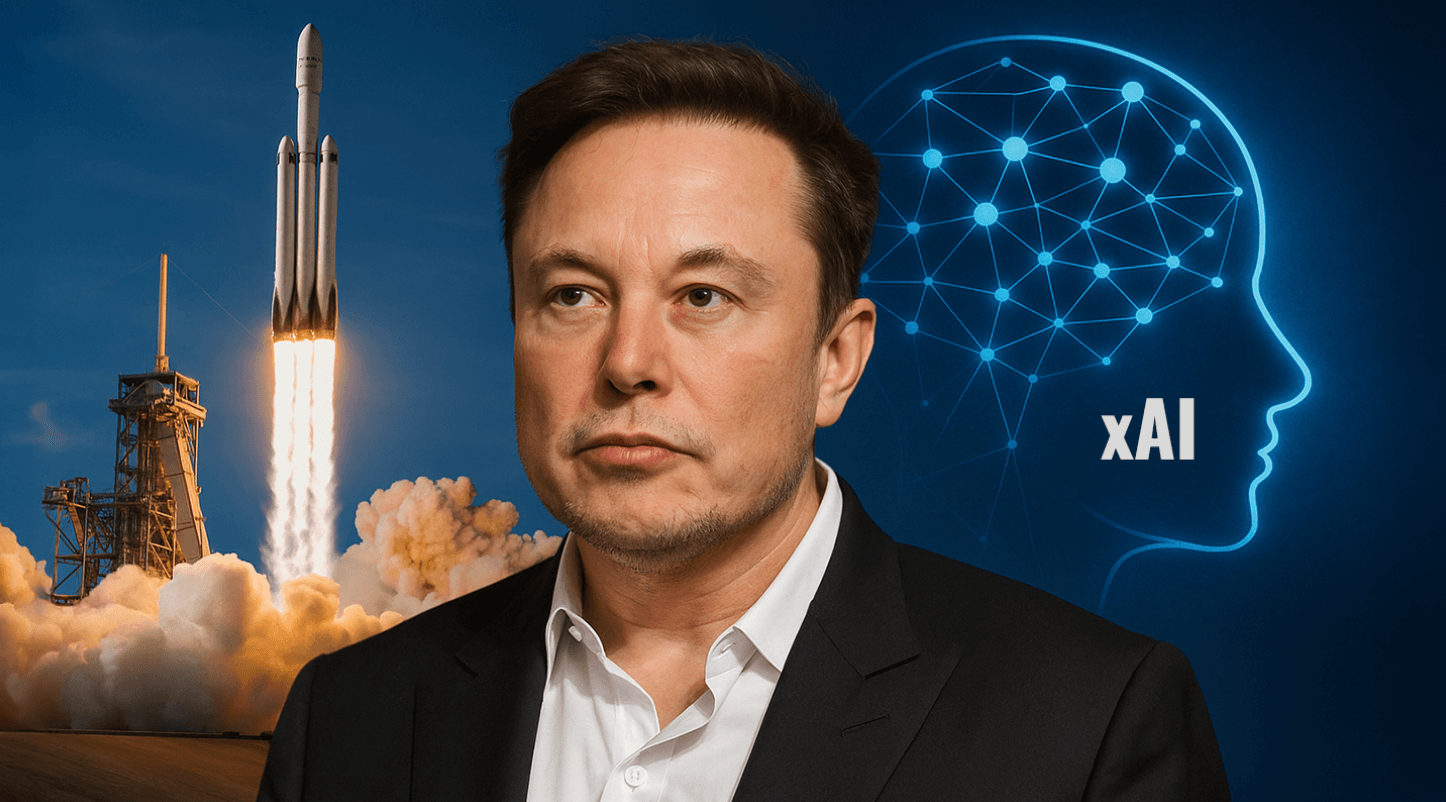
SpaceX is targeting more than 2 gigawatts of terrestrial AI compute capacity by the end of 2026, scaling toward 5 to 10 gigawatts in 2027, according to Dealroom's reporting on the third deal's disclosure. Johnsen has also flagged plans to eventually move some of this compute infrastructure into orbit, with the company targeting its first orbital compute satellites next year. Whether that orbital ambition becomes a meaningful revenue contributor or remains a longer-term aspiration is a separate question from the terrestrial compute business already generating real, reported revenue today.
What Would Actually Confirm This Growth Is Durable
None of the four deals' eventual value is guaranteed simply because it's been announced. Given the 90-day exit structure built into nearly all of these agreements, the more useful thing to track over the coming quarters isn't whether SpaceX signs a fifth deal, but whether the first four actually renew past their initial commitment windows rather than being exercised out early by either party. A pattern of renewals would suggest genuine, sticky demand for SpaceX's specific compute infrastructure. A pattern of customers exiting early once their own capacity needs shift elsewhere would suggest SpaceX is functioning more as swing capacity for AI labs managing their own demand spikes, a less durable position even at the same headline revenue figure.
The identity of the undisclosed counterparties behind two of the four deals, the July $6.7 billion agreement and the newest December contract, is also worth watching. Anthropic and Google are known, credible, well-capitalized AI customers. Whether the two undisclosed counterparties carry the same staying power is a genuine unknown until SpaceX or the customers themselves confirm who's actually on the other side of these contracts.
What This Means for Traders Watching SPCX Directly
For anyone tracking how this specific AI compute narrative feeds into SPCX's price action, WEEX lists the stock as SPCX-USDT, giving traders a way to position on the stock funded directly with USDT rather than routing through a traditional brokerage account tied to a single currency or region.
Given how much of SpaceX's near-term valuation case now rests on compute deals with short renewal windows rather than locked in multi-year contracts, a trader who wants exposure to this specific storyline benefits from a venue where entering or adjusting a position doesn't require waiting on settlement times tied to a separate account structure. SPCX-USDT is available on WEEX, alongside the rest of WEEX's Stock Spot 2.0 lineup for traders following the broader AI infrastructure theme running through names like SpaceX, Oracle, and the memory chip sector simultaneously.
Conclusion
SpaceX's fourth AI compute deal in under a year, worth roughly $13.3 billion annualized once fully active, pushes the company's combined compute business toward $41 billion in annualized revenue by December, a business line built almost entirely within the span of twelve months. But nearly every one of these four contracts carries a roughly six month term with a 90 day exit clause, meaning the headline revenue figures describe current demand and current capacity utilization more than they guarantee multi-year backlog. Whether SpaceX's compute business becomes a durable, renewing revenue base or remains closer to flexible swing capacity for AI labs managing their own demand cycles is the question the next several quarters, not this week's announcement, will actually answer.
FAQ
1. How much revenue do SpaceX's four AI compute deals add up to?
Once all four contracts are billing simultaneously by December 2026, SpaceX's compute business is projected to generate more than $41 billion in annualized revenue, according to CFO Bret Johnsen's disclosures and figures compiled from AI Business and Pulse 2.0.
2. Who are SpaceX's AI compute customers?
Confirmed customers include Anthropic, paying approximately $1.25 billion per month through May 2029, and Google, paying $920 million per month from October 2026 through June 2029. The customers behind the July $6.7 billion deal and the newest December contract have not been disclosed.
3. Why does the 90 day exit clause matter?
Johnsen has confirmed that nearly all of these hosting deals include a roughly six month commitment with a 90 day exit provision for either party, meaning the announced revenue figures aren't backed by long-term, non-cancelable contracts in the way the headline totals might suggest.
4. What revenue target is SpaceX working toward?
The company is targeting $100 billion in company wide annualized recurring revenue by the end of 2026, up from a June quarter run rate of approximately $31 billion.
5. How is this AI compute business showing up in SpaceX's actual financial filings?
SpaceX's SEC filing for the quarter ended June 30, 2026 reported AI solutions and infrastructure revenue up $1.883 billion year over year, including $1.6 billion specifically tied to AI infrastructure as the company began offering cloud services.
This content is provided for general informational purposes only and doesn't constitute financial, investment, legal, or tax advice. Any events, rewards, online promotions, or related information mentioned herein should not be considered a recommendation, solicitation, or invitation to purchase, sell, trade, or otherwise deal in any crypto assets. Crypto assets are highly volatile and may result in loss. The availability of WEEX services, products, and related events may vary by region. You are responsible for ensuring that your participation is in accordance with applicable local laws and regulations.
You may also like

SpaceX Stock Price Is Stuck Between $145 and $155: Here's What Breaks the Range
SPCX has been stuck between $145 and $155 since September 3, and the options market underneath the range is split between historically calm long dated pricing and sharp short-term spikes around each scheduled event.
Tokenized Stocks Daily: Optical Networking Rally, SpaceX Earnings Beat & SNDK Earnings Watch | WEEX TradFi
Today’s WEEX TradFi Daily Brief covers optical networking stocks, SpaceX and Palantir earnings momentum, oil market moves, and key earnings to watch.

WEEX Daily Market Highlights | 2026.08.04
Bank of Korea warns AI chip leverage threatens markets

NVDA Stock Price Falls: Jim Cramer Questions Anthropic's AI Slowdown Warning

TVL Grows 90%, Own Users Contribute Less Than 2%: Robinhood Chain Has Yet to Release Distribution Dividends

AI: China Rejects US Call to Slow Down and Denounces a 'Cold War'

The Fed, BoE, and BoJ Set the Direction for the Crypto Market This Week - Fintech World

AI: Chinese espionage agency warns of danger, crypto already in its sights
Trump Agrees to New Ethical Rules to Pass US Crypto Bill - Fintech World

US Regulators Define Bitcoin and XRP as Digital Commodities
ZEC Price Prediction After $1,000 Breakout: Is $1,500 Next?
BNK Investment & Securities expands tokenized securities push with EverTreasure
Challenging 5 Days for Crypto and Markets: Three Major Decisions Ahead!

Retail Investors Support South Korea's Crypto Market as Corporate Accounts Remain Unopened

Will the Logic of CapEx and Tech Stocks Change After AI Slows Down?
Is it all about shouting orders? Bonk Guy faces community backlash as account shrinks over $6 million in a week

ByteDance Syndicated Loan: Demand for $30 Billion Against $20 Billion Requested

Why Did Kraken Buy Reap Instead of a U Card?
Cryptomarket enters 'the week of the year' - all eyes on Wednesday

The 82 Trillion Won Gap: The Corporate Market South Korea Missed
Bitcoin Now Accounts for 85% of Some Portfolios, Up from 2% Initially

LSK Crypto Surged 700%: Inside the Chain Shutdown and Token Burn Behind It
LSK jumped 700% this week on a real catalyst — Lisk shutting down its original chain and proposing to burn 25% of supply — but a $35 million short squeeze did most of the heavy lifting.

Bitcoin is set for a MASSIVE fundamental week! Analysis by Vincent Ganne
BlackRock Bitcoin ETF Outflows: $19 Million Exited from IBIT, Only 0.03%
The Turning Point for Crypto VCs: From Token Arbitrage to Project Quality Reevaluation

Thailand SEC Proposes Daily Transfer Limit of $150,000 for Stablecoins
South Korea CBDC plan draws warning over privacy risks

Samsung Stock: Why Its 2nm Chip Deal With Qualcomm Just Stalled
Samsung is refusing to discount its 2nm chip pricing for Qualcomm, pushing the deal past 2026, a sign of how much leverage its Tesla and Broadcom contracts have already bought it.
Metaplanet launches $1M Hong Kong Bitcoin unit
SpaceX Stock Price Is Stuck Between $145 and $155: Here's What Breaks the Range
SPCX has been stuck between $145 and $155 since September 3, and the options market underneath the range is split between historically calm long dated pricing and sharp short-term spikes around each scheduled event.
Tokenized Stocks Daily: Optical Networking Rally, SpaceX Earnings Beat & SNDK Earnings Watch | WEEX TradFi
Today’s WEEX TradFi Daily Brief covers optical networking stocks, SpaceX and Palantir earnings momentum, oil market moves, and key earnings to watch.
WEEX Daily Market Highlights | 2026.08.04
Bank of Korea warns AI chip leverage threatens markets
NVDA Stock Price Falls: Jim Cramer Questions Anthropic's AI Slowdown Warning
TVL Grows 90%, Own Users Contribute Less Than 2%: Robinhood Chain Has Yet to Release Distribution Dividends
Contents
Latest articles


Latest coin listings on WEEX


