
Bitget hack laundering generated $761,725 in fees, researcher finds

 Prefer us on Google


Protocols and services used to move funds stolen from Bitget have collected $761,725 in fees during the laundering process, while an independent researcher has traced $259,718 in THORChain affiliate fees to recipients with additional financial links to wallets involved in the swaps.
Summary
- Protocols and services collected $761,725 in fees from transactions used to move funds stolen in the $387.5 million Bitget hack, according to independent researcher Andrey Sergeenkov.
- THORChain liquidity providers received $573,226, while MetaMask collected $149,417, Chainflip received $26,751 and CoW EthFlow received $12,332.
- Sergeenkov traced $259,718 in THORChain affiliate fees to seven addresses with additional financial links to wallets involved in moving the stolen funds.
- The largest linked affiliate address received $177,499, with part of its fee income later converted to USDT and eventually transferred to an address labeled as an OKX hot wallet.
- Another $206,196 in affiliate fees went to recipients for which Sergeenkov did not establish additional financial links to the wallets involved in the stolen fund movements.
According to research shared with crypto.news by independent researcher Andrey Sergeenkov, the analysis covered transactions through Oct. 2 at 10:22 UTC and examined both the services used to exchange the stolen assets and the addresses named as fee recipients in THORChain swap instructions. The findings follow the Sept. 24 theft from Bitget's hot and warm wallets, which the exchange later valued at approximately $387.5 million.
Sergeenkov calculated that THORChain liquidity providers received $573,226 from swaps involving the stolen funds. MetaMask collected another $149,417, while Chainflip received $26,751 and CoW EthFlow received $12,332, according to the transaction data presented in his research.
The analysis goes beyond identifying protocols that processed the assets. Sergeenkov examined THORChain affiliate fees separately and traced how some of the recipient addresses interacted with wallets involved in moving the stolen funds.
THORChain affiliate fees reached $259,718
THORChain swaps can contain an affiliate fee that is routed to a separate recipient specified in the swap instruction. Sergeenkov found $259,718 in affiliate fees went to seven addresses where subsequent transaction activity provided what he described as additional financial links to wallets involved in the stolen fund swaps.
His analysis does not claim that being named as an affiliate recipient proves an address belongs to the attacker. An interface or script can insert a recipient address before the sender signs a transaction, including when a service collects a referral fee. Sergeenkov said the recipient field alone therefore cannot establish who controls an address.
Instead, he separated recipients where transaction history provided another connection.
The largest address in this category, thor18dvgrgpvxlh7rhhld4qjyrxs9c7tvwdakrkjm4, received $177,499 in fees. Sergeenkov linked it to the laundering activity through shared recipients of the main funds.
Another address received $56,514 and had the same type of connection. A third collected $18,080, with Sergeenkov finding that some fee proceeds were returned to a wallet that had submitted one of the swaps.
Other linked recipients collected $4,544, $2,885 and $196. One address received less than $1 before transferring funds to another fee recipient examined in the analysis.
In some cases, different swaps that named different affiliate recipients sent the principal stolen funds to the same Bitcoin destination wallets. Other transactions showed fee proceeds moving back to a swap sender or between reviewed fee recipients, according to Sergeenkov.
Some fee proceeds eventually reached an OKX labeled wallet
Sergeenkov traced part of the $177,499 received by the largest linked affiliate address beyond THORChain.
Part of its RUNE fee income was exchanged for USDT and then passed through two Ethereum wallets. The funds eventually reached an address labeled "OKX Hot Wallet 5" by Etherscan, according to the research.
Sergeenkov said OKX could use its internal deposit records to determine whether the transfers corresponded to a customer account and identify its holder. His analysis does not establish who owns the account or whether the exchange customer was involved in the Bitget theft.
The fee trail adds another layer to the movement of assets following the Bitget breach. As crypto.news previously reported, roughly $269 million passed through THORChain across 7,804 transactions by BlockSec's Sept. 29 snapshot, although the figure represented pass through value and could include the same funds moving through the protocol more than once.
A Bitget linked wallet later completed 27 THORChain swaps, converting roughly 2,390 ETH into 75.2 BTC worth approximately $6.3 million at the time.
Another $206,196 went to recipients without established links
Sergeenkov identified a separate group of THORChain affiliate recipients that collected $206,196 from swaps involving the stolen funds but for which he had not established additional financial links to the hackers' wallets through the transaction history reviewed.
The distinction is central to his analysis. Addresses in this second group appeared in signed swap instructions as fee recipients, but Sergeenkov did not find the extra fund movements used to place the first group in the linked category.
The largest recipient in the unlinked group was associated with the registered THORChain name naswap and received $102,344. A THORChain holding account credited with fees under several names, including w1, t, vi, ss, dx, ej and symbiosis, accounted for $92,438.
Another address associated with the name tch received $7,245, while an address using ns collected $2,994. A further recipient received $1,176. Sergeenkov said final payouts from the holding account had not been traced in his analysis.
His findings arrived after Bitget and THORChain publicly disagreed over whether the protocol should intervene in transactions involving identified attacker addresses. Bitget had asked THORChain to refuse service to addresses linked to the breach, while THORChain said its emergency halt mechanisms were designed to protect network operations and did not provide a selective freeze for individual transactions.
Other services took a different approach. NEAR Intents said its SHIELD system blocked more than $50 million in attempted transfers linked to the Bitget wallets and froze approximately $503,000 during execution. Roughly $166,000 passed through before the suspected flows were stopped, according to NEAR Intents general manager Alex Shevchenko.
Sergeenkov's research concerns fees generated while the stolen assets were moved and exchanged, not the amount recovered or frozen. His $761,725 total consists of fees earned by protocols and services from the reviewed swaps, while the $259,718 and $206,196 figures identify two groups of THORChain affiliate recipients based on whether his transaction review found additional financial links to wallets involved in moving the stolen funds.
-- Price
This content is provided for general informational purposes only and doesn't constitute financial, investment, legal, or tax advice. Any events, rewards, online promotions, or related information mentioned herein should not be considered a recommendation, solicitation, or invitation to purchase, sell, trade, or otherwise deal in any crypto assets. Crypto assets are highly volatile and may result in loss. The availability of WEEX services, products, and related events may vary by region. You are responsible for ensuring that your participation is in accordance with applicable local laws and regulations.
You may also like

Pump.fun 'optimized for addiction': what the internal messages cited in court really say

Rayls Bridges Traditional Finance and Decentralized Finance
The Week Ahead: 4 Key Moments for the Crypto Market
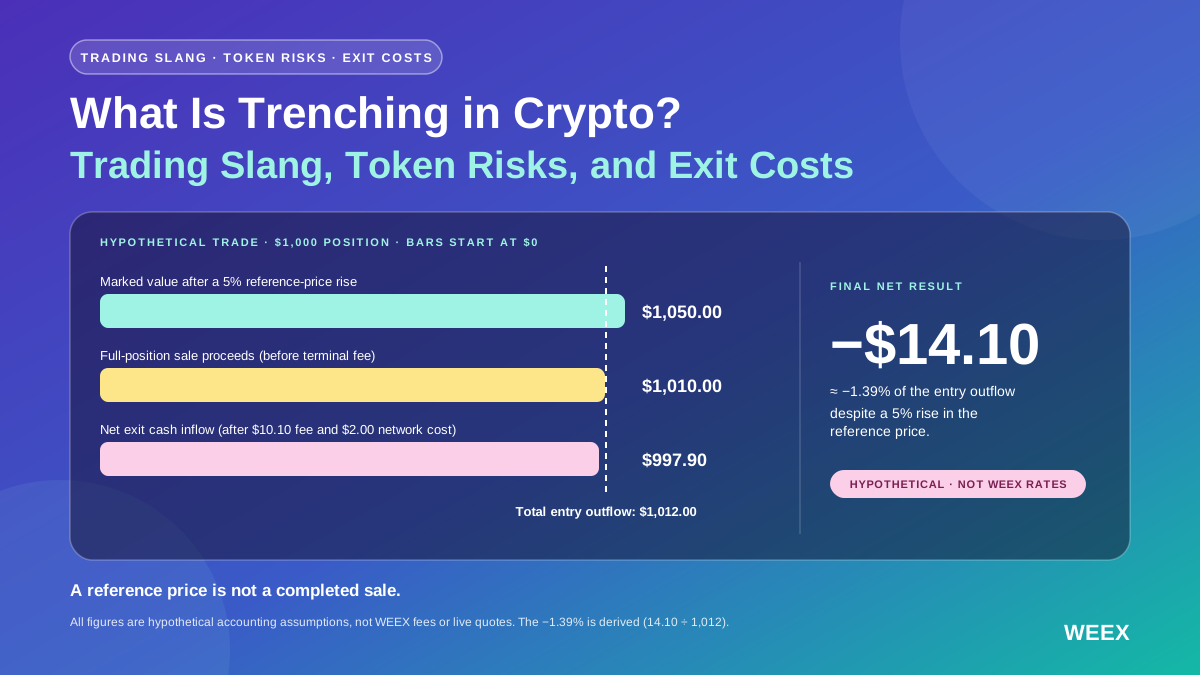
What Is Trenching in Crypto? Trading Slang, Token Risks, and Exit Costs
What is trenching in crypto? Learn the slang, token checks, liquidity risks, and how a rising token can still produce a loss after trading costs.
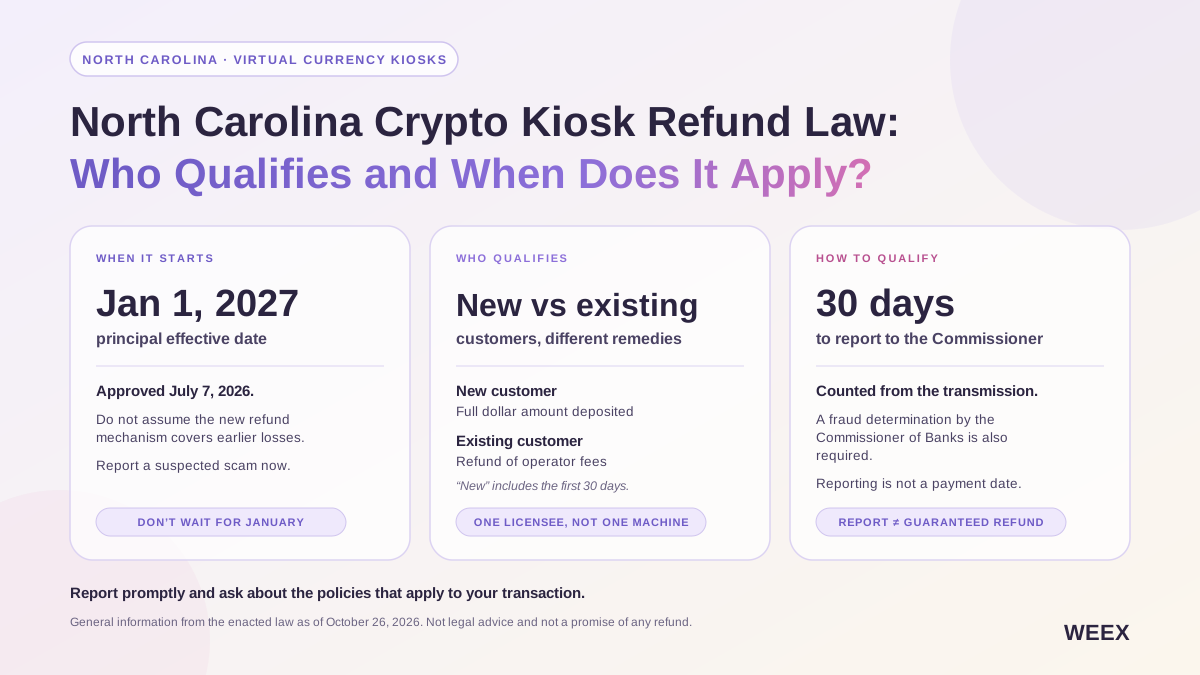
North Carolina Crypto Kiosk Refund Law: Who Qualifies and When Does It Apply?
Understand North Carolina’s crypto kiosk refund law: the January 2027 start date, who qualifies, reporting deadlines, and documents victims should keep.

[Bitcoin $0 Controversy②] "$0 is an Exaggeration"... Reasons Wall Street Disagrees
[ETH Letter] Meritz Securities Reviews Tokenization of Korean Securities Based on OP Stack

Progressive Party Opposes Further Delay of Cryptocurrency Income Tax

JPMorgan's Tokenized Fund on Solana: What MONY and JLTXX Mean for Institutional Adoption of RWA
Real and Fake Cryptocurrency Market Makers: What Makes a Market Maker Legitimate?
Michaël van de Poppe sees four crypto trends: AI, Ethereum, Sui, and digital assets

Coppock Curve and Crypto Trading: How to Use the Trend Reversal Indicator

Bitcoin Records U.S. Constitution Again... This Time with a Mysterious Code

Hedge funds hold $2 trillion in US debt, but their next trade could require fewer bonds
Weekly: $68,000 Theft from Ukrainian in Trust Wallet, Circle's Lawsuit Against Trump Over $2 Billion in UAE, and Historic Solana Update

ZachXBT Accuses CoinDCX of Losing $16 Million in Client Funds

NYSE’s owner is backing 24/7 stock tokens without Wall Street’s usual price rules
JPMorgan Now Offers Two Tokenized Money Market Funds on Solana
Follow the Money: $630 Million for Strive, Tether Activity and Attention to CeFi
HTX Research Analyst Chloe: Despite Significant Net Inflows into Bitcoin Spot ETFs, Macroeconomic Data Suppresses Rebound Potential
Killa: Frequent Short-term Trading Risks Missing Major Market Movements, Patience in Holding Positions is Important
China's fiscal revenue rose 5.1% by September, but land sales continue to decline

90% of Revenue from Meme Coins, Yet Valuation Rivals Pump: What Should Meteora Be Worth?
Former FTX Executive Slams Netflix's New Series: Turning Financial Fraud into a 'Romantic Film' is Absurd

Ripple teams up with $10B payments firm Arf to expand RLUSD use on XRPL

One billion dollars in three days is not enough. Bitcoin faces a significant challenge

WEEX Exclusive:Major Indexes Close Higher; Focus on TSLA, META Stock Earnings | WEEX TradFi Daily(October 22, 2026)
Major Indexes Close Higher; Focus on TSLA, META Stock Earnings | WEEX TradFi Daily(October 22, 2026)
The three major indexes closed higher on October 21, led by the Nasdaq. SpaceX beat earnings expectations and disclosed AI-business revenue; merger discussions with Tesla also helped lift AI and crypto-related stocks. Bitcoin traded near $84,000 and Ethereum near $2,470. LIT led majors on compliance-license expectations. On October 22, investors will watch Procter & Gamble, Southern Copper and Union Pacific before the open, followed by Western Digital and Newmont after the close.

Irish drug lord’s lost Bitcoin fortune comes back to life as $41 million moves to Coinbase

ZachXBT Reports on Cryptocurrency Laundering via FreedomXMR on Hyperliquid
Pump.fun 'optimized for addiction': what the internal messages cited in court really say
Rayls Bridges Traditional Finance and Decentralized Finance
The Week Ahead: 4 Key Moments for the Crypto Market
What Is Trenching in Crypto? Trading Slang, Token Risks, and Exit Costs
What is trenching in crypto? Learn the slang, token checks, liquidity risks, and how a rising token can still produce a loss after trading costs.
North Carolina Crypto Kiosk Refund Law: Who Qualifies and When Does It Apply?
Understand North Carolina’s crypto kiosk refund law: the January 2027 start date, who qualifies, reporting deadlines, and documents victims should keep.
[Bitcoin $0 Controversy②] "$0 is an Exaggeration"... Reasons Wall Street Disagrees





