
Bitcoin Could Be "Less Volatile" Than Gold and Surpass Its Market Value

 Prefer us on Google


- The scarcity of BTC would be an advantage in competing with gold as a store of value.
- Greater market depth could cushion BTC's price movements.
Economist Saifedean Ammous argued that the growth of liquidity and capitalization of bitcoin (BTC) could reduce its price fluctuations in the long term, potentially making it a less volatile monetary asset than gold and larger in size. The author of The Bitcoin Standard defended that the scarcity of BTC is an advantage for its consolidation as money, not an obstacle to its use.
In response to criticisms from Professor Lawrence H. White, Ammous argued that the difficulty of expanding the supply of an asset is precisely one of the characteristics that made gold a dominant money. From his perspective, bitcoin takes that property further because its issuance follows predictable rules and does not depend on the decisions of a central issuer.
The economist considered that a growing demand for bitcoin does not need to translate into an expansion of its supply. Instead, it can elevate its purchasing power and allow its holders to accumulate larger monetary balances. According to his thesis, this process would favor savings, liquidity, and lower volatility as the market matures.
Ammous questioned the idea that the ability to increase supply in response to higher demand is an advantage for money. To illustrate his position, he suggested that if that characteristic were decisive, other metals like copper or iron would have had better conditions to impose themselves over gold as a monetary reserve; an idea that has also been explored by CriptoNoticias.
In his view, the limited expansion of gold reserves contributed to its historical position as money. Bitcoin, whose issuance is subject to predetermined rules, would deepen that characteristic by further reducing the possibility of diluting its supply.
The author also rejected the notion that a higher market capitalization cannot be related to a reduction in volatility. In his response, he cited analyses attributed to Fidelity and Charles Schwab, as well as research on realized volatility, bid-ask spreads, and BTC liquidity, which would point to a decrease in fluctuations over time.
 The realized volatility of Bitcoin over one year has shown a downward trend as the market matures. Source: @saifedean / X
In the analysis, he argued that greater market depth can help absorb trades without causing such pronounced price movements. However, that evolution does not guarantee that volatility will continue to decrease nor that bitcoin will become more stable than gold, as we also explained in CriptoNoticias.
Another central point of his argument is that holding BTC also constitutes a way of using it as money. For Ammous, those who hold the asset with the purpose of preserving their purchasing power for future expenses are accumulating monetary balances, even if they do not use it habitually to pay for goods and services.
Therefore, he considers it premature to demand widespread adoption of bitcoin as a means of payment before recognizing its monetary advancement. In his response, he estimated that BTC represents about 1% of global cash balances and argued that it still has room to grow.
This stance contrasts with that of White, who questions whether an asset with strong price fluctuations can offer the necessary predictability for everyday exchanges. The professor also highlighted the competition from stablecoins, designed to maintain a stable value and used to transfer units linked to fiat currencies.
Ammous responded that the transaction volume of stablecoins primarily reflects the use of dollars through new transfer channels and does not demonstrate that bitcoin needs a flexible supply.
His forecast is that the progressive monetization of BTC will boost its liquidity, reduce its volatility, and expand its valuation until it surpasses that of gold. This is an expectation about the future evolution of the asset, not a confirmed outcome. The pace of adoption, demand, and market conditions will be decisive in assessing whether that scenario materializes.
-- Price
This content is provided for general informational purposes only and doesn't constitute financial, investment, legal, or tax advice. Any events, rewards, online promotions, or related information mentioned herein should not be considered a recommendation, solicitation, or invitation to purchase, sell, trade, or otherwise deal in any crypto assets. Crypto assets are highly volatile and may result in loss. The availability of WEEX services, products, and related events may vary by region. You are responsible for ensuring that your participation is in accordance with applicable local laws and regulations.
You may also like

Bitcoin Threatened by a Fragile American Economy and Persistent Inflation

Treasury dealers' net bill holdings reach two-year high ahead of October 30

Circle launches cirBTC for Ethereum and Arc with unified balance

Anthony Pompliano: The State Will Never Stop Printing Money! Bitcoin, Gold, and Land Will Benefit for 20 Years

Ansem is Bearish on Bitcoin and Ethereum, Market May Correct Before Rising

Leon Wankum Predicts Bitcoin Will Outgrow Real Estate Market

Blockstream Executive Peter Bain: Bitcoin Holding $81K Signals Bull Run

Bitcoin-to-Nasdaq Ratio Turns Bullish After 235 Sessions

PHP Exploit Takes Down Government and Hospital Websites

Galaxy Believes Bitcoin Bear Market Ended in June, Recommends Buying and Holding

Empery Invests $65 Million to Acquire 25% Stake in AI Data Center
Bitcoin's next Fed test comes with a hidden problem in America's inflation data
The crypto market loses altitude, patience becomes a habit – Steady Lads

Bitcoin's flat trend vs. S&P 500 signals risk warning, says Bloomberg analyst

Cyberattack on GMO in Japan: Trading Accounts Compromised, GMO Coin Claims to be Unaffected
Mark Cuban compares Bitcoin to meme stocks
Electrum patches Bitcoin vulnerability allowing payment redirection
The Week Ahead: 4 Key Moments for the Crypto Market

Security Researcher Exploits PHP2Shell Vulnerability to Breach Bounty Website, Earns Approximately $2000 in Bitcoin Rewards
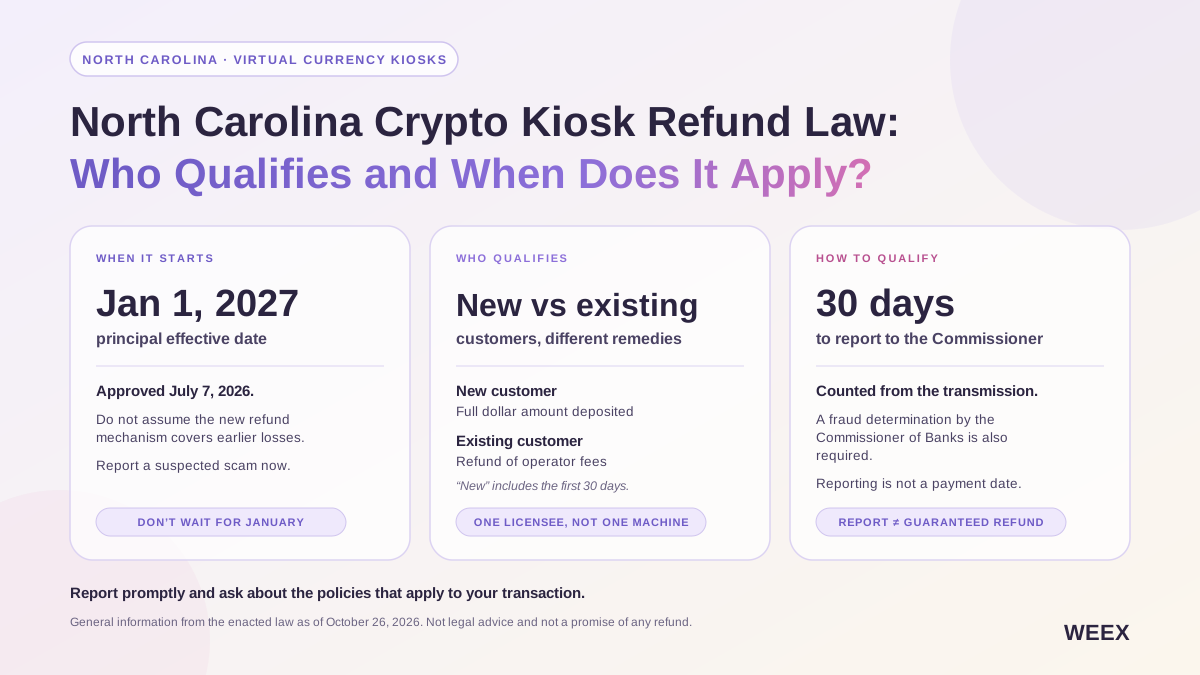
North Carolina Crypto Kiosk Refund Law: Who Qualifies and When Does It Apply?
Understand North Carolina’s crypto kiosk refund law: the January 2027 start date, who qualifies, reporting deadlines, and documents victims should keep.
US Startup Successfully Develops Artificial Gold, Highlighting Bitcoin Scarcity

Sam Price Claims Bitcoin Has Been Declared Dead Multiple Times

Mr&强 Analyzes Bitcoin Support and Resistance Areas

Franklin Templeton Launches Two Dividend Reinvestment Bitcoin ETFs

Interest on U.S. corporate bonds with CCC rating rises to 17.99 percent

LND Releases v0.21.5-beta.rc1 with Fee Estimate Limits

FOUNDATION Faces Spam Attack from Spoofed Domain Names
Bitcoin Core Changes Rules for Disclosing Security Vulnerabilities

New York Man Sentenced to 51 Months in Prison for Telecom Fraud and Money Laundering

[Bitcoin $0 Controversy②] "$0 is an Exaggeration"... Reasons Wall Street Disagrees
Bitcoin Threatened by a Fragile American Economy and Persistent Inflation
Treasury dealers' net bill holdings reach two-year high ahead of October 30
Circle launches cirBTC for Ethereum and Arc with unified balance
Anthony Pompliano: The State Will Never Stop Printing Money! Bitcoin, Gold, and Land Will Benefit for 20 Years
Ansem is Bearish on Bitcoin and Ethereum, Market May Correct Before Rising
Leon Wankum Predicts Bitcoin Will Outgrow Real Estate Market


