
10-Year Treasury Yield Hit a 24 Year High at 5.3%: What That Means for QQQ

 Prefer us on Google
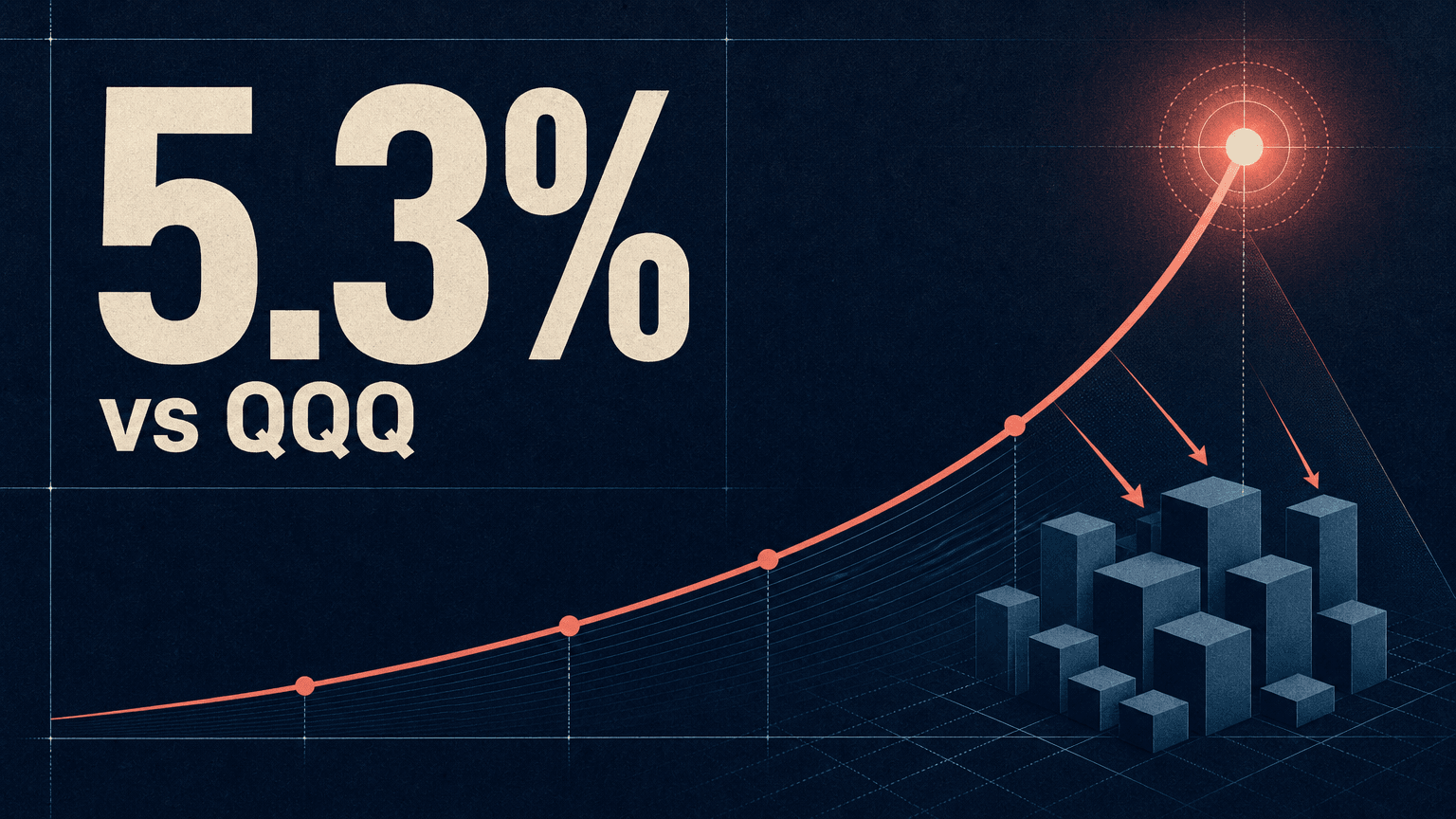
The 10-year Treasury yield hit approximately 5.3% at the end of September, a level last seen in the spring of 2002, briefly touching 5.31% intraday and closing around 5.298%.
What makes this move in the 10-year Treasury yield worth paying attention to for anyone holding QQQ isn't just the headline number. It's that the 10-year Treasury yield kept climbing even after inflation data came in cooler than expected, which tells you something specific about what's actually driving long-term rates right now, and that driver has direct implications for how growth stocks get valued based on where the 10-year Treasury yield settles.
Why Cooler Inflation Didn't Bring Yields Down
Core PCE for August rose 0.2% month over month, below the 0.3% forecast, pushing the annual core reading to 3%, also below the 3.3% expected. That's genuinely good inflation news, and it showed up immediately in Fed rate hike expectations: odds of an October hike fell from as high as 80% earlier in the month to roughly 36% to 37%, with traders pushing the next expected move toward December instead.
If short-term rate expectations were the only thing driving the 10-year yield, that data should have pulled it lower. It didn't. The yield kept pushing toward multi-decade highs anyway, which is the detail that matters most here. Analysts attributed the move to a combination of forces that have little to do with the Fed's next meeting: an energy driven inflation scare tied to the conflict in Iran, ballooning U.S. government debt and budget deficits requiring heavy bond issuance, and a historic wave of AI-infrastructure investment pulling capital and supply dynamics in the same direction. Macquarie's Thierry Wizman specifically pointed to bond issuance, not inflation, as the bigger driver this year, noting that capital spending plans from hyperscalers and their suppliers are likely to keep issuance elevated well into next year.
Why This Distinction Matters More for QQQ Than for the Fed
Here's the mechanism worth understanding plainly: the Fed controls short-term rates directly, but the 10-year yield reflects a mix of growth expectations, inflation expectations, and a term premium investors demand for lending money over a longer horizon. When the 10-year rises because the Fed is expected to tighten, falling rate hike odds should bring it back down. When it rises because of supply and term premium instead, a change in Fed expectations doesn't fix it.
That's precisely the situation right now. Even with October hike odds falling to around 36%, the 10-year stayed near 5.3%, which means the valuation pressure facing QQQ isn't primarily coming from what the Fed does next. It's coming from the long end of the curve pricing in heavier bond supply and elevated term premium that persists regardless of the Fed's next decision. For a growth heavy index like QQQ, that's a harder problem to wait out than a single rate decision, because it doesn't resolve just because the Fed pauses.
How a Higher Discount Rate Hits QQQ Specifically
Growth stocks, which make up the bulk of QQQ's holdings, are valued heavily on earnings expected years into the future. The 10-year Treasury yield functions as the risk free rate in most valuation models, and when it rises, the present value of those distant future earnings falls, because future cash flows get discounted more heavily. This isn't an abstract relationship. The S&P 500's forward P/E has already compressed from roughly 22 to 19 as yields climbed through September, and QQQ, trading at typically higher multiples than the broader index, has more room to compress on the same mechanism.
Mortgage rates reaching 7.03% is a parallel data point worth noting, not because QQQ holds mortgage sensitive names directly, but because it illustrates how broadly this yield move is spreading through the real economy. A 10-year yield at 5.3% isn't an isolated bond market phenomenon. It's showing up in borrowing costs across sectors, which raises the odds that growth stock valuation pressure persists rather than reverses quickly.
-- Price
Where Wall Street Actually Disagrees
The forward path for the 10-year yield is genuinely contested among serious forecasters, which matters for anyone trying to time QQQ around this. J.P. Morgan Asset Management's Karen Ward expects the 10-year to rise only slightly above 5% before stabilizing. ING's forecast is dramatically different: a push toward 6%, which the firm explicitly says would push stock multiples, and by extension indexes like QQQ, further down from here.
That's not a narrow disagreement. A 10-year yield at 5% versus 6% implies very different outcomes for how much further growth stock valuations could compress. Near-term data releases will matter for which view gains ground: the October 2 employment report, October 14 CPI, and the October 28 FOMC meeting are the next concrete checkpoints that could either reinforce the current inflation cooling, yields still rising dynamic or break it in one direction.

Watch the Term Premium, Not Just the Fed Calendar
The useful shift here is in what to actually monitor. Most QQQ focused commentary defaults to watching Fed meeting dates and rate hike probabilities, and those still matter. But this specific episode, cooler PCE data failing to bring yields down, is a clear signal that the term premium and bond supply dynamics have become the more important variable for the long end of the curve right now. If that holds, QQQ's valuation pressure could persist even through a Fed pause, which would be a different setup than markets have traded through in recent cycles when rate expectations and long-end yields moved more in tandem.
I'd treat the spread between J.P. Morgan's and ING's forecasts as a reasonable proxy for how much uncertainty is actually priced into the next leg of this move. A six month horizon where the 10-year could plausibly sit anywhere from just above 5% to 6% is a wide enough range that QQQ's near-term multiple compression risk isn't fully resolved by any single data release, including the Fed's own meeting on October 28.
Trading QQQ Through a Rate Story That Isn't About the Fed Anymore
What makes this setup different from a typical pre-FOMC trade is that the catalyst driving yields higher, bond supply and term premium, doesn't resolve on the Fed's calendar the way a rate decision does. QQQ is available on WEEX Spot and WEEX Futures, funded in USDT from the same account used for other crypto trading, which makes it possible to size a position around the specific data points that actually move this story, the October 2 jobs report, October 14 CPI, and bond auction results, rather than waiting on a single Fed meeting that may not be the real catalyst this time.
That distinction matters because the range between J.P. Morgan's sub-5% call and ING's 6% forecast represents genuinely different outcomes for QQQ's valuation multiple, not a narrow technical debate. Building exposure in steps as each of those near-term data points lands, rather than committing to one view of where the 10-year settles, fits a market where the usual relationship between Fed expectations and long end yields has already broken down once this quarter. Trading on WEEX is backed by a publicly disclosed 1,000 BTC protection fund, which you can check at weex.com/protectfund, worth confirming before holding a position through a rate environment this unsettled.
Conclusion
The 10-year Treasury yield's climb to roughly 5.3%, even as cooler PCE data pushed October rate hike odds down to around 36%, shows that bond supply and term premium, not Fed policy alone, are now the dominant force on the long end of the curve. For QQQ, that matters because growth stock valuations are discounted against exactly this rate, and a yield driven by structural supply pressure doesn't necessarily ease just because the Fed pauses. With forecasts split between J.P. Morgan's sub-5% call and ING's 6% target, the next few weeks of data, not the Fed's October meeting alone, are likely to determine which direction QQQ's valuation pressure actually goes.
FAQ
1. Why did the 10-year Treasury yield hit a 24 year high?
A combination of factors: the Fed's September rate hike and expectations of more tightening, an energy driven inflation scare tied to the Iran conflict, rising government debt and bond issuance, and heavy AI-infrastructure investment, according to analyst commentary cited across multiple reports.
2. If inflation data came in cooler, why didn't yields fall?
Because the 10-year yield's recent rise is being driven more by bond supply and term premium than by short-term inflation or Fed-hike expectations, so a single cooler PCE reading wasn't enough to reverse the move.
3. How does a higher 10-year yield affect QQQ specifically?
Growth stocks are valued on earnings expected far into the future, and the 10-year yield serves as the discount rate in most valuation models. A higher yield reduces the present value of those future earnings, compressing valuation multiples, which the S&P 500's forward P/E drop from roughly 22 to 19 already illustrates.
4. What's the forecast range for the 10-year yield going forward?
Views differ sharply. J.P. Morgan Asset Management expects the yield to rise only slightly above 5%, while ING forecasts a move toward 6%, which it says would push stock valuations further down.
5. What should I watch next for QQQ's rate sensitivity?
The October 2 employment report, October 14 CPI data, and the October 28 FOMC meeting are the next concrete data points likely to influence whether the 10 year yield's climb continues or stabilizes.
This content is provided for general informational purposes only and doesn't constitute financial, investment, legal, or tax advice. Any events, rewards, online promotions, or related information mentioned herein should not be considered a recommendation, solicitation, or invitation to purchase, sell, trade, or otherwise deal in any crypto assets. Crypto assets are highly volatile and may result in loss. The availability of WEEX services, products, and related events may vary by region. You are responsible for ensuring that your participation is in accordance with applicable local laws and regulations.
You may also like

OpenAI DevDay 2026 Goes Global for the First Time: What the AI Conference Could Mean for QQQ
OpenAI DevDay 2026 opens September 29 and goes global for the first time, but its effect on QQQ is indirect and likely to be gradual rather than a single session move.

WEEX Exclusive:ISM and Dell Drive the AI Trade | WEEX TradFi Daily(Sep. 1, 2026)

ISM and Dell Drive the AI Trade | WEEX TradFi Daily(Sep. 1, 2026)
This brief focuses on institutional crypto allocation, U.S. manufacturing data, Dell earnings as a test of AI server demand, and Tesla’s autonomy-driven support for technology risk appetite. Since oil was already covered in yesterday’s brief, today’s report avoids repeating the crude-oil theme. NVIDIA, China technology shares, South Korean semiconductor exports and Broadcom’s market-highlight item have been removed, with Broadcom kept only in Today’s Preview.
WEEX Exclusive:WEEX Weekly Preview, August 31-September 4, 2026

AI Infrastructure Earnings Face a Broad Validation Test as Jobs and ISM Data Set the Rate Narrative | WEEX Weekly Preview, August 31-September 4, 2026

WEEX Exclusive:Cooling CPI lifts AI infrastructure and storage stocks
CPI Eases as Expected, Cooling Rate-Hike Fears; Storage and AI Infrastructure Stocks Rally Hard, Watch AMAT Earnings Today | WEEX TradFi Daily Brief (Aug. 13, 2026)
Today’s WEEX TradFi Daily Brief covers the cooler-than-feared July CPI print that reduced rate-hike expectations, the sharp rally in storage and AI infrastructure names, and the after-hours earnings focus on Applied Materials, helping you quickly capture stock-token trading opportunities.
U.S. Inflation Data in Focus, AI Earnings Enter Validation Phase, TSMC, Unitree and Semiconductor Chain Take Center Stage.WEEX TradFi Weekly Market Preview (August 10-August 14, 2026)

July Jobs Report in Focus as Storage Stocks Slide | WEEX TradFi Daily Brief
Today’s WEEX TradFi Daily Brief covers the July jobs report, weakness in storage stocks, Tesla and SpaceX’s Terafab project, and renewed oil supply concerns.
WEEX Daily Market Highlights | 2026.07.30
The following is WEEX's daily roundup of key stock token market highlights and upcoming earnings, helping you stay on top of market-moving events and trading opportunities.

Bitcoin holders in Netherlands could face tax on unrealized gains from 2028

U.S. September Manufacturing PMI at 54.5%... Expanding for 9 Consecutive Months

The Quantum Issue: Quantum Isn't Coming For Your Bitcoin

Ghana crypto market hits $21B, fifth in sub-Saharan Africa

Wall Street Institutions Warn: The Federal Reserve Commits the 'Original Sin', 10-Year Treasury Yield May Reach 8%

Former bank employee accused of diverting USD 931,000 to cryptocurrency accounts

Argentina Country Risk Rises After September Sell-Off: What Comes Next for the Merval?

UK FCA Officially Launches Cryptocurrency License Applications; Institutions Must Submit Materials by February 28, 2027

Crypto Banks in Belarus Transition from Legal Model to Practical Launch

Bitcoin ETF Flows: $2.42 Billion by End of September
PERPTools raises $8M with NEAR, Animoca Brands joining seed round

ASML Stock Outlook 2026: Can AI Chip Demand Support Further Growth?

Tokenized assets hit $34B as investors favor single stocks
SNDK Stock Fell 12% After Hours: Here's the One Number That Spooked Investors

Ethereum is preparing a 200 million gas push as its Layer 1 scaling strategy accelerates
What is Concrete (CT) TGE? Can Institutional DeFi Drive More Gains?

Citigroup Changes Its Stance on Bitcoin, New Target Set Much Higher Than Before

Trump Calls for Jerome Powell's 'Forced' Resignation After Fed Inspector General Report
U.S. Consumption and Employment Remain Resilient, Inflation Cooling Fails to Reverse U.S. Treasury Decline

SMH Gained 9% While the Rest of the Market Fell: What Rising Real Yields Are Actually Punishing
OpenAI DevDay 2026 Goes Global for the First Time: What the AI Conference Could Mean for QQQ
OpenAI DevDay 2026 opens September 29 and goes global for the first time, but its effect on QQQ is indirect and likely to be gradual rather than a single session move.
WEEX Exclusive:ISM and Dell Drive the AI Trade | WEEX TradFi Daily(Sep. 1, 2026)
ISM and Dell Drive the AI Trade | WEEX TradFi Daily(Sep. 1, 2026)
This brief focuses on institutional crypto allocation, U.S. manufacturing data, Dell earnings as a test of AI server demand, and Tesla’s autonomy-driven support for technology risk appetite. Since oil was already covered in yesterday’s brief, today’s report avoids repeating the crude-oil theme. NVIDIA, China technology shares, South Korean semiconductor exports and Broadcom’s market-highlight item have been removed, with Broadcom kept only in Today’s Preview.
WEEX Exclusive:WEEX Weekly Preview, August 31-September 4, 2026
AI Infrastructure Earnings Face a Broad Validation Test as Jobs and ISM Data Set the Rate Narrative | WEEX Weekly Preview, August 31-September 4, 2026
WEEX Exclusive:Cooling CPI lifts AI infrastructure and storage stocks
Contents
Latest articles


Latest coin listings on WEEX


