
Saylor: The era of intelligence and digital assets needs a bill of rights

 Prefer us on Google


- Saylor projects a digital asset industry worth USD 100 trillion.
- Proposes a financial infrastructure available 24/7 for AI agents.
Michael Saylor argues that advancements in artificial intelligence will enable individuals and companies to produce much more, and therefore, they will need greater freedom to create, issue, custody, transfer, and use digital assets. The entrepreneur presented this vision on September 26, 2026, summarizing his remarks at a summit on technological freedom organized by the Bitcoin Policy Institute.
Saylor proposes establishing five fundamental rights for individuals and companies: to create assets and applications, issue them to finance activities, choose how to custody them, transfer them between individuals and providers, and use them to spend, invest, generate income, or access credit.
His proposal includes facilitating the financing of up to 10 million new businesses through tokens, with lower issuance costs and proportional disclosure requirements. He also suggests allowing issuers of digital dollars to compete through different yields and that banks and insurers should be able to incorporate BTC into their services.
In the case of banking, Saylor questions the 1,250% risk weighting contemplated by Basel rules for certain exposures to crypto assets. He believes that custodying bitcoin for clients, lending against it as collateral, and holding it on one's own balance sheet are different activities that should receive regulatory treatment commensurate with their risks.
Tokenization also plays a central role. Saylor suggests that owners should be able to move their assets between providers and compare custody and credit services. In his view, this possibility would increase users' bargaining power and force intermediaries to compete to retain them.
 Michael Saylor during the Freedom Technology Summit in Washington D.C., where he criticized the restrictions of the Clarity Act. Source: X
Regarding financial privacy, he proposes raising the reporting threshold for certain transactions. The USD 10,000 limit for cash transactions dates back to 1972 and, according to an estimate from the U.S. Government Accountability Office, would be equivalent to about USD 72,880 in 2023. He also suggests that identity verification processes could be reused among providers, with customer authorization.
For everyday payments, he considers the tax exemptions of USD 20 or USD 200 insufficient and proposes a higher threshold, adjusted for inflation. Additionally, he suggests adapting the financial infrastructure so that artificial intelligence agents can conduct transactions 24/7.
The proposal comes as the debate continues over how far the development of artificial intelligence should be allowed. Saylor proposes a different direction: instead of reducing the possibilities of new technologies, he argues that the United States should expand the capacity of individuals and companies to use them and create new products and businesses.
Digital intelligence will automate jobs, transform industries, and render established products obsolete. Prosperity will depend on our ability to create new companies and new opportunities at an even faster pace.
Michael Saylor, founder of Strategy.
This approach also explains his criticism of the CLARITY bill, as reported by CriptoNoticias. Saylor believes that the initiative places too much emphasis on restrictions and contrasts it with his proposal for a "bill of rights." His call is for the Securities and Exchange Commission, the Commodity Futures Trading Commission, the Treasury, and the White House to use their powers to reduce regulatory barriers.
Saylor projects that digital assets could become a USD 100 trillion industry. The magnitude of this expectation raises the debate that underpins his proposal: if artificial intelligence expands the capacity to create wealth, the rules regarding digital capital will determine how much of that capacity can be transformed into new companies, products, and markets.
-- Price
This content is provided for general informational purposes only and doesn't constitute financial, investment, legal, or tax advice. Any events, rewards, online promotions, or related information mentioned herein should not be considered a recommendation, solicitation, or invitation to purchase, sell, trade, or otherwise deal in any crypto assets. Crypto assets are highly volatile and may result in loss. The availability of WEEX services, products, and related events may vary by region. You are responsible for ensuring that your participation is in accordance with applicable local laws and regulations.
You may also like

Where can Bitcoin count toward a US exchange’s operating reserves?

Why Is the ATX Crypto Price Different Across Platforms? Project ATX (ATX) Explained
See why the ATX crypto price varies across platforms. Compare Project ATX mint addresses, PumpSwap pools, and swap quotes for the same trade size.

Interpretation of South Korea's Digital Asset Law Proposal: ICO Ban Lifted, Banks to Lead Stablecoin

Tiger International's Q3 Customer Assets Surpass $64.8 Billion, Setting New Records in Hong Kong Market Net Inflows of Nearly $1 Billion

Ethereum ETF: $96 million in net inflows stop the November bleeding

Jito Proposal Allocates New Revenue Stream to Foundation Before Sharing with DAO After Reaching $20 Million

Aave’s USDC loans surge 36% to $2.6 billion as liquid collateral share plunges

TBV Connects with AAVE: Borrowing Money Without Giving Up Bitcoin, But Only 20 Coins Can Be Initially Accommodated

XRP borrowers face a $207,500 tipping point as one vault dominates an $8 million market

Wells Fargo Upgrades U.S. Large-Cap Stocks to 'Most Preferred' Rating, Last Week's Plunge Provides Buying Opportunity

LlamaRisk Proposes to Lower Collateral Rates for Coinbase Tokenized Stocks on Aave V4

Bonding Curve and LP Incentives: Key Modules and Evolution Trends of New Token Liquidity Mechanisms
India's Central Bank Proposes 'Trusted Person' Confirmation for Electronic Transfers

PAXG puts gold in a wallet. Getting the bullion out is another matter

XRP Ledger lending upgrade just 5 votes away from approval
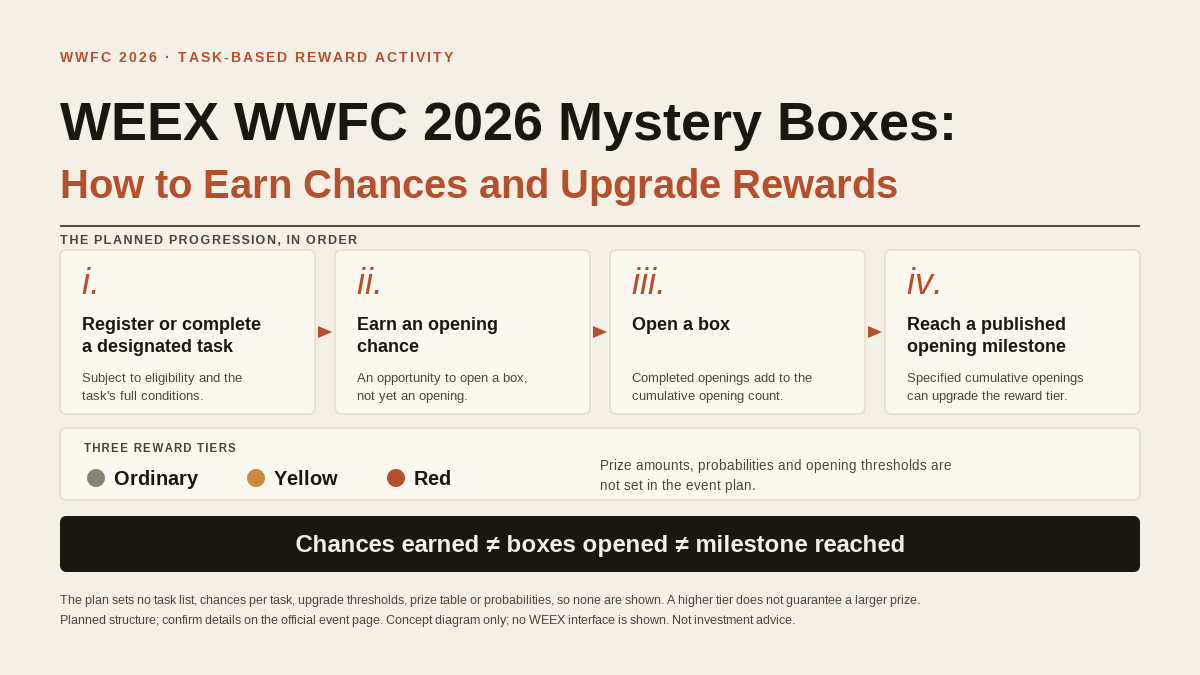
WEEX WWFC 2026 Mystery Boxes: How to Earn Chances and Upgrade Rewards
Explore WEEX WWFC 2026 mystery boxes: how to earn opening chances, understand three reward tiers, and track cumulative openings toward reward upgrades.

Crypto PNL vs Trading Volume: How WEEX WWFC 2026 Leaderboards Work
Compare crypto PNL, trading volume, and ROI with worked examples, and learn how to read the four planned WEEX WWFC 2026 leaderboards accurately.

Cardano’s $5M event budget faces 5 times more opposition

Repaying a Bitcoin-backed loan on Sui can leave you waiting to withdraw native BTC

Why Bitcoin’s quantum security upgrade may take years

Cysic CEO: Over 6 Million BTC Public Keys Exposed, Accounting for 31.2% of Circulation

Penetrating Social Trading Ledgers: Who is Really Making Profits Amidst the Traffic Noise?

Nearly two-thirds of Square Bitcoin payments were under $20

India Plans to Ease Disclosure Requirements for Foreign Investment Funds
Overview of 6 New AI Mining Projects: Perhaps the Most Noteworthy Track After Privacy Narratives
Bitcoin buyers face a trading issue as stablecoins just suffer their biggest supply drop since 2022
Will the Market Rebound After Thanksgiving? Bank of America: Likely Short-Term, Major Trends Require Three Conditions

XRPL Credit Updates Approaching 29 Vote Threshold
NEAR is cutting inflation. Who pays the cost of fewer new tokens?

What Does the New Bitcoin Price Event Contract Filing Actually Specify?
Where can Bitcoin count toward a US exchange’s operating reserves?
Why Is the ATX Crypto Price Different Across Platforms? Project ATX (ATX) Explained
See why the ATX crypto price varies across platforms. Compare Project ATX mint addresses, PumpSwap pools, and swap quotes for the same trade size.
Interpretation of South Korea's Digital Asset Law Proposal: ICO Ban Lifted, Banks to Lead Stablecoin
Tiger International's Q3 Customer Assets Surpass $64.8 Billion, Setting New Records in Hong Kong Market Net Inflows of Nearly $1 Billion
Ethereum ETF: $96 million in net inflows stop the November bleeding
Jito Proposal Allocates New Revenue Stream to Foundation Before Sharing with DAO After Reaching $20 Million
Latest articles



Latest coin listings on WEEX


