
Ethereum Delays Update Amid Massive Cost Surge

 Prefer us on Google


Ethereum will have to wait a few more weeks before welcoming Glamsterdam. Developers have decided to postpone this update to January 2027, likely towards the end of the month. The reason: a surge in the cost of creating smart contracts that risks crashing thousands of applications designed under the old rules. Ethereum wants to increase its capacity, but not at the expense of a network that operates at half its potential.
In Brief
- The Ethereum Foundation and external researchers have contacted over 50 companies potentially affected by this change.
- The deployment of a 24-kilobyte contract could rise from 4.95 to 37.8 million gas, nearly eight times more.
- The four client teams, Geth, Nethermind, Reth, and ethrex, wish to maintain the new rules.
Ethereum Aims to Scale Without Bursting Its Database
Glamsterdam is expected to allow Ethereum to handle more operations simultaneously. The goal is to support the growth of on-chain trading and lending services. However, this scaling comes at a cost: the amount of data that nodes must retain is increasing rapidly.
In January 2026, the state database of a Geth node, which aggregates the data necessary for the network's operation, weighed about 390 gibibytes. Since the gas limit increased from 30 to 60 million, its daily growth has more than tripled, rising from 105 to 326 mebibytes.
At a limit of 200 million gas, this database could thus grow by 387 gibibytes per year. In other words, nodes may have to store increasingly more data.
To limit this accumulation, EIP-8037 introduces a fee of 1,530 gas units per byte of new state. This mechanism raises the cost of operations that add permanent data to the blockchain.
Contract Deployment Could Cost Eight Times More
This increase in costs is already sparking debate. With the new rules, the base cost for deploying a contract rises from 32,000 to 183,600 gas units. Creating an empty account jumps from 25,000 to 183,600 gas, while a new storage location goes from 20,000 to 97,920 gas.
The change becomes even more striking with large contracts. A 24-kilobyte program will now require 37.8 million gas, compared to just 4.95 million previously. At a base price of 0.08 gwei, its deployment would cost about 0.003 ETH.
However, the issue is not just about the bill. Many applications have been programmed with gas budgets calculated according to the old rates. If an operation now consumes more than expected, the transaction may simply fail. And an application that can no longer execute its operations hasn't really gained scalability.
Researchers have identified about 200 potential issues. A developer from the Ethereum Foundation estimates that 15,000 programs could be affected. Among the contacted companies, the majority believe they can adapt their applications before mid-January, provided the rules remain unchanged.
-- Price
Client Teams Keep Pressure on the Timeline
Despite these difficulties, the four main teams developing Ethereum clients, Geth, Nethermind, Reth, and ethrex, do not wish to backtrack on the new rules.
The schedule includes a dress rehearsal on Hoodi, a public test network, during the week of December 14. Developers are expected to make a decision at their meeting on November 26.
Applications facing the most serious issues should receive their fixes by mid-December. Others will have until January 10 to adapt. If the tests go well, Ethereum could consider a deployment on its main network by the end of January 2027.
One question remains: what will happen to applications that do not complete their updates in time? Their transactions could fail without an immediate solution.
Ultimately, Glamsterdam illustrates a well-known paradox in the evolution of blockchains: improving performance is not enough; it is also necessary to avoid penalizing those who are already using the network. Ethereum is therefore pushing back its timeline to give developers time to adapt. Scalability is advancing, but it also comes with its costs.
This content is provided for general informational purposes only and doesn't constitute financial, investment, legal, or tax advice. Any events, rewards, online promotions, or related information mentioned herein should not be considered a recommendation, solicitation, or invitation to purchase, sell, trade, or otherwise deal in any crypto assets. Crypto assets are highly volatile and may result in loss. The availability of WEEX services, products, and related events may vary by region. You are responsible for ensuring that your participation is in accordance with applicable local laws and regulations.
You may also like

Equinor and Germany's VNG Sign 18-Year Natural Gas Supply Agreement

Maersk Orders 12 Ultra Large Container Ships

UBS Downgrades Aixtron to Sell, Expects AI Optical Communication Equipment Demand to Slow by 2028, Shares Plunge Over 10%

Borrowing to Buy Food: The Reality of American Life
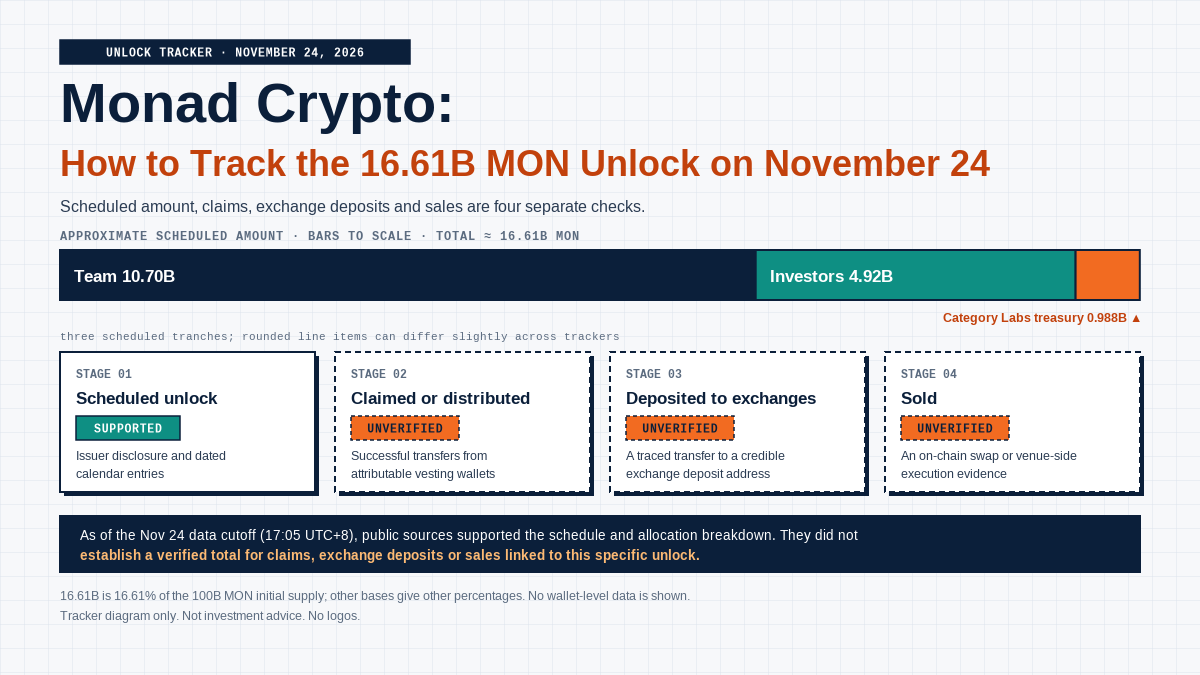
Monad Crypto: How to Track the 16.61B MON Unlock on November 24
Track Monad’s 16.61B MON unlock on November 24. See the team, investor, and treasury allocations, and learn how to verify claims and exchange deposits.

European Fertilizer Suppliers Shut Down Factories Due to Soaring Energy Prices

WEEX Exclusive:Equities Surge on Jensen Huang’s Return; Eyes on Dell Earnings | WEEX Daily Market Brief (November 24, 2026)
On the November 23 Eastern Time close, the three major indexes all finished higher. NVIDIA restored Jensen Huang as CEO and the semiconductor sector surged. Bitcoin rose then pulled back to around $62,000. Cosmos led mainstream coins. On November 24 Eastern Time, the market focuses on digesting the prior rebound.

Equities Surge on Jensen Huang’s Return; Eyes on Dell Earnings | WEEX Daily Market Brief (November 24, 2026)
On the November 23 Eastern Time close, the three major indexes all finished higher. NVIDIA restored Jensen Huang as CEO and the semiconductor sector surged. Bitcoin rose then pulled back to around $62,000. Cosmos led mainstream coins. On November 24 Eastern Time, the market focuses on digesting the prior rebound.

Indonesia Cuts Natural Gas Supply to Singapore Due to Pipeline Maintenance

CCTV's 300 Million Yuan Pyramid Scheme: Who is Behind It?

Market Regulation Administration Reviews 440 Cases of Operator Concentration in the First Three Quarters

Texas Pacific Land Company Acquires EagleRock Land in $3 Billion All-Stock Deal

ConocoPhillips Sells Norwegian Business to Var Energi for $3.9 Billion

European Natural Gas Prices Rise to €94.31 per MWh Due to Cooling Temperatures

The Scarce Dividend in the Autonomous Taxi Race: Supporting Service Stations
Mr&强 Reminds About Early Bird Badge Claim Details
Bloomberg Strategist Predicts Cryptocurrency Will Face NFT Fate, US Stocks and Gold to Decline
Ethereum Developers Change Gas Calculation Method

Why Is It Difficult for Income Reflows to Boost Cryptocurrency Prices? Net Reflows Are Weakly Correlated with Prices

Murphy USA Emerges as Top Dividend Stock with 14-Bagger Growth

Should You Invest $1,000 in Bloom Energy Right Now?
Better Buy: Bitcoin vs. Ethereum
El Salvador Plans to Add Over 1 Gigawatt of Power Capacity to Support Bitcoin Mining

3 Data Center Power Stocks Down More Than a Third From Their Records to Buy Now and Hold Through 2030

Negotiations on Australia's Gas Reservation Proposal Continue, Legislation Hopes to Pass Next Week
BitMine Reports $10.1 Billion Loss, Nvidia May Set Record for Longest Consecutive Weekly Decline

Where Will Bloom Energy Stock Be in 5 Years After More Than Doubling Its Revenue in 2026?

As traditional giants rush into digital dollars, USDD’s Yvonne Chia explains why 24/7 access, self-custody, and transparent yield give decentralized stablecoins an edge banks can’t replicate.

Chevron Exploration Vessel Arrives in Greece, Initiating Offshore Oil and Gas Exploration

When Accounts Become 'Programmable': The Trade-offs from EIP-7702, ERC-4337 to Native AA
Equinor and Germany's VNG Sign 18-Year Natural Gas Supply Agreement
Maersk Orders 12 Ultra Large Container Ships
UBS Downgrades Aixtron to Sell, Expects AI Optical Communication Equipment Demand to Slow by 2028, Shares Plunge Over 10%
Borrowing to Buy Food: The Reality of American Life
Monad Crypto: How to Track the 16.61B MON Unlock on November 24
Track Monad’s 16.61B MON unlock on November 24. See the team, investor, and treasury allocations, and learn how to verify claims and exchange deposits.
European Fertilizer Suppliers Shut Down Factories Due to Soaring Energy Prices
Latest articles



Latest coin listings on WEEX


