
ZKsync (ZK) Price Prediction 2025 – 2030

 Prefer us on Google


What is ZKsync (ZK)?
ZKsync represents a sophisticated Layer-2 scaling protocol engineered to enhance Ethereum's transaction throughput while significantly reducing operational costs. The platform achieves this through advanced zero-knowledge rollup technology, which processes transaction batches externally before submitting compressed cryptographic proofs to the main Ethereum network.
Imagine Ethereum as a bustling metropolitan highway during peak hours, where each vehicle represents an individual transaction competing for limited space. ZKsync functions as an elevated express lane system that diverts traffic to parallel routes, processes journeys efficiently, and subsequently merges verified completion certificates back onto the main roadway. This architectural approach maintains Ethereum's foundational security while exponentially increasing its capacity through computational delegation.
The core innovation lies in zk-rollups' ability to validate transaction batches without revealing sensitive details, creating an optimal balance between scalability and privacy. By handling computational heavy-lifting off-chain while leveraging Ethereum for final settlement, ZKsync delivers substantial gas fee reductions and sub-minute transaction finality - positioning itself as a crucial infrastructure component for Ethereum's mass adoption trajectory.
Key Factors Influencing ZKsync's Future Price
zk-Rollup Technology Adoption
The fundamental value proposition of ZKsync hinges on zero-knowledge proof technology's capacity to deliver Ethereum-compatible scaling solutions. Widespread adoption across decentralized applications and traditional enterprises could substantially enhance network value accrual.
Network Enhancements and Ecosystem Development
Continued protocol improvements, particularly regarding interoperability features and developer experience, will prove crucial for maintaining competitive positioning. A vibrant application ecosystem with substantial total value locked would likely positively correlate with token valuation.
Layer-2 Competitive Dynamics
ZKsync operates within an intensely competitive environment featuring multiple technologically sophisticated alternatives. Sustainable differentiation through superior user experience, cost efficiency, or unique capabilities will likely determine long-term viability.
Token Economic Model
The ZK token's emission schedule, utility mechanisms, and governance features will significantly influence valuation dynamics. Effective balance between circulating supply growth and demand drivers remains crucial for price stability.
Macroeconomic and Market Conditions
Broader cryptocurrency market cycles and global financial conditions will continue impacting ZK's price trajectory, notwithstanding project-specific developments. Regulatory clarity regarding Layer-2 solutions may additionally serve as a significant valuation catalyst.
ZKsync (ZK) Price Prediction 2025
ZKsync enters 2025 at a pivotal juncture, with the recently deployed Atlas upgrade potentially serving as a catalyst for renewed ecosystem growth. The platform's positioning within Ethereum's scaling landscape suggests three plausible valuation scenarios for the coming year.
In an optimistic market environment where Ethereum's Layer-2 adoption accelerates and ZKsync successfully onboards significant decentralized applications, the token could potentially appreciate toward the $0.40–$0.60 range. This scenario presupposes substantial liquidity migration and positive momentum across cryptocurrency markets.
Under baseline conditions characterized by steady but unspectacular growth, ZK might consolidate within the $0.20–$0.35 bandwidth. This projection reflects moderate ecosystem expansion without breakthrough adoption or severe market headwinds.
A more cautious outlook accounts for potential market deterioration or intensified selling pressure from token unlock events. In such circumstances, ZK could retreat toward support levels around $0.10–$0.15, particularly if broader cryptocurrency sentiment weakens.
-- Price
ZKsync (ZK) Price Prediction 2026
The 2026 timeframe may represent a consolidation phase for ZKsync, during which the platform's technological advantages could translate into more sustainable ecosystem development. The competitive landscape among zero-knowledge rollup solutions is expected to intensify significantly during this period.
Should ZKsync establish itself as a preferred zk-rollup solution and demonstrate robust network metrics, the token could potentially advance toward the $0.70–$1.00 valuation tier. This scenario would likely require meaningful protocol enhancements and expanding developer adoption.
Under neutral market conditions with gradual ecosystem maturation, ZK might trade within a $0.40–$0.60 corridor. This projection assumes consistent technical development without dramatic market shifts.
If ZKsync fails to maintain competitive advantages or experiences developer migration to alternative scaling solutions, the token could face resistance around the $0.20–$0.30 range. Regulatory developments could further influence this trajectory.
ZKsync (ZK) Price Prediction 2027
By 2027, the Layer-2 ecosystem is anticipated to demonstrate clearer hierarchical structures, with ZKsync's positioning becoming more defined relative to competing scaling solutions.
In a favorable outcome where ZKsync captures significant market share and demonstrates sustainable fee generation, the token could potentially appreciate toward $1.20–$1.80. Gaming applications and decentralized finance integrations might serve as particular growth vectors.
A moderate growth scenario envisions ZK trading between $0.70–$1.00, reflecting steady but unexceptional ecosystem expansion amid competitive pressures.
Should technological evolution favor alternative scaling approaches or if ZKsync experiences development stagnation, the token might retreat to the $0.40–$0.60 range. Ethereum's own roadmap execution could additionally impact this outlook.
ZKsync (ZK) Price Prediction 2028–2029
The 2028-2029 period may coincide with broader cryptocurrency market cycles, potentially offering ZKsync opportunities for accelerated adoption if the platform maintains technological competitiveness.
In an optimistic scenario where ZKsync emerges as a leading zk-rollup solution with substantial transaction volume, the token could potentially reach $2.00–$3.50. Real-world asset integration and enterprise adoption could further support this trajectory.
Under baseline conditions with consistent ecosystem development, ZK might stabilize within the $1.20–$2.00 range, reflecting mature but competitive market positioning.
If ZKsync fails to maintain developer engagement or experiences technological displacement, the token could correct toward $0.70–$1.00. Broader economic conditions would likely significantly influence this outcome.
ZKsync (ZK) Price Prediction 2030
By the decade's conclusion, ZKsync's positioning within the blockchain infrastructure landscape should be substantially clarified, with long-term value accrual mechanisms more clearly established.
In a bullish scenario where zk-rollup technology achieves widespread adoption and ZKsync captures meaningful market share, the token could potentially trade between $4.00–$6.00. This projection assumes successful execution and favorable regulatory developments.
A moderate outcome might see ZK trading in the $2.50–$3.50 range, reflecting solid but not exceptional performance within a maturing ecosystem.
Should technological evolution diminish zk-rollup relevance or if ZKsync fails to maintain competitive advantages, the token might struggle to surpass the $2.00 threshold. Protocol governance and token utility would likely significantly influence this trajectory.
Conclusion
ZKsync represents a technologically sophisticated approach to Ethereum scaling, with its future valuation contingent upon both execution quality and broader market dynamics. While near-term price action may reflect market sentiment fluctuations, long-term value appreciation will likely correlate with ecosystem growth and protocol utility.
The platform's emphasis on zero-knowledge rollup technology positions it advantageously within Ethereum's scaling roadmap, though competitive intensity necessitates continuous innovation. For investors and ecosystem participants, monitoring network metrics, development activity, and adoption trends may provide more meaningful indicators than short-term price movements as the project evolves toward 2030.
For traders seeking exposure to ZKsync's innovative scaling technology, WEEX provides a secure and professional trading platform to access ZK tokens. With competitive trading fees, robust liquidity, and advanced security protocols, WEEX enables seamless participation in the growing Layer-2 ecosystem. Register and Trade now!
Further Reading
- What is Ping (PING) and Why is Suddenly Trending?
- What Is Hana Network (HANA)?
- What Is Story (IP) and How Does It Work?
Disclaimer: The opinions expressed in this article are for informational purposes only. This article does not constitute an endorsement of any of the products and services discussed or investment, financial, or trading advice. Qualified professionals should be consulted prior to making financial decisions.
This content is provided for general informational purposes only and doesn't constitute financial, investment, legal, or tax advice. Any events, rewards, online promotions, or related information mentioned herein should not be considered a recommendation, solicitation, or invitation to purchase, sell, trade, or otherwise deal in any crypto assets. Crypto assets are highly volatile and may result in loss. The availability of WEEX services, products, and related events may vary by region. You are responsible for ensuring that your participation is in accordance with applicable local laws and regulations.
You may also like
Aster (ASTER) Price Prediction for November 2025

Linea Price Prediction 2025-2026

XST Token Fell 50% in a Day: What That Says About Meme Coin Volatility Generally
Lululemon Stock Crashes to an 8 Year Low Right Before Its New CEO Even Starts

TSLA vs SPCX: Musk's Two Public Companies Just Had Very Different Weeks
TSLA's Cybercab: What Actually Stands Between It and Commercial Operation?

Tesla Stock Jumps Nearly 7% as Cybercab Launches: But Wall Street Is Already Warning of a Selloff

How to Use an AI Agent for Trading in the WEEX AI Wars II Hackathon
What Is the WEEX AI Wars II Hackathon? AI vs Human Trading Explained

What Is Tangem Wallet? A Complete Beginner's Guide

MetaMask Transaction Stuck or Failed? Here's How to Fix It
Can You Buy Crypto with SadaPay? Using SadaPay for PKR-to-USDT P2P Payments

John Ternus Is Apple's New CEO: What He Inherits After 15 Years of Tim Cook
Meta Stock Rallied After a $16.68 Billion Settlement: Why a Legal Loss Sent Shares Higher

How to Buy USDT with Raast: A Guide to Instant PKR Payments in Pakistan
Easypaisa P2P Payments: How to Choose a Merchant and Confirm a USDT Order
XST Stock: Why This Ticker Points to Four Completely Different Companies
Should You Buy AVGO Stock? What a Street Wide "Strong Buy" Rating Actually Requires
Broadcom Stock Price Fell After 86% Revenue Growth: What the Q4 Guidance Gap Actually Means
AAPL Under Ternus: What Apple's CEO Change Means for Traders
CyberLeek Crypto: The GTA 6 Token's Exit Liquidity Problem
AIINU After LongX: What the NVDA 3x Fee Loop Actually Pays
MetaMask Seed Phrase & Private Key Security Guide
How to Install and Set Up MetaMask (2026 Updated Guide)
What Is MetaMask? A Complete Beginner's Guide
What Is Arbitrum (ARB) and How Does This Ethereum Layer 2 Work?
Is Arbitrum (ARB) Worth Buying After Its 30% Rally? An Analysis About Utility, Supply and Risks

GoPro Stock Soared 40%: What the $1.14 Merger Actually Pays
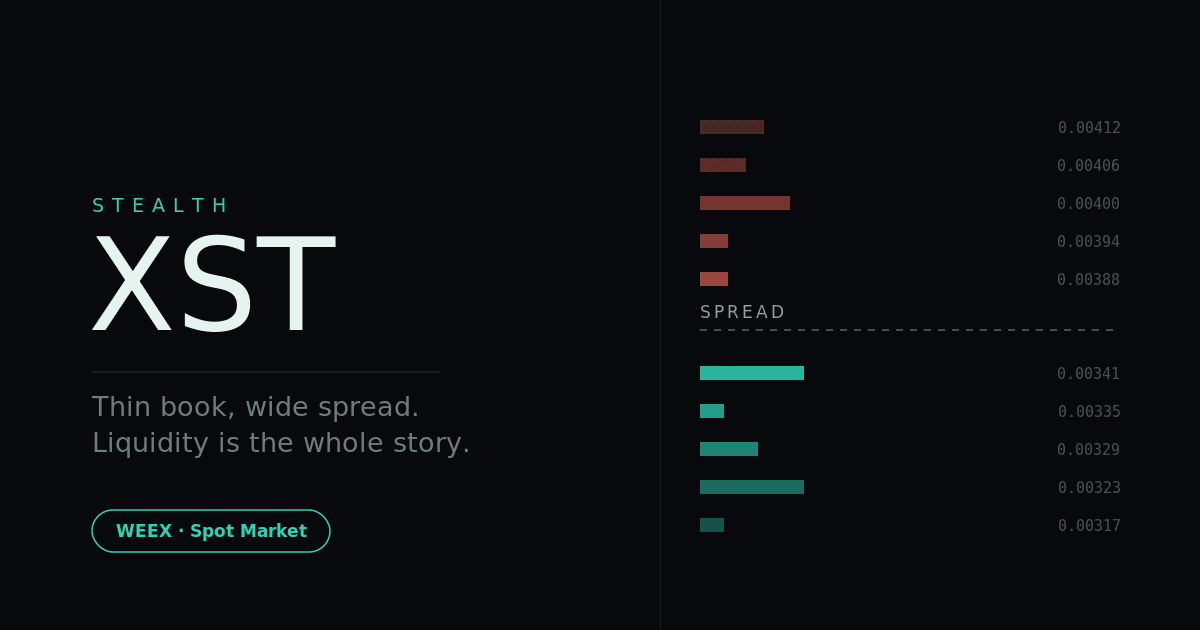
Stealth XST Coin: The $1,806 Daily Volume Behind a $2.3M Cap
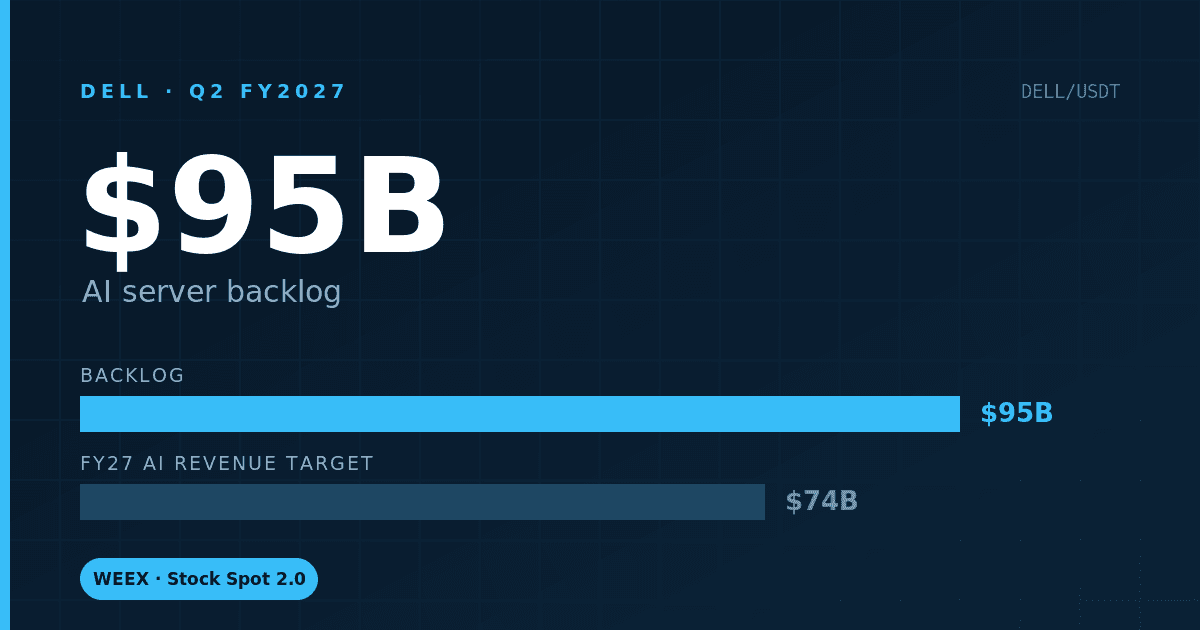
Dell Earnings: $95B AI Backlog Now Dwarfs Its Own Guidance
Aster (ASTER) Price Prediction for November 2025
Linea Price Prediction 2025-2026
XST Token Fell 50% in a Day: What That Says About Meme Coin Volatility Generally
Lululemon Stock Crashes to an 8 Year Low Right Before Its New CEO Even Starts
TSLA vs SPCX: Musk's Two Public Companies Just Had Very Different Weeks
TSLA's Cybercab: What Actually Stands Between It and Commercial Operation?


