
WEEX Security Alert — Common Cryptocurrency Scams

 Prefer us on Google

Over the past few years, cryptocurrency has skyrocketed in popularity, attracting countless investors keen to capitalize on the digital gold rush. Yet opportunities often come hand-in-hand with risks—the rapid growth of the crypto industry has also given rise to a wide array of scams and fraudulent schemes. This article will break down common types of cryptocurrency fraud and offer practical tips to help you avoid them and navigate the digital financial landscape safely.
What is a cryptocurrency scam?
A cryptocurrency scam refers to any deceptive tactic or scheme aimed at stealing digital assets—such as Bitcoin or Ethereum—or tricking individuals into revealing sensitive personal information or transferring money under false promises of crypto-related gains.
Scammers are particularly drawn to cryptocurrency for several reasons:
- Transactions are difficult, and often impossible, to reverse once confirmed.
- The absence of a central authority makes it challenging to report incidents or recover funds.
- Widespread public interest is coupled with limited understanding of how cryptocurrencies and blockchain technology actually work.
Common Cryptocurrency Scams
Ponzi Schemes
Ponzi schemes remain a widespread and damaging type of fraud in the cryptocurrency space. In these scams, fraudsters attract investors by promising exceptionally high and consistent returns on digital asset investments. In reality, these returns are funded solely by money from new participants—not from actual profit-generating activities. This unsustainable structure eventually collapses when incoming investments slow down, causing significant financial losses for the majority of investors.
To avoid falling victim to Ponzi schemes, maintain a healthy skepticism toward any investment opportunity that guarantees high returns with little or no risk. Always conduct thorough independent research before committing funds.
Pump-and-Dump Schemes
A pump-and-dump scheme typically begins when a group of coordinated individuals—often insiders or influential figures—accumulate a significant position in a low-priced, low-market-cap cryptocurrency. They then use aggressive promotion across social media channels, forums, and messaging groups to create artificial hype around the asset, attracting unsuspecting investors and driving up both trading volume and price through false or exaggerated claims.
Once the price reaches a targeted peak, these insiders swiftly sell their holdings en masse, securing substantial profits and causing a rapid collapse in the token’s value. As a result, late-coming investors are often left holding virtually worthless assets with little to no liquidity, unable to recover their funds.
Phishing Scams
Phishing remains one of the most prevalent threats in the crypto space. Scammers often impersonate trusted companies or individuals through emails, text messages, or social platforms, aiming to deceive users into divulging sensitive information—such as login credentials, seed phrases, or private keys. In a related tactic, you might download what appears to be a legitimate cryptocurrency application, only to install malware designed to drain your funds or steal your account details. To protect yourself, always treat unsolicited messages with skepticism, avoid sharing private keys or passwords, and only download apps from official and verified sources.
Too-good-to-be-true Investments
Beware of offers that sound too good to be true—like promises to “double your Bitcoin in 24 hours.” Scammers often use these outrageous claims to lure eager investors, presenting themselves as expert traders or automated profit-generating services. However, once you transfer your cryptocurrency to their wallet, they disappear instantly, cutting off all communication and leaving you with no way to recover your funds. Always remember: guaranteed high returns in a short time are almost always a scam.
How to Avoid Crypto Scams
As both the cryptocurrency landscape and associated scams continue to evolve, adopting key safety habits can help you invest with greater confidence and security. Given the largely unregulated nature of the industry, exercising caution and independent judgment is essential when engaging with new technologies and platforms.
- DYOR before purchasing any cryptocurrency or committing to a platform.
- Do not trust unsolicited financial advice from strangers on social media or dating apps.
- Use only reputable cryptocurrency wallets and exchanges—preferably those with a well-established track record and positive public reputation.
- Enable 2FA on all your financial and exchange accounts.
- Never share your private keys or seed phrase with anyone under any circumstance.
Avoid clicking links in suspicious or urgent emails—always navigate directly to the official website of your crypto service. Additionally, refrain from downloading unverified apps through platforms like TestFlight (Apple), as these are not subject to official security review.
-- Price
WHY WEEX?
WEEX stands as a leading global centralized exchange, firmly committed to preventing scams and fraudulent activities to ensure the safety of user assets and data.
To address security challenges, WEEX employs a comprehensive risk control system that incorporates both hot and cold wallet segregation. This multi-layered strategy is supported by collaborations with top-tier security technology providers, including Suntwin Technology, Qingsong Cloud Security, HEAP, Armors, and others.
At WEEX, your security is not just a priority—it’s a promise. We continuously enhance and expand our security measures to provide a protected trading environment. Join WEEX today and experience a cryptocurrency platform where safety is fundamental to everything we do.
Further Reading
This content is provided for general informational purposes only and doesn't constitute financial, investment, legal, or tax advice. Any events, rewards, online promotions, or related information mentioned herein should not be considered a recommendation, solicitation, or invitation to purchase, sell, trade, or otherwise deal in any crypto assets. Crypto assets are highly volatile and may result in loss. The availability of WEEX services, products, and related events may vary by region. You are responsible for ensuring that your participation is in accordance with applicable local laws and regulations.
You may also like
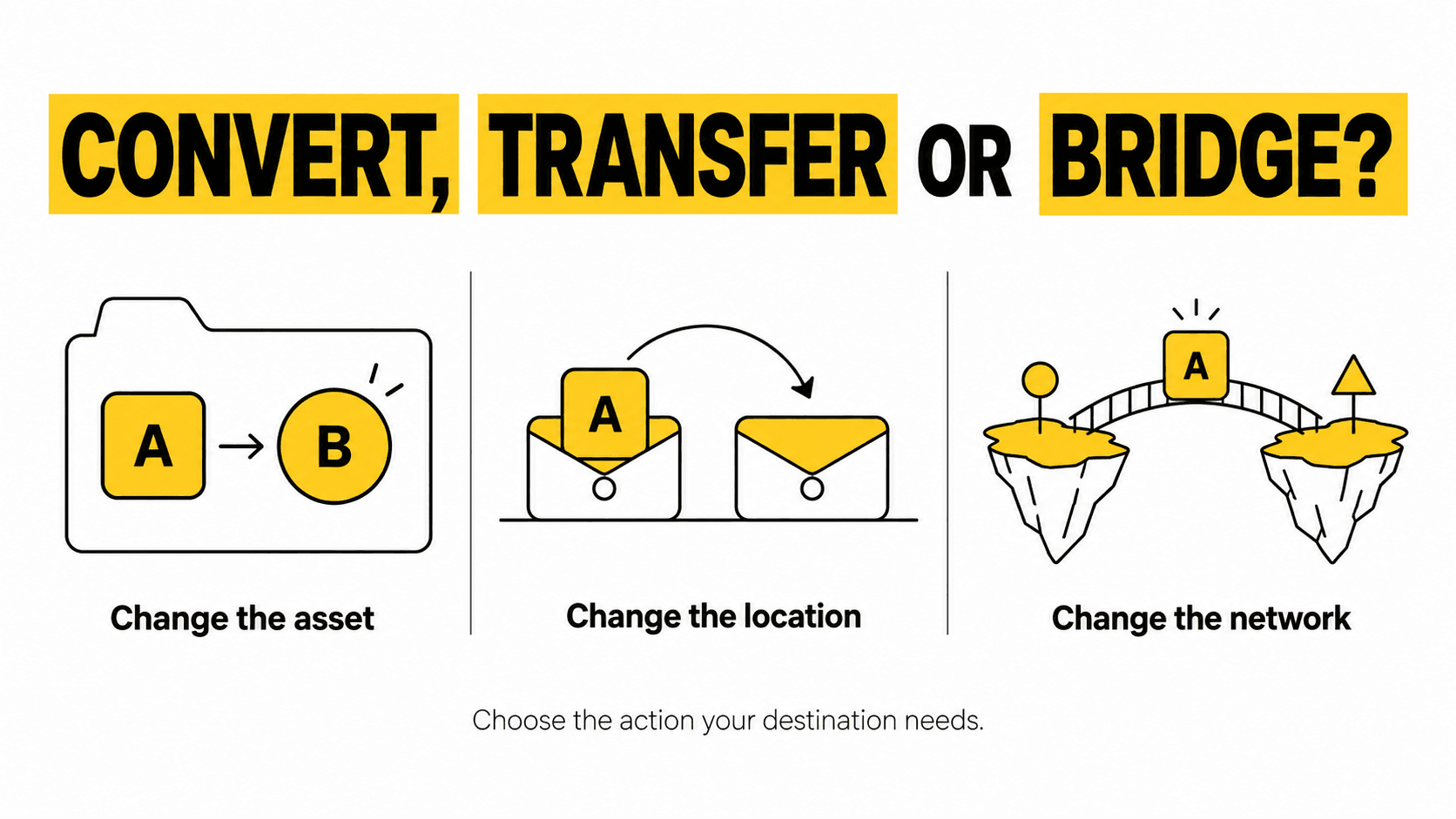
Crypto Convert vs Transfer vs Bridge: Which Action Do You Need?
How to Convert ETH to USDT on WEEX: Step-by-Step Guide
How to Convert USDT to BTC on WEEX: Step-by-Step Guide
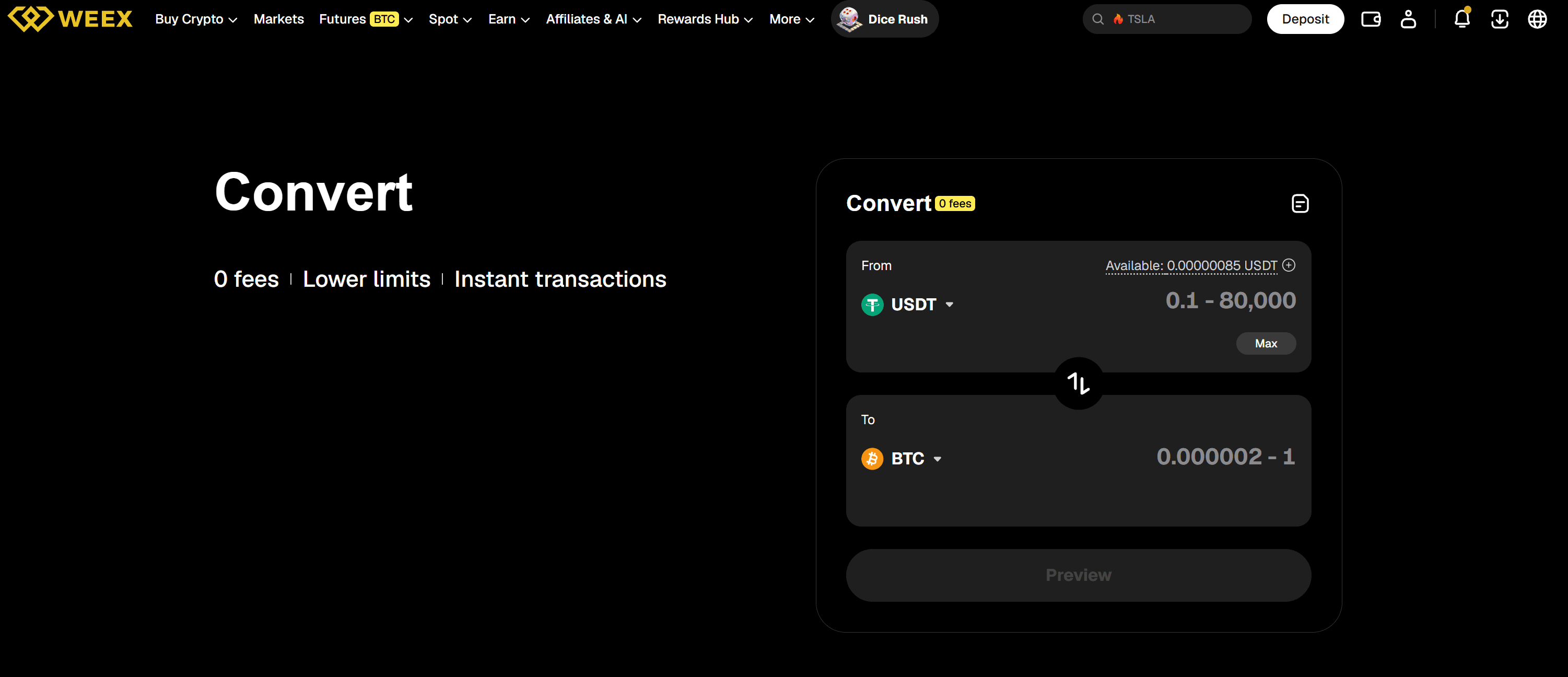
How to Convert BTC to ETH on WEEX: Step-by-Step Guide
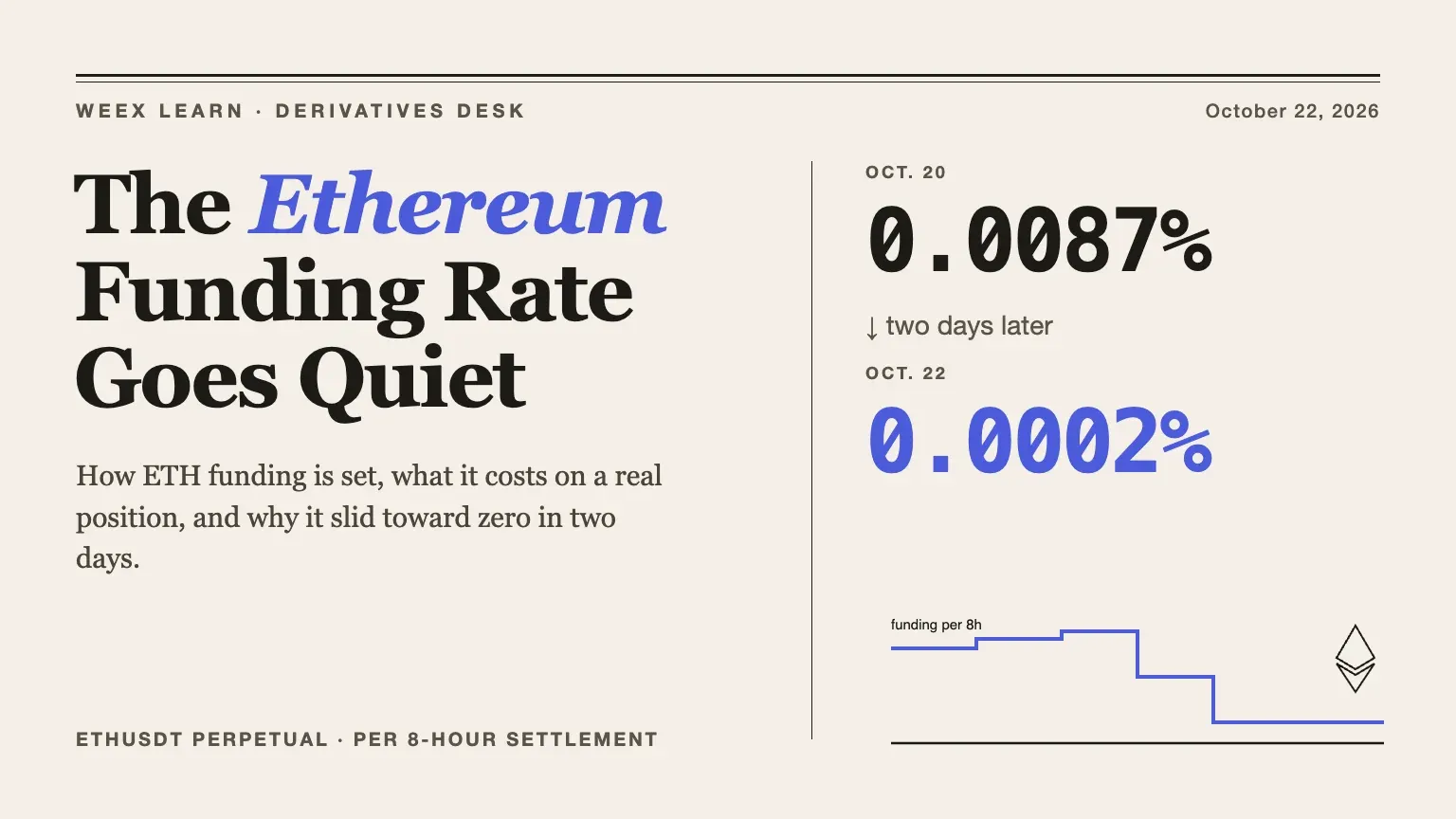
Ethereum Funding Rate: How It Works and Why It Dropped Near Zero
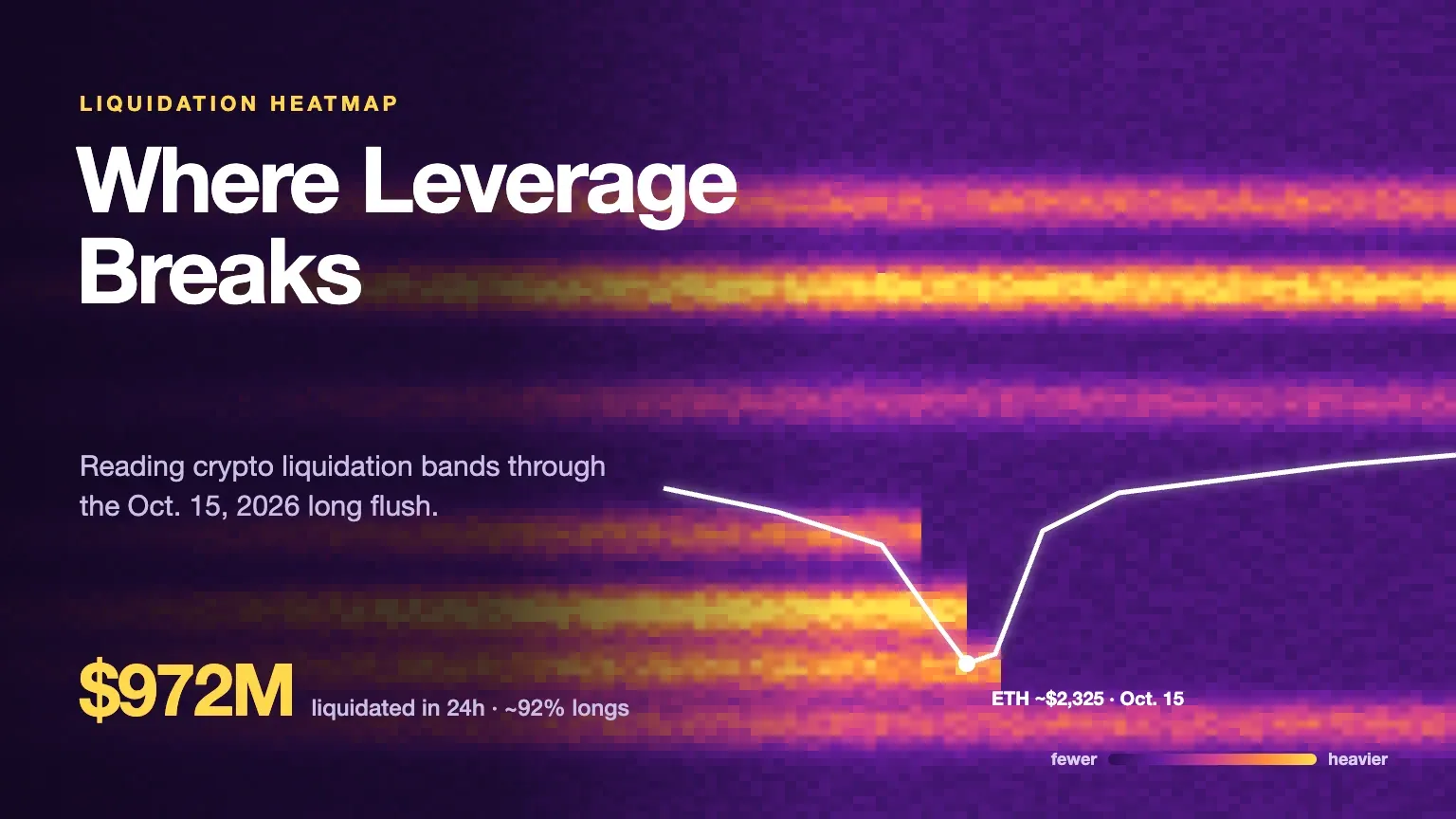
Crypto Liquidation Heatmap: Reading the $972M Oct. 15 Long Flush
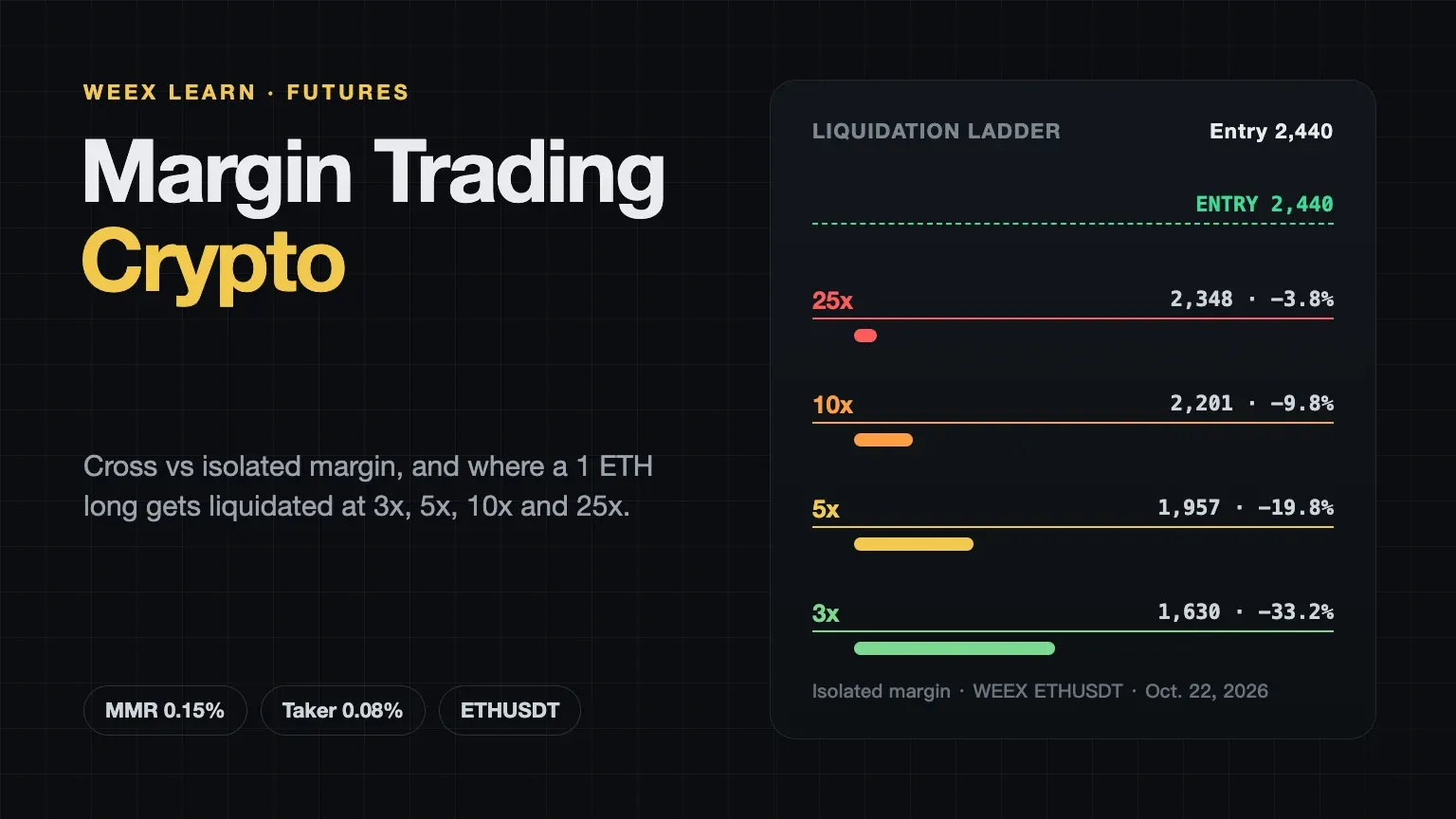
Margin Trading Crypto: Cross vs Isolated and Liquidation Math
How to Convert BTC to USDT: A Step-by-Step WEEX Guide
xStocks Crypto Explained: What Tokenized Stocks Are, How They Work and What Holders Should Check
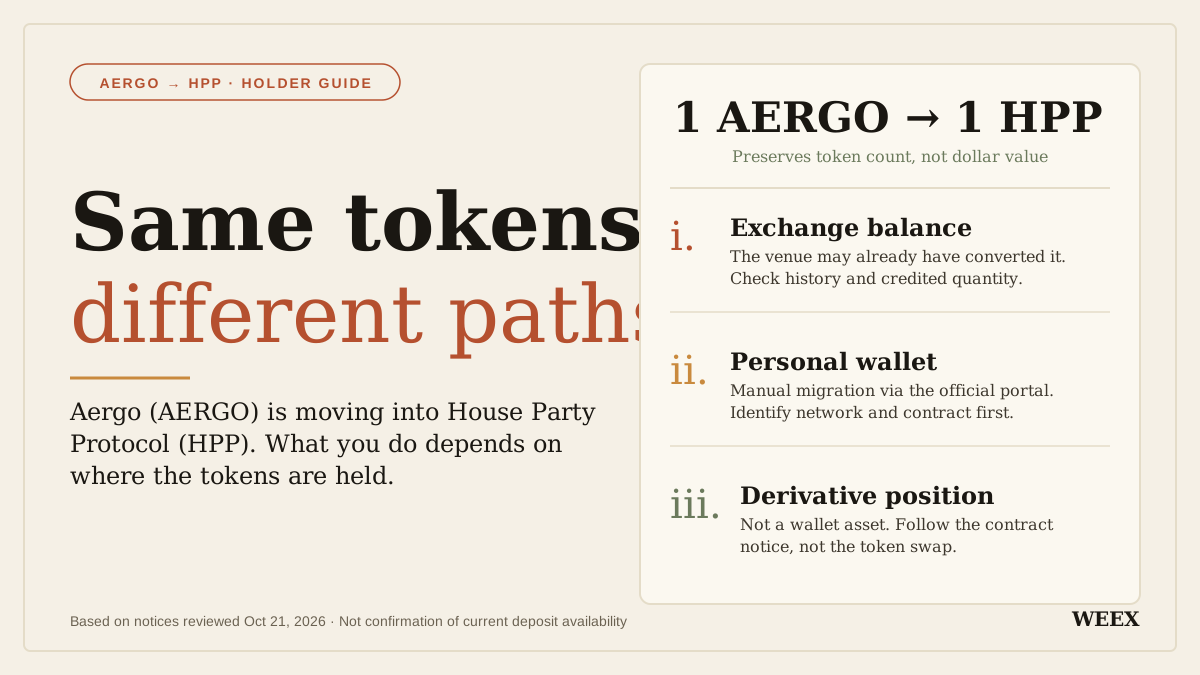
What Happened to Aergo (AERGO) Crypto? Token Migration and What Holders Should Do
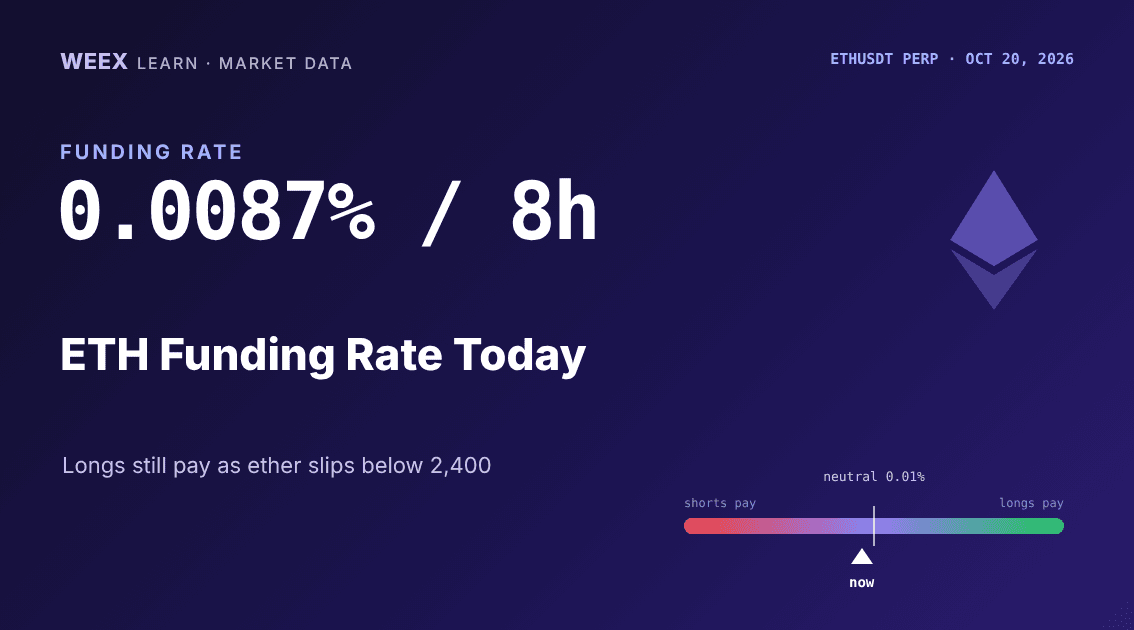
ETH Funding Rate Today: 0.0087% per 8h as Ether Longs Re-Lever

What Is Blockchain and How Does It Work? One Transaction, Traced
Staking APR vs Inflation: How Much of Your Crypto Yield Is Real?
WEEX Convert Fees: What Zero-Fee Conversion Really Costs You
WEEX Convert Quote: How the 8-Second Price Lock Really Works
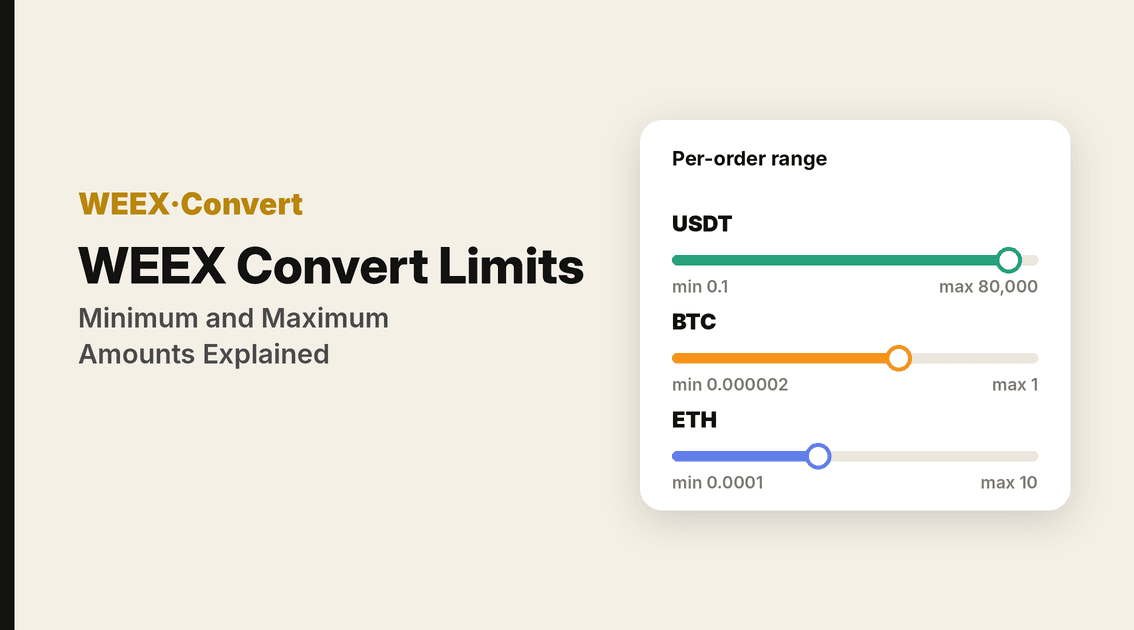
WEEX Convert Limits: Minimum and Maximum Amounts Explained
How to Check a WEEX Convert Order: History, Rate and Status
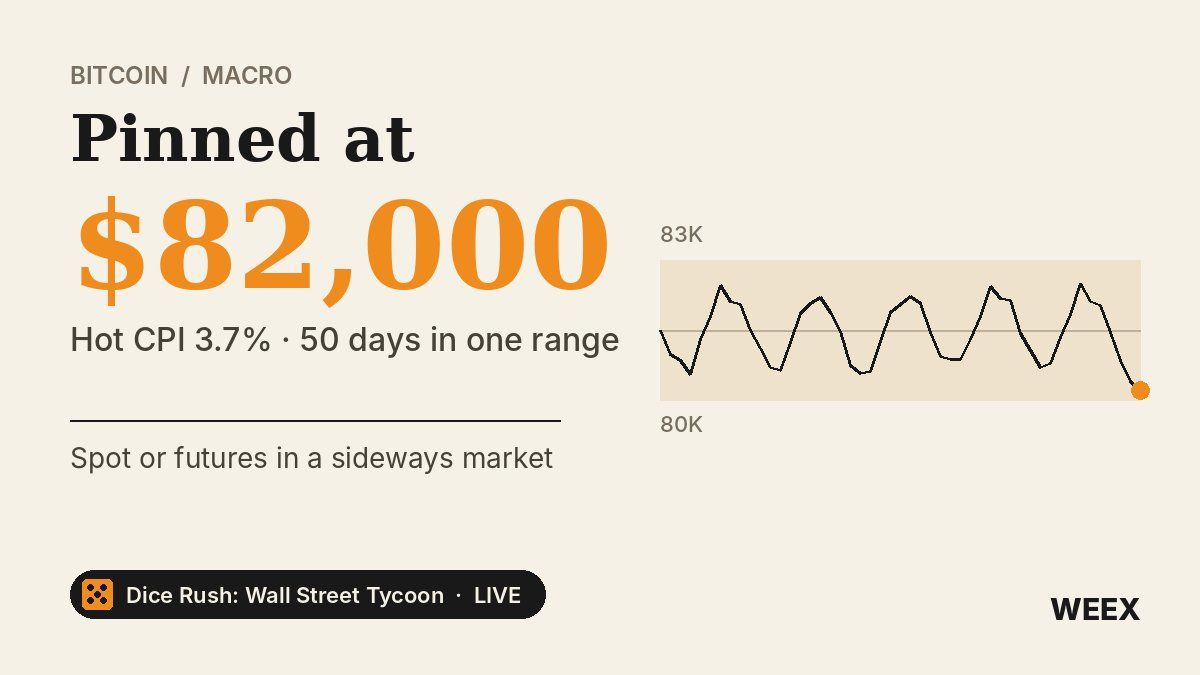
Bitcoin Price After Hot CPI: Why BTC Is Pinned Near $82,000
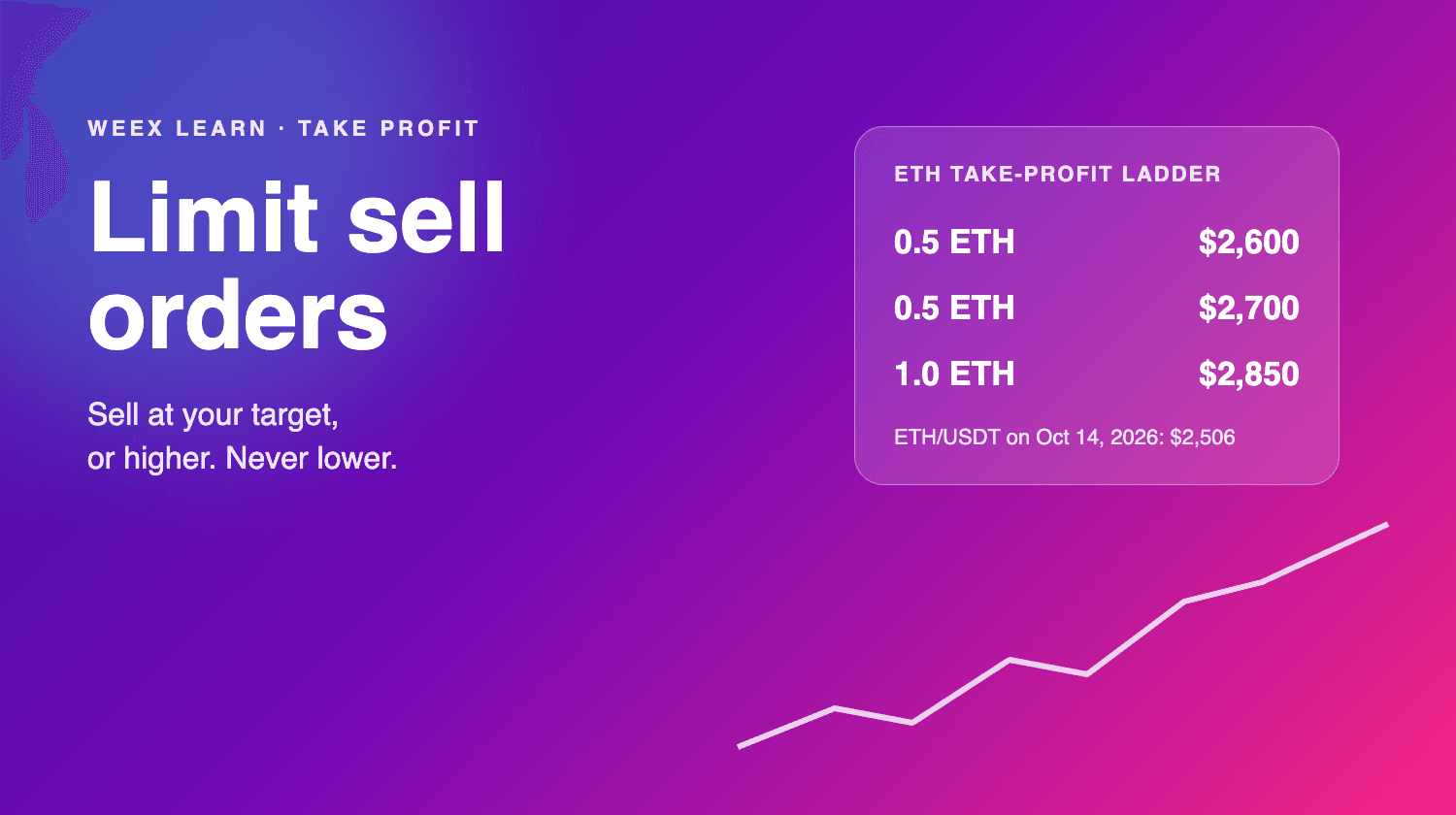
Limit Sell Order: How to Set a Take-Profit Price in Crypto

Best Crypto Podcasts for Beginners: A 4-Week Listening Plan

What Is Plume (PLUME)? Why the RWA Token Stays 93% Below Its High Even After the Layer 2 Rally
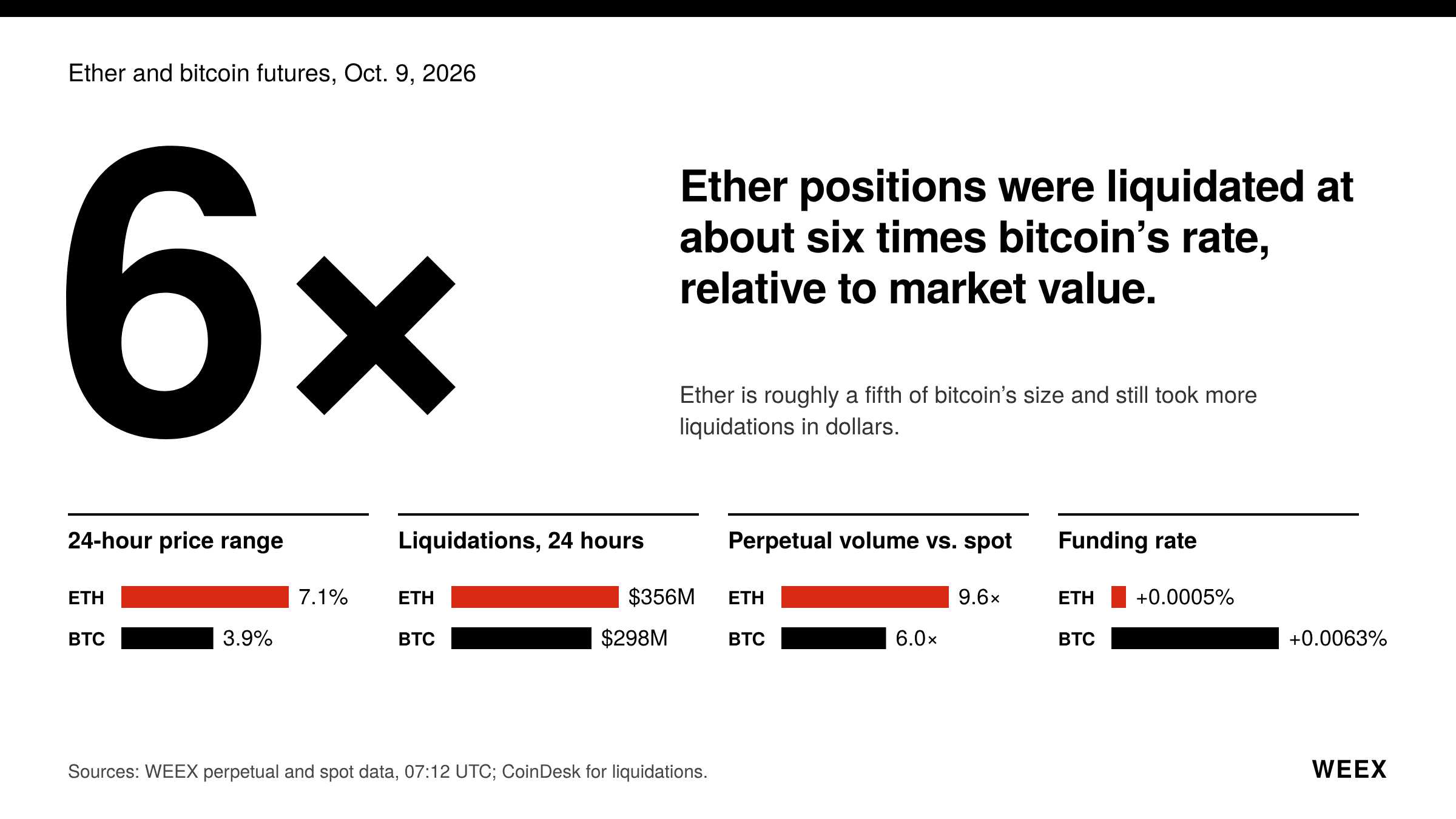
ETH Futures: Why Ether Is Falling Faster Than Bitcoin This Week
How to Buy Presale Crypto: Step by Step Guide for Beginners
Ethereum Glamsterdam Hits 200M Gas on Sepolia: What Changes After the Upgrade?
What Is Staking? 4 Myths to Clear Up Before You Stake Crypto
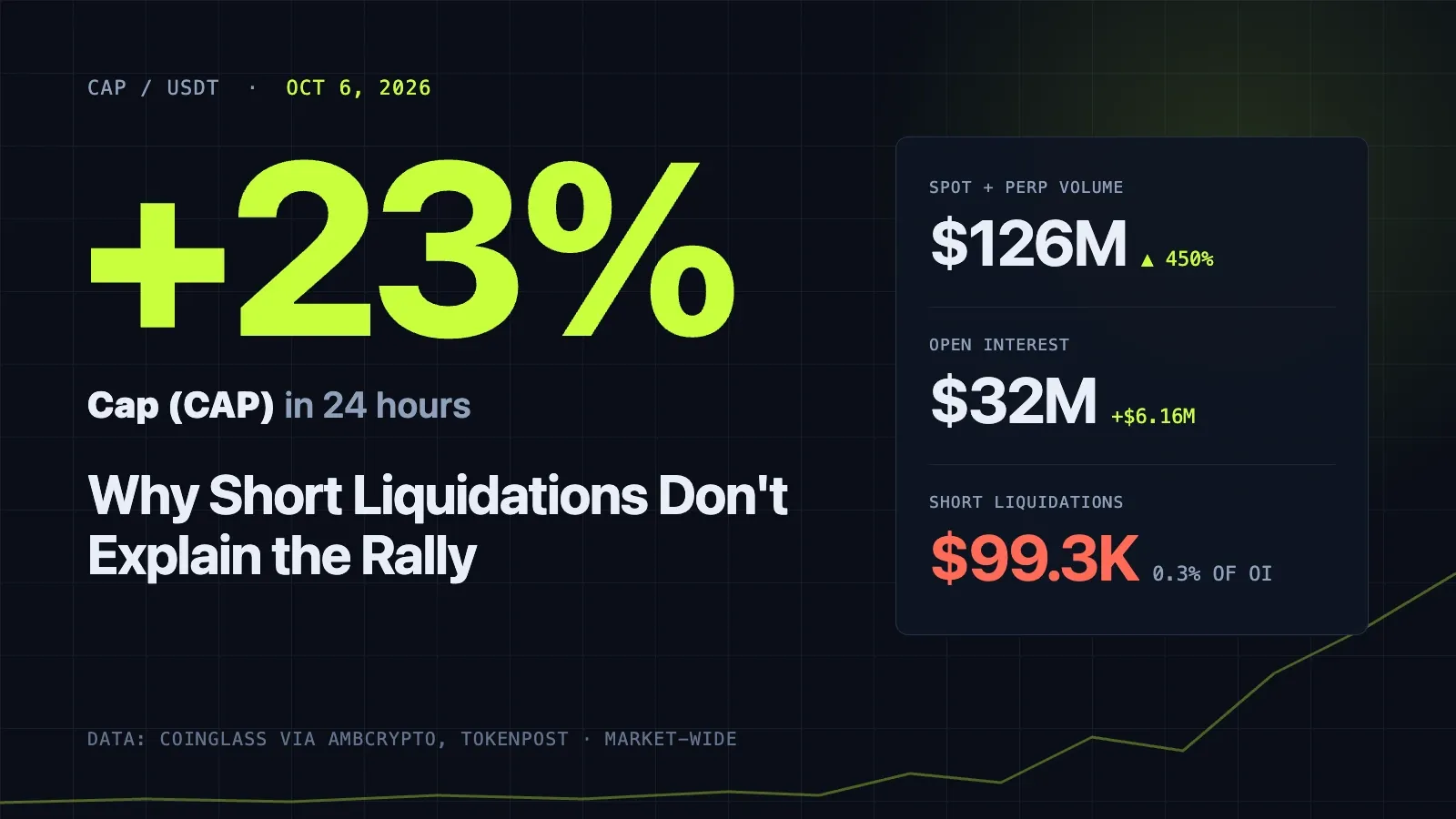
CAP Price Up 23%: Why Short Liquidations Don't Explain the Rally

Ethereum Glamsterdam Upgrade: Sepolia Date and ETH Price Impact
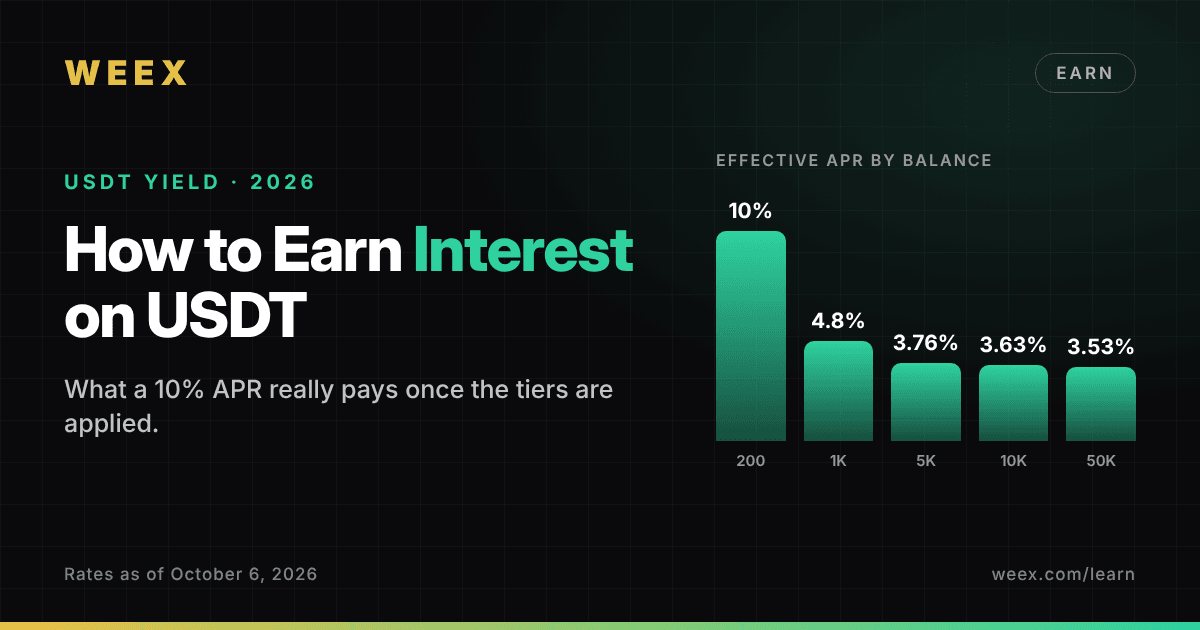
How to Earn Interest on USDT: What a 10% APR Really Pays in 2026

How to Buy Crypto With Apple Pay in 5 Steps: Why Your Bank May Decline the Payment
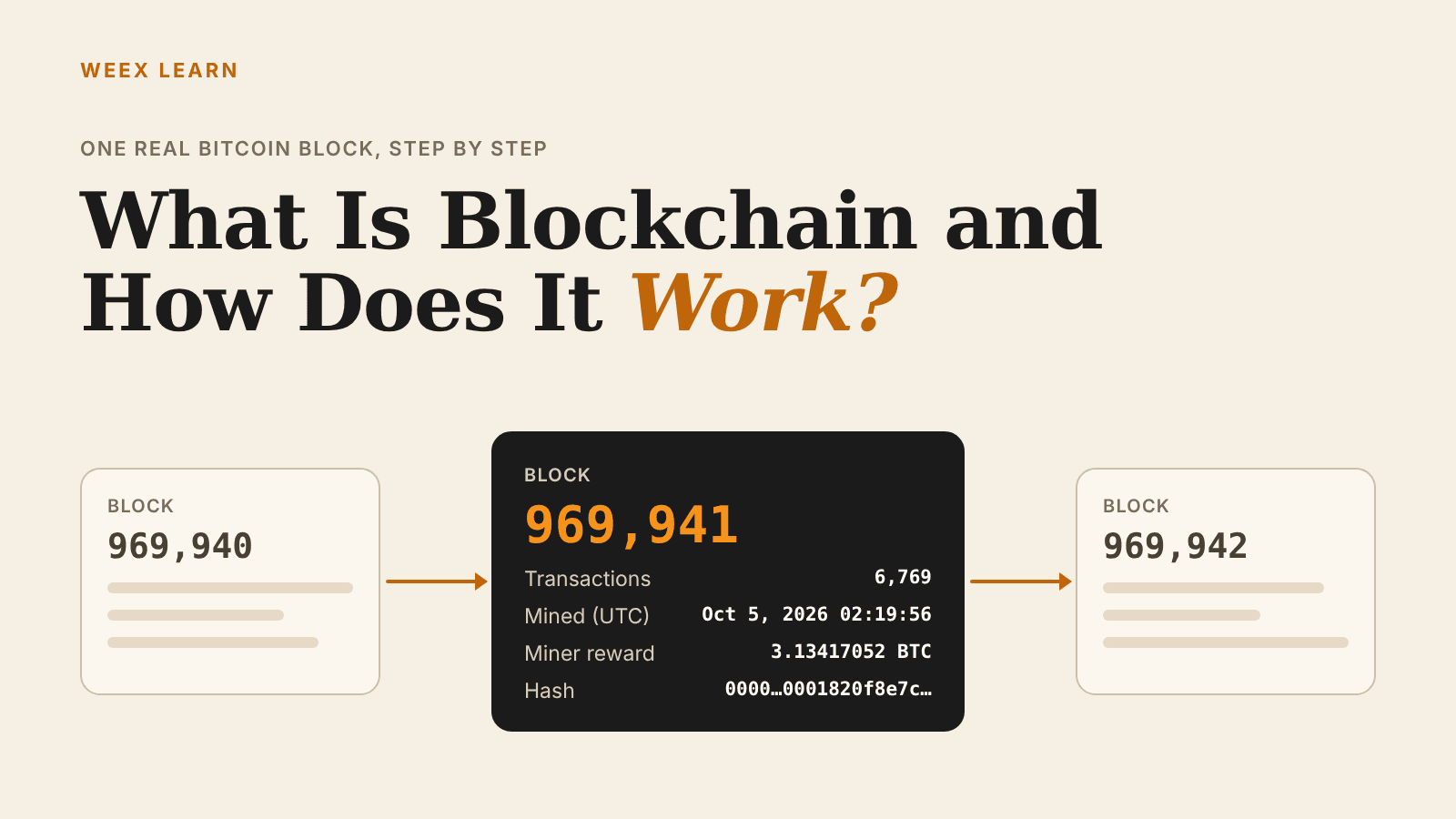
What Is Blockchain and How Does It Work? One Real Block Explained
Crypto Convert vs Transfer vs Bridge: Which Action Do You Need?
How to Convert ETH to USDT on WEEX: Step-by-Step Guide
How to Convert USDT to BTC on WEEX: Step-by-Step Guide
How to Convert BTC to ETH on WEEX: Step-by-Step Guide
Ethereum Funding Rate: How It Works and Why It Dropped Near Zero
Crypto Liquidation Heatmap: Reading the $972M Oct. 15 Long Flush
Contents
Popular coins
Latest articles





