
If You Invested $1,000 in Ethereum 5 Years Ago, Here Is How Much You’d Have Today

 Prefer us on Google


In the world of cryptocurrency, five years can bring monumental change. Ethereum, the leading smart contract platform, has undergone a remarkable evolution since 2020. At that time, ETH was trading at a modest few hundred dollars, supported mainly by an emerging DeFi ecosystem and a dedicated but still-growing community.
By mid-2025, Ethereum has not only reclaimed but exceeded its previous all-time highs, continuing to serve as the foundation for decentralized applications, NFTs, and global Web3 infrastructure. This dramatic growth invites a compelling question: How much would a $1,000 investment in Ethereum made five years ago be worth today? In this article, we retrace ETH’s price journey from 2020 to 2025 and break down the major developments that fueled its ascent.
Ethereum in 2020: Trading Between $230–$435
In the middle of 2020, Ethereum was gradually recovering from the extended crypto winter that followed the 2017 bull run. Prices fluctuated between approximately $230 and $435. While Bitcoin dominated mainstream attention, Ethereum was steadily establishing itself as the core infrastructure for decentralized finance.
A $1,000 investment during this period would have purchased about 2.3 ETH. To many traditional investors, Ethereum still appeared speculative and unproven. Yet under the surface, fundamental shifts were underway: DeFi applications like Uniswap and Aave were gaining traction, and developers were advancing plans for Ethereum’s transition to proof-of-stake.
In retrospect, this window offered a rare opportunity to enter the market before Ethereum’s historic run—a moment that leads many to ask today: is Ethereum a good investment looking back? The answer seems clear in hindsight, but at the time, it required vision and conviction.
Ethereum in 2021: The Great Bull Run and New Highs
The year 2021 marked Ethereum’s coming-of-age. A powerful bull market fueled by institutional interest, NFT mania, and DeFi expansion drove ETH to unprecedented levels.
- Early 2021: ETH broke above $1,000
- Mid-2021: The asset surpassed $2,000 and $3,000
- November 2021: Ethereum reached a then all-time high of nearly $4,891
- Year-End: ETH consolidated around $3,700
For those who invested in 2020, returns were staggering. The initial $1,000 purchase of 2.3 ETH ballooned to over $11,000 at the peak. Ethereum had clearly evolved beyond a mere cryptocurrency—it became the bedrock of Web3.
Ethereum in 2022: Market Collapse and the Merge
The optimism of 2021 was soon tested. By 2022, rising interest rates, the collapse of several crypto enterprises, and broader macroeconomic uncertainty triggered a severe market downturn.
- Mid-2022: ETH fell to nearly $880, down more than 80% from its high
- September 2022: The long-awaited Merge successfully transitioned Ethereum to proof-of-stake, drastically reducing its energy consumption and setting the stage for future scaling. Despite this achievement, ETH ended the year around $1,200.
Investors who held through this period saw their $1,000 investment decline to roughly $2,700–$3,000—a sobering retreat from earlier highs, yet still a gain from the initial entry. This period had many wondering: should I invest in Ethereum during such turbulence? Those who maintained confidence were ultimately rewarded.
-- Price
Ethereum in 2023–2025: Renewed Momentum and Record Highs
Ethereum’s recovery began in earnest in 2023, bolstered by technical upgrades and increasing institutional adoption.
- 2023: ETH climbed back above $2,000 following the Shanghai upgrade, which enabled staking withdrawals. It ended the year near $2,280.
- 2024: The approval of spot Ethereum ETFs attracted new capital, pushing the price toward $3,705 by November.
- Early 2025: A brief correction brought ETH near $2,200, but the dip was short-lived.
- August 25, 2025: Ethereum achieved a ATH of $4,953.73.
This recovery not only demonstrated Ethereum’s resilience but also rewarded patient holders who believed in its long-term vision. With each new high, investors continue to ask: is now a good time to buy Ethereum? While timing the market is challenging, Ethereum's strong fundamentals suggest continued long-term potential.
If You Invested $1,000 in Ethereum 5 Years Ago, How Much You’d Have Today?
While Bitcoin often dominates the spotlight, Ethereum has also experienced remarkable growth and remains one of the most widely held cryptocurrencies.
Ethereum first entered the market in August 2015, trading around $3 before dipping to an all-time low of $0.45 later that year. A decade later, in August 2025, it reached a record high of nearly $4,954—a dramatic rebound from its low of under $1,400 in April. As of early September 2025, Ethereum is trading around $4,400.
Given this volatile yet upward-trending history, here's what a $1,000 investment in Ethereum would be worth today based on different starting points. All values are calculated using Ethereum's price of $4,327 on September 5, 2025. Historical pricing is sourced from CoinMarketCap.
- 1 year ago:
- If you invested $1,000 in Ethereum in 2024, it would now be worth $1,767.
- 5 years ago:
- A $1,000 investment in Ethereum back in 2020 would be worth $11,145 today.
- 10 years ago:
If you had invested $1,000 in Ethereum in 2015—when it was priced at just $1.27—your investment would be worth nearly $3.4 million today.
What if you had invested just $1 instead?
- 1 year ago:
- A $1 investment in Ethereum in 2024 would now be worth $1.77, reflecting a 76.7% gain.
- 5 years ago:
- $1 invested in Ethereum in 2020 would be worth $11.15, thanks to a gain of nearly 1,015%.
- 10 years ago:
If you invested $1 in Ethereum in 2015, it would be worth $3,395 today—an increase of 339,432%.
Conclusion
Ethereum's transformation from a DeFi pioneer to a global settlement layer represents one of the most compelling investment narratives in crypto. A $1,000 investment in ETH five years ago would be worth nearly $11,400 at the latest all-time high—an exceptional return by any standard.
Yet these gains came with significant volatility, requiring strong conviction and a long-term perspective from investors. Ethereum's future remains promising due to its ongoing upgrades, institutional adoption, and central role in the open internet. However, as with any cryptocurrency, investors should remain mindful of the risks and market cycles.
For those looking to capitalize on Ethereum’s potential, WEEX offers a secure and user-friendly platform to trade ETH. With deep liquidity, competitive fees, and professional-grade tools, WEEX empowers both new and experienced traders to enter the market with confidence. Whether you're building a long-term portfolio or taking advantage of short-term opportunities, WEEX provides a reliable environment to buy and trade Ethereum.
FAQ About Ethereum Investment
1: What was Ethereum's initial price at launch?
Ethereum first became available to the public in 2015 through its initial crowd sale, with ETH priced at approximately $0.75. The value began climbing steadily as the network gained its first users and developers.
2: What was the price range of Ethereum five years ago?
Back in mid-2020, Ethereum was trading between $230 and $435. This period preceded both the explosive growth of NFTs and the network’s major upgrade to a proof-of-stake consensus mechanism.
3: If I invested $1,000 in Ethereum in 2020, what would it be worth now?
A $1,000 investment in Ethereum around mid-2020 would have purchased roughly 2.3 ETH. Based on the all-time high of $4,953.73 reached on August 25, 2025, that investment would be valued at approximately $11,400 today.
4: Can Ethereum reach $10,000?
While a price of $10,000 per ETH is within the realm of possibility, most analysts believe it would require a combination of strong ecosystem expansion, broader institutional adoption, and positive macroeconomic conditions. Such a milestone is more likely to occur in the early 2030s, if ever.
5: Does Ethereum still present a good investment opportunity in 2025?
As the leading platform for decentralized applications, non-fungible tokens, and smart contracts, Ethereum continues to play a foundational role in the blockchain space. However, like all cryptocurrencies, it is subject to high volatility and market risks. Investors should consider their risk tolerance and long-term strategy before investing.
Further Reading
- If You Invested $1,000 in Bitcoin 10 years ago, Here’s How Much You’d Have Now
- How to Trade ETH Futures on WEEX?
- Market Insight: Will ETH Break to New Highs?
Disclaimer: The opinions expressed in this article are for informational purposes only. This article does not constitute an endorsement of any of the products and services discussed or investment, financial, or trading advice. Qualified professionals should be consulted prior to making financial decisions.
This content is provided for general informational purposes only and doesn't constitute financial, investment, legal, or tax advice. Any events, rewards, online promotions, or related information mentioned herein should not be considered a recommendation, solicitation, or invitation to purchase, sell, trade, or otherwise deal in any crypto assets. Crypto assets are highly volatile and may result in loss. The availability of WEEX services, products, and related events may vary by region. You are responsible for ensuring that your participation is in accordance with applicable local laws and regulations.
You may also like
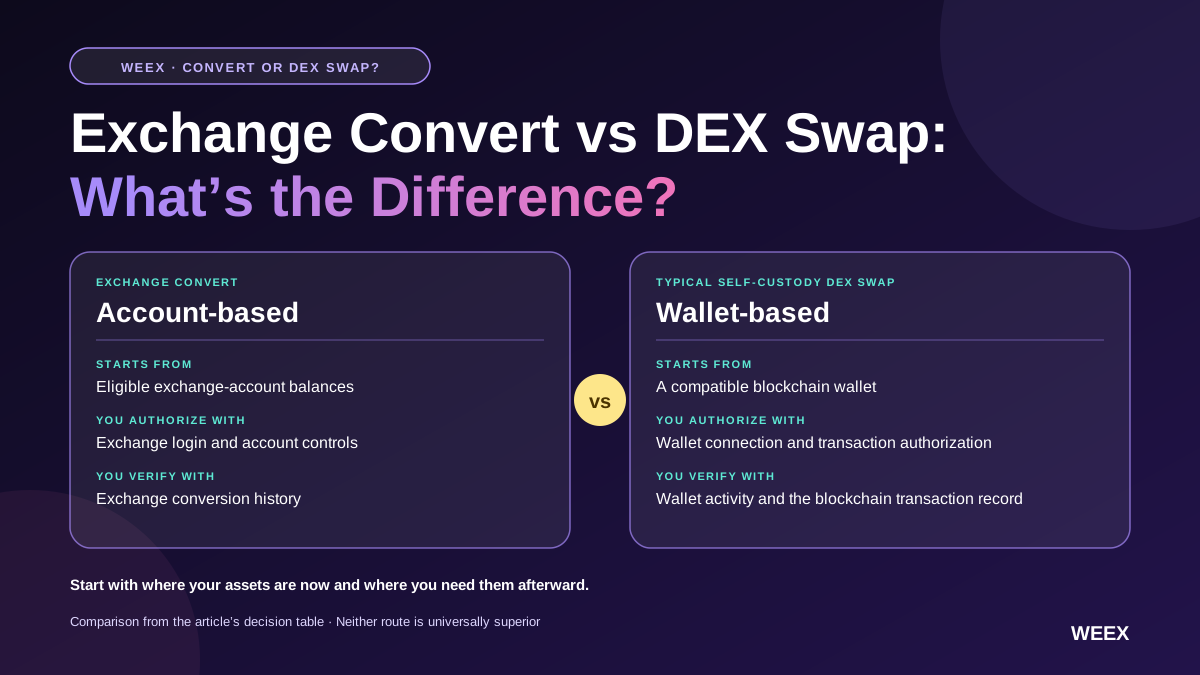
Exchange Convert vs DEX Swap: What’s the Difference? Try Convert Crypto On WEEX!
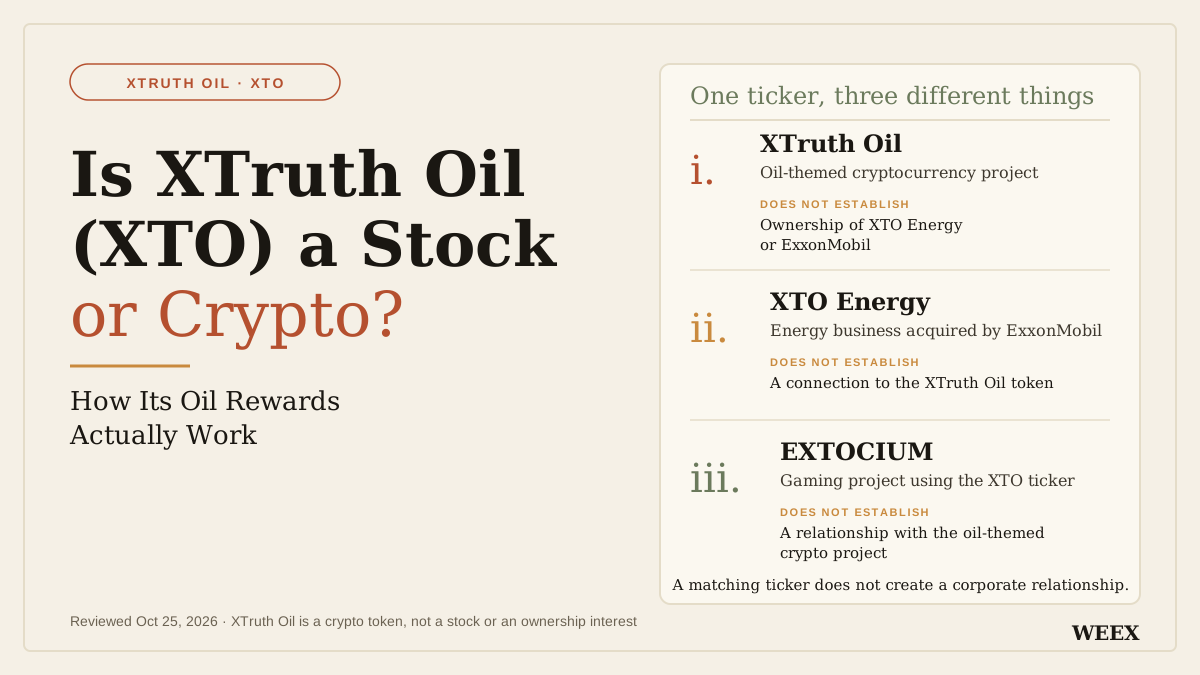
Is XTruth Oil (XTO) a Stock or Crypto? How Its Oil Rewards Actually Work

What Is Pearl (PRL) Crypto and How Does Its Mining Work?

Stake ETH or Hold USDT on WEEX? The Price Move That Decides It
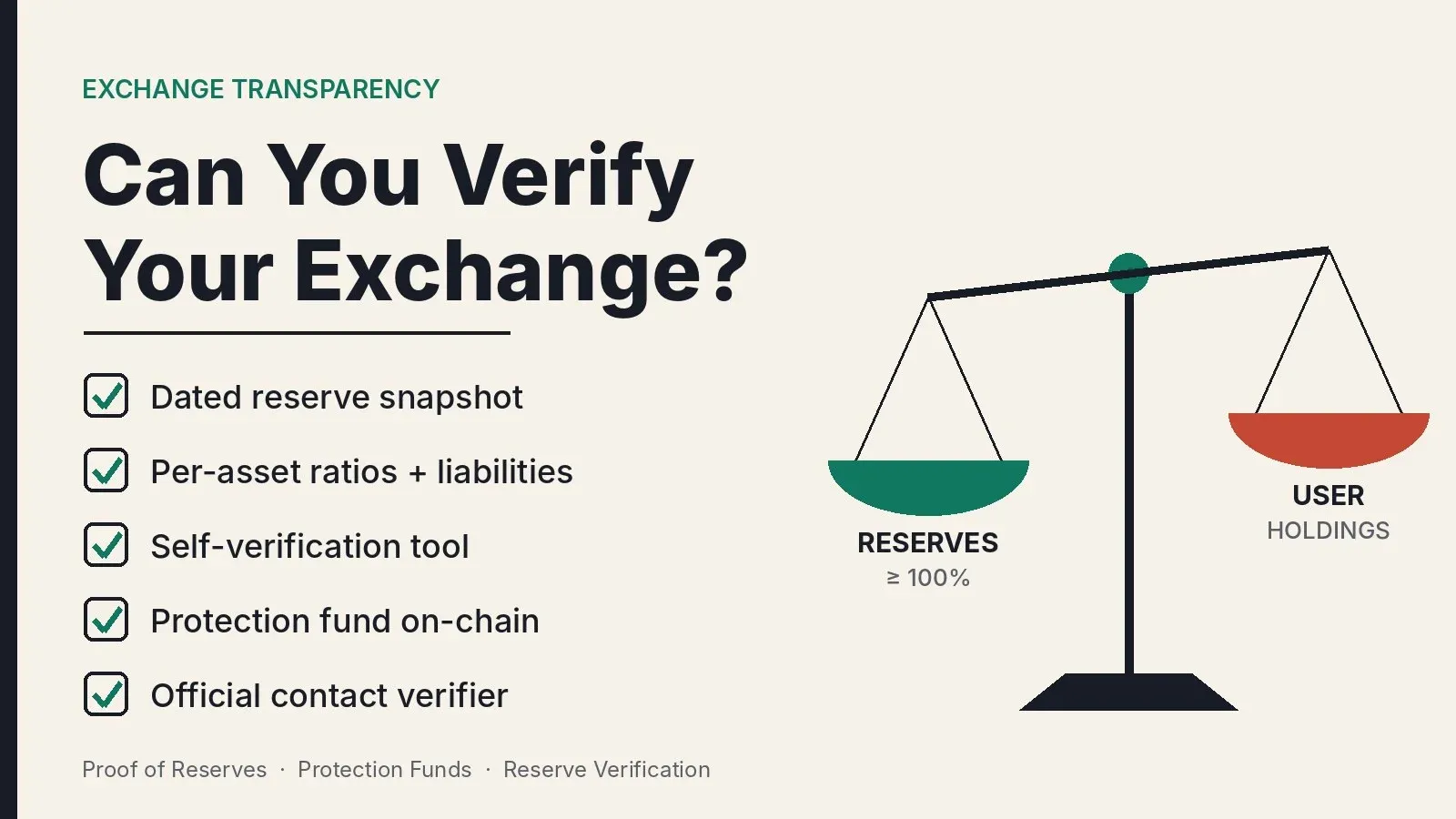
How Transparent Is a Crypto Exchange? Checking Proof of Reserves and Protection Funds
What Is Leverage Trading in Crypto? A Beginner’s Guide With Simple Examples
Is RSI a Good Indicator? How the Relative Strength Index Works, Its Limits and How Traders Use It
CRWV Stock Swings From -9.5% to +5.9%: Why CoreWeave Reversed
Walrus (WAL) Jumps 30%: Sui Storage Token Rallies on AI Data
CoreWeave Stock Plunges 15%: Why a Bond Yield Spooked CRWV
Best Crypto Miner for Beginners: What to Check on Cost, Power, Hashprice and Profit Before You Buy
MU Stock Falls Below $1,000: Is the CXMT Threat Real or Just an Excuse to Take Profits?
Stop Limit Order: How It Works and Why It Can Fail to Fill

Best Crypto Podcasts for Beginners: A 4-Week Listening Plan

Conflux (CFX) Price Jumps on China's National Blockchain Network Plan: Does the Policy Actually Name CFX?

What Is Plume (PLUME)? Why the RWA Token Stays 93% Below Its High Even After the Layer 2 Rally

Who Is David Ellison? Skydance’s Strategy, Media Consolidation, and the Investment Case
Crypto Funding Rate: Who Pays, What It Costs, What It Signals
PEP Earnings: PepsiCo Beats Q3, Cuts Guidance on North America
BTC Futures Analysis: $80K Held, but Longs Are Still Paying Up
Third-Party Trading Platforms vs Direct WEEX Trading: Fees, Liquidity, Security, and Control
How to Day Trade Crypto for Beginners: Do the Fee Math First
What Is Blockchain and How Does It Work? One Real Payment Traced
What Is a Blockchain Node? Types, 2026 Counts, and Real Costs

TSMC Stock Outlook Ahead of Q3 Earnings: Can AI Demand Push Shares Higher?
Taiwan Stock Market Nears 50,000: Can the TAIEX Break the Milestone After the Holiday?
How to Buy USDT in Thailand: Payment Methods, Fees and Transfer Checks

What Is RLC Crypto? How iExec (RLC) Powers Confidential Computing

Best Crypto Trading Strategies for Beginners: What to Know Before You Trade
PUMP Price Rally: Can Pump.fun Buybacks Outrun Monthly Unlocks?
Exchange Convert vs DEX Swap: What’s the Difference? Try Convert Crypto On WEEX!
Is XTruth Oil (XTO) a Stock or Crypto? How Its Oil Rewards Actually Work
What Is Pearl (PRL) Crypto and How Does Its Mining Work?
Stake ETH or Hold USDT on WEEX? The Price Move That Decides It
How Transparent Is a Crypto Exchange? Checking Proof of Reserves and Protection Funds
What Is Leverage Trading in Crypto? A Beginner’s Guide With Simple Examples


