
Key Pros and Cons of SpaceX IPO: How to Buy SpaceX Pre on WEEX in 2026?

 Prefer us on Google
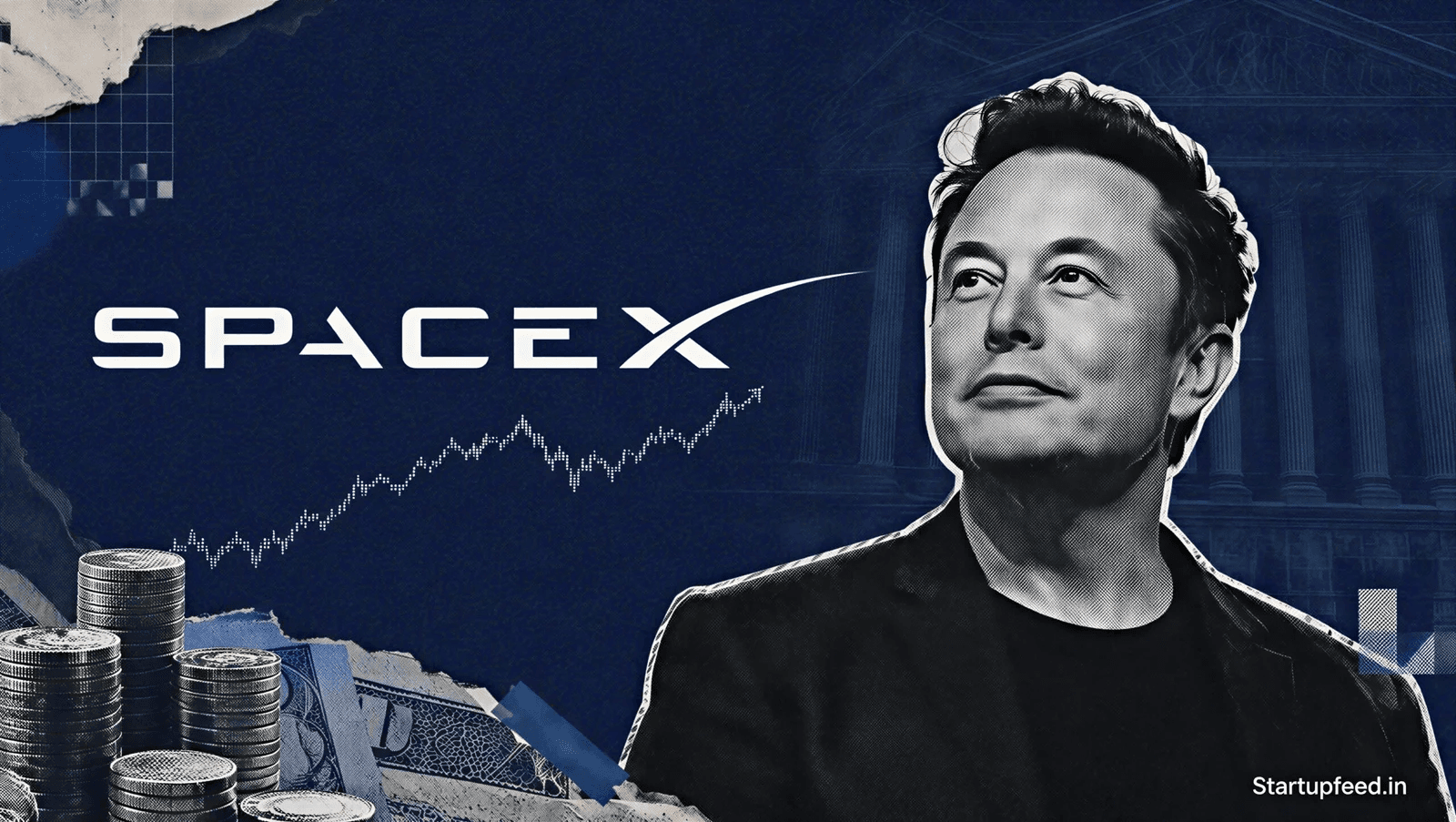
SpaceX just filed its S-1. The numbers are massive. $1.75 trillion valuation. $135 per share. $75 billion raise. Listing as early as June 12, 2026.
For most of history, pre-IPO access was for VC firms and millionaires. Not anymore.
Here is the real breakdown of spacex ipo pros and cons, plus exactly how to buy SpaceX Pre-IPO on WEEX with no accredited investor requirements.
Key Takeaways
- SpaceX targets a $1.75 trillion valuation at $135 per share, listing on Nasdaq under SPCX as early as June 12, 2026.
- 30% of shares are allocated to retail investors, an unprecedented move for a mega-cap IPO.
- Morningstar estimates fair value at $780 billion, roughly 55% below the IPO target.
- SpaceX lost $4.94 billion in FY2025 despite $18.7 billion in revenue.
- How to buy SpaceX Pre on WEEX: Buy SpaceX spot, or trade SPCX pre-IPO perpetuals with 20x leverage max.
What Is the SpaceX IPO and When Is SpaceX Going Public?
SpaceX (Space Exploration Technologies Corp.) filed its S-1 registration with the SEC on May 20, 2026, with an amendment on June 1, 2026.
Key dates:
| Event | Date |
| Institutional roadshow | June 4-8, 2026 |
| Final share pricing | June 11, 2026 |
| Public trading debut | June 12, 2026 (expected) |
| Ticker | SPCX |
| Exchange | Nasdaq + Nasdaq Texas |
The timeline is locked. No more rumors.
Where to buy spacex ipo after listing? Any regulated broker: Fidelity, Schwab, Robinhood, Interactive Brokers. But if you want exposure before June 12, pre-IPO instruments are the only path.
What Will the SpaceX IPO Price Be?
$135 per share. Firm. SpaceX reportedly told underwriters it will not budge.
But here is the unusual part: 30% of the offering is set aside for retail investors. That is massive. Most mega-cap IPOs give retail scraps. SpaceX is doing the opposite.
The spacex ipo valuation at $135 per share implies a $1.75 trillion market cap.
To put that in perspective:
- Boeing: ~$120B
- Lockheed Martin: ~$140B
- Northrop Grumman: ~$70B
- Combined: $330B. Still 5x smaller than SpaceX.
Either SpaceX is worth more than the entire legacy defense aerospace industry combined, or the valuation is too high.
-- Price
Pros of SpaceX IPO
- Unmatched launch dominance: SpaceX launched more than half of all global rockets last year. No competitor has reusable technology at scale. ULA, Rocket Lab, and Blue Origin are years behind.
- Starlink is a cash machine: Spacex starlink revenue 2025 hit approximately $13-15 billion, representing the majority of SpaceX's $18.7B total. With 10 million+ subscribers and 62.9% adjusted EBITDA margins, Starlink alone would be a unicorn.
- AI and data center synergies: SpaceX merged with xAI and secured a $1.25 billion per month contract with Anthropic through mid-2029. That is $15 billion annually from one customer.
- Retail-friendly allocation: 30% set aside for ordinary investors. Most IPOs allocate 5-10% to retail. This changes who can participate.
- Fast index inclusion: New exchange rules allow mega-caps to bypass seasoning periods. SPCX could enter passive indices within 15 trading days, creating forced buying pressure.
Cons of SpaceX IPO
- Valuation is aggressive: At $1.75T against $18.7B revenue, the price-to-sales ratio is 94x. Morningstar published a fair value estimate of $780 billion. That is 55% below the IPO target.
- SpaceX lost $4.94 billion in FY2025: Not close to profitable. The xAI segment alone recorded a $6.4 billion operating loss in 2025. Starlink prints cash. Everything else burns it.
- Key person risk: Elon Musk retains 82-85% voting power through dual-class shares. Public shareholders have no governance control. What Musk decides goes. No questions asked.
- Lockup structure is unusual: Only 3% of shares float at IPO. But SpaceX allows phased insider selling. Large holders can exit gradually starting soon after listing. Supply increases. Prices often drop.
- Small float = high volatility: 3% public float means limited shares available. First day pops are likely. Then corrections. Then more volatility.
How to Buy SpaceX Pre on WEEX in 2026: Step by step Guide
If you want exposure before the June 12 listing, how to buy spacex pre on WEEX is straightforward. WEEX offers three pre-IPO instruments with no accredited investor requirements.
Step-by-step to buy SpaceX Pre on WEEX:
- Step 1: Go to WEEX official website and create your account.
- Step 2: Fund your wallet. Transfer funds to your account or buy crypto via fiat or quick buy.
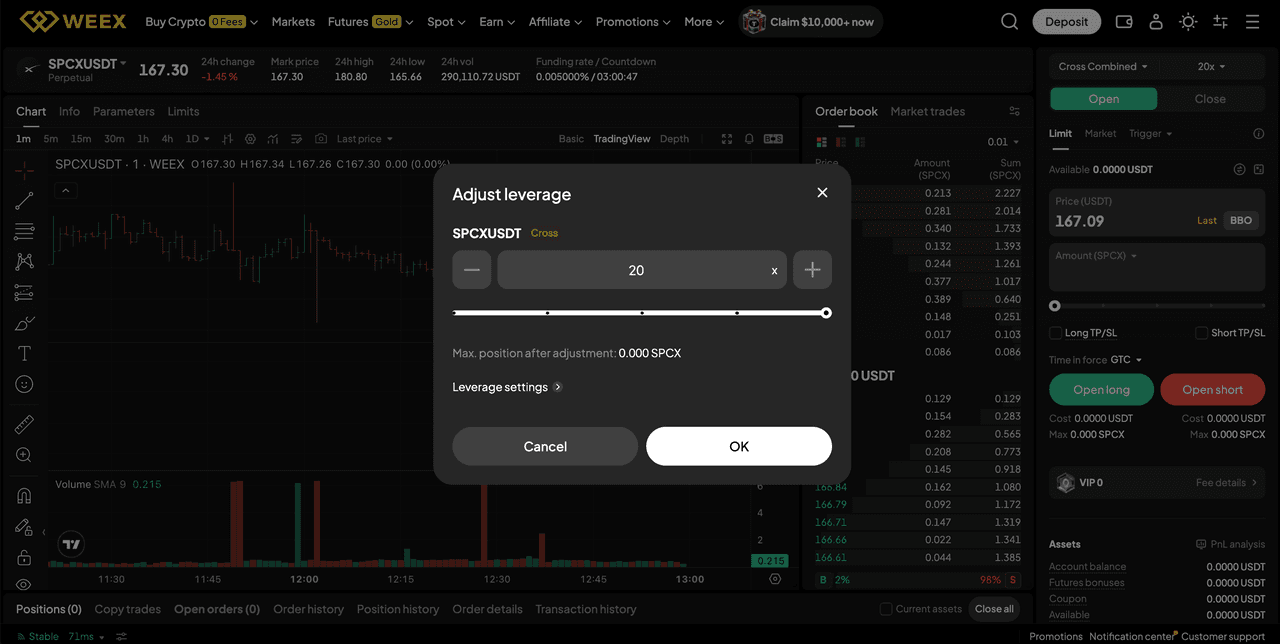
- Step 3: Navigate to the futures section and search for SPCXUSDT.
- Step 4: Set leverage and set take-profit and stop-loss orders.
Pro note: These are derivatives, not real equity. You are trading price exposure, not ownership. Never risk more than 1-2% of your portfolio on pre-IPO speculation.
SpaceX IPO vs Anthropic IPO
SpaceX is not the only mega-IPO in 2026. Anthropic filed confidentially for a Q4 listing at $965B – $1T.
| Metric | SpaceX (SPCX) | Anthropic |
| Target valuation | $1.75T | $965B – $1T |
| Listing date | ~June 12, 2026 | Q4 2026 (expected) |
| Revenue (annualized) | $18.7B (FY2025) | $47B (May 2026 run-rate) |
| Revenue multiple | ~94x | ~20.5x |
| Profitability | Net loss $4.94B | Projecting Q2 2026 profit |
| Core business | Launches + Starlink | Enterprise AI + Claude |
Which is better? For short-term momentum and index inclusion, SpaceX wins. For valuation discipline and software margins, Anthropic looks cleaner. Many traders plan to hold both.
Conclusion: Should You Participate in SpaceX IPO?
Should you participate in the SpaceX IPO? Yes, but only if you have a 5-10 year horizon, believe Starlink can 5x subscribers, and can handle 50% drawdowns. Keep pre-IPO exposure small—1-5% of your portfolio. Say no if you need money within two years, cannot stomach a 50% correction, or think $1.75T already prices perfection.
The smarter play for most retail traders? Wait 3-6 months. Let lockup expirations hit. Let the first earnings report drop. Let FOMO fade. If you still want pre-IPO exposure anyway, how to buy spacex pre on WEEX works with as little as $10. Just remember: pre-IPO derivatives are not shares. Trade small. Trade smart.
Ready to trade? WEEX offers zero fees, instant execution, and the security you need. Sign up on WEEX Now and Start Trading!
FAQ
Q: How to buy SpaceX Pre on WEEX?
A: Create a WEEX account, go to the Pre-IPO Zone, choose SpaceX(VNTL), PreStocks, or SPCX-USDT, fund with USDT, set 2-5x leverage, and execute your position. Full 5-step guide above.
Q: What is the SpaceX IPO price?
A: $135 per share, targeting a $1.75 trillion valuation. Final pricing on June 11, 2026.
Q: Is SpaceX profitable?
A: No. SpaceX reported a net loss of $4.94 billion in FY2025. Starlink is profitable, but Starship and xAI burn cash.
Q: When is the SpaceX IPO date?
A: Public trading is expected to begin as early as June 12, 2026, following the June 11 pricing.
This content is provided for general informational purposes only and doesn't constitute financial, investment, legal, or tax advice. Any events, rewards, online promotions, or related information mentioned herein should not be considered a recommendation, solicitation, or invitation to purchase, sell, trade, or otherwise deal in any crypto assets. Crypto assets are highly volatile and may result in loss. The availability of WEEX services, products, and related events may vary by region. You are responsible for ensuring that your participation is in accordance with applicable local laws and regulations.
You may also like
Recordati Stock (REC): The Respighi BidCo Tender Offer, the Timetable and What Happens If You Do Nothing

Is Bitcoin Preparing for a Bullish Breakout? Key Technical Indicators and On-Chain Data
Is RKLB Stock a Buy After the Space Force Contracts and Q2 Earnings?
What Is a Broker Sub-Account? How Multi-Client Trading Structures Work
JSW Stock Forum: What the Threads Are Actually Arguing About — and What They Cannot Tell You
zk-SNARK vs zk-STARK: What's the Difference?
How Zero Knowledge Proofs Are Used in Blockchain Today

What Is Zero Knowledge Proof? A Beginner's Guide
Is PGP Still Secure in 2026?
PGP vs End-to-End Encryption: What's the Difference?
Opendoor Stock Price Prediction 2026-2027: Can OPEN Reach the $4.95 Analyst Target After the Q2 Turnaround?
Is SNDK Stock a Buy After Falling Below $1,300 on Record Earnings?
SanDisk Unveils HBF: What the World's First HBM-Flash Standard Means for SNDK Stock
How to Create a WEEX API Key Without Getting Locked Out
Japan's 20% Crypto Tax: Already Enacted, Start Date Not Yet Set (August 2026)
Form 1099-DA Explained: A 2026 Filing Season Guide for Crypto Traders
UFC's $175M Crypto.com Deal: What It Means for Crypto's Mainstream Moment
API Trading Software: Check the Exchange Limits First
What Is the Yen Carry Trade? How It Moves Bitcoin, Explained
How to Identify Fake WEEX Websites and Customer Service Impersonators
Is WEEX a Scam? Safety, Regulation and Withdrawals Explained (2026)
What Is Broker Trading? A Beginner's Guide to Trading Through a Broker
Hyperliquid (HYPE) July 30 Unlock: What Time Does the $198M Unstake Hit and How Will It Impact Price?
How Do Crypto Brokers Make Money From Fee Sharing? What the Economics Actually Look Like
How to Avoid Crypto Broker Scams: What Legitimate Brokers Actually Look Like
How to Call an Exchange API: Keys, Signatures and Error Codes
GOOG Stock After Q2 Earnings: Why a Record EPS Sank 7%
Crypto Exchange API: What It Does and What Your Key Can Do
Argentina World Cup 2030: Who Replaces Messi and Can They Ever Win Again?
Oil Falls 7% as US Pauses Iran Strikes: Which Stocks Win and Which Lose Now
Recordati Stock (REC): The Respighi BidCo Tender Offer, the Timetable and What Happens If You Do Nothing
Is Bitcoin Preparing for a Bullish Breakout? Key Technical Indicators and On-Chain Data
Is RKLB Stock a Buy After the Space Force Contracts and Q2 Earnings?
What Is a Broker Sub-Account? How Multi-Client Trading Structures Work
JSW Stock Forum: What the Threads Are Actually Arguing About — and What They Cannot Tell You
zk-SNARK vs zk-STARK: What's the Difference?


